

From Saint-Malo to Guadeloupe, an unusual weather pattern is shaping the opening stages of the transatlantic race
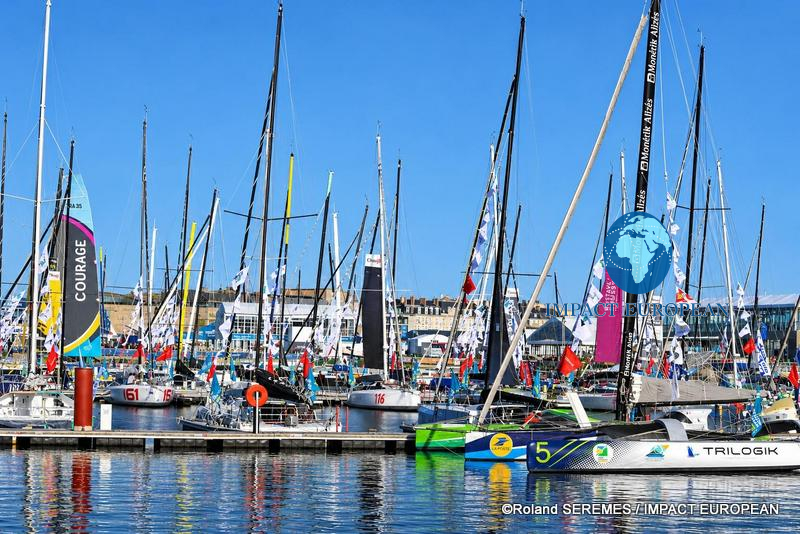
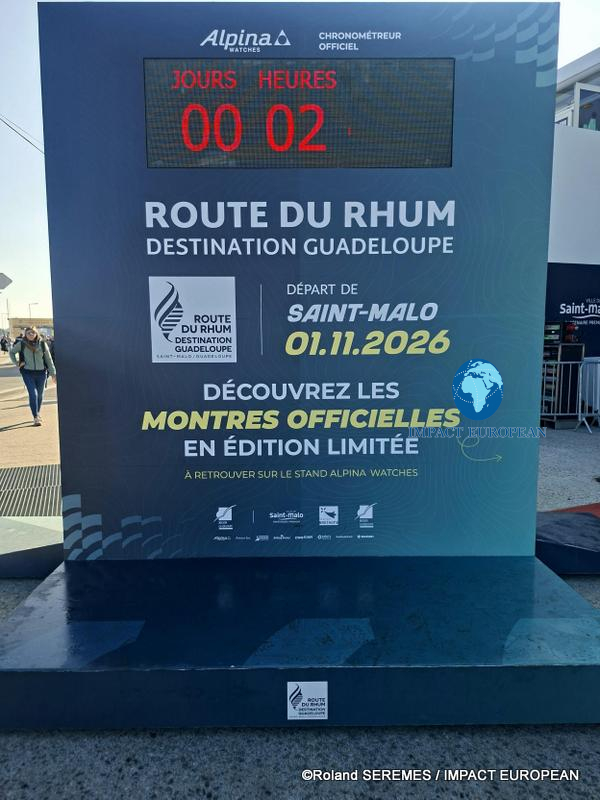
The 13th edition of the Route du Rhum – Destination Guadeloupe began on Sunday, 1 November 2026, as 115 competitors crossed the starting line off Saint-Malo at 1:02 p.m. Local sunshine and a north-easterly breeze of 8 to 11 knots provided a strikingly calm setting for the start of one of the major solo transatlantic sailing races. Yet the weather picture beyond the opening hours was far less straightforward. With no established trade winds along the usual route, the fleet was expected to head north of the Azores, turning the first part of the Atlantic crossing into a test of navigation, timing and strategic judgement.
From preparation to the reality of solo sailing
For the sailors, the race begins well before the starting signal. The days leading up to departure bring technical checks, weather analysis and the growing awareness that the comfort of land is about to give way to the demands of the open ocean.
Franck Cammas, a four-time Route du Rhum competitor and winner in 2010 aboard the maxi-trimaran Groupama 3, says that the days before the start have often been harder than the start itself. The mind fills with possible scenarios: equipment failure, changing weather and the challenges of leaving a familiar environment for a very different one.
His first participation, in 1998, remains a telling example. He had sailed only around 500 miles alone on his boat before facing a forecast Force 9 gale on the first night. His aim was simply to finish, rather than to measure himself against the leading competitors.
The transition from anticipation to action is crucial. Leaving the hotel, reaching the boat, saying goodbye to family and friends, and casting off all become part of a carefully prepared sequence. Once the boat has left the pontoon, Cammas explains, there is less time to imagine what might happen and more need to respond to what actually happens. He says he has often felt a sense of relief about an hour after the starting signal.
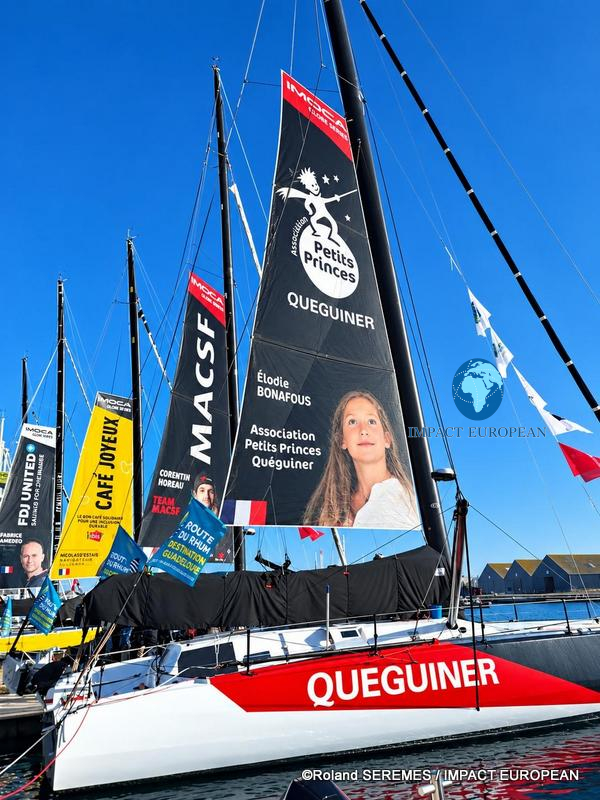
Sam Goodchild, sailing MACIF Santé Prévoyance, describes a similar shift. Repeated questions about stress during the race village week can make the subject seem more pressing than it initially was. Once on board, attention moves to sail choices, positioning on the starting line and communication with the team. During the race, the concerns become practical: avoiding breakage, making sound strategic decisions and keeping an eye on competitors.
A sunny start, demanding first manoeuvres
The fleet set off in a north-easterly wind of 8 to 11 knots under a clear sky. The starting line measured 3.2 miles, or 5.9 kilometres. Crew members left the boats four minutes before the start, leaving the skippers alone as they crossed the line at 1:02 p.m.
Three competitors were penalised for crossing too early: Christophe Rateau aboard Gustave Roussy and Marco Guerra aboard Imagin’Act-Socomec in the Class40 division, and David Ducosson aboard Trilogik in Vintage Multi.
The first compulsory passage was Cape Fréhel, 16 miles (29 kilometres) from the starting line. The different boat designs meant that the fleet could not all follow the same course. The large Ultim multihulls had to move away from the direct route and make two gybes to round the cape. Some monohulls starting farther south appeared able to reach it on a single leg under spinnaker.
That difference in angles created a demanding opening sequence. Boats were manoeuvring in a relatively confined area, with potential speeds approaching 30 knots in gusts according to the pre-race briefing. The race management had therefore identified crossing points and secured areas around the course, including zones used by passenger boats. Competitors needed to balance speed with close attention to traffic and the movements of other boats.
The fleet turns north-west towards the Celtic Sea
After Cape Fréhel, the fleet was expected to turn towards the Héaux de Bréhat before heading out into the Celtic Sea. The first 36 to 48 hours were forecast to take the boats north-west towards Ireland, rather than directly south towards the tropics.
The wind was expected to strengthen from the east, making for a fast opening stage. The next major manoeuvre was an anticipated gybe near the south-west of Fastnet. The timing differed by class: the Ultim boats were expected to make the move around midnight, the IMOCA and Ocean Fifty fleets and the fastest Vintage Multi boats the following morning, and the leading Class40 boats on Monday evening.
The waters near the coast of Cornwall required particular attention because of restricted areas and dense maritime traffic. For solo sailors, maintaining a proper lookout while managing a fast-moving boat would be an essential part of the opening phase.
An Atlantic without its usual trade-wind pattern
The main strategic uncertainty lay farther west. The weather briefing on 31 October described a strong high-pressure system centred north of Ireland and another over Washington. A low-pressure system near Greenland and its associated cold front were disrupting the trade-wind pattern across the Atlantic as far south as the Tropic of Cancer.
Without established trade winds along the conventional route, the sailors and their routing teams were preparing for a passage north of the Azores. The forecasts suggested that the wind would initially support a fast west-north-westerly course, with conditions strengthening to around 20 knots and gusts of 25 to 30 knots on Monday, according to Météo Consult.
The Ultim boats were expected to pass the Azores on Tuesday evening. From Wednesday, a low was forecast to develop near the archipelago, affecting the second part of the fleet. The faster boats might cross the trough separating the two high-pressure systems before conditions became more complicated for those behind.
The route options remained uncertain. Even the more southerly trajectories under consideration were still north of the direct route, while the trade winds were located around Cape Verde. Yann Eliès described possible variations in positioning, but there was no clearly winning route at that stage.
The pre-race briefing also underlined the uncertainty surrounding arrival times. Only 15% of the ensemble-model runs suggested that the first boats could reach Guadeloupe within seven days. This was a forecast assessment made before the start, not a statement about the eventual race outcome.
Early leaders emerge across six classes
The opening passage around Cape Fréhel produced the first signs of competition in the six divisions. In the Ultim class, Tom Laperche aboard SVR-Lazartigue moved ahead of Armel Le Cléac’h on Banque Populaire XI after a more effective sequence of manoeuvres. Anthony Marchand on Actual Ultim 3 was also close, with Thomas Coville on Sodebo Ultim3 nearby. Louis Burton, making his Ultim debut aboard Armand Thierry, was among the leading group.
The early leaders reported in the other divisions included Basile Bourgnon on Edenred in Ocean Fifty, Guillaume Pirouelle on Sogestran Seafrigo in Class40, Sam Goodchild on MACIF Santé Prévoyance in IMOCA, Eric Péron on French Touch Oceans Club in Vintage Multi and Kieran Leborgne on Armor-Lux – Le Finistère Assurance in Vintage Mono.
Attention also focused on Gitana 18, the new Maxi Edmond de Rothschild skippered by Charles Caudrelier. Its large appendages appeared to create drag at the start, but the boat later demonstrated its ability to fly as the wind strengthened. The early observations also pointed to less efficient transitions and manoeuvres. On a course expected to involve frequent changes of direction, the boat’s ability to make up for those moments through outright speed remained an important question.
A race shaped by decisions as much as speed
The opening of the 2026 Route du Rhum illustrates the complexity of modern offshore sailing. Boat design and raw speed matter, but so do manoeuvre sequences, weather interpretation and the ability to choose a course under uncertain conditions.
The fleet had left Saint-Malo in favourable weather, but the Atlantic ahead offered no obvious route to Guadeloupe. The north-western course, the passage beyond the Azores and the forecast development of low pressure all placed a premium on judgement. The sailors would have to preserve their boats, manage their energy and make decisions without the reassurance of a predictable trade-wind passage.
The race had begun with a spectacular public departure. Its next chapter would be written far from the shore, through the choices made by 115 sailors facing an ocean whose conditions were still difficult to read.
©2026 IMPACT EUROPEAN – All rights reserved
Views: 2
More Stories
Paris Protests: Cost-of-Living Anger Meets Police Tensions
Paris protest puts cost of living and public freedoms in focus
Art Basel Paris 2026: Global Art Meets an Unexpected Closure