

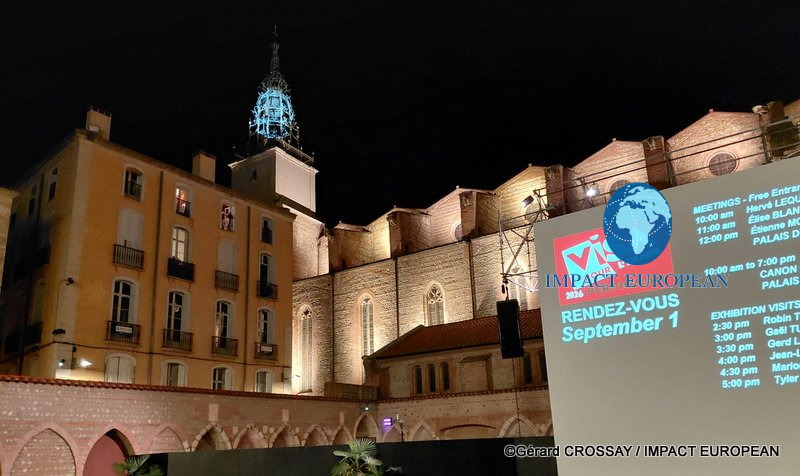
In Perpignan, the 38th edition of Visa pour l’Image is unfolding at a moment of profound change for visual journalism. The international festival opened on August 29 and continues through September 13, bringing together photographers, editors, agencies and audiences around images documenting a rapidly changing world. But this edition has also become a historic turning point. Jean-François Leroy, the festival’s founder and longtime director, died in Paris on August 31 at the age of 69. That evening at Campo Santo, his own portrait appeared on the screen of the festival he had spent nearly four decades building. His death leaves more than an institutional legacy. At a time when artificial intelligence can manufacture convincing images without witnessing anything at all, it raises a fundamental question: what makes a photograph trustworthy?
The world still needs witnesses
A photograph can travel around the planet in seconds.
Its origin may be far more difficult to establish.
This tension has become one of the defining challenges of contemporary visual information.
Images reach audiences through news websites, messaging platforms and social networks, often detached from the circumstances in which they were produced. They can be copied, cropped, altered, relabeled and redistributed long after their original publication.
Generative artificial intelligence introduces another possibility: an apparently photographic representation may depict an event that never occurred before a camera.
Against this technological transformation stands an old principle.
Someone was there.
For photojournalism, physical presence remains fundamental. A photographer witnesses an event at a specific place and time and produces an image connected to that reality.
That relationship between photographer, event and evidence is at the heart of Visa pour l’Image.
And in 2026, it may matter more than ever.
Perpignan brings the photographic record together
Since 1989, Visa pour l’Image has brought international photojournalism to Perpignan.
Its 38th edition opened on August 29, 2026 and runs through September 13.
Twenty-seven exhibitions are announced across the city, open to the public free of charge from 10 a.m. to 8 p.m.
The professional week, running from August 31 to September 5, creates another dimension.
Photographers, agencies, editors and other professionals meet around portfolio reviews, awards, grants and discussions about the profession.
At night, Campo Santo hosts six projection evenings.
Images produced across different countries and circumstances are brought together and shown to an audience.
Wars.
Political upheavals.
Humanitarian crises.
Environmental transformations.
Social change.
Lives documented far from Perpignan become part of a shared visual record.
The festival therefore does more than exhibit photography.
It creates a place where fragments of contemporary history can be examined together.
This year, however, history entered the festival itself.
Jean-François Leroy and a festival built around other people’s images
For almost four decades, Jean-François Leroy was one of the defining figures behind Visa pour l’Image.
He had worked in photography and the photographic press, including at Sipa Press, before launching the festival in Perpignan in 1989, with support that included Roger Thérond.
His position was unusual.
He became widely associated with photography without making his own photographs the center of the institution.
Visa was built to show the work of others.
Over the following decades, the profession changed dramatically.
The economics of newspapers and magazines weakened.
Photographic agencies faced major transformations.
Digital publishing accelerated the circulation of images.
Budgets available for long-term reporting came under pressure.
Social platforms changed how photographs reached audiences.
Yet photographers continued to travel to places where events were happening.
Visa continued to give those images physical space.
Despite serious illness, Leroy remained involved in preparing the 2026 edition. For the first time in the festival’s 38 editions, however, he was unable to attend its opening.
Two days later, on Monday, August 31, Jean-François Leroy died in Paris from cancer.
He was 69.
His death was announced by his family and the Visa pour l’Image team.
The timing was striking.
The professional week had just begun.
The international community he had helped bring together was arriving in Perpignan.
At Campo Santo, the man behind the festival entered the frame
That evening, the relationship between Jean-François Leroy and the images of Visa changed.
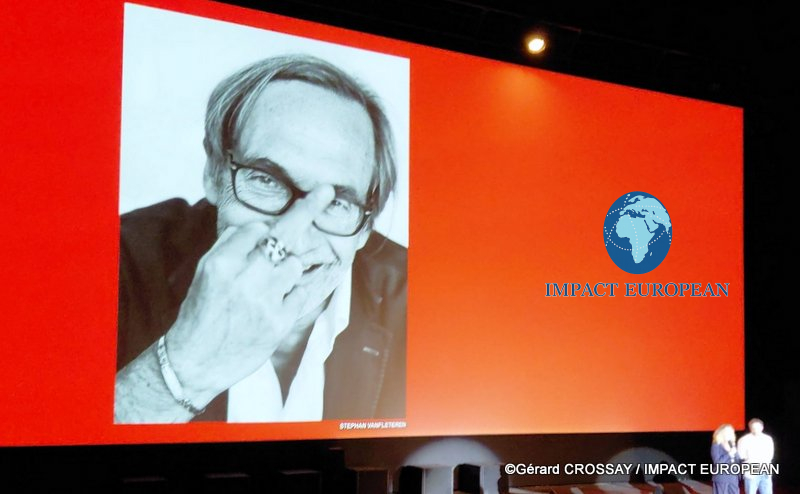
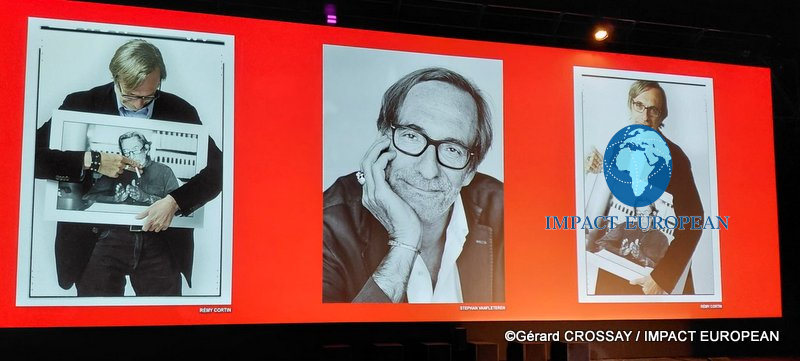
His portraits appeared on the giant screen at Campo Santo.
Among the photographs shown were portraits credited to Stephan Vanfleteren and Rémy Cortin.
The audience applauded.
For decades, Leroy had helped decide which photographs would be brought before an audience in Perpignan.
Now he was inside the image.
It was a simple reversal, but a powerful one.
Photography was doing for the festival’s founder what it has done for countless people and events throughout history: preserving a visible trace after the moment itself had disappeared.
The photographs no longer represented only Jean-François Leroy.
They were becoming part of Visa pour l’Image’s own archive.
The institution dedicated to recording the world had begun recording the loss of the man who created it.
An image can outlive its subject
The evening continued.
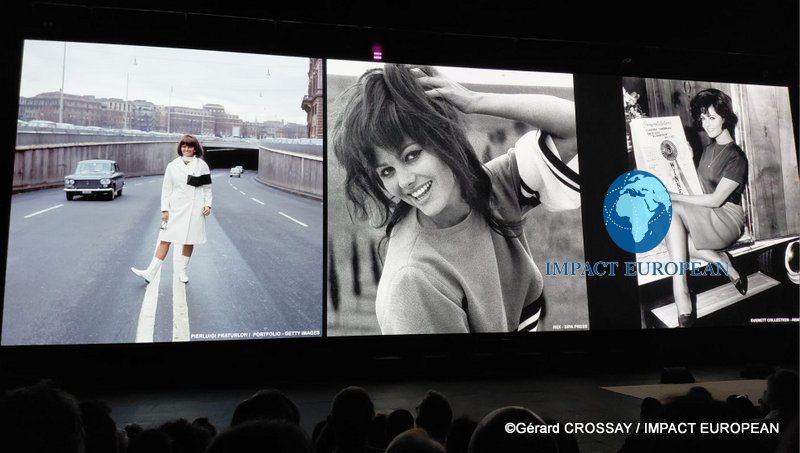
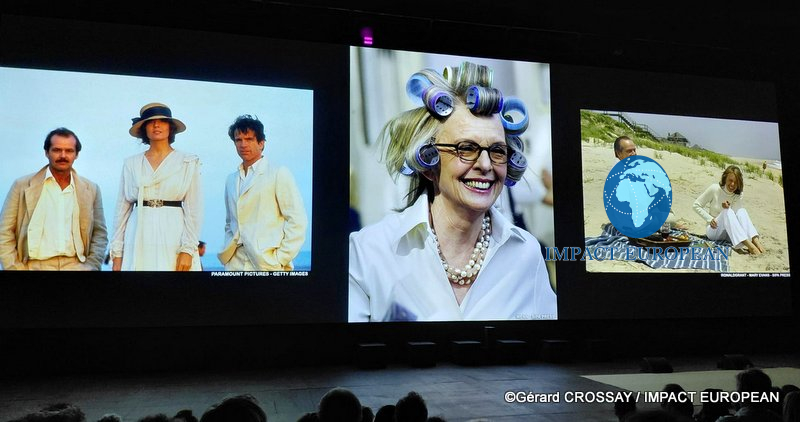
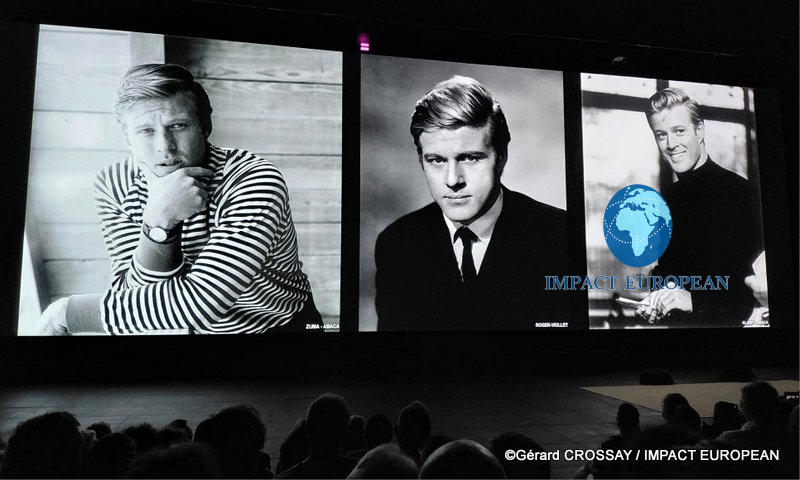
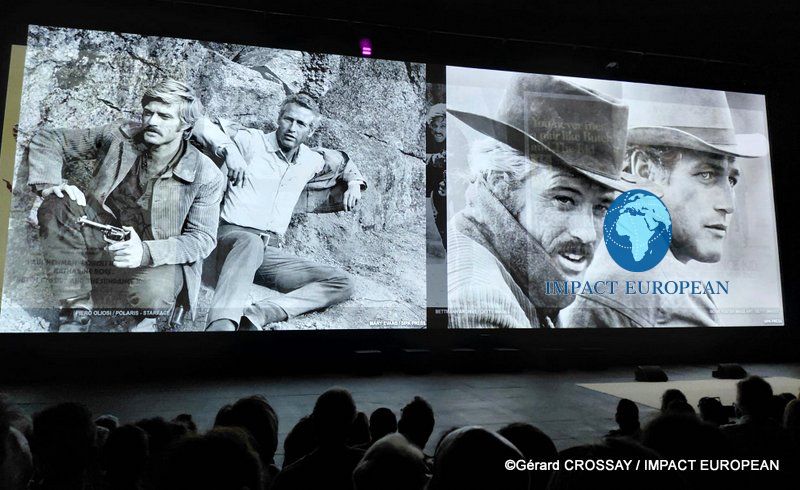
Sequences devoted to Claudia Cardinale and Robert Redford were also projected at Campo Santo.
Portraits, film scenes and archival images carried fragments of individual lives back onto the screen.
Their presence alongside the tribute to Leroy highlighted one of photography’s most enduring characteristics.
A photograph exists in two times.
There is the instant in which it is made.
Then there is everything that happens to it afterward.
A press photograph may initially document breaking news. Years later, the same frame may become historical evidence.
A portrait can become part of the visual memory of a generation.
A photograph of an apparently ordinary moment can acquire significance because the world around it has changed.
This is why archives matter.
But an archive is only as useful as the information that allows future viewers to understand what it contains.
Who made the image?
When?
Where?
Under what circumstances?
What does it actually show?
Those questions are becoming increasingly important.
When a convincing image is no longer necessarily evidence
For most of photographic history, manipulating images required effort.
Today, producing a convincing artificial scene can take moments.
That technological change does not make photography obsolete.
It makes verification more important.
In his editorial for the 38th edition, written before his death, Jean-François Leroy was still addressing the importance of reliable, verified information in an environment increasingly affected by manipulated imagery and artificial intelligence.
The distinction is fundamental.
An image can look real without documenting reality.
Photojournalism therefore cannot rely solely on visual credibility.
Its value also comes from provenance.
A journalist was there.
The location can be identified.
The time can be established.
A caption provides context.
An editor can ask questions about how the image was obtained.
A photographer can account for what happened before and after the frame.
None of this means that photographs are automatically neutral.
Every photographer makes decisions about position, timing and framing.
Journalistic photography has always required interpretation and context.
But there is a decisive difference between interpreting an event that occurred and manufacturing an event that never existed.
The future credibility of visual journalism may increasingly depend on making that distinction visible to the public.
Trust begins before the photograph is published
The debate about artificial intelligence often focuses on technology.
For journalism, the deeper issue is trust.
Audiences do not need only more images.
They need reasons to understand why particular images deserve credibility.
That responsibility extends across the entire chain of publication.
The photographer must work according to journalistic standards.
Captions must accurately identify what is shown.
Editors must preserve context.
Newsrooms must correct errors.
Archives must retain information about origin.
Publishers must distinguish documentary photographs from illustrations or generated material.
In this sense, the future of photojournalism will not be determined solely by cameras.
It will also depend on standards.
A trustworthy photograph is not simply an image that looks believable.
It is an image whose journalistic history can be established.
There can be no photographic memory without photographers
Technology presents only one part of the challenge.
The other is economic.
There can be no documentary archive of tomorrow if photographers cannot afford to document the world today.
Reporting costs money.
Travel costs money.
Equipment, insurance, accommodation, communications and security can cost money.
Long-term projects require something even more difficult to finance: time.
This is why grants, awards, portfolio reviews and professional encounters have significance beyond the festival itself.
They form part of an ecosystem that can help photographic work exist.
The question is not merely whether society values photographs after they become historically important.
It is whether society is prepared to support the work required to produce them before anyone knows which images history will need.
Every archive contains a hidden prerequisite.
Someone first had to go there.
After Leroy, the test is not to preserve the past but to defend the purpose
Jean-François Leroy’s death inevitably raises questions about the future of Visa pour l’Image.
Delphine Lelu, the festival’s general director, has spoken of the significant legacy he leaves and of the need for Visa to continue.
But continuity should not mean freezing an institution in the form it had under its founder.
The stronger question is what must continue.
The exhibitions will change.
The photographers will change.
Technology will change.
The ways audiences encounter images will change.
Even the definition of what looks photographic will continue to change.
The fundamental need, however, remains remarkably stable.
Societies need people capable of going into the world, witnessing events and producing a record that can be examined by others.
On August 31 at Campo Santo, Jean-François Leroy became part of that record himself.
His portrait appeared.
The audience applauded.
Then the screen moved on to other images.
That sequence contains a lesson larger than the tribute.
People disappear.
Events end.
Technology changes.
But the need to establish what happened remains.
In a world where seeing may no longer be enough to believe, the future of photojournalism will depend on something more demanding: proving why an image can be trusted.
©2026 IMPACT EUROPEAN – All rights reserved
Views: 11
More Stories
Paris Motor Show 2026: Global Carmakers Face a New Era of Mobility
Violence Against Women: French Protesters Push Parliament to Preserve Landmark Protection Bill
Paris Pride 2026: From Political Mobilisation to a European Message of Solidarity