

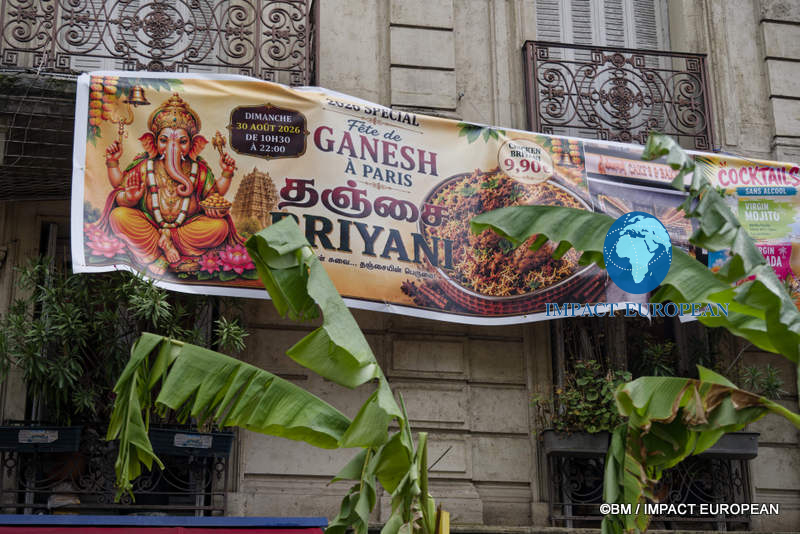
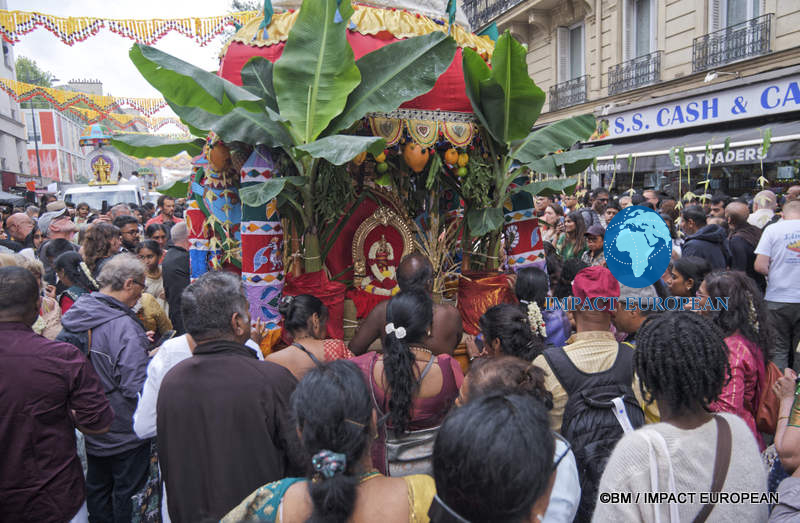
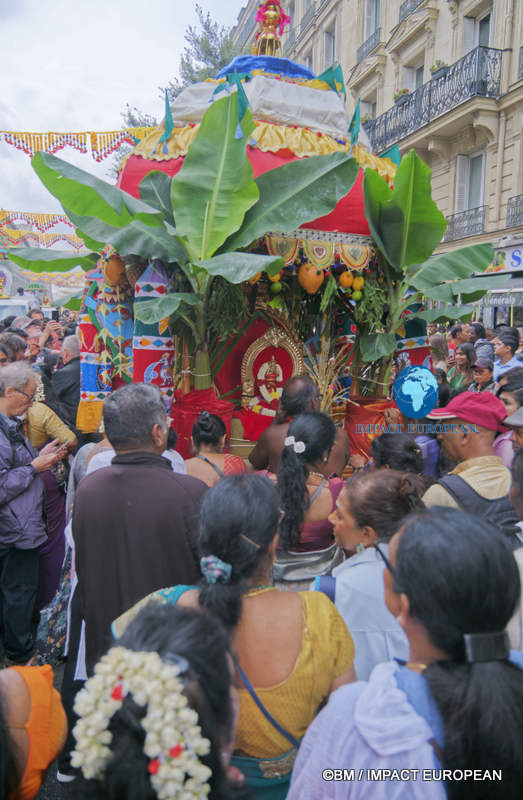
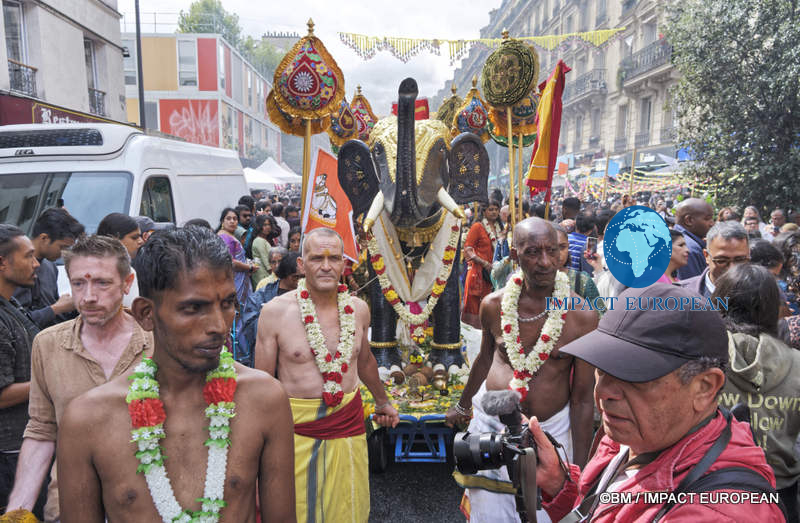
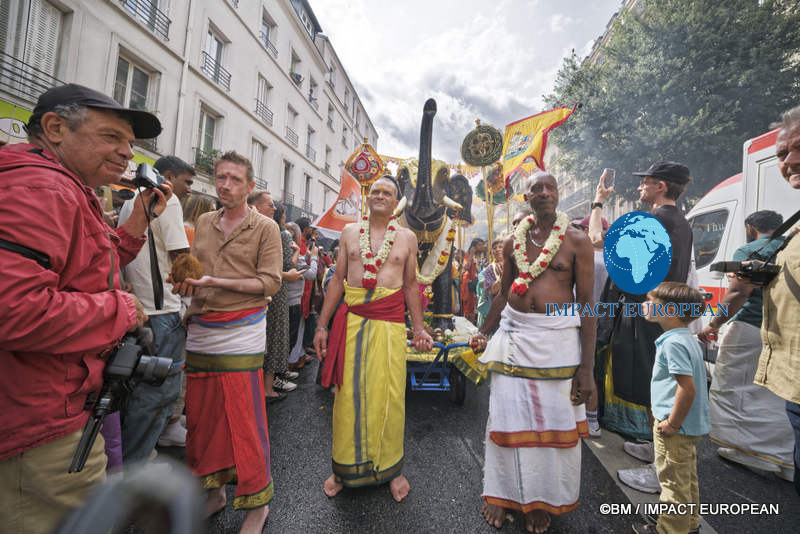
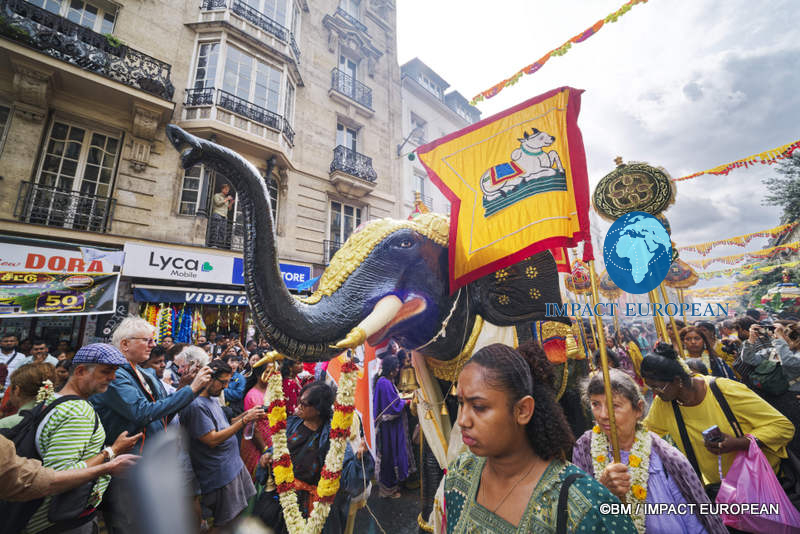
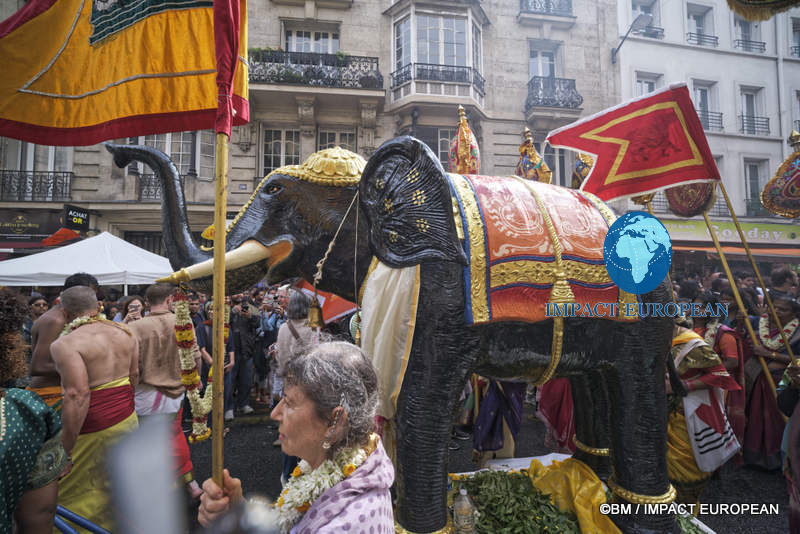
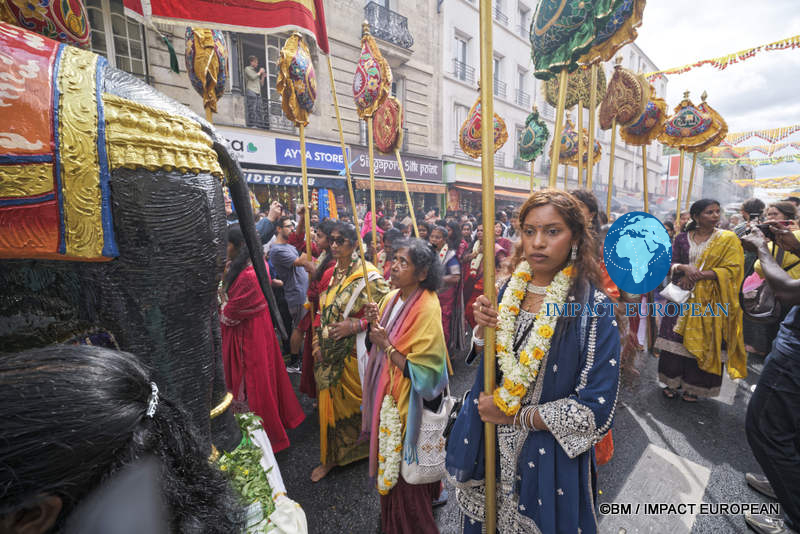
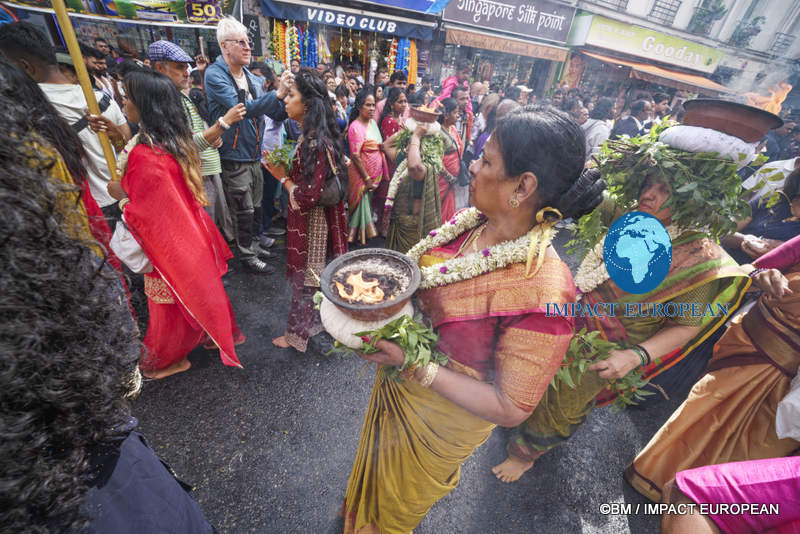
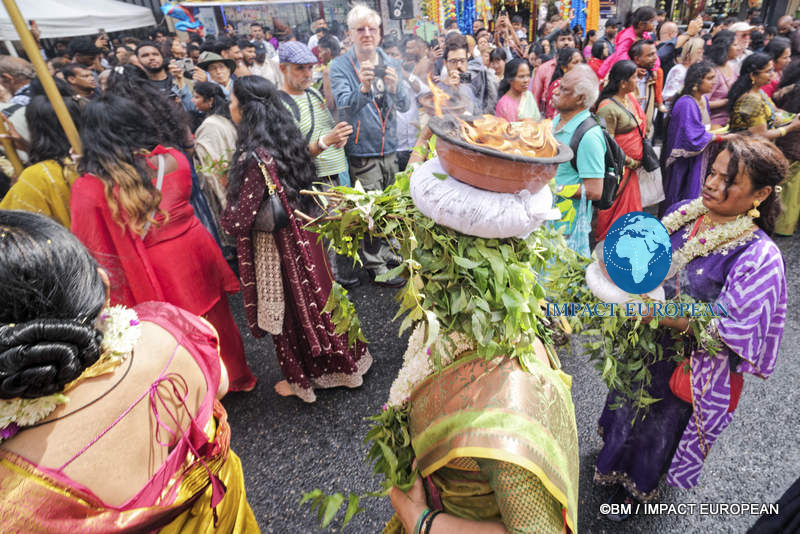
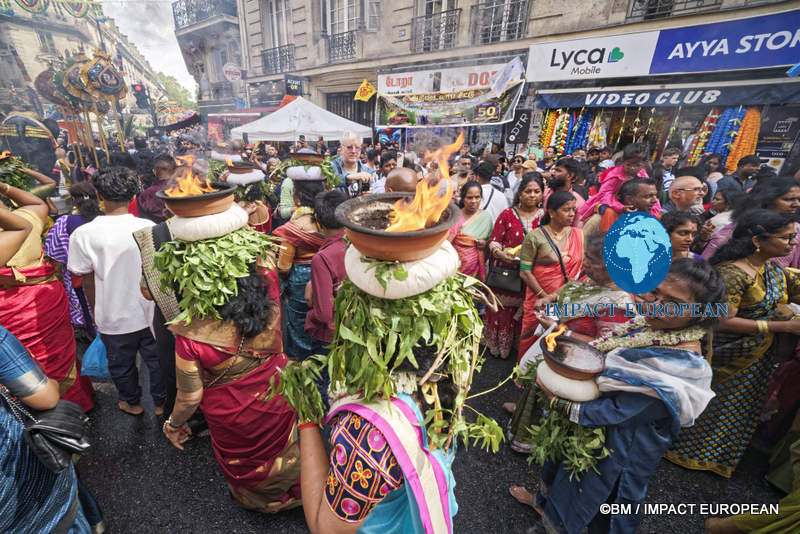
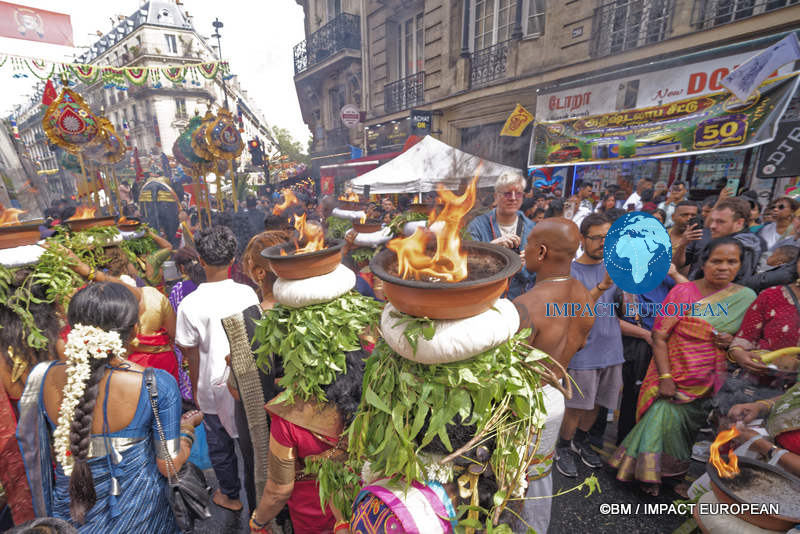
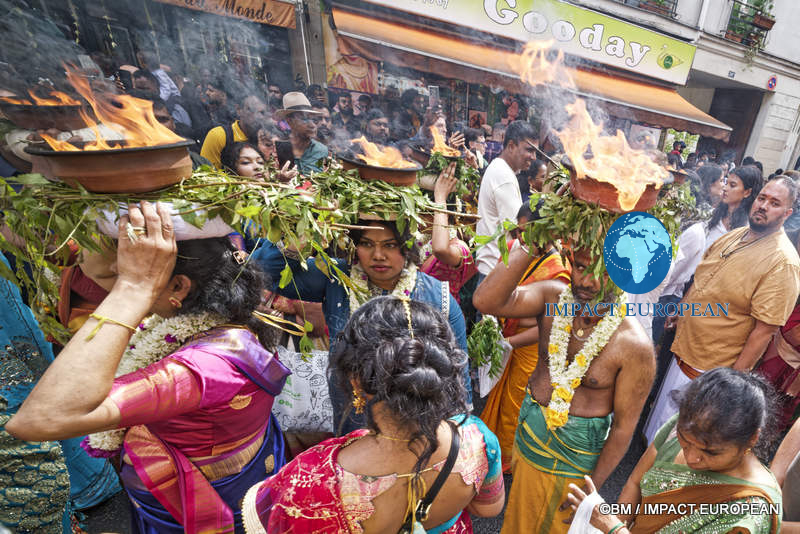
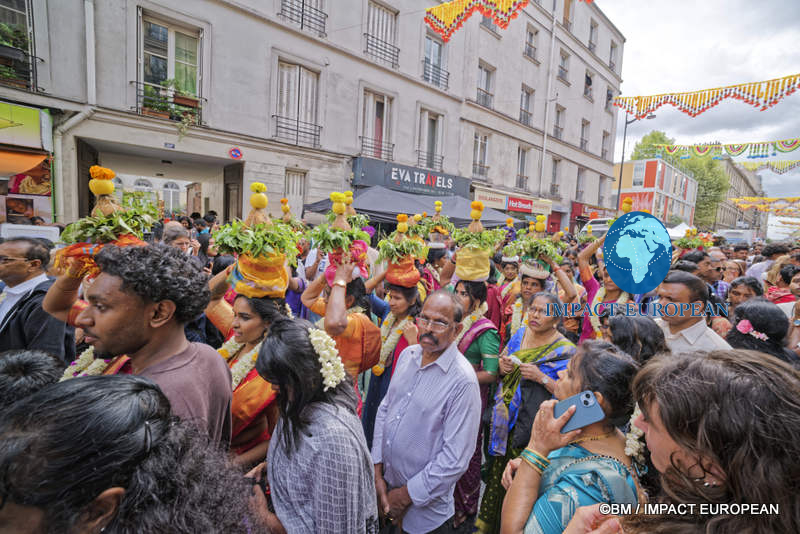
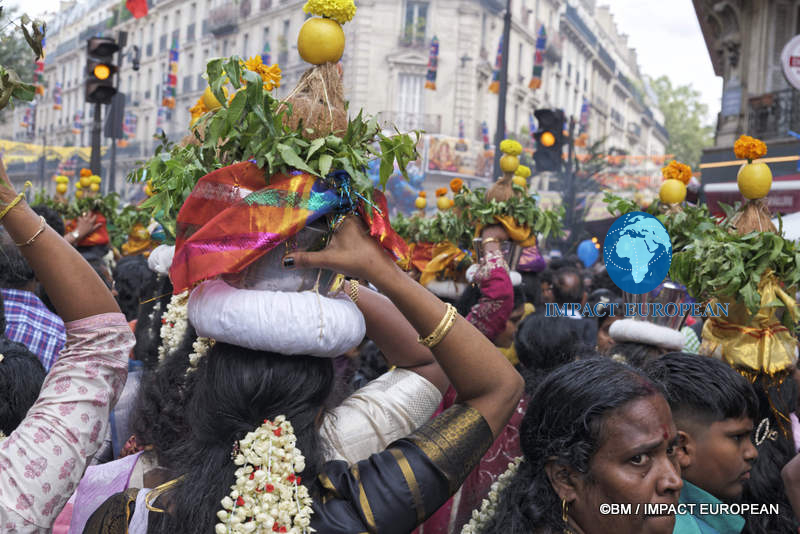
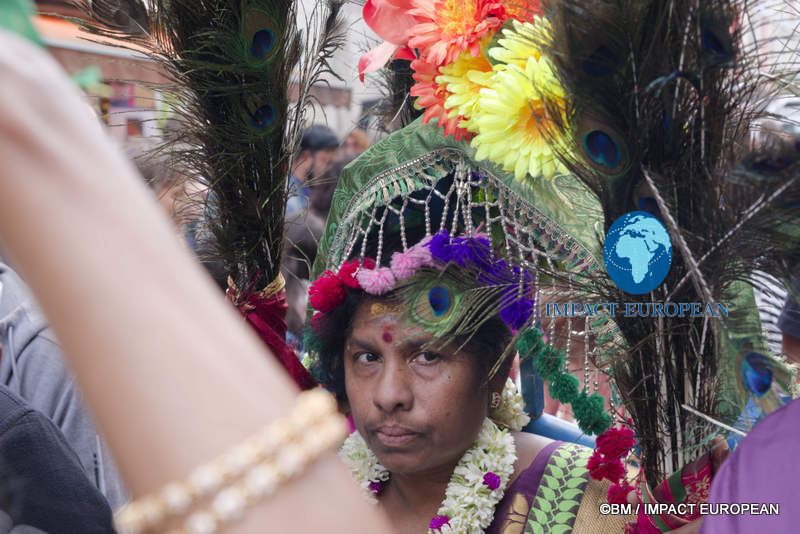
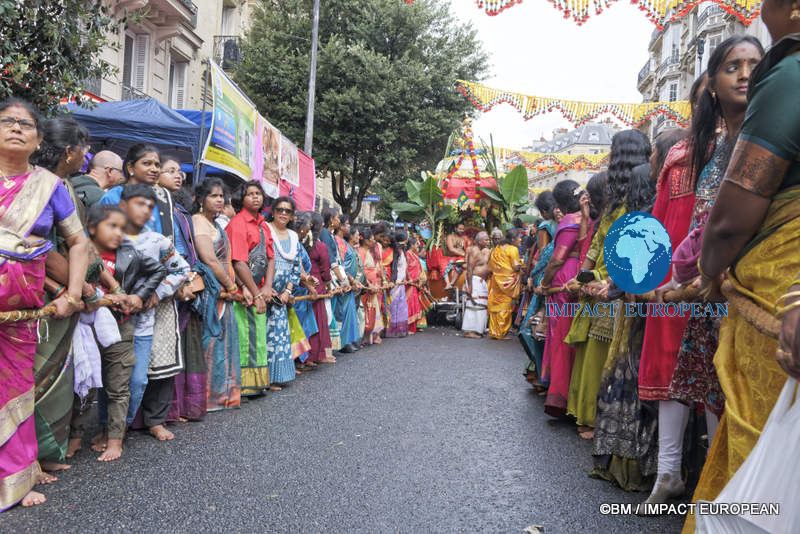
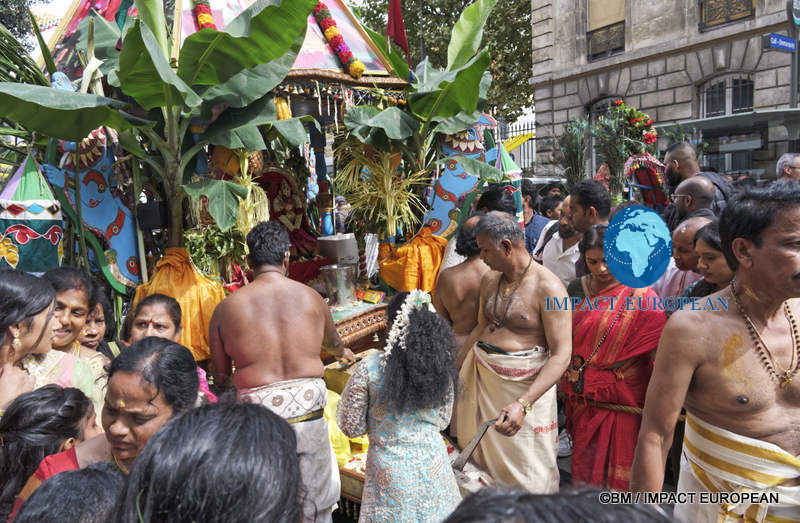
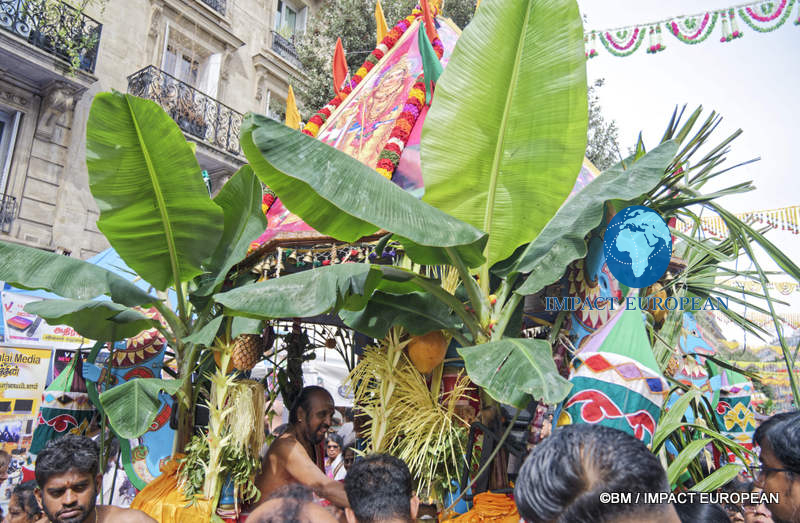
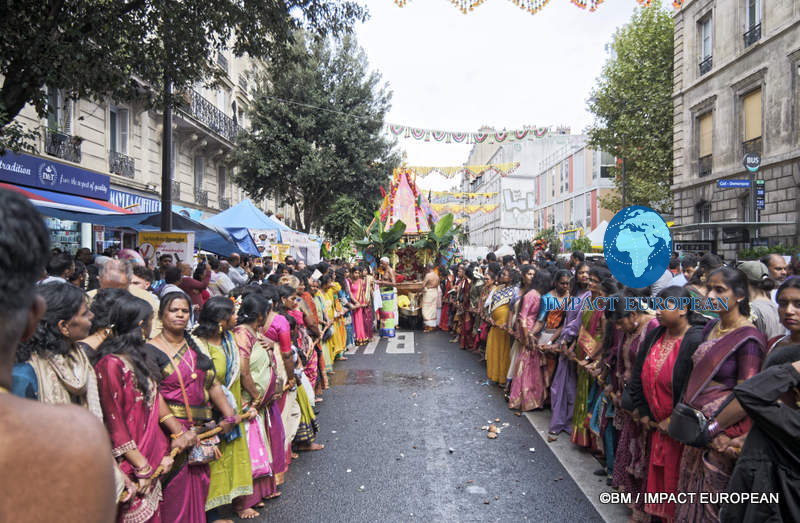
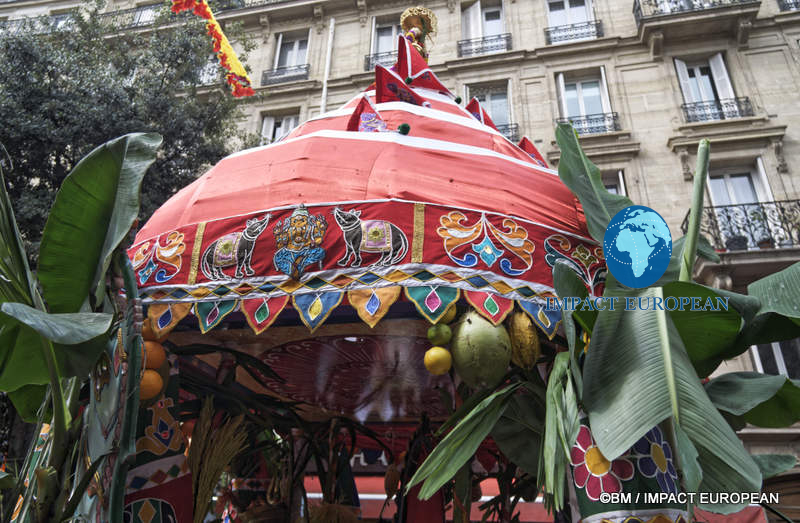
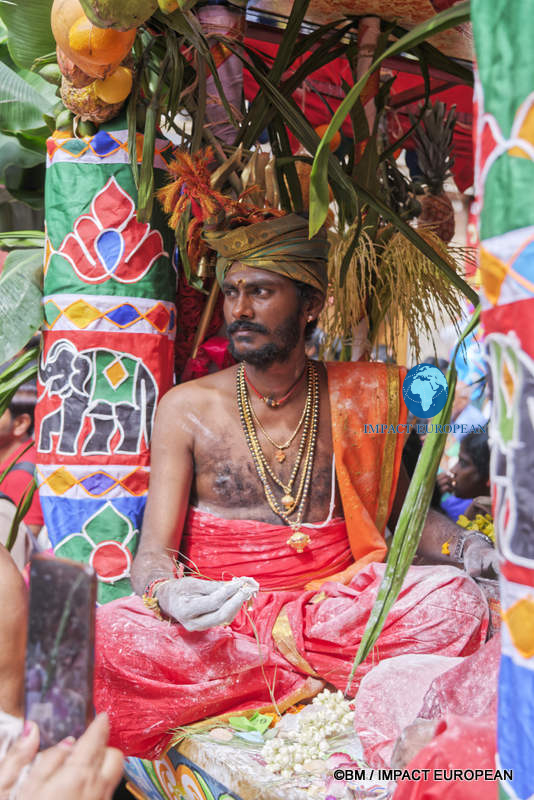
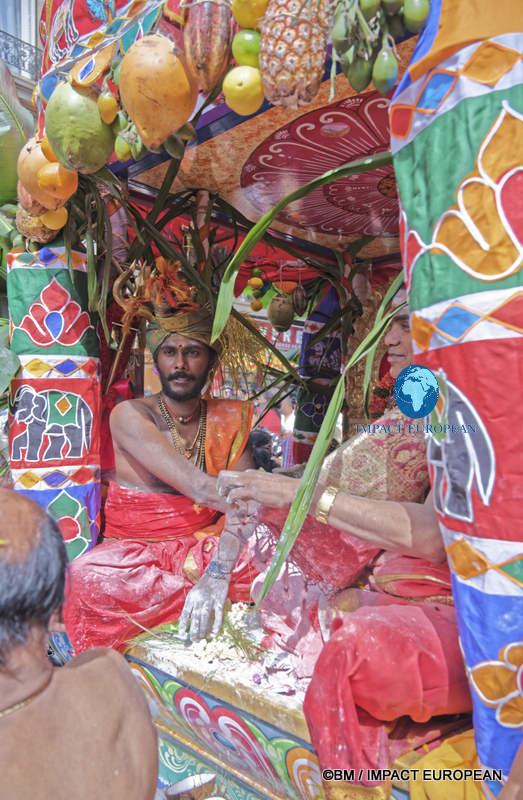
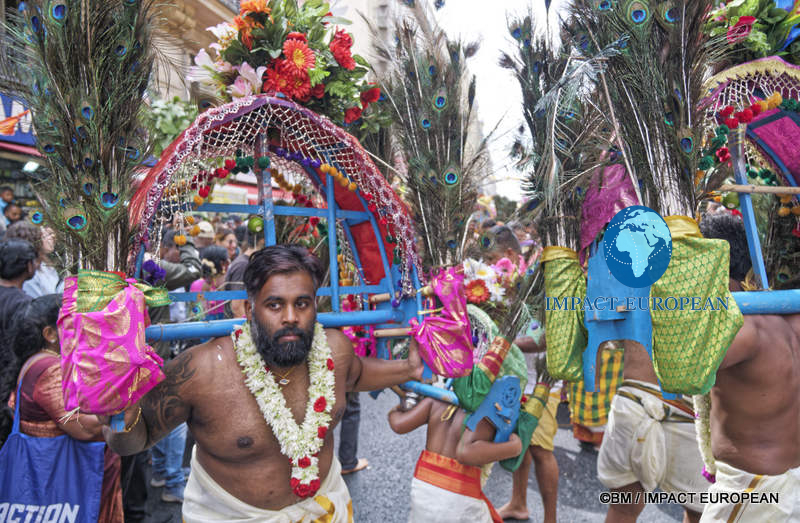
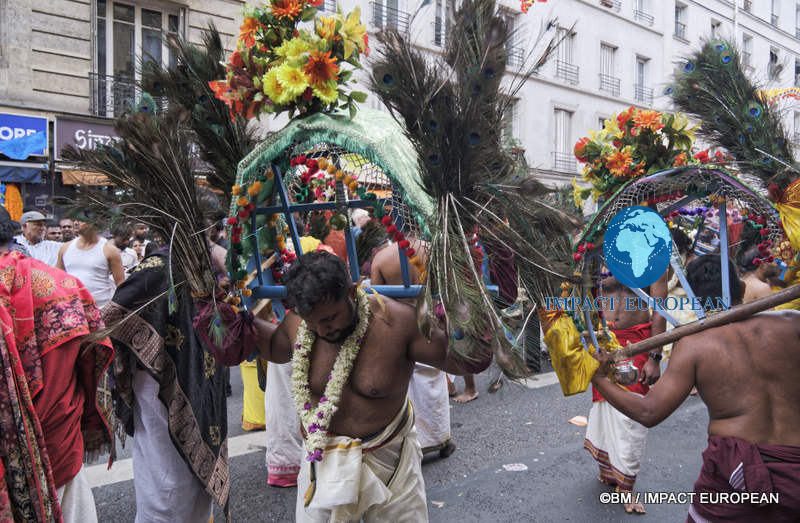
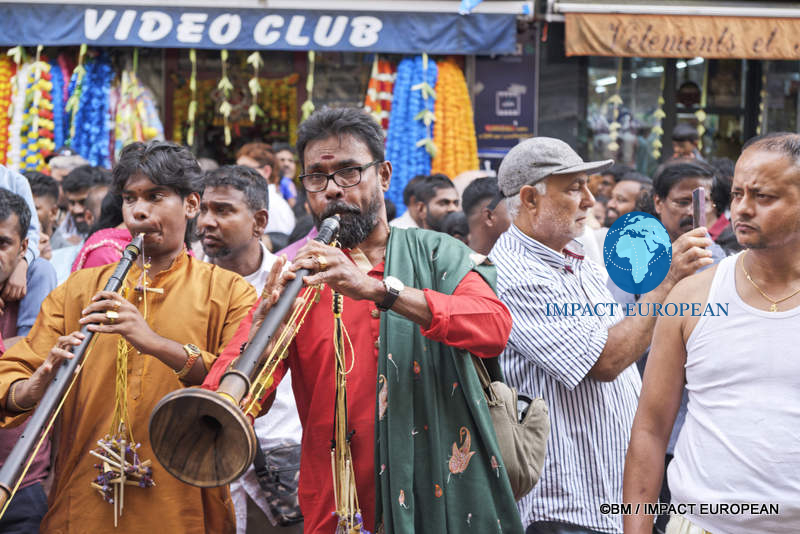
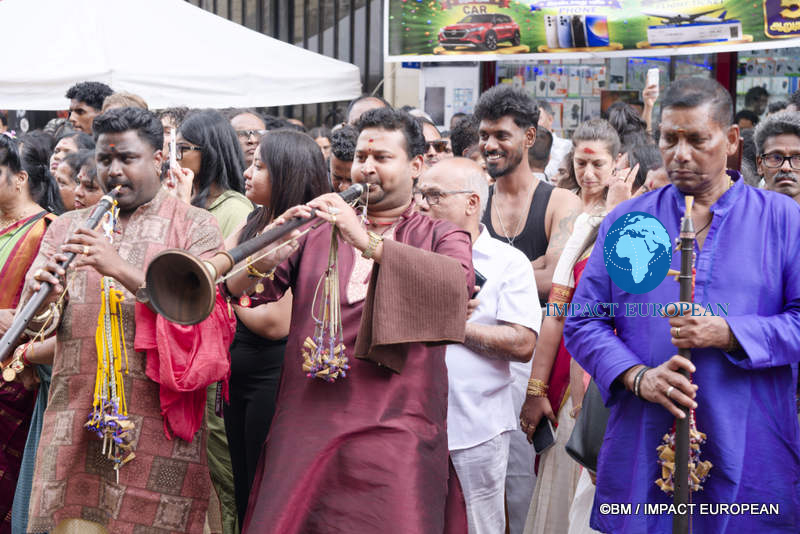
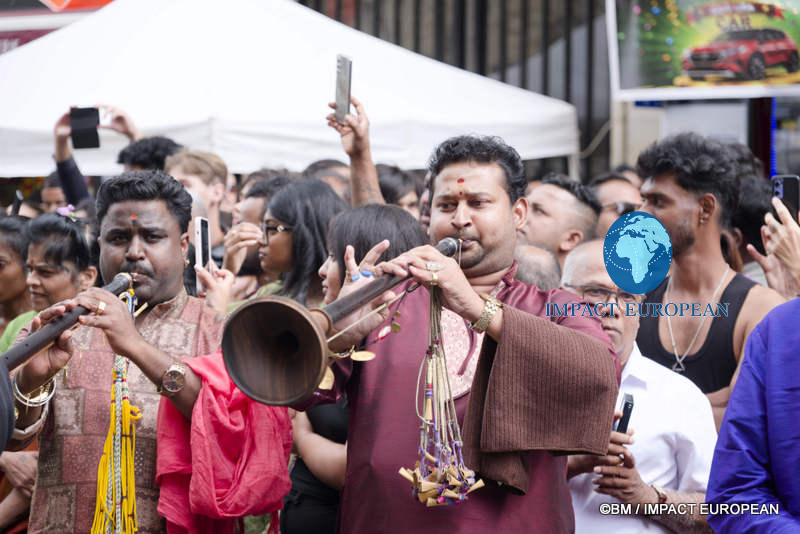
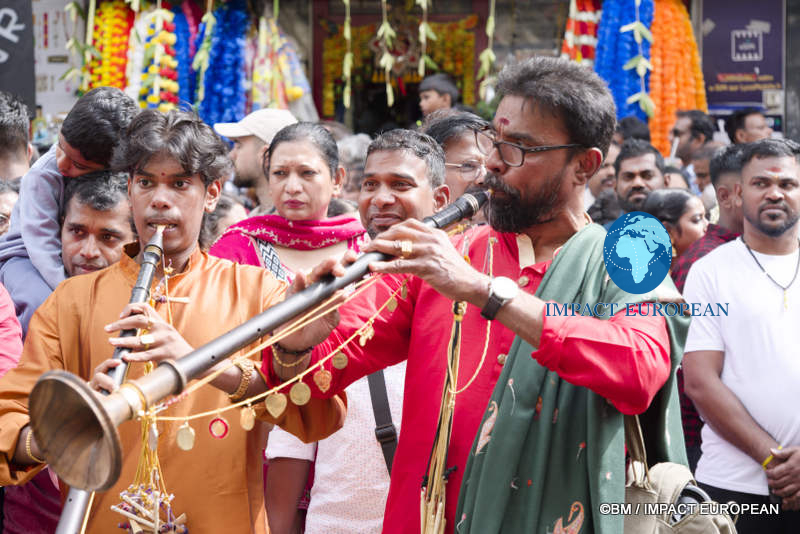
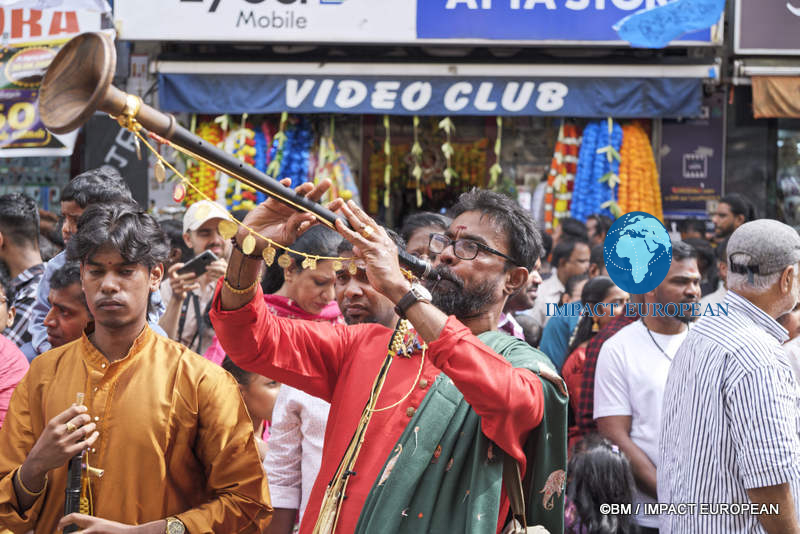
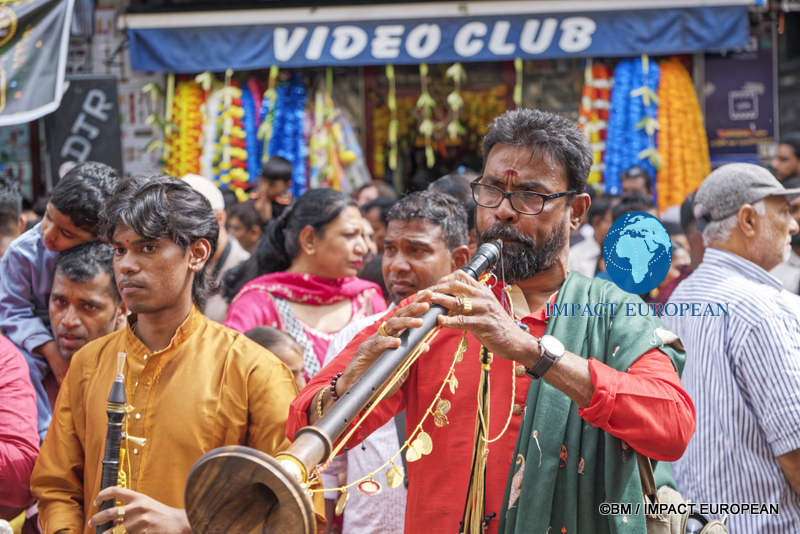
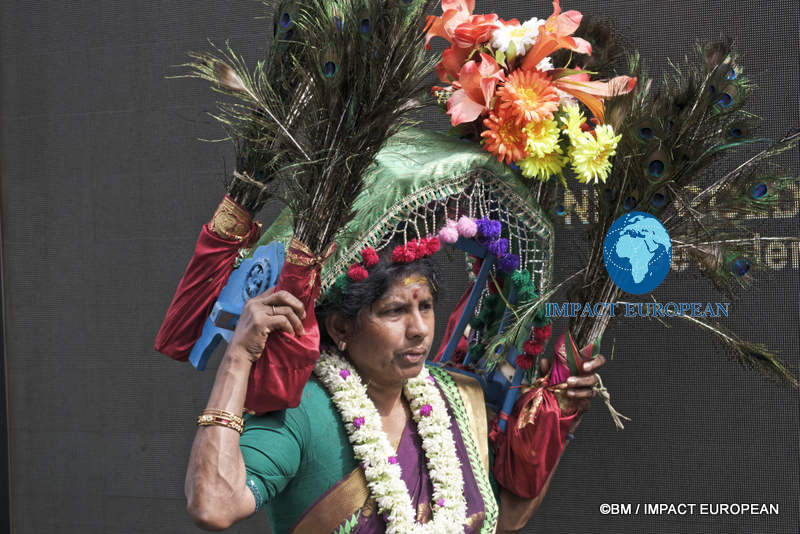
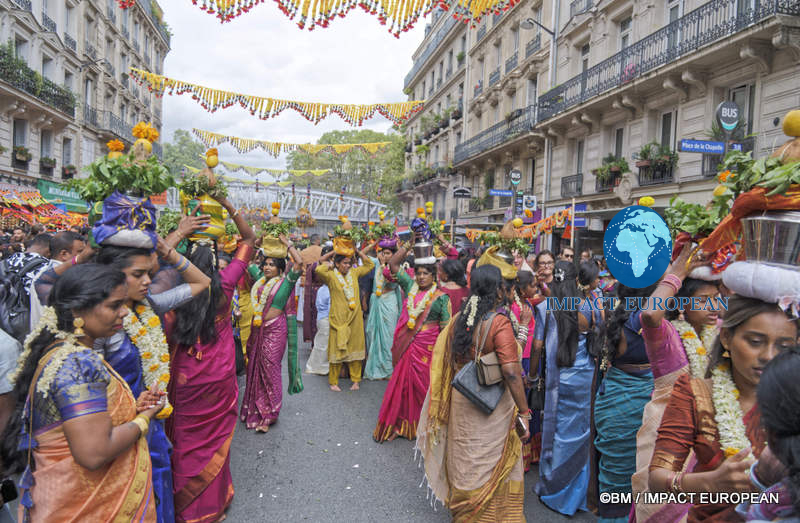
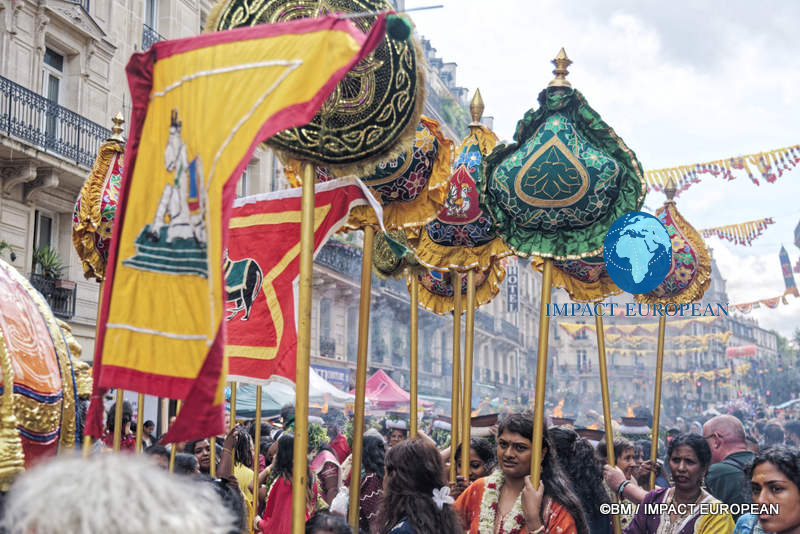
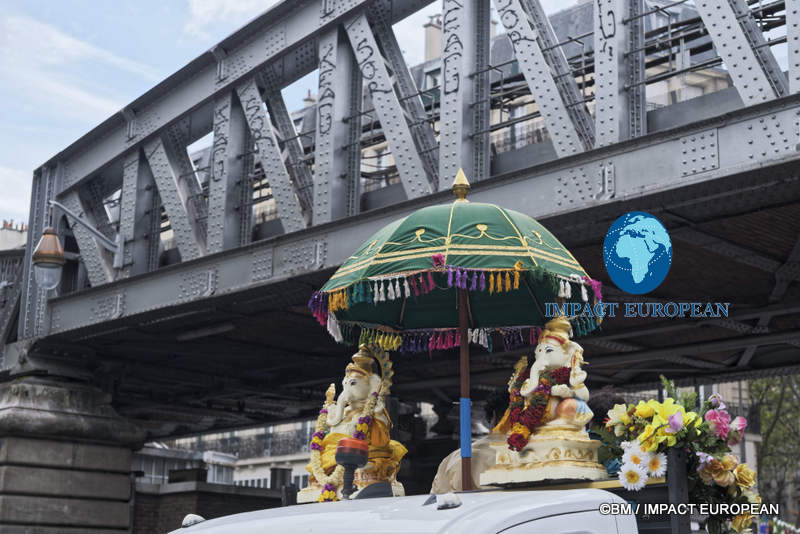
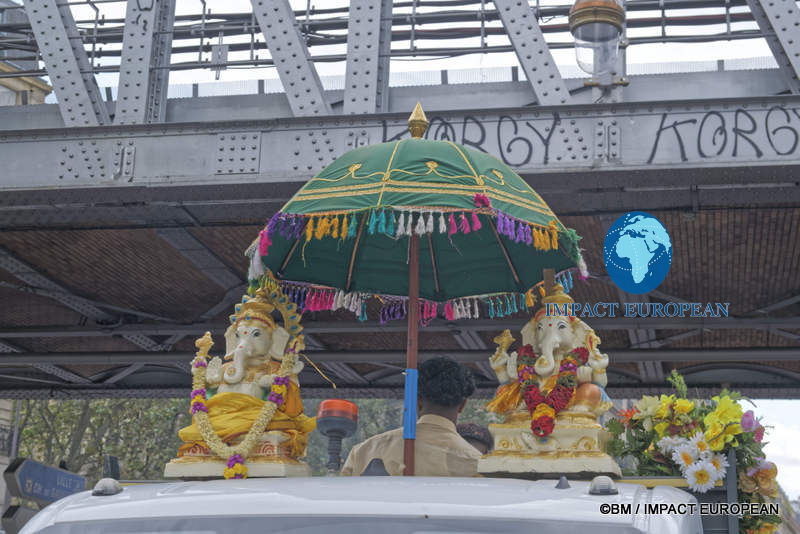
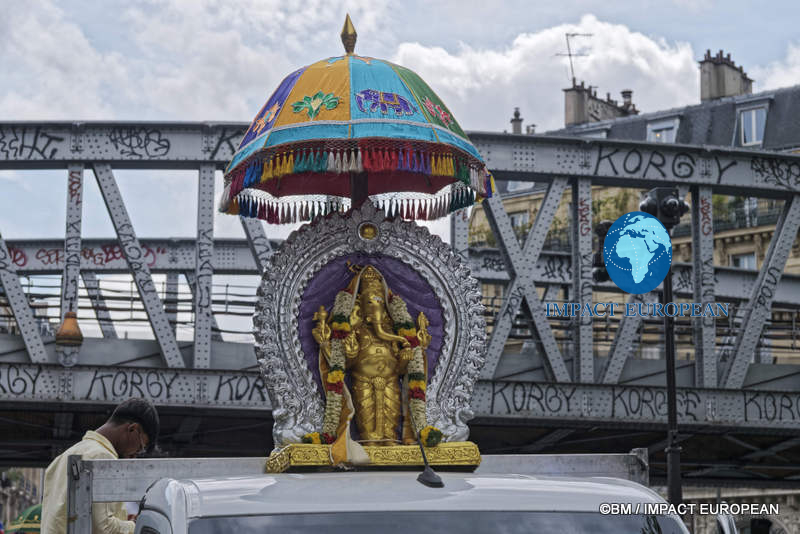
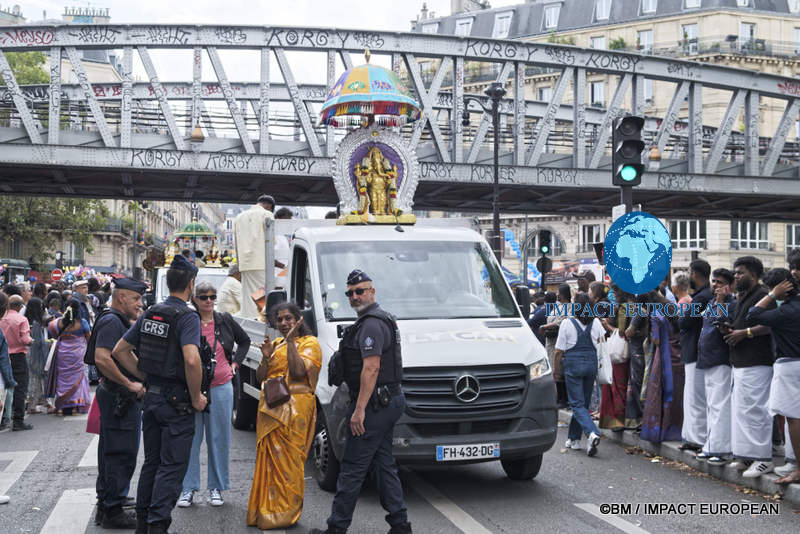
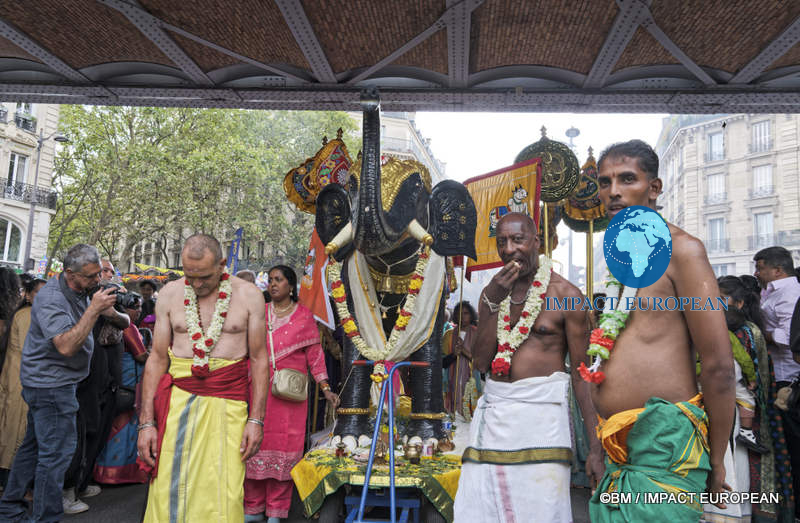
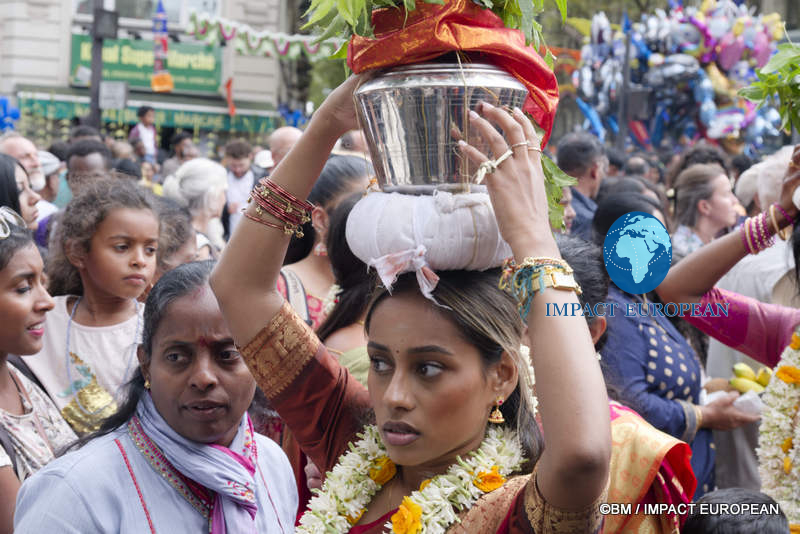
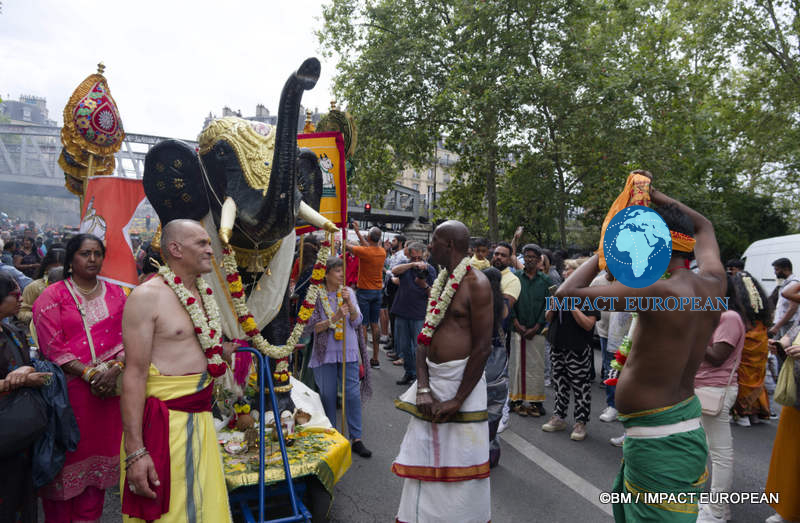
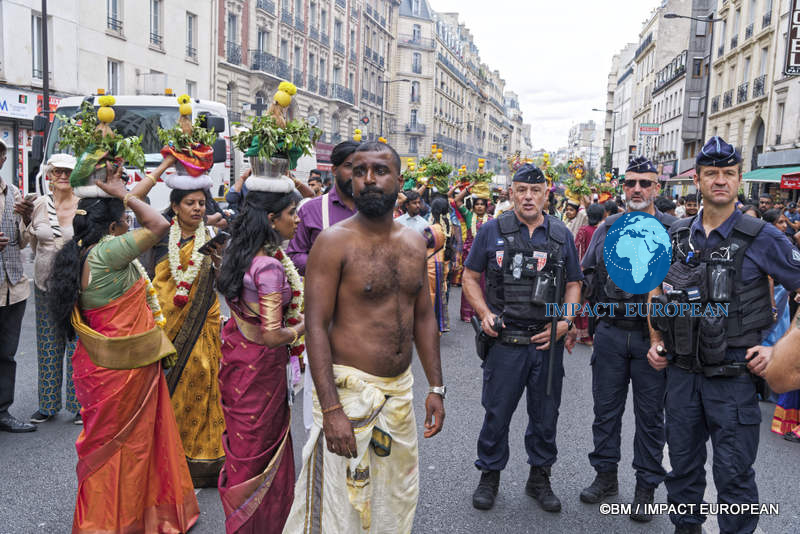
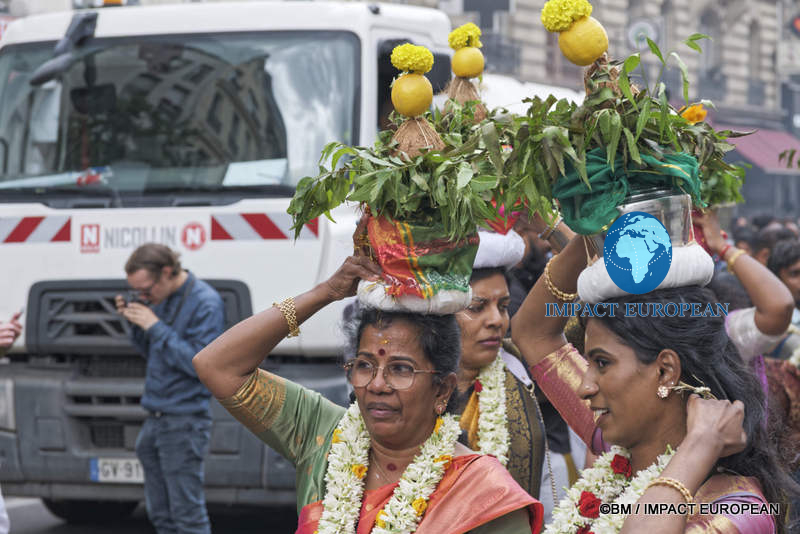
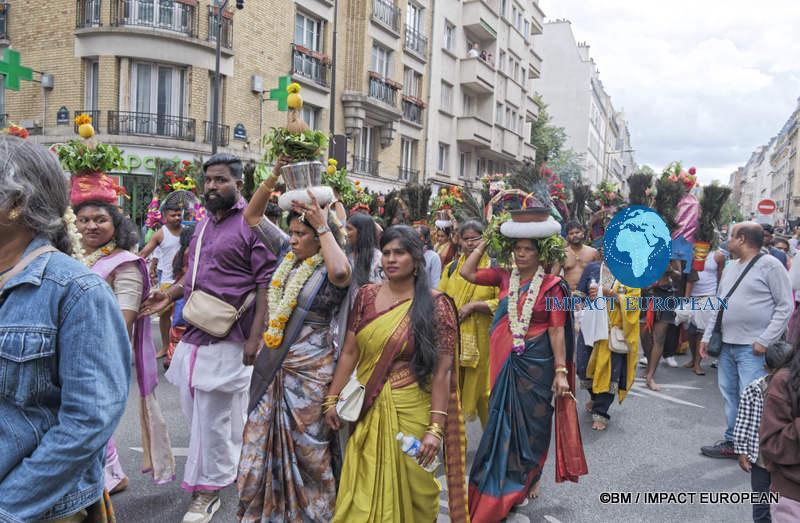
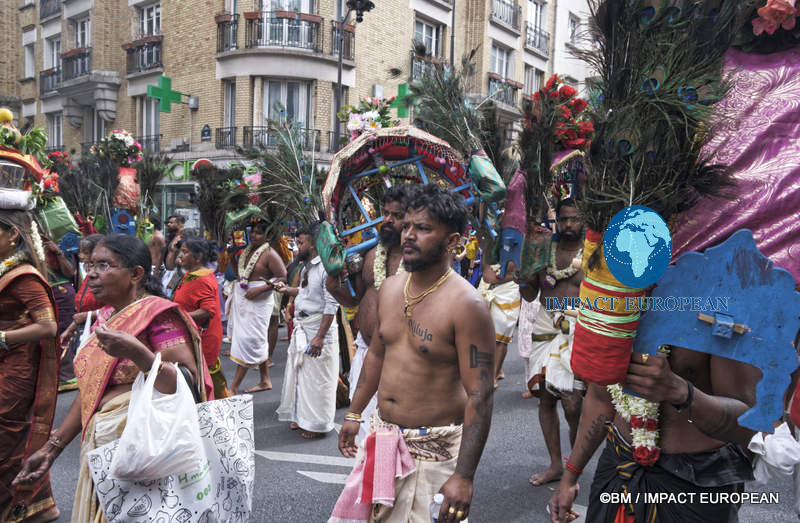
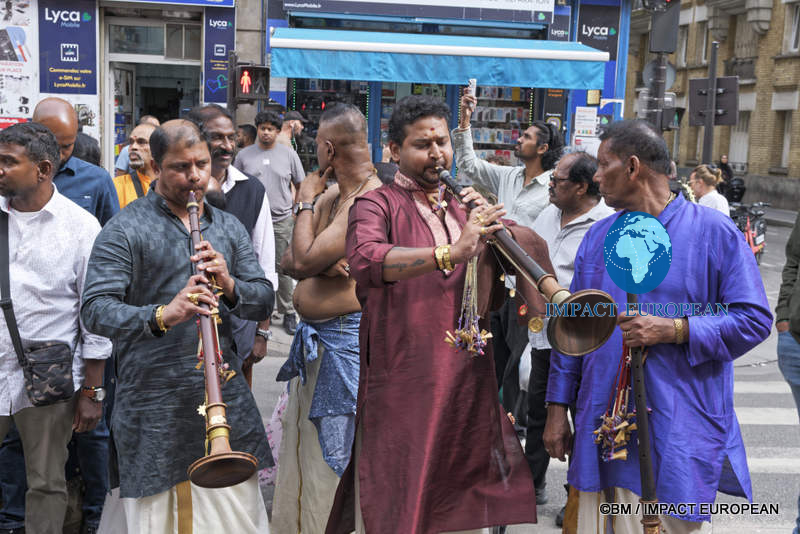
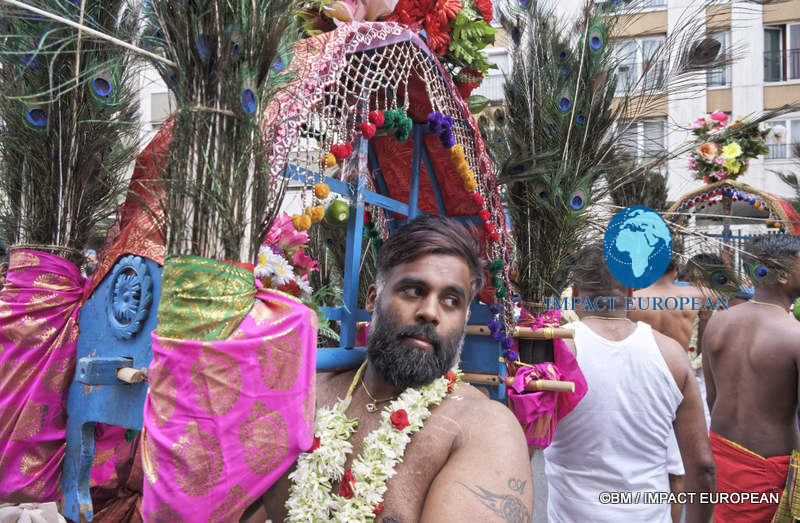
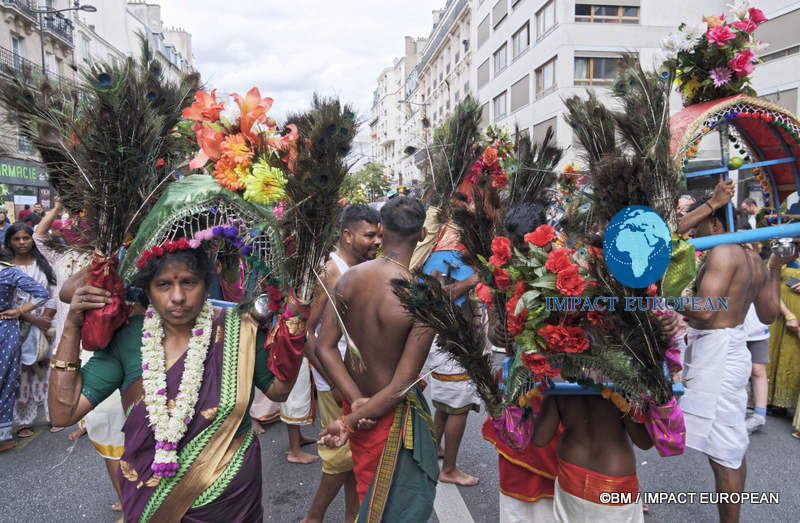
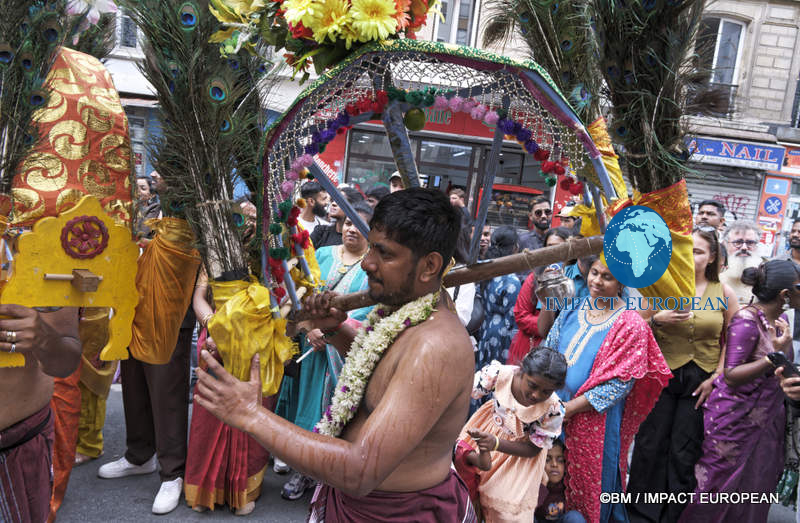
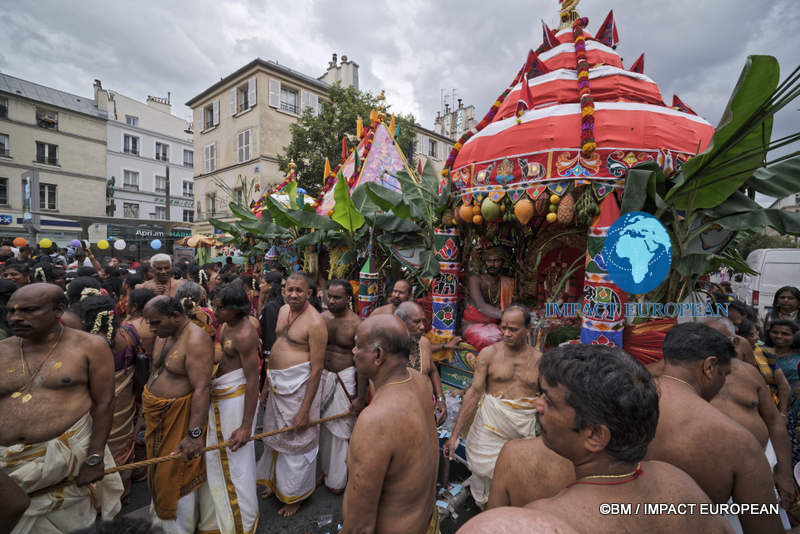
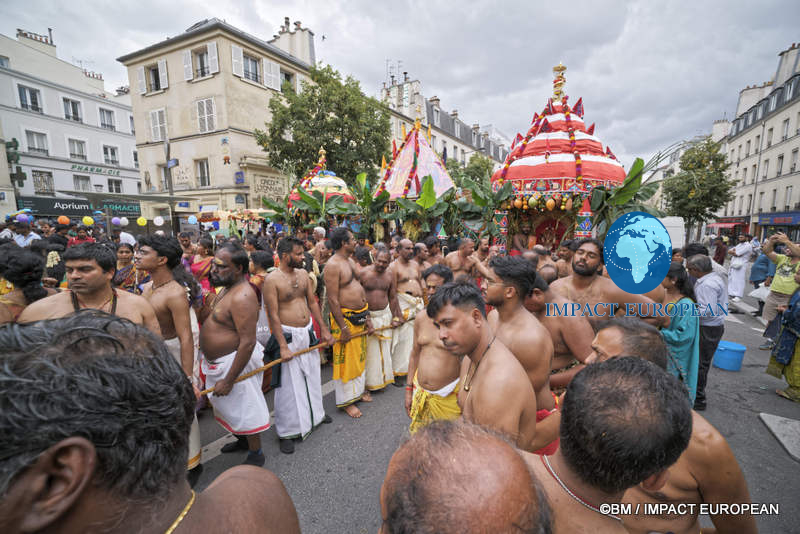
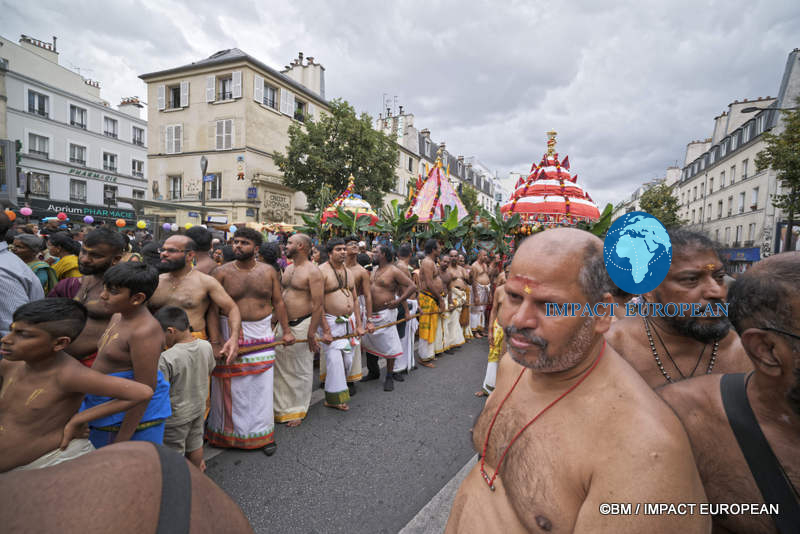
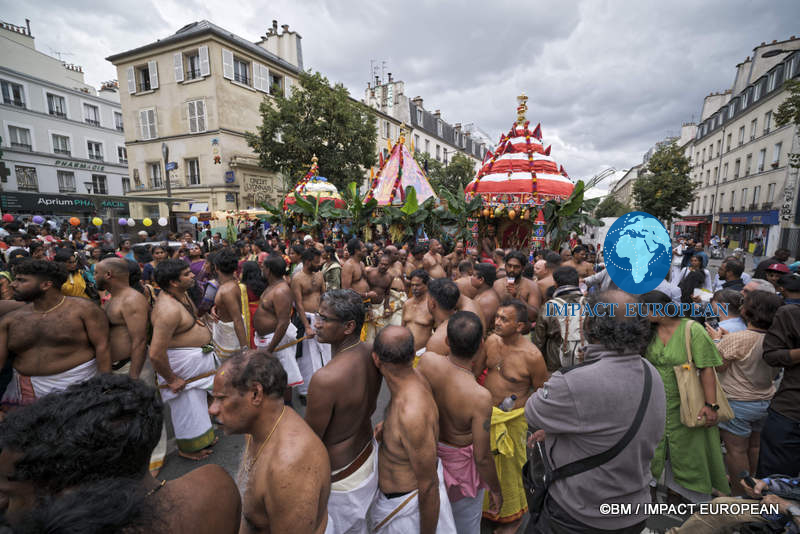
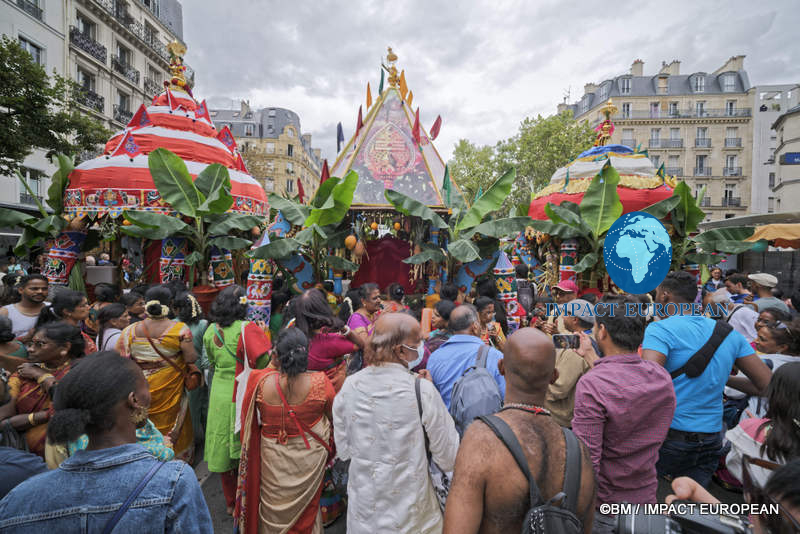
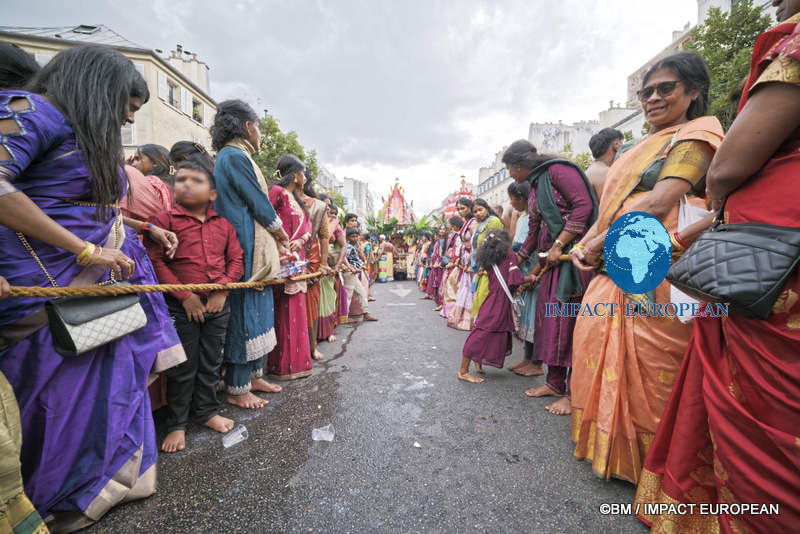
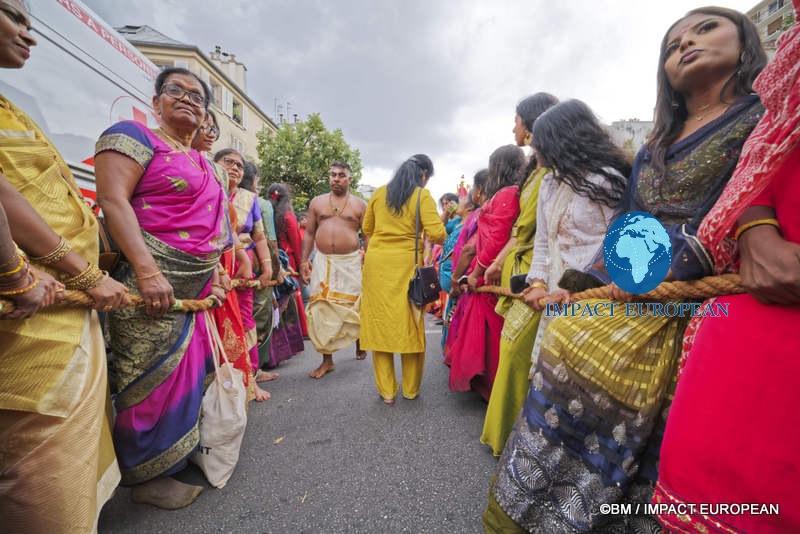
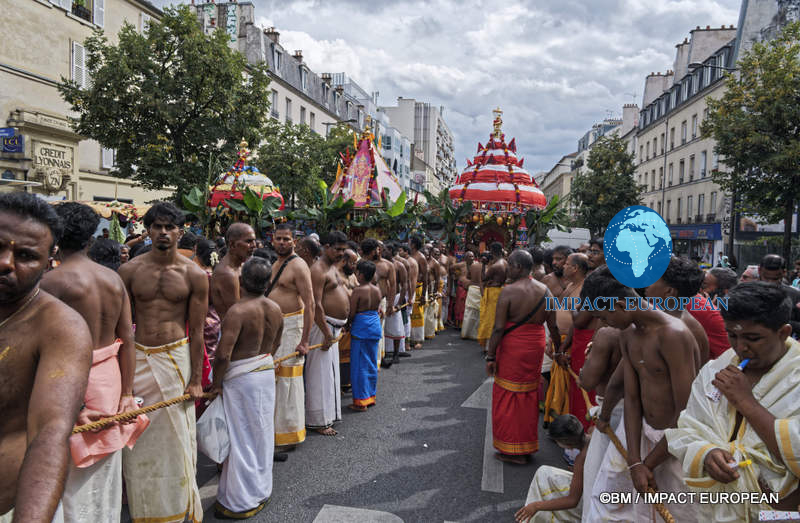
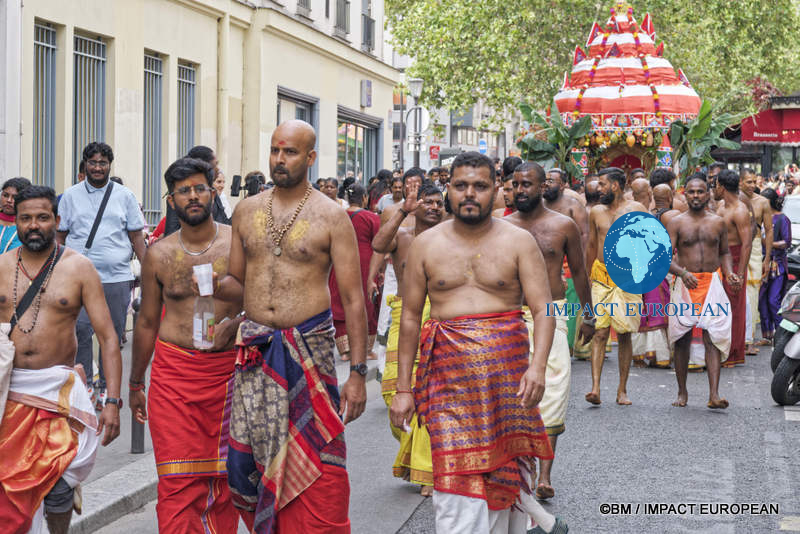
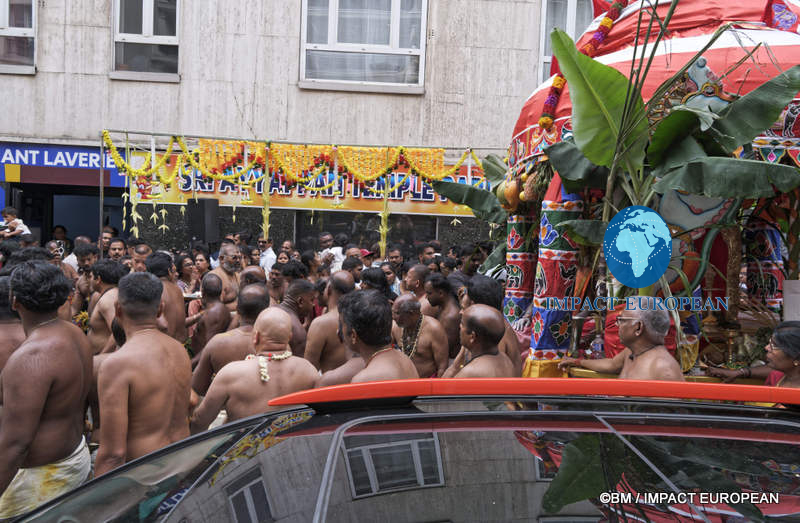
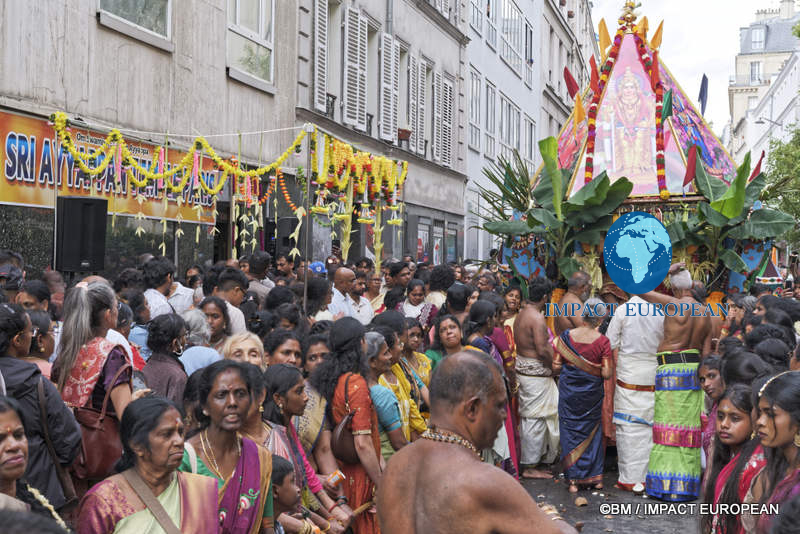
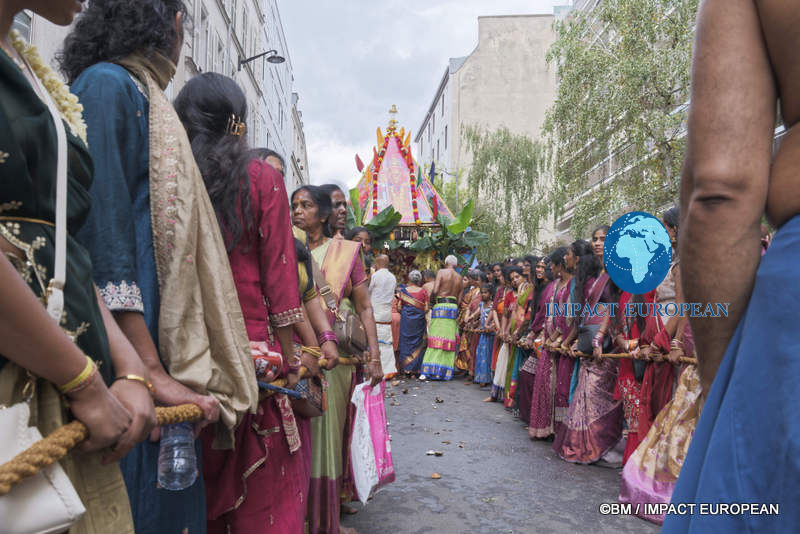
On Sunday, August 30, 2026, the streets of La Chapelle in northern Paris became a place of worship, gathering and transmission for the annual Ganesh festival. From the Sri Manicka Vinayakar Alayam temple on Rue Pajol, worshippers, families, musicians and dancers accompanied the Hindu deity through the neighborhood. Flowers, offerings, prayers and hundreds of coconuts broken along the route revealed something beyond the celebration itself: how a diaspora continues to preserve its traditions while building its life far from its ancestral lands.
On Sunday morning, worship began at 9 a.m. inside the Sri Manicka Vinayakar Alayam, at 17 Rue Pajol in Paris’s 18th arrondissement.
A few hours later, the celebration moved beyond the temple walls.
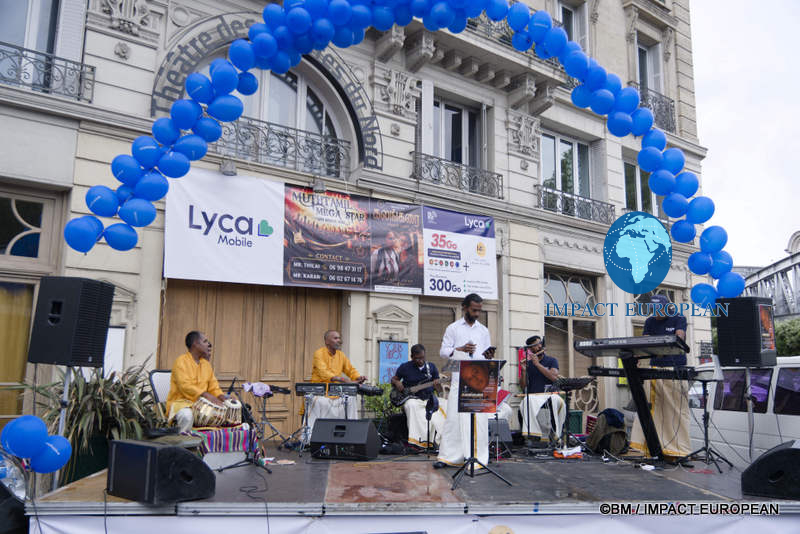
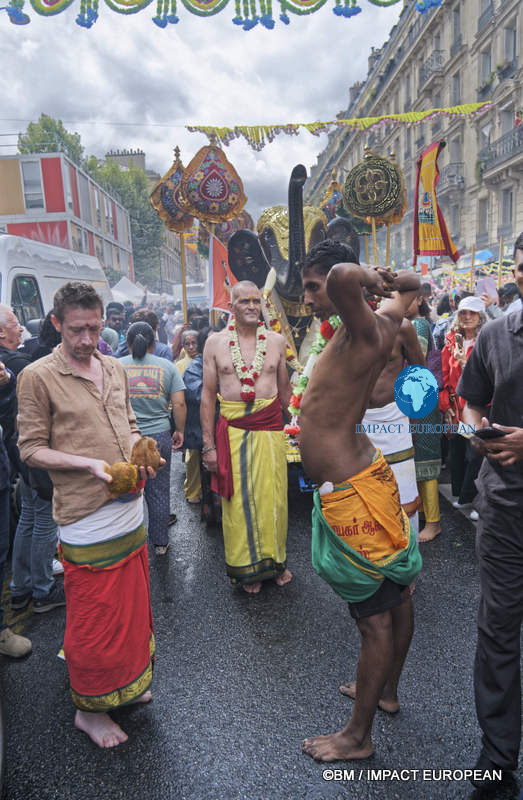
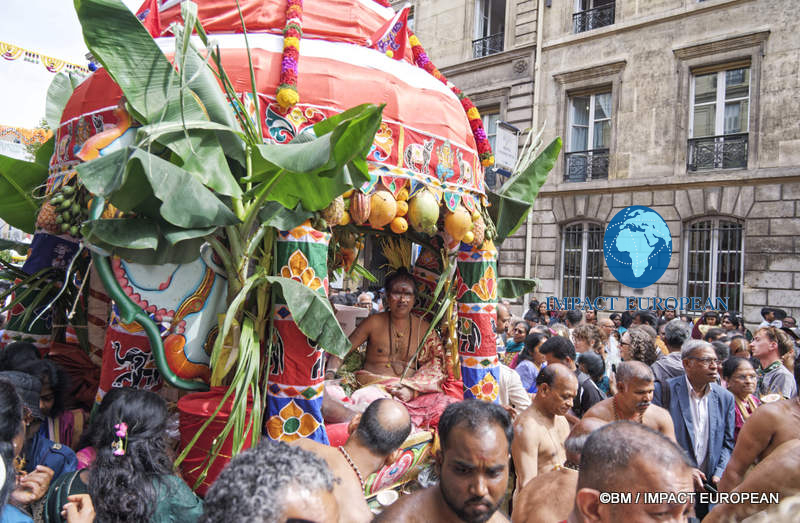
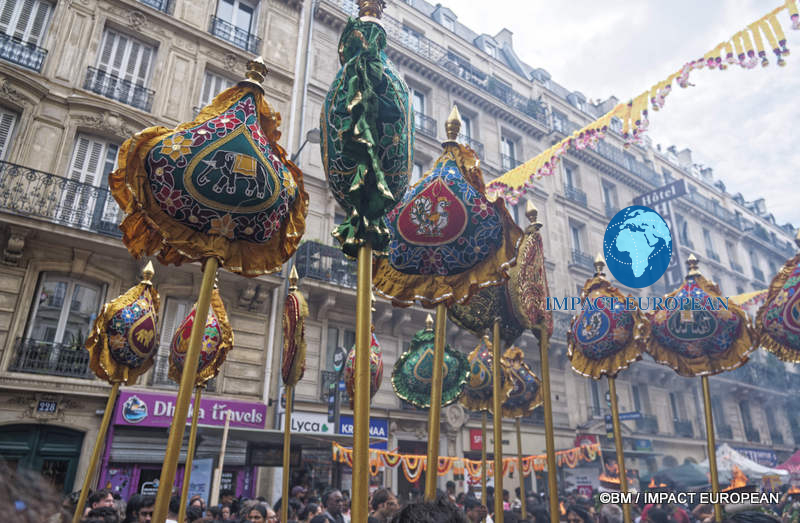
From 10:30 a.m., Ganesh was accompanied through La Chapelle by worshippers, families, musicians and dancers. The procession moved through streets including Rue Perdonnet, Rue du Faubourg-Saint-Denis, Avenue Marx-Dormoy, Rue Ordener and Boulevard Barbès, crossing parts of Paris’s 18th and 10th arrondissements before ending around 3 p.m.
For several hours, a religious tradition rooted thousands of kilometers away became part of the streetscape of contemporary Paris.
But what happened in La Chapelle was not simply a religious procession. It was also the visible expression of a community history shaped by migration, displacement and the determination to pass traditions from one generation to another.
Ganesh, the Deity of Beginnings
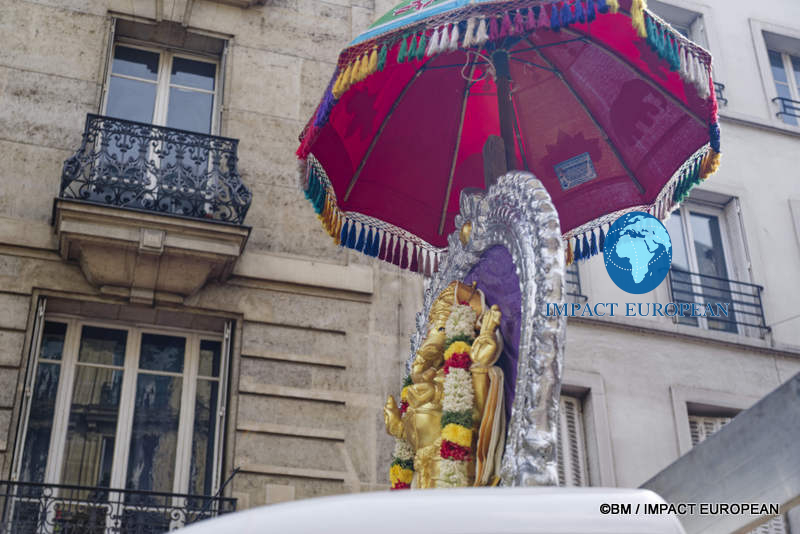
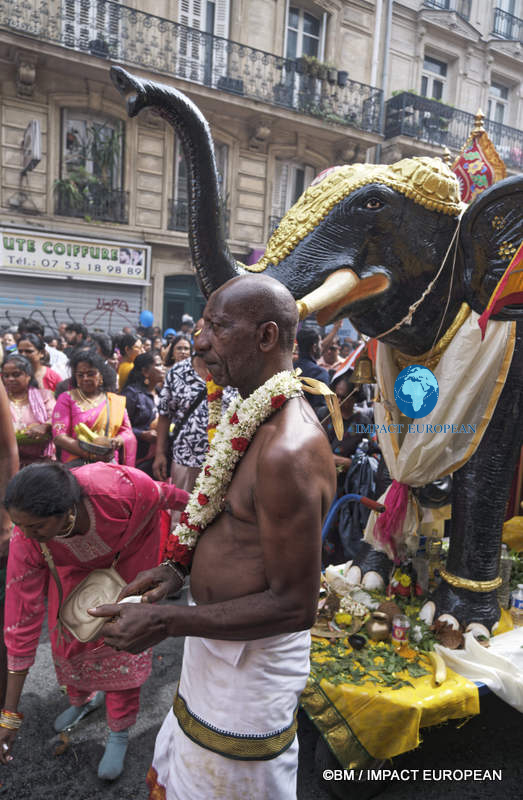
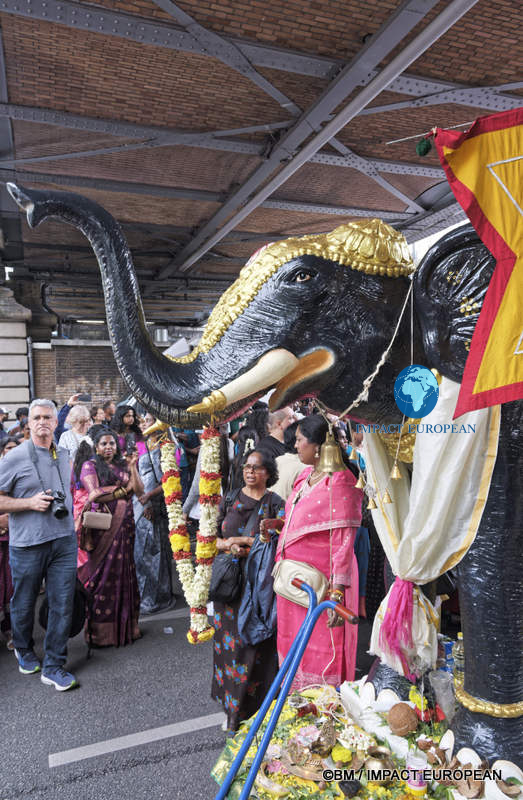
With his elephant head, Ganesh is one of the most immediately recognizable deities in Hinduism.
He is associated with wisdom, new beginnings and the removal of obstacles, and is traditionally invoked before important undertakings and transitions in life.
Several Hindu traditions recount the origins of his elephant head. In one of the best-known narratives, the goddess Parvati creates Ganesh and asks him to guard her entrance. When Shiva attempts to enter, the boy does not recognize him and refuses to let him pass.
In anger, Shiva beheads him.
Faced with Parvati’s grief, Shiva restores the child to life with the head of an elephant.
The physical representation of Ganesh also carries layers of symbolism. His large ears are commonly associated with listening and wisdom. His broken tusk is connected, in another tradition, with knowledge and the Mahabharata, for which Ganesh is traditionally associated with the act of writing.
In Paris, however, the meaning of the celebration is expressed not only through mythology but through gestures repeated by worshippers.
Hundreds of Coconuts Broken in the Streets
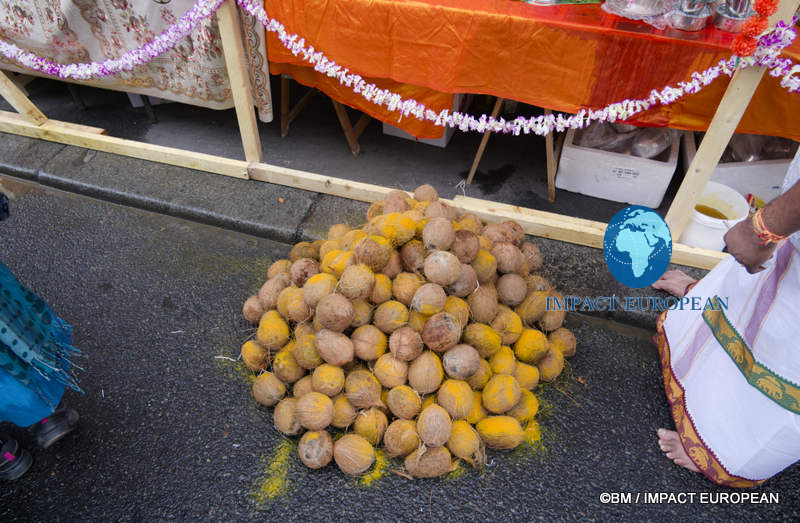
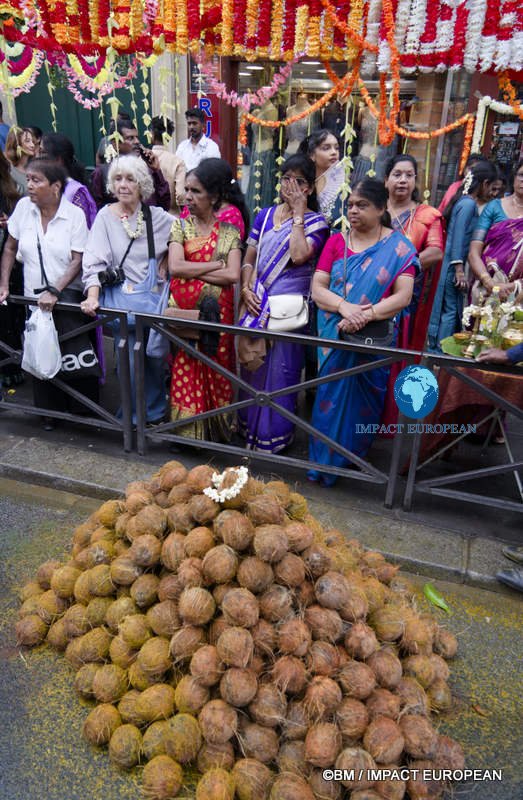
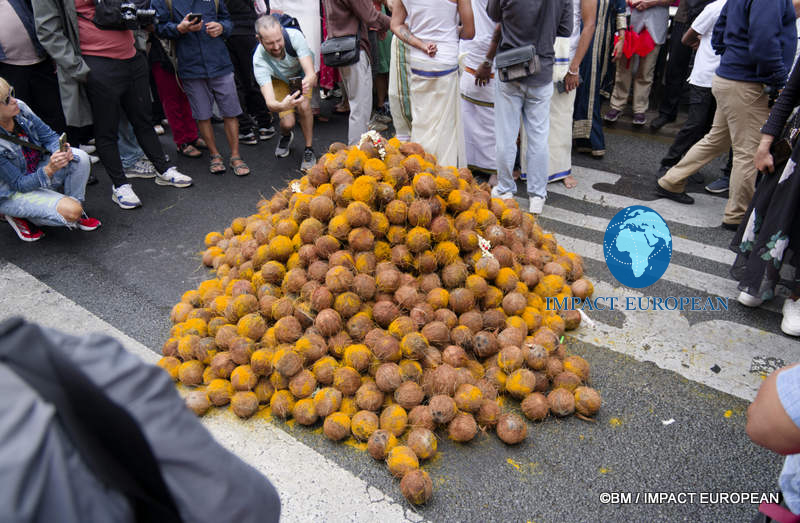
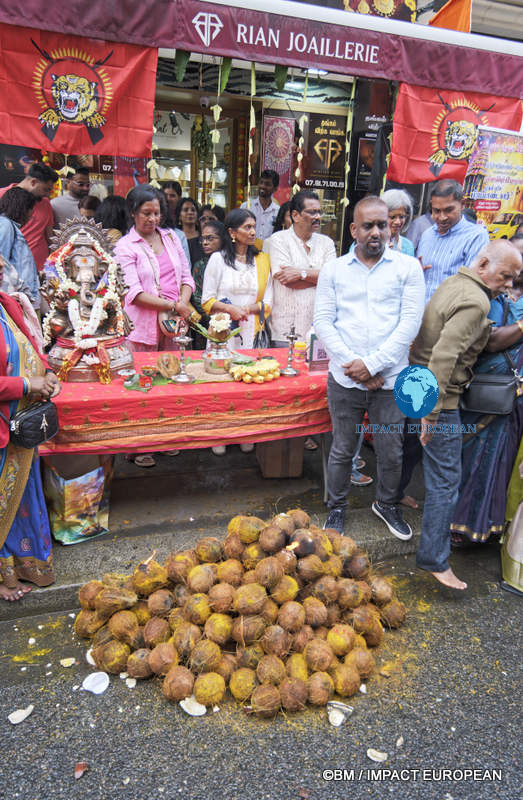
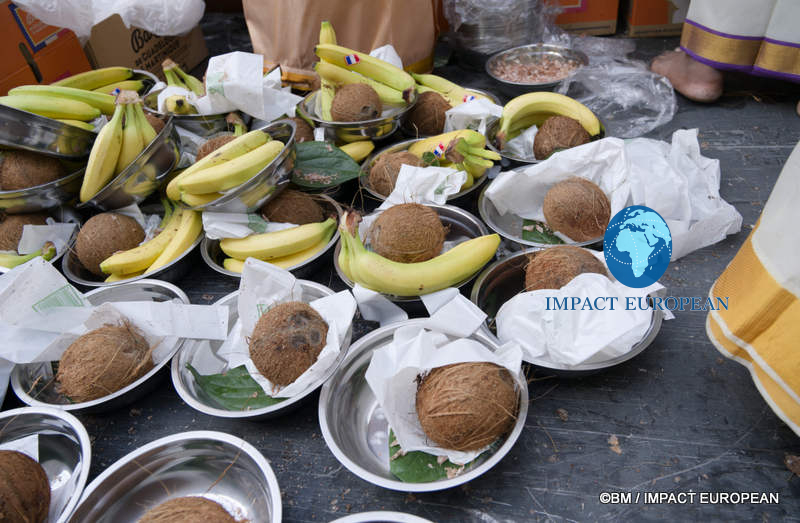
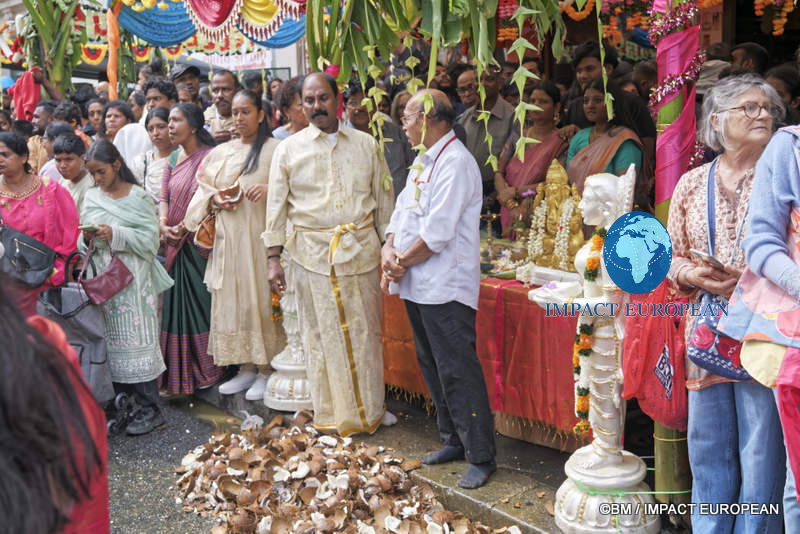
Among the most striking rituals during the Paris procession is the breaking of coconuts.
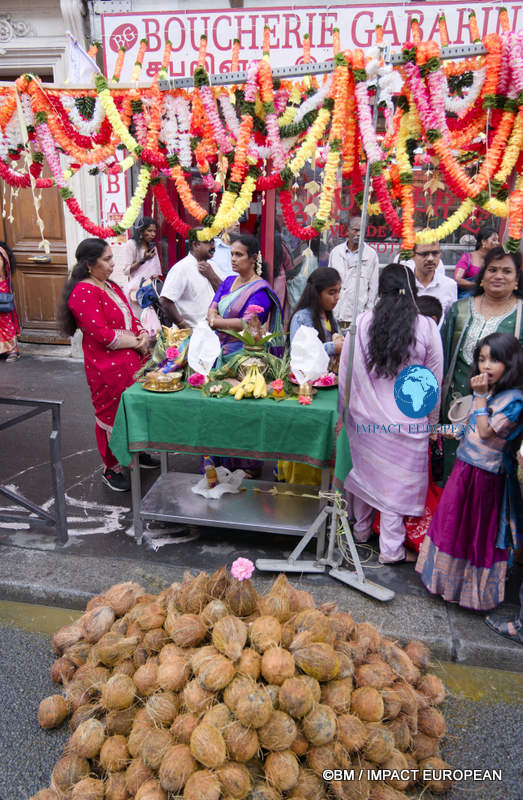
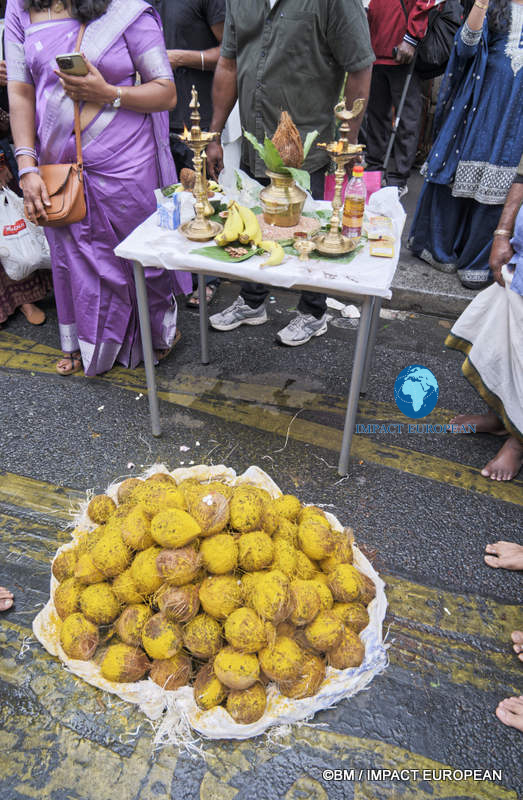
Hundreds are smashed onto the ground as Ganesh passes.
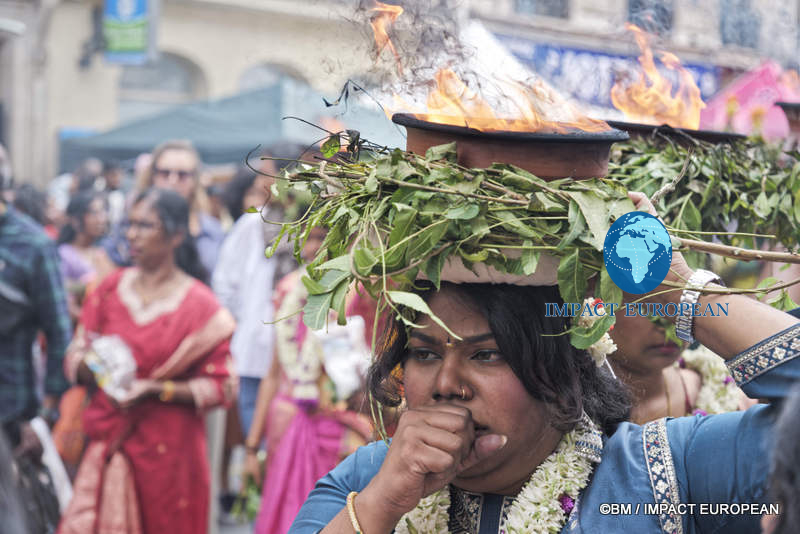
The coconut is an offering, but the act also carries a spiritual meaning. Breaking its hard outer shell is associated with breaking one’s ego and pride, while the white flesh inside evokes purity.
Around this highly visible ritual are quieter forms of devotion.
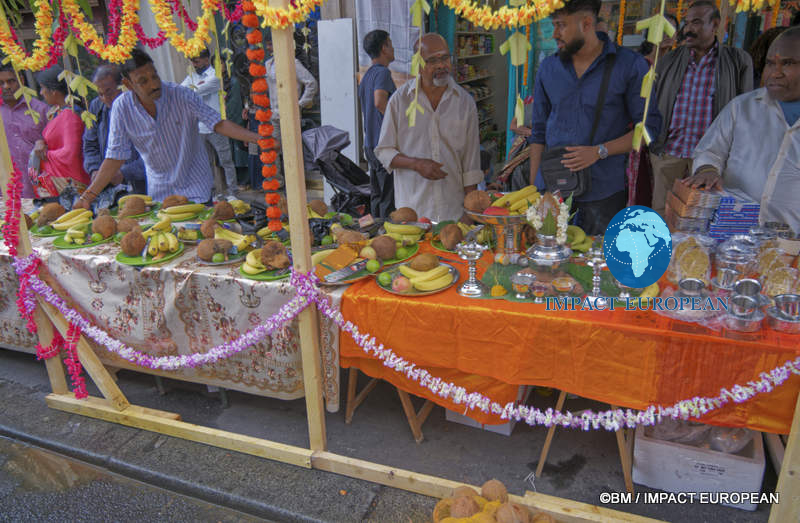
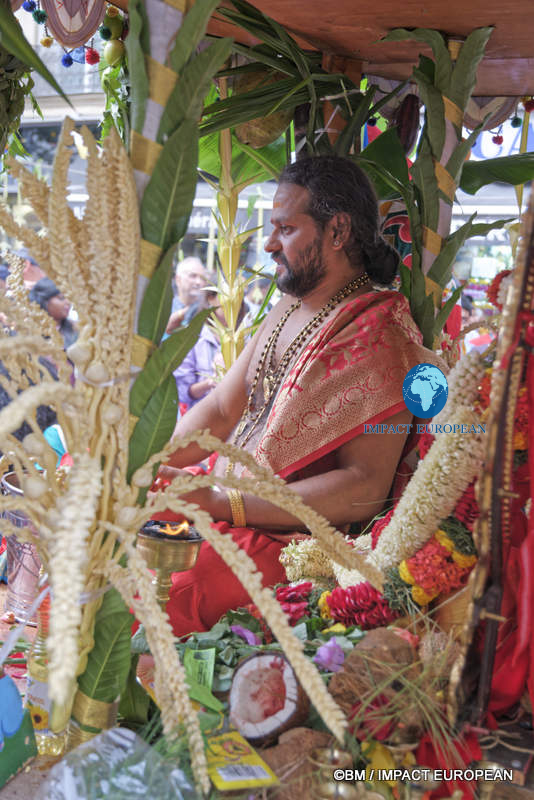
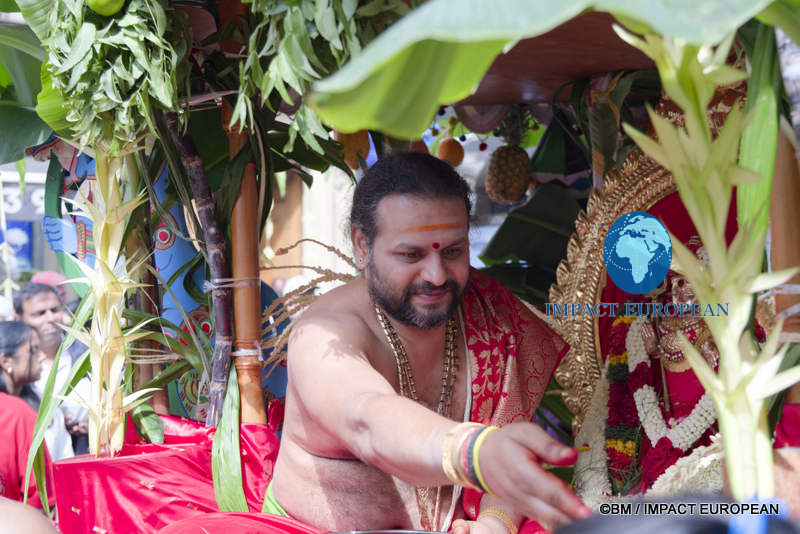
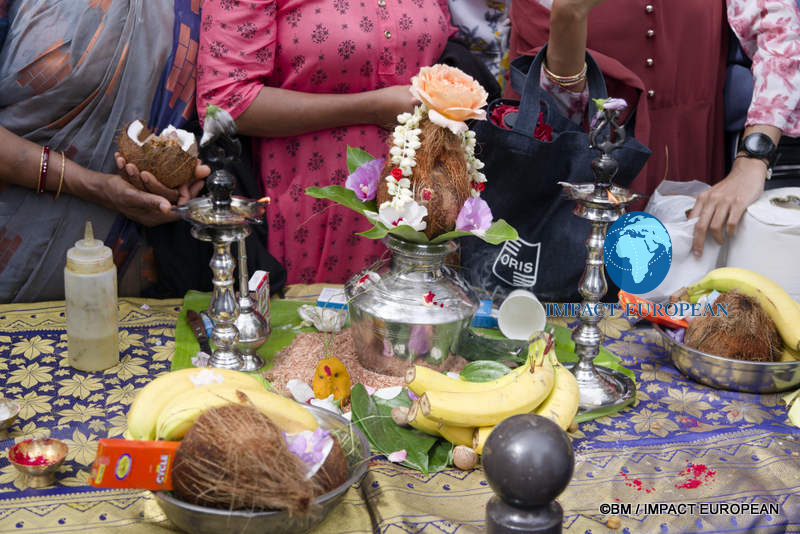
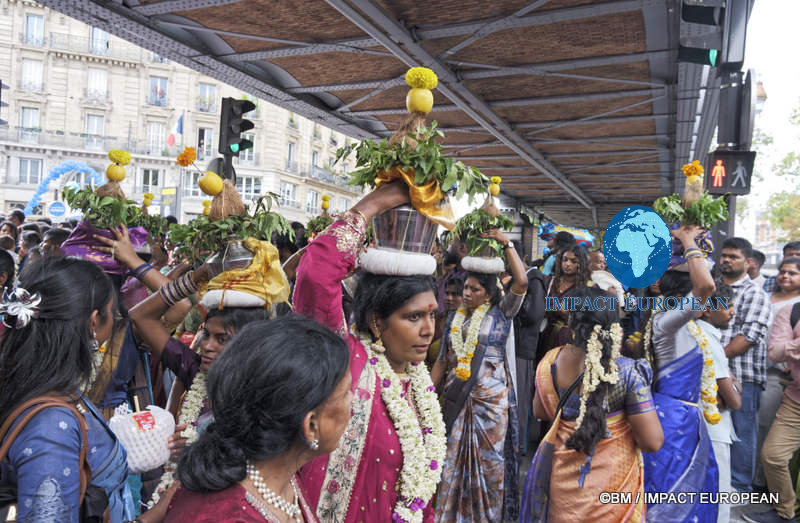
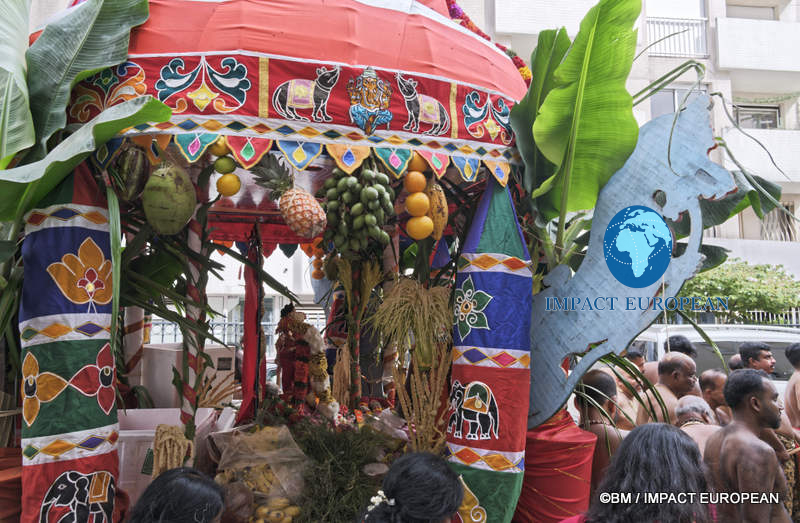
Flowers and fruit are offered to Ganesh. Traditional sweets associated with the deity include modaks, often made with rice flour, coconut and jaggery, and laddoos, small round sweets prepared in different varieties.
Incense and oil lamps are also used during puja, the acts of worship performed before the deity.
For someone encountering the festival from the pavement, these elements can first appear as colors, fragrances, sounds and movement. For worshippers, they belong to religious practices preserved and repeated across generations.
La Chapelle and the History of Migration
The presence of the Ganesh festival in Paris cannot be separated from the migration history of La Chapelle.
From the late 1970s and particularly during the 1980s, France received growing numbers of Sri Lankan Tamils. Violence and the civil war in Sri Lanka drove many people from their homes, and part of this population settled in the Paris region.
La Chapelle gradually became one of the most visible centers of Tamil life in the French capital.
Businesses, restaurants, community organizations and places of worship became established in and around the neighborhood. The area is sometimes referred to as Little Jaffna, after the city and peninsula in northern Sri Lanka associated with a large Tamil population.
The exact size of France’s Tamil population remains difficult to establish because France does not produce official ethnic population statistics. Some estimates place it between 100,000 and 150,000 people, with a significant concentration in the Paris region.
Yet this population cannot be reduced to a single migration story.
France’s links with South Asia also include Franco-Pondicherrian communities originating from Pondicherry and Karaikal, former French territories in India. Other families have histories connected to Réunion, Mauritius, Madagascar and the Caribbean, where populations of Indian origin developed their own religious and cultural traditions.
Different migrations produced different histories. What connects them is not a single identity but the movement of cultural and religious practices across geographical boundaries.
Rue Pajol: A Temple Becomes an Anchor
The Sri Manicka Vinayakar Alayam has become an important point of reference in this history.
Established on Rue Pajol in the 1980s, the temple has organized Paris’s annual Ganesh procession since the 1990s.
Throughout the year, the temple provides a permanent place for religious practice. During the festival, the relationship between worship and the city changes: Ganesh leaves the temple, and the tradition becomes publicly visible in the surrounding streets.
This movement matters.
The temple anchors religious practice in a fixed place. The procession carries that practice into the neighborhood where generations of families have established their lives.
The festival therefore connects two spaces: the place where faith is practiced and the city where the diaspora lives.
Integration Without Erasing Heritage
More than four decades after the major arrival of Sri Lankan Tamils in France, the story is no longer solely about migration.
It is also about generations born or raised in France.
Children and grandchildren may never have experienced the displacement that shaped the lives of earlier generations. Their everyday lives are French, while family, cultural and religious traditions can connect them to histories that began elsewhere.
The Ganesh festival makes this coexistence visible.
Preserving a tradition does not necessarily mean remaining apart from the society in which a community lives. In La Chapelle, a religious practice inherited from another part of the world takes place openly in Parisian public space.
Residents, visitors and passers-by encounter the procession. Families who have built their lives in France continue practices inherited from previous generations.
Integration and cultural continuity are therefore not necessarily opposing forces. A diaspora can become part of its country of residence while maintaining traditions that connect generations to their origins.
Hindu Worship Beyond La Chapelle
The religious landscape of the Paris region has also expanded beyond Rue Pajol.
Hindu places of worship are present elsewhere in Paris and in suburbs including La Courneuve and Sarcelles, reflecting different communities and religious traditions.
That landscape is continuing to evolve.
In Bussy-Saint-Georges, east of Paris, the BAPS Swaminarayan Hindu Mandir is due to be consecrated on September 6, 2026.
The new temple belongs to a different Hindu tradition and organization from the Tamil temple on Rue Pajol, and their histories should not be conflated. Its construction nevertheless illustrates the growing diversity and visibility of Hindu religious institutions across the Paris region.
A Festival That Travels With Its Communities
Ganesh celebrations are not confined to India, nor is Paris an isolated example.
As communities have migrated and settled in different parts of the world, religious practices have travelled with them.
Distance changes the setting. It does not necessarily end the tradition.
In La Chapelle on August 30, flowers were offered, prayers recited and coconuts broken. Families gathered around Ganesh while rituals inherited from earlier generations unfolded in the streets of a European capital.
By around 3 p.m., the procession came to an end and the neighborhood gradually returned to its everyday rhythm.
What remains is larger than a single Sunday celebration.
For a diaspora living far from its ancestral lands, continuity can be measured in the ability of one generation to pass a gesture, a belief and a tradition to the next — and for that tradition to continue its journey across borders.
©2026 IMPACT EUROPEAN – All rights reserved
Views: 85
More Stories
Paris Motor Show 2026: Global Carmakers Face a New Era of Mobility
Violence Against Women: French Protesters Push Parliament to Preserve Landmark Protection Bill
Paris Pride 2026: From Political Mobilisation to a European Message of Solidarity