

Before there is speed, there is observation. Before an acrobatic movement, there is repetition. And before a horse can enter an arena and perform freely alongside a human, a relationship has already been built away from the audience.
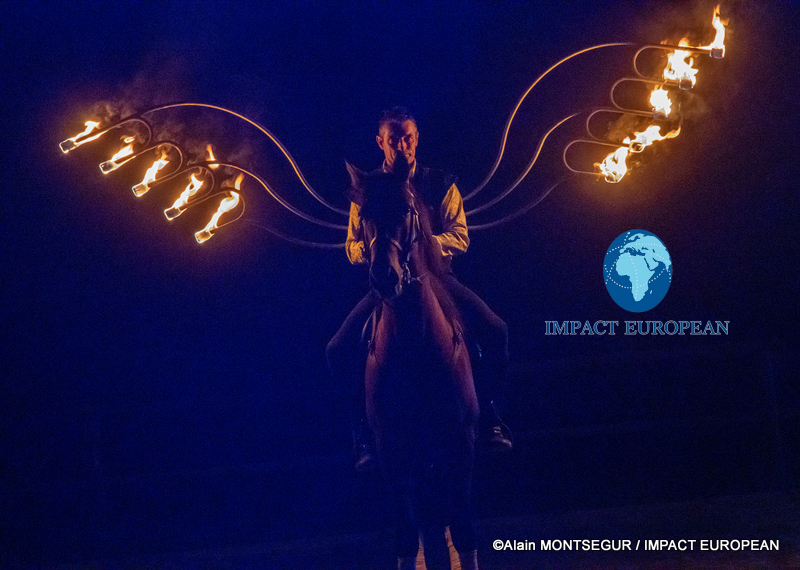
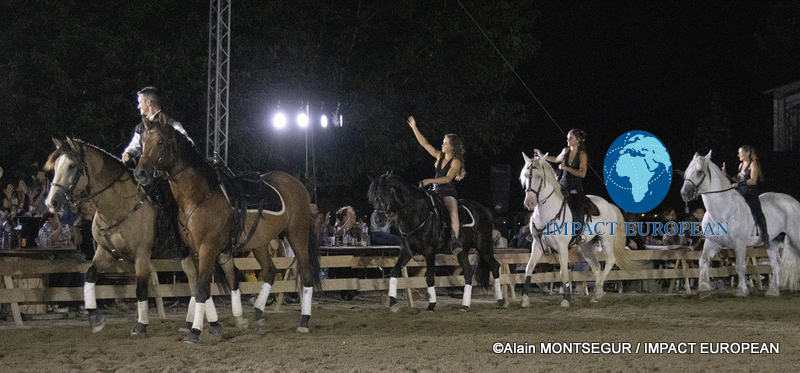
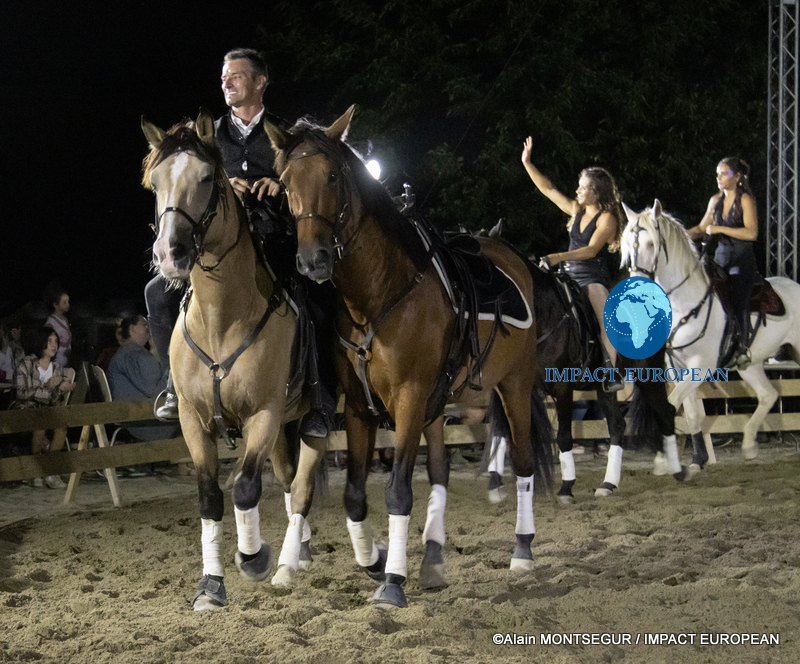
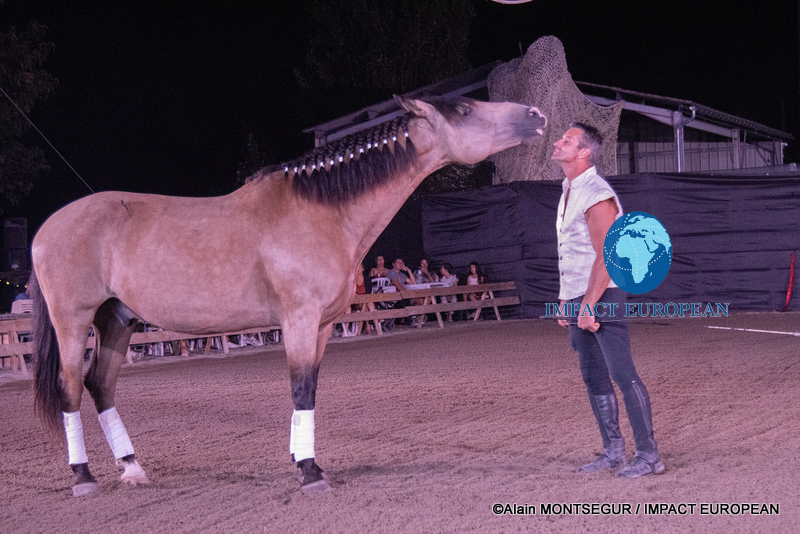
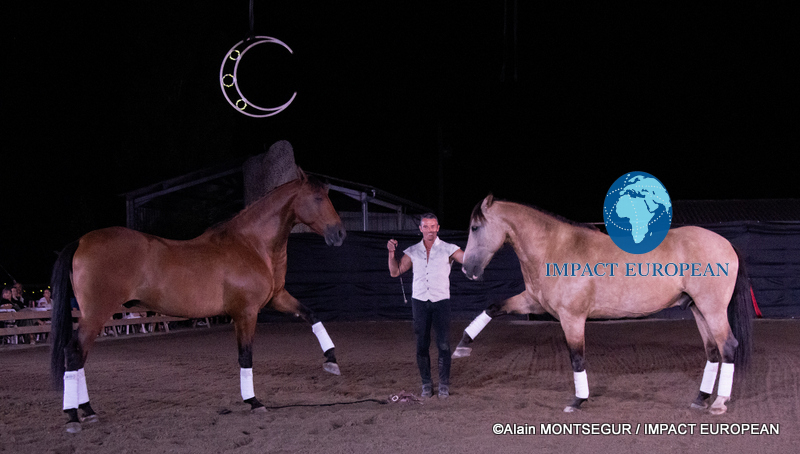
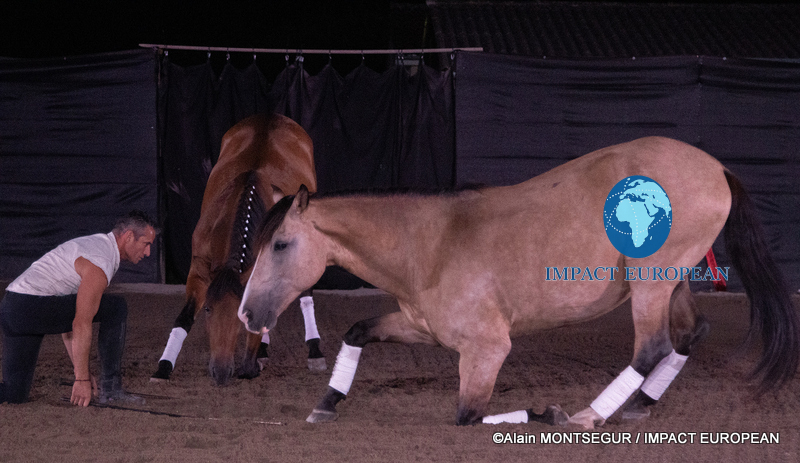
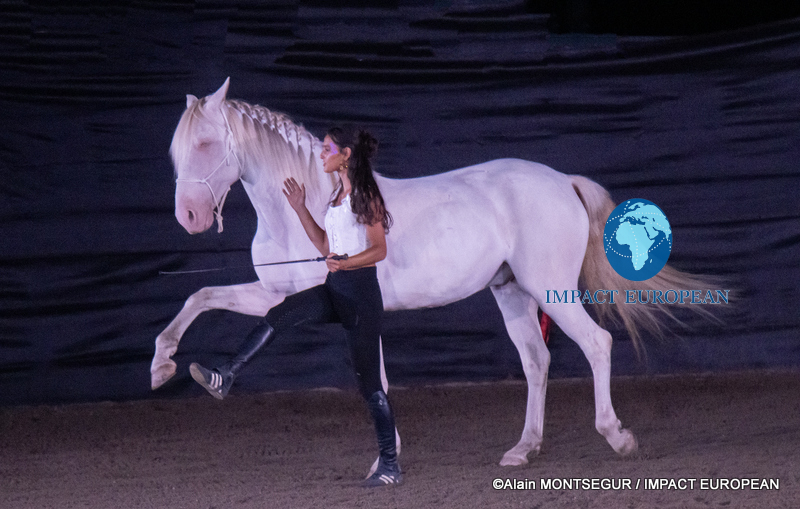
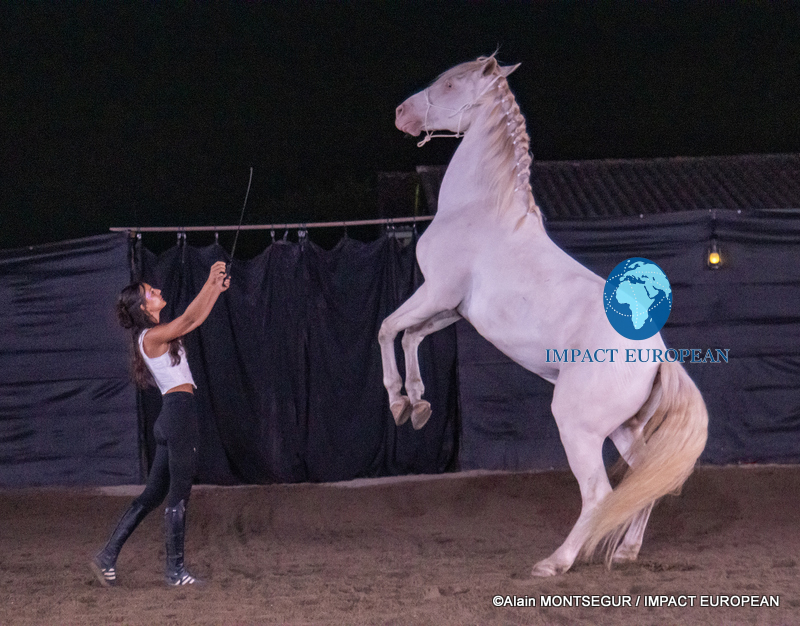
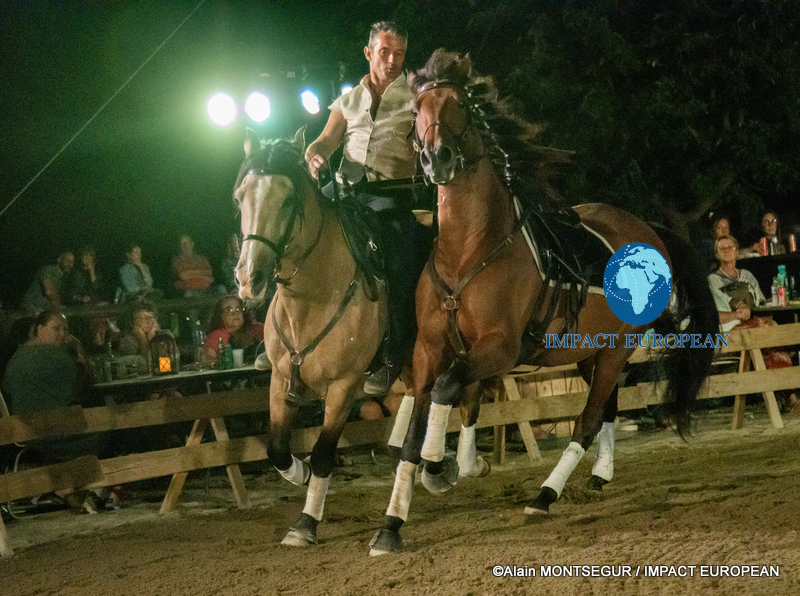
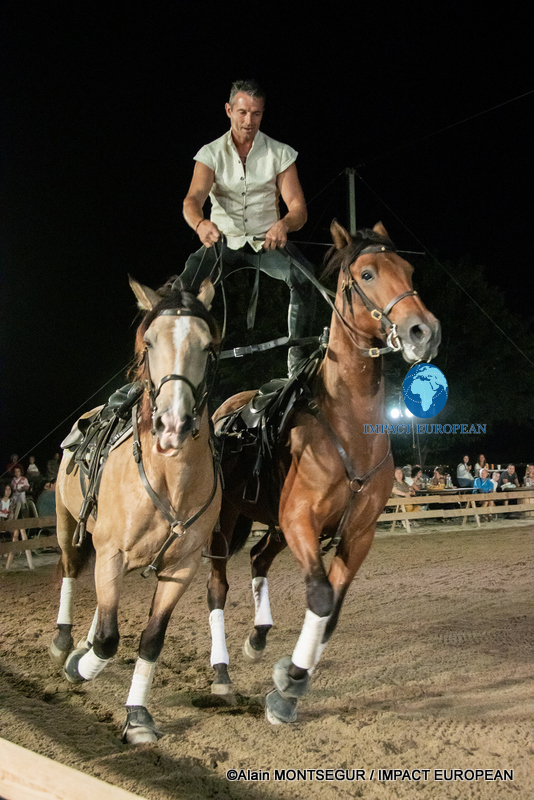
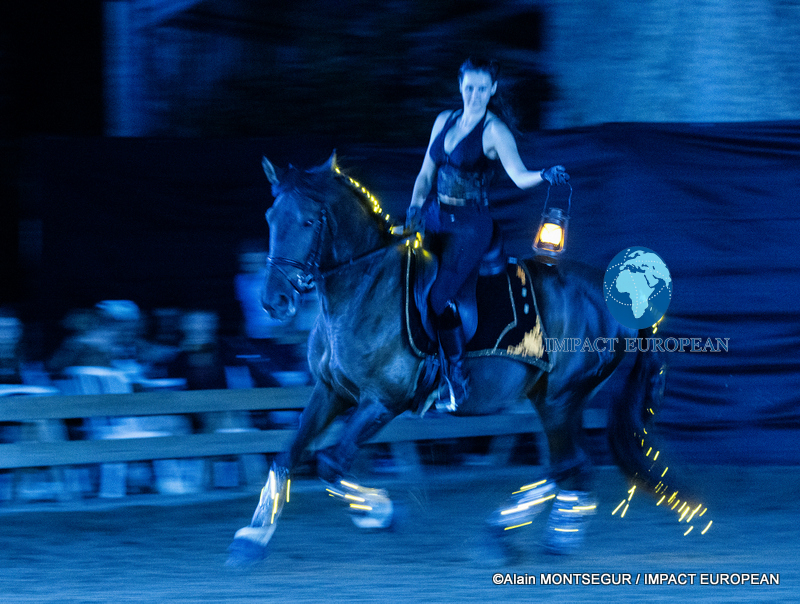
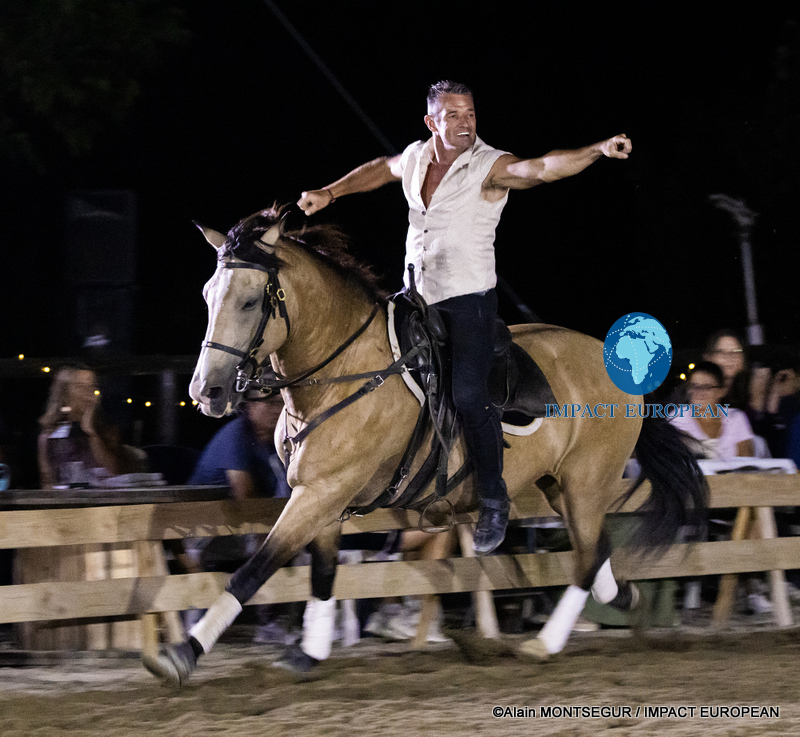
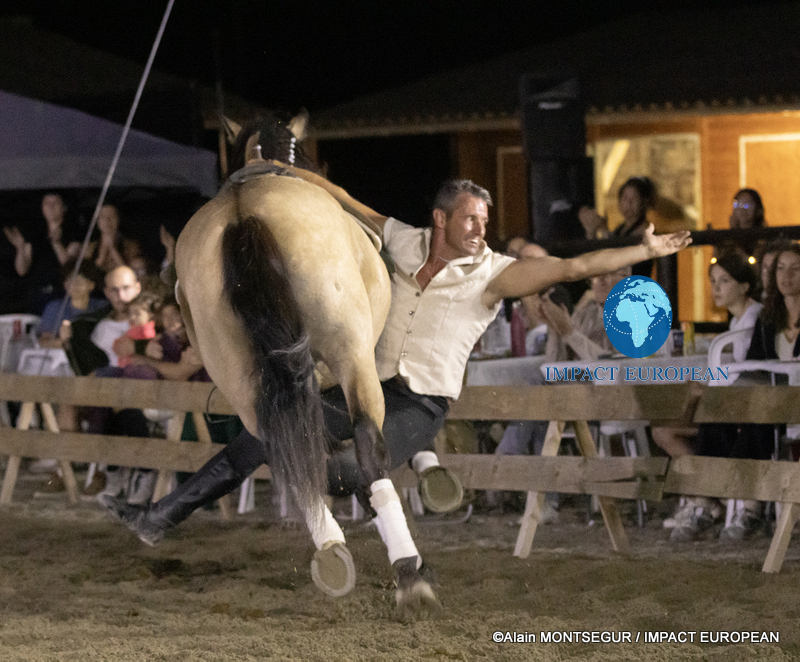
On August 29, 2026, Laurent Douziech entered the arena at Équi’noche in Castelmayran with Douro and Vicio for a liberty performance. It was the last of only three Équi’noche evenings held during the summer, following the July 4 and July 25 events.
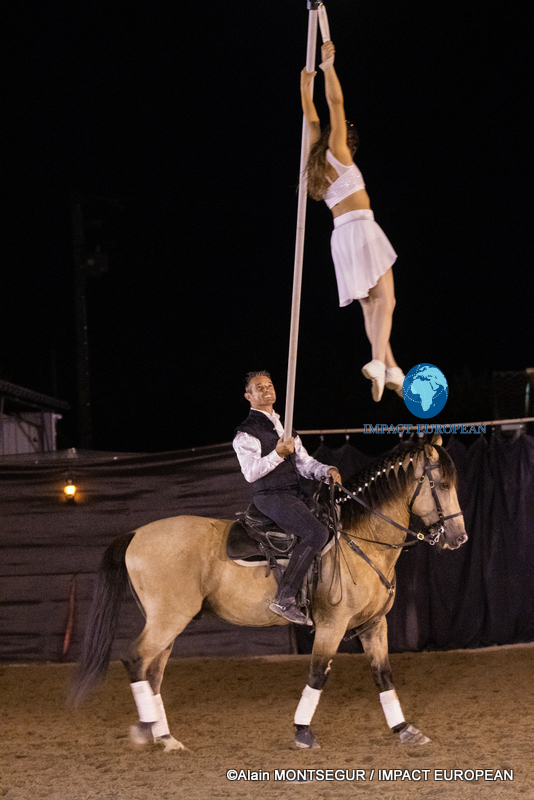
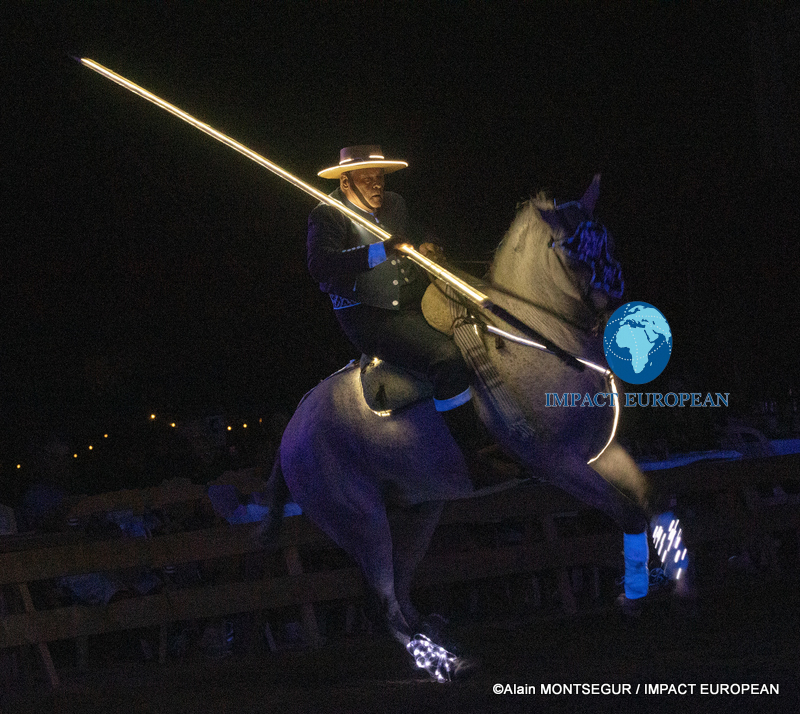
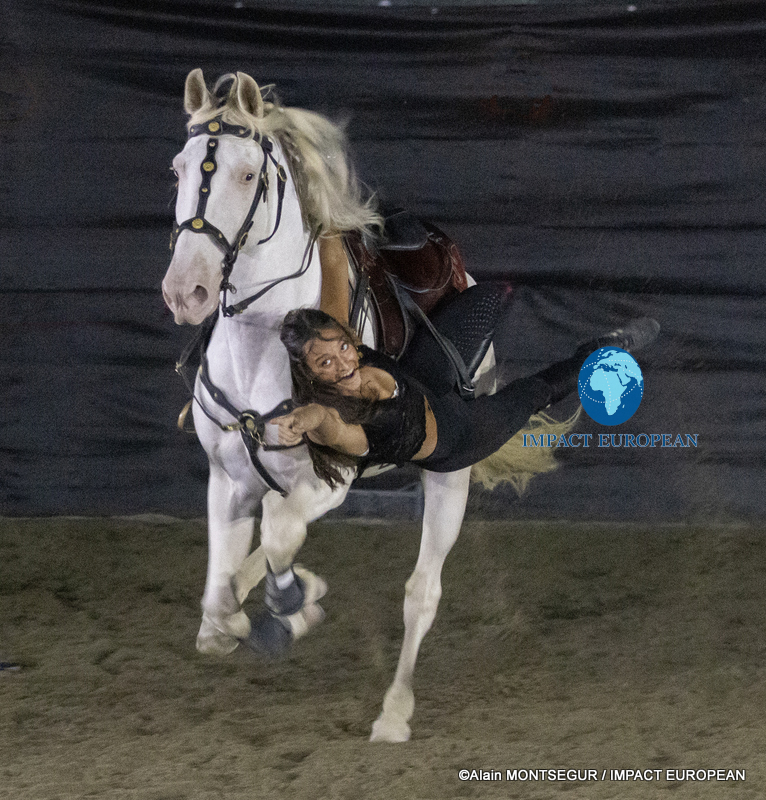
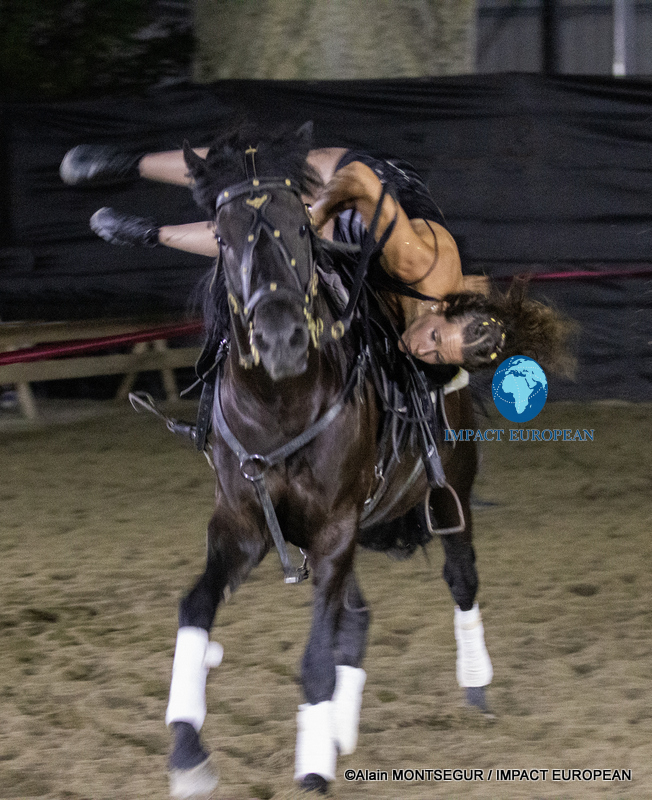
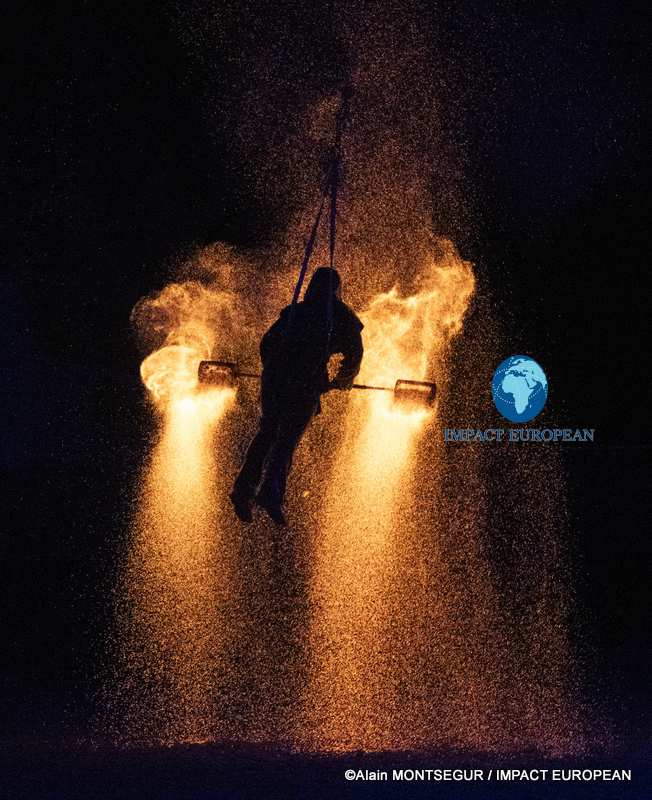
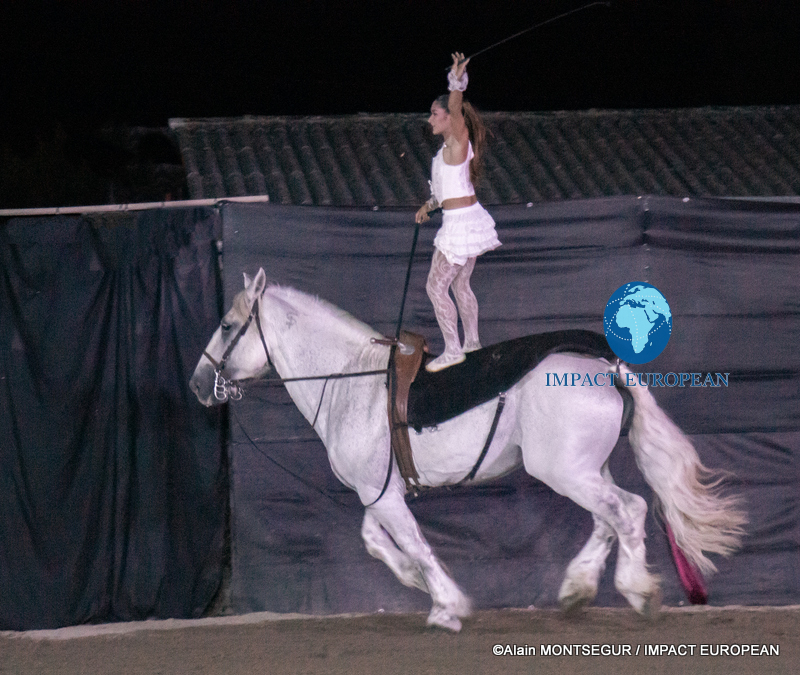
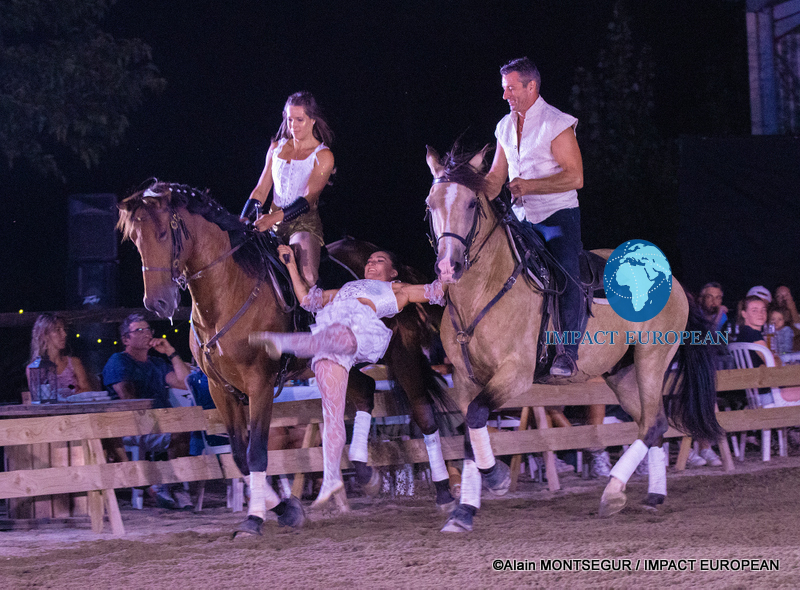
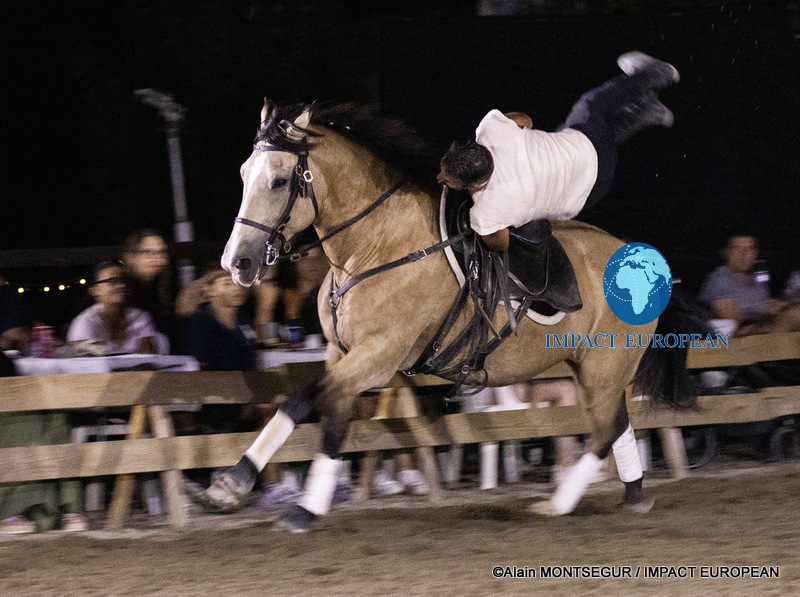
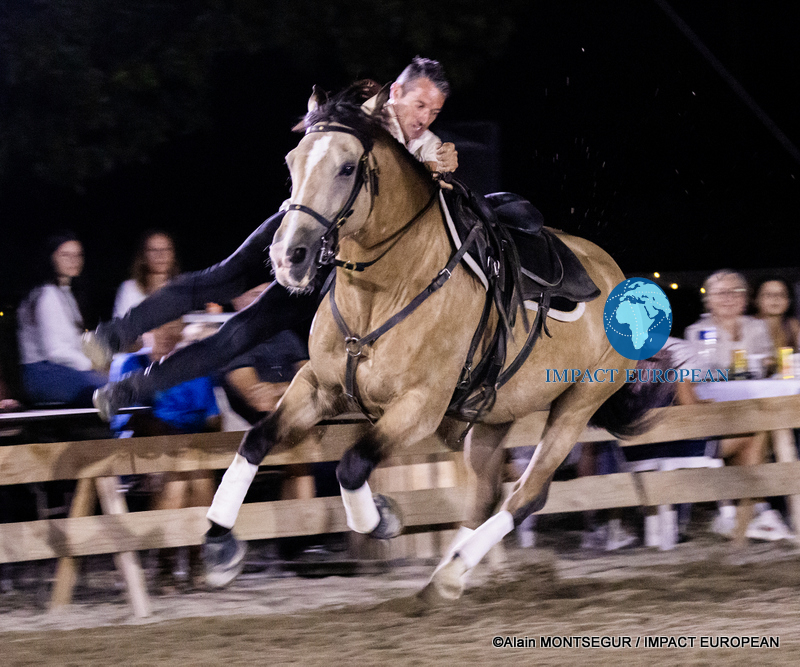
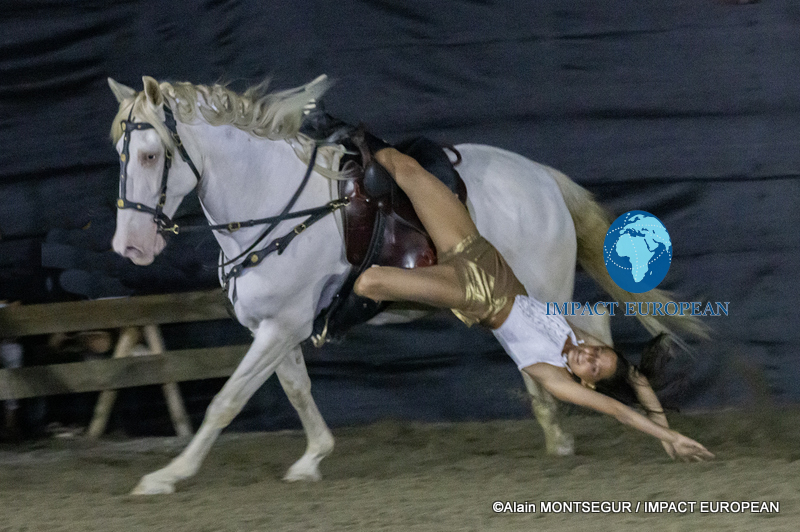
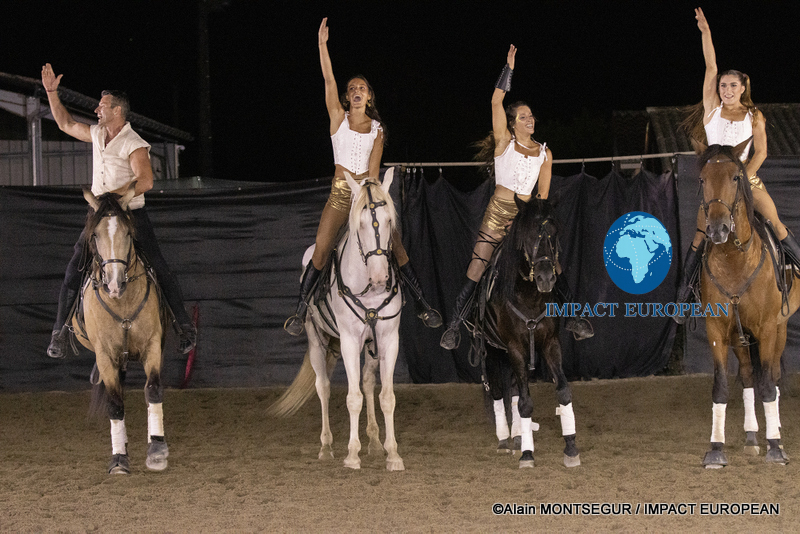
For the audience, the performance belonged to a show lasting a little over an hour and a half, combining high-school dressage, liberty work, Cossack vaulting, stunts and aerial arts, accompanied by lighting and music.
For the horses and the people working with them, however, the story did not begin that evening.
It begins with something far less spectacular: learning how to understand one another.
When equipment disappears, communication remains
Liberty work exposes the relationship between human and horse in a particularly direct way.
At the Pachka stables, the practice is taught through an understanding of equine behaviour and codes, with communication relying notably on voice and gestures. The work is explicitly associated with developing a relationship of complicity with the horse.
Without tack, communication cannot simply be hidden behind equipment.
The human has to observe.
A gesture has to become meaningful. A request has to be understood. The horse’s observable response tells the person whether that communication is working or needs to change.
This is where trust stops being an abstract idea.
For Laurent Douziech, Douro and Vicio, what eventually becomes a liberty performance is built from repeated interactions in which the horse learns to work alongside the human and the human learns how to communicate with that particular horse.
The relationship therefore cannot remain static.
Each new exercise adds experience. Each response provides information. What has already been learned makes another step possible.
And that same principle can be found far beyond the performance arena.
The relationship is also something others can learn
Life at Castelmayran continues throughout the year.
The Pachka stables provide boarding and riding instruction for different ages and levels, with regular work in show jumping and dressage alongside the other activities developed at the site.
During school holidays, half-day and full-day courses give riders opportunities to prepare their Galops or explore specific disciplines. The programme includes groundwork and liberty, as well as Cossack vaulting and acrobatic riding.
This is where the experience accumulated between professional riders and horses begins to serve another purpose.
It can be passed on.
Liberty work is open to beginners without a minimum Galop level. The starting point is not spectacular technique but the horse itself: its behaviour, its codes and the communication established through voice and gesture.
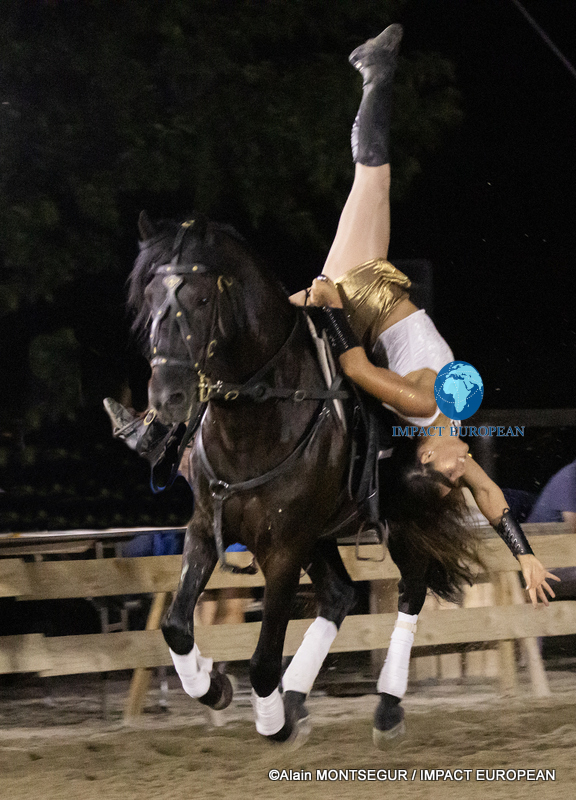
Cossack vaulting follows another progression.
Initial movements can be introduced while the horse is standing or walking. Working at the gallop requires greater confidence and technical ability, particularly for safety. Training is adapted to the abilities of each horse-and-rider pair.
The progression matters because it shows that performance is not built by simply increasing difficulty.
A human being may understand a movement intellectually and still not be ready to perform it with a horse at speed.
The rider has to master the body, balance and timing.
The horse has to be prepared for what is being asked of it.
Only then can the pair move further.
Trust does not replace technical mastery. It makes increasingly demanding technical work between human and horse possible.
Mastery changes what becomes possible
That principle can be followed through the different activities practised at Castelmayran.
Show jumping and dressage are part of the regular sporting work, including competition at regional and national level.
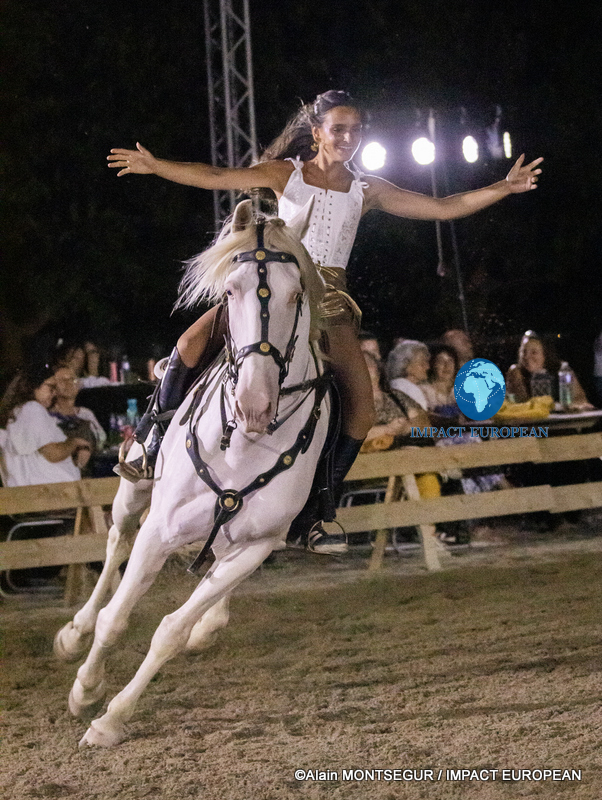
Liberty removes tack from the equation and places greater emphasis on another form of communication.
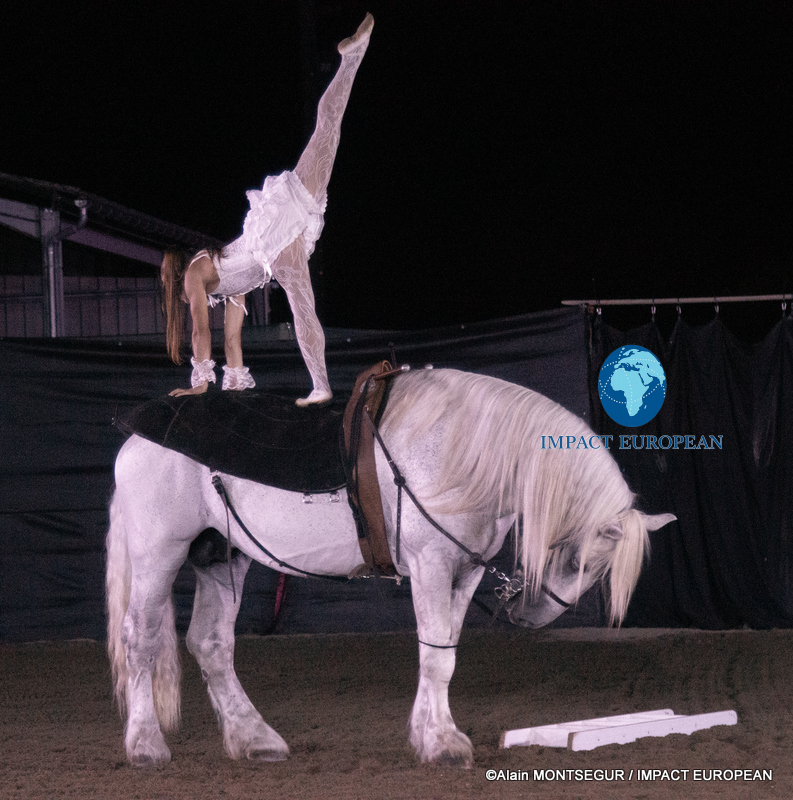
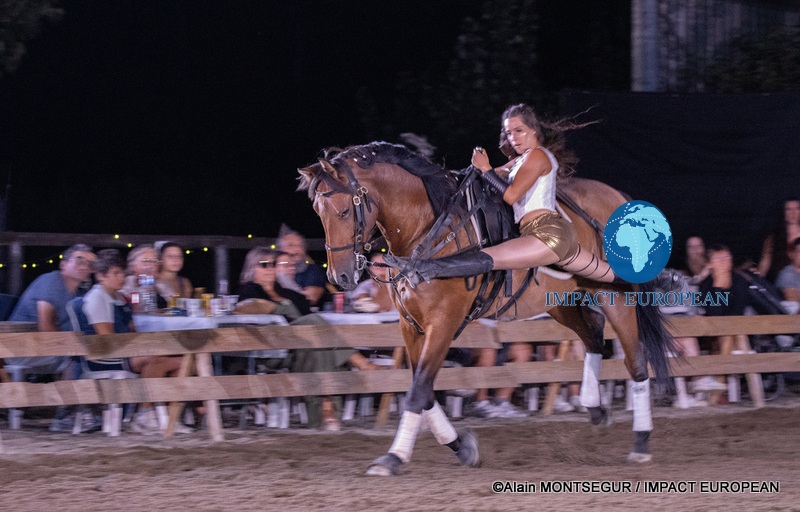
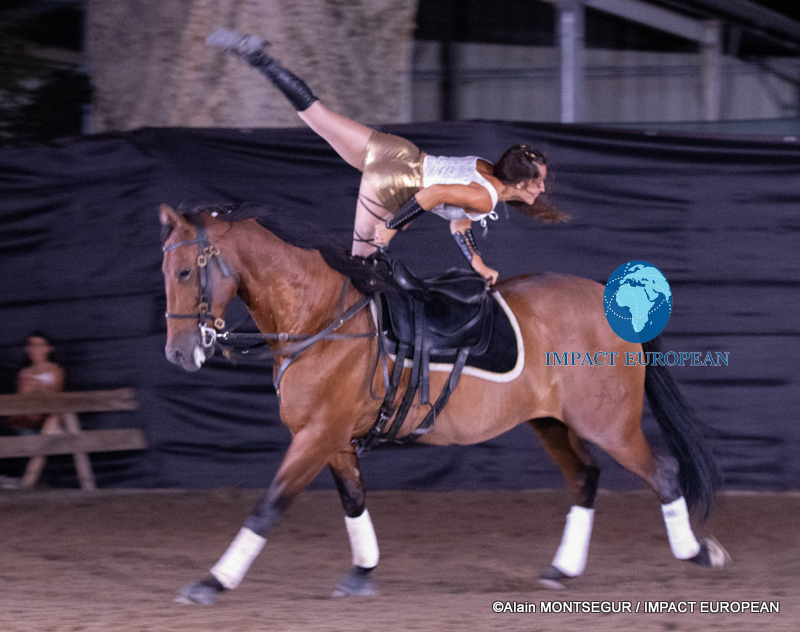
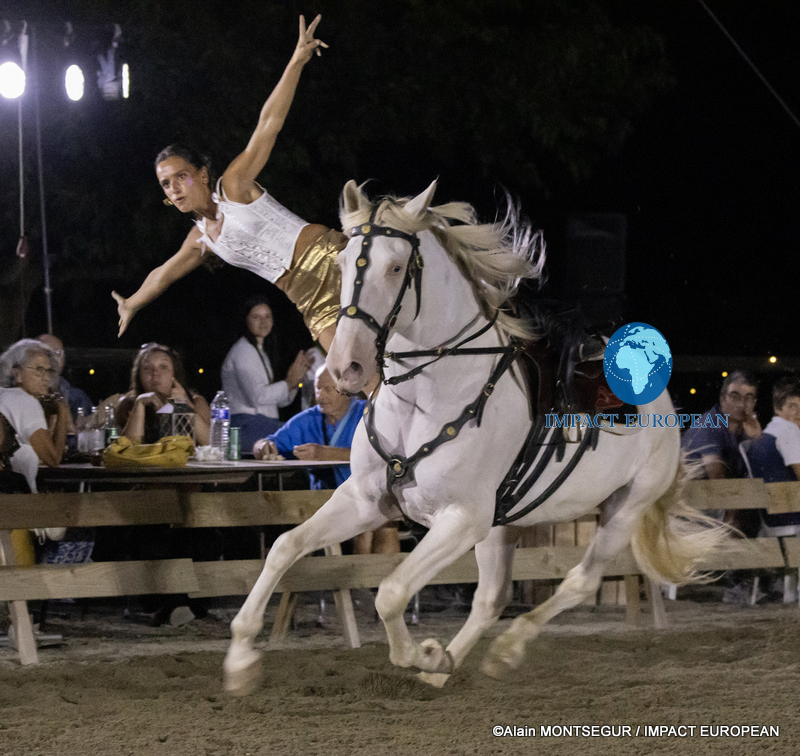
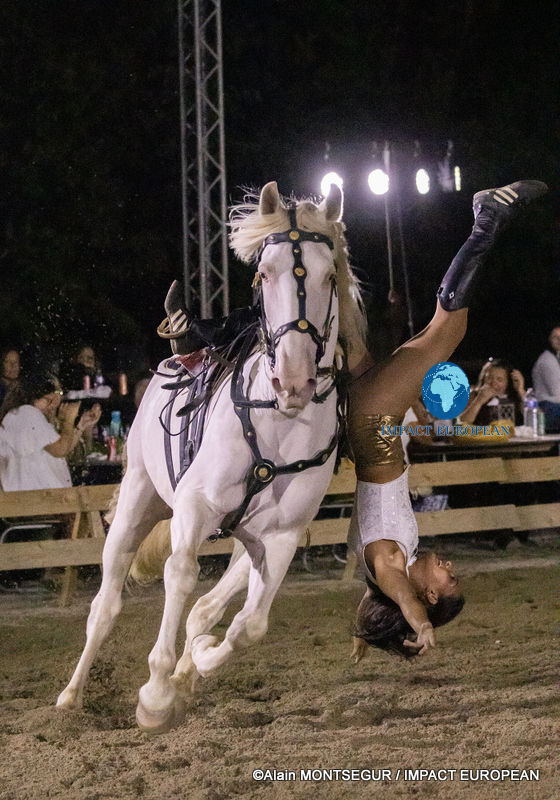
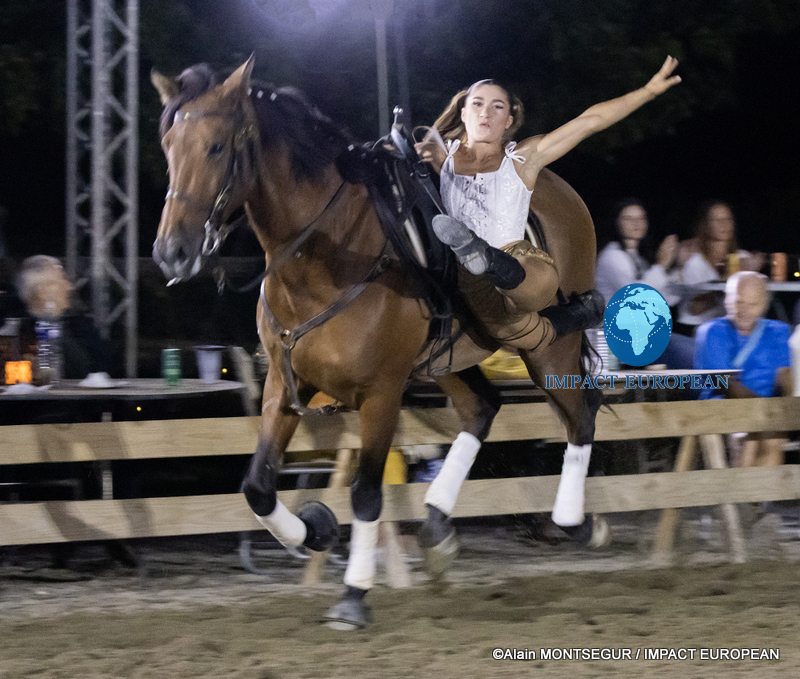
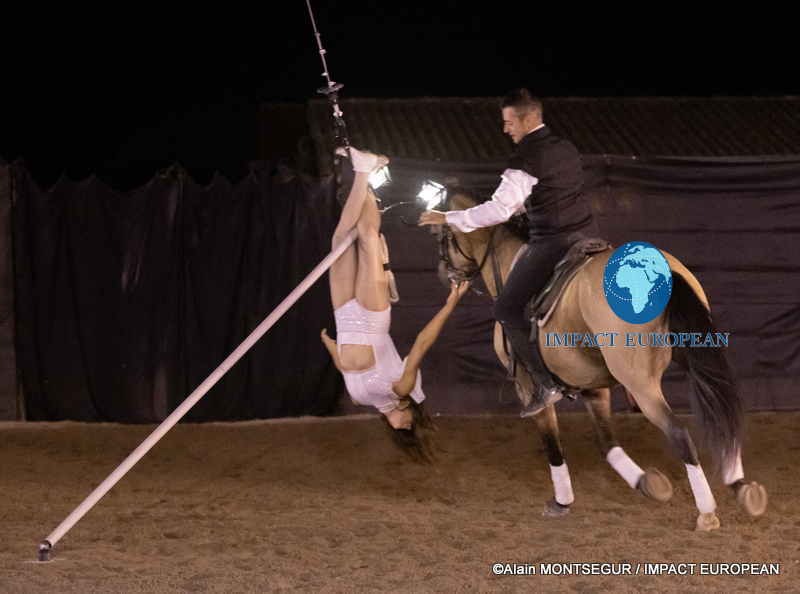
Cossack vaulting introduces the human body moving around a horse that may itself be moving at speed.
These practices are technically different, but they share a fundamental reality: the horse remains part of the action rather than becoming a passive object within it.
The more demanding the movement becomes, the more important the preparation of the pair becomes.
That is particularly significant in Laurent Douziech’s work.
He is not only involved in teaching. He is an equestrian artist and professional stunt performer.
Once a movement has been learned and mastered, his work can therefore move into another territory.
Experimentation.
Castelmayran as a place where technique becomes creation
The site is used for training and rehearsals, but also for testing new figures and bringing different disciplines together.
Cossack vaulting, liberty work and aerial arts can all enter this process, while the experience developed there is also transmitted to riders.
This changes the purpose of repetition.
Repeating a movement is initially a way of learning it.
Later, repetition can make it reliable.
Once it is mastered, however, the question can become different: what else can be created from it?
The horse is central to that question.
An equestrian creation cannot simply be designed independently and then have a horse inserted into it. The animal’s movement, preparation and interaction with the performer affect what can actually happen in the arena.
The creation Fusion provides a concrete example.
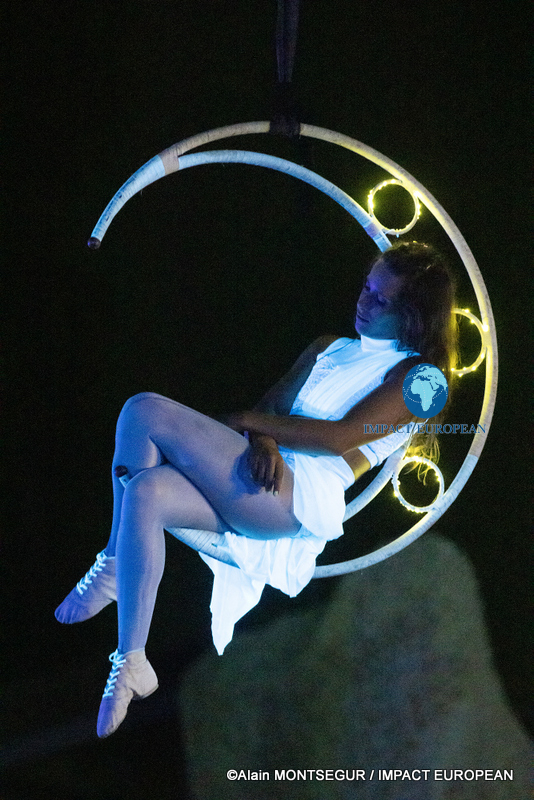
Developed in Castelmayran, initially with Équimuse, it brought together Cossack vaulting and high aerial performance, including an apparatus shaped like a moon suspended above the horses. The research behind that combination later contributed to the development of the Équi’noche format.
Something that began with the fundamentals of working with a horse could therefore eventually support a much more complex artistic construction.
But complexity never eliminates the starting point.
The horse still has to work with the human.
Équi’noche turns the work towards an audience
During the three summer evenings, the central arena at the Pachka stables became a performance space surrounded by the atmosphere of an outdoor equestrian guinguette.
At that moment, work previously carried out in training changes its destination.
It becomes something to share.
The audience does not necessarily see the gradual learning that preceded the performance. It sees the liberty work, the vaulting, the aerial movements and the final choreography.
But the relationship between human and horse remains underneath what is happening.
Laurent’s liberty work with Douro and Vicio is particularly revealing because the absence of tack leaves less between the human request and the horse’s observable response.
Other disciplines make the relationship visible differently.
In vaulting, technical mastery may dominate the spectator’s attention as the performer’s body moves around the horse. Yet the movement still depends on work involving both.
The spectacle therefore does not replace the relationship.
It makes visible what that relationship has gradually made possible.
The work does not remain in Castelmayran
Douziech Horse Events also performs regularly away from its home base.
Laurent Douziech and Eline Chorches have brought equestrian and aerial performance to the Nuit du Cheval in Foix. Liberty and Cossack vaulting have featured at the Nuit du Cheval in Rignac. The duo has also been regularly invited to Festibérique in Caussade, while Chevauchée sous les étoiles formed part of July 14 celebrations in Villeréal.
Moving from one venue to another does more than extend the geographical reach of a show.
It changes the conditions in which the work has to exist.
A different arena may impose different spatial constraints. A new production can bring different artistic partners. Another audience encounters the work without having witnessed the daily process behind it.
Collaborations add another layer. The documented trajectory of Douziech Horse Events includes work with other equestrian structures and artists, including the Troupe du Ménil Saint-Michel, as well as productions and residencies beyond Castelmayran.
Experience therefore travels in both directions.
Work developed with the horses at home can be taken onto another stage.
What happens on that stage can then provide new experience for future work.
The relationship continues to evolve.
Teaching and performing become two forms of transmission
This movement also explains why teaching and performance should not be treated as completely separate worlds.
At the stables, experience is transmitted directly to riders.
Someone learning liberty work discovers how to observe and communicate with a horse. Someone beginning Cossack vaulting gradually develops the physical and technical abilities required to work at greater speed.
Club activities, themed events, rides and gatherings also involve riders and families in a broader equestrian environment.
On stage, transmission takes another form.
The audience does not receive a riding lesson. It sees what years of working with horses can become when technical mastery is transformed into artistic expression.
These two forms of transmission are different, but they come from the same accumulated experience.
One allows another rider to begin building a relationship with a horse.
The other allows an audience to witness what such a relationship can eventually produce.
From a horse and a human to a much larger stage
Laurent Douziech’s career has also reached major national equestrian events.
The Crinières d’Or Gala at Cheval Passion in Avignon represents a historical and recurring landmark in his artistic trajectory. His appearances there have included work connected with Dream Horse, alongside Mathilde Maestrello, combining emotional staging and high-level vaulting.
The next Cheval Passion is scheduled for January 14–18, 2027. Those dates alone do not establish Laurent Douziech’s participation in that particular edition, which would require confirmation from the official programme.
What the longer trajectory does establish is the distance that can exist between the apparent simplicity of the starting point and the complexity of the final creation.
At one end is a human standing beside a horse.
The human observes.
He communicates.
The horse responds.
They learn to work together.
Then the difficulty can increase.
A movement becomes more precise. The pair develops greater mastery. Mastery allows experimentation. Experimentation opens the possibility of creation. Creation reaches an audience. Experience is passed to other riders and carried onto other stages.
Then the performers return to work.
The process is never completely finished because the relationship itself continues to develop.
This is what connects Douro and Vicio in liberty at Castelmayran with the more spectacular dimensions of Laurent Douziech’s work.
The acrobatics may become more difficult. The stages may become larger. New artists may join the creation.
Yet beneath all of them remains the same condition:
before the human can ask the horse to do more, the horse must be able to trust the human asking.
©2026 IMPACT EUROPEAN – All rights reserved
Views: 10
More Stories
Paris Motor Show 2026: Global Carmakers Face a New Era of Mobility
Violence Against Women: French Protesters Push Parliament to Preserve Landmark Protection Bill
Paris Pride 2026: From Political Mobilisation to a European Message of Solidarity