

What makes La Bola Negra extraordinary is that it refuses to treat queer suffering as spectacle.
This is where the film immediately distances itself from many prestige LGBTQ+ dramas that often reduce homosexuality to victimhood, tragedy or martyrdom. While the film undeniably contains violence, repression and historical trauma, Javier Calvo and Javier Ambrossi constantly redirect the narrative toward transmission, resilience and collective memory.
The film does not merely ask what queer people endured.
It asks what survives afterward.
That distinction changes everything.
The emotional architecture of the film becomes increasingly impressive as the three timelines begin echoing each other not through exposition, but through cinematic language itself. A gesture performed in 1932 finds its mirror decades later. A silence in one era contaminates another. A line of poetry transforms into an emotional wound that remains open across generations.
The directors openly embrace melodrama, but never in a manipulative way. Instead, they use melodrama the way Pedro Almodóvar once used it in his most inspired work: as a vessel for collective emotion.
And indeed, Almodóvar’s shadow hovers over the film — not as imitation, but as inheritance. The presence of Penélope Cruz reinforces this connection, yet La Bola Negra ultimately belongs entirely to Calvo and Ambrossi. Their cinematic voice feels more mature, more disciplined and far more emotionally devastating than anything they have previously directed.
What is particularly fascinating is how the film balances intimacy and historical scale.
At its core, La Bola Negra remains deeply personal.
The lovers during the Spanish Civil War are not abstract symbols. They are terrified young men trying desperately to preserve tenderness in a world collapsing around them. The contemporary storyline involving Alberto searching through fragments of forgotten queer history never feels academic. It feels urgent.
The film understands that queer memory is fragile.
That entire generations disappeared without leaving archives behind.
And that art often becomes the only surviving testimony.
One of the most moving ideas in the film is precisely this obsession with artistic survival. The screenplay repeatedly returns to objects: poems, records, letters, unfinished works.
The characters die.
But art remains.
This idea culminates in one of the film’s most devastating thematic revelations: LGBTQ+ history survives not because institutions protected it, but because artists insisted on preserving emotional truth through creation.
Cinema itself becomes resistance.
Visually, La Bola Negra is overwhelming in the best possible sense.
Many Cannes competition films this year have embraced austerity and restraint. Calvo and Ambrossi move in the opposite direction. Their film is lush, theatrical, feverish and unapologetically cinematic.
The camera glides through time almost like a ghost itself.
The transitions between timelines are executed with astonishing elegance. At times, characters appear trapped inside memories that no longer belong exclusively to them. The result creates a sensation rarely achieved in modern cinema: historical continuity through emotion rather than narrative explanation.
The production design is equally remarkable.
The 1930s sequences possess an operatic grandeur without ever becoming museum-like reconstructions. The directors are not interested in recreating history with sterile realism. They want history to feel alive, unstable and emotionally unfinished.
That decision gives the film enormous contemporary power.
The Spanish Civil War scenes are among the strongest in the entire competition. Flames, collapsing buildings and devastated landscapes become almost expressionistic. Yet the directors never lose sight of human fragility amid the spectacle.
One extraordinary scene involving Rafael inside a war-torn village feels destined to become iconic Cannes imagery.
But perhaps the film’s greatest strength lies in its treatment of silence.
Again and again, characters fail to say what they truly feel. Conversations stop halfway. Lovers separate without confession. Mothers and sons remain emotionally imprisoned by unspoken pain.
The directors explicitly frame silence as violence.
Not only political silence.
Family silence.
Emotional silence.
Historical silence.
And in many ways, the film argues that queer history itself has been shaped by generations forced into silence.
This theme resonates with extraordinary force in today’s political climate, where LGBTQ+ rights once again face hostility in multiple countries. Without becoming didactic, La Bola Negra quietly reminds audiences that progress is never permanent.
“We will not go backwards,” the filmmakers themselves declared while discussing the film’s meaning.
That political undercurrent gives the film tremendous urgency.
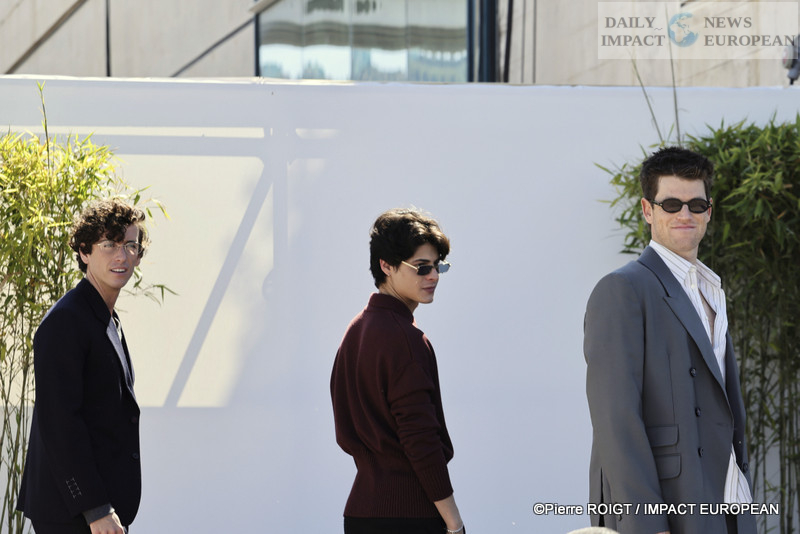
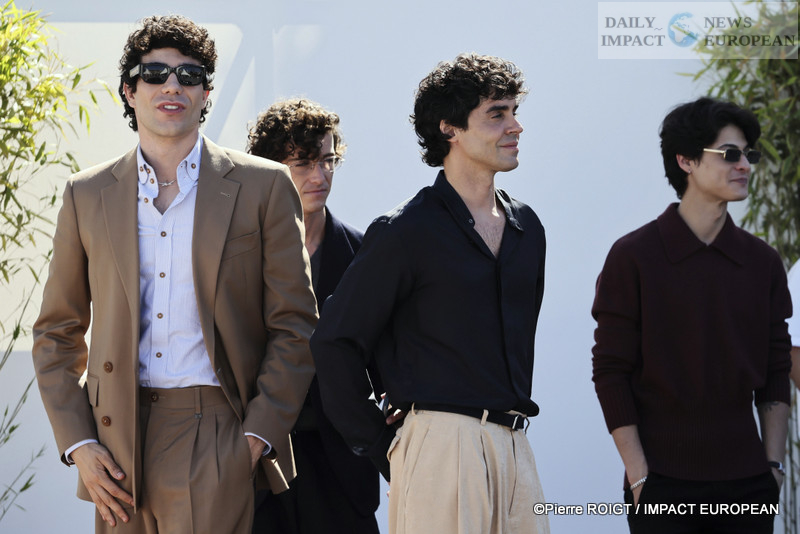
The performances are uniformly superb.
Guitarricadelafuente delivers one of the most astonishing screen debuts seen at Cannes in years.
His face alone carries entire emotional landscapes.
There is something almost fragile and transparent about his presence on screen. He embodies innocence, repression and desire simultaneously. The camera adores him, but more importantly, it trusts him.
Miguel Bernardeau brings a physical intensity that perfectly balances Guitarricadelafuente’s vulnerability. Their chemistry avoids cliché entirely. Their relationship feels less like a conventional romance and more like two men briefly discovering emotional freedom before history destroys them.
Carlos González anchors the contemporary sections beautifully. His storyline could easily have become the weakest because it functions partly as narrative connective tissue. Instead, he transforms Alberto into the emotional conscience of the entire film.
The supporting cast elevates the project even further.
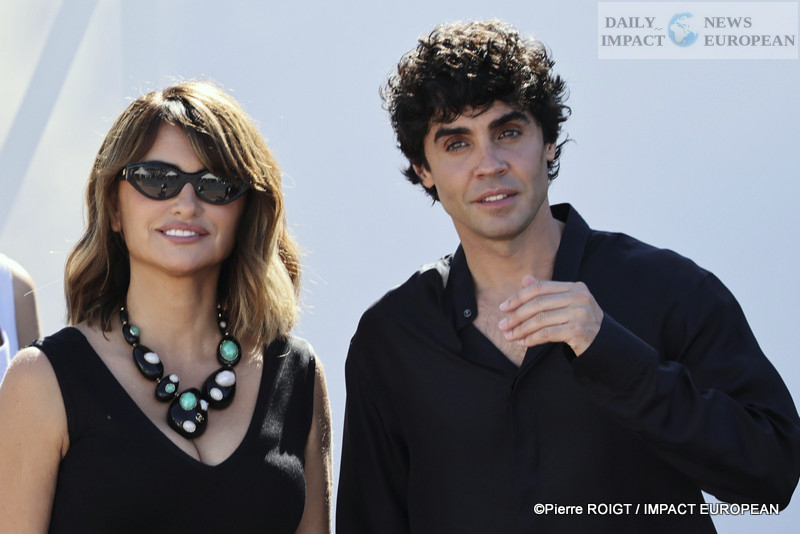
Lola Dueñas is magnificent in limited screen time. Penélope Cruz delivers precisely the kind of magnetic emotional authority that only great movie stars possess. Glenn Close, meanwhile, appears almost mythological — as though cinema history itself were observing the younger characters from another dimension.
Importantly, the directors made a deliberate decision to cast openly gay actors in the principal queer roles.
That decision matters enormously.
Not simply symbolically, but emotionally.
The film never feels like it is “performing” queerness from the outside. It feels inhabited by lived emotional memory.
That authenticity permeates every frame.
Of course, La Bola Negra will not work for everyone.
Some viewers may find its symbolism excessive. Others may resist its deliberate poetic abstraction. The film occasionally risks overwhelming itself with metaphor and visual density.
Yet those excesses are also inseparable from its greatness.
This is not a film interested in tasteful moderation.
It wants transcendence.
It wants operatic emotion.
It wants cinema to become memory itself.
And astonishingly, it often succeeds.
There is also something profoundly moving about seeing such unapologetically queer cinema occupying the center of Cannes competition with this level of ambition and scale.
Historically, queer cinema has frequently been marginalized into side sections, smaller productions or niche critical conversations.
La Bola Negra rejects that limitation entirely.
This is not a “small” queer film.
It is epic cinema.
Political cinema.
Romantic cinema.
Historical cinema.
And perhaps most importantly, communal cinema.
The standing ovation after the premiere reportedly lasted several minutes, and the emotional reaction on the Croisette has been intense. Many critics are already discussing the film as a serious Palme d’Or contender.
And honestly, it is difficult to disagree.
Unlike some Cannes favorites that dominate through formal experimentation alone, La Bola Negra achieves something much rarer: it combines emotional accessibility with artistic ambition.
Audiences feel the film before they intellectually decode it.
That quality often matters enormously with juries.
The current Cannes lineup contains several excellent films, but very few possess the same sense of historical importance.
La Bola Negra feels like a film destined to survive beyond the festival ecosystem.
It has the emotional scale, political resonance and cinematic confidence of works that become long-term cultural landmarks.
Whether it ultimately wins the Palme d’Or remains uncertain.
But it already feels impossible to imagine Cannes 2026 without it.
In many ways, La Bola Negra represents the culmination of multiple cinematic traditions at once: Almodóvar’s emotional flamboyance, Lorca’s poetic fatalism, queer historical cinema, melodrama and political memory.
Yet despite those influences, the film never loses its singularity.
It remains unmistakably itself.
And perhaps that is why the film lands with such force.
Because beneath all its beauty, all its historical reflection and all its visual sophistication, La Bola Negra is ultimately about something profoundly simple:
the human need to be remembered truthfully.
Not sanitized.
Not erased.
Not hidden.
Remembered.
That emotional truth gives the film its extraordinary power.
And it is precisely why La Bola Negra may leave Cannes not only with a prize, but with something even rarer:
the feeling that cinema still has the ability to preserve human memory against disappearance itself.
Copyright © 2026 IMPACT EUROPEAN






Views: 51
More Stories
Paris protest puts cost of living and public freedoms in focus
Art Basel Paris 2026: Global Art Meets an Unexpected Closure
France Protests on October 17: Mass Mobilization Overshadowed by Violence Across the Country