

Presented as a Midnight Screening at the Cannes Film Festival, Full Phil marks Quentin Dupieux’s first major English-language feature. Yet despite its American stars and international production scale, the film remains unmistakably his.
Absurd, uncomfortable, funny and strangely melancholic, Full Phil feels like a collision between luxury tourism, emotional paralysis and surreal comedy.
The story follows Philip Doom, a wealthy American industrialist traveling to Paris in an attempt to reconnect with his estranged daughter Madeleine. But in true Dupieux fashion, the plot immediately drifts away from realism. French cuisine becomes psychologically threatening, a 1950s horror film starts influencing reality, and an intrusive hotel employee slowly turns the luxury trip into something resembling an existential nightmare.
What could have become a conventional satire instead mutates into something stranger.
Dupieux is not really interested in narrative logic. He is interested in emotional disconnection. His characters rarely communicate directly. They circle around each other through awkward pauses, repetitive conversations and bizarre behavior.
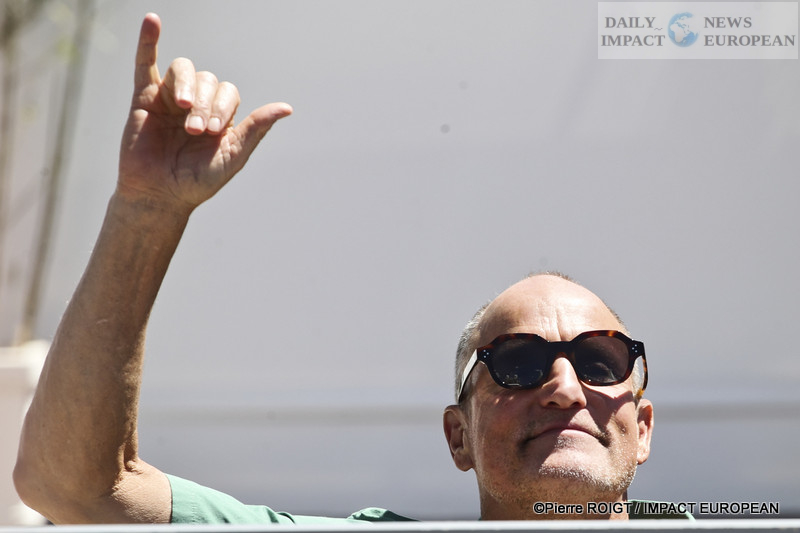
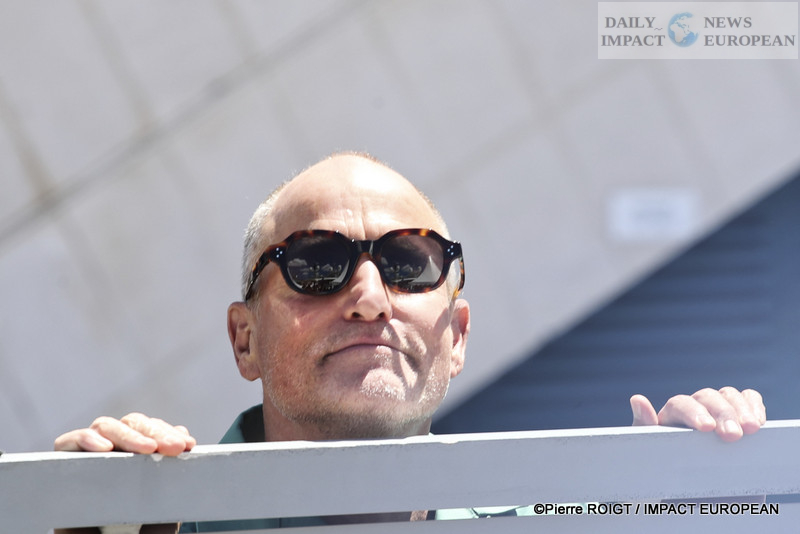
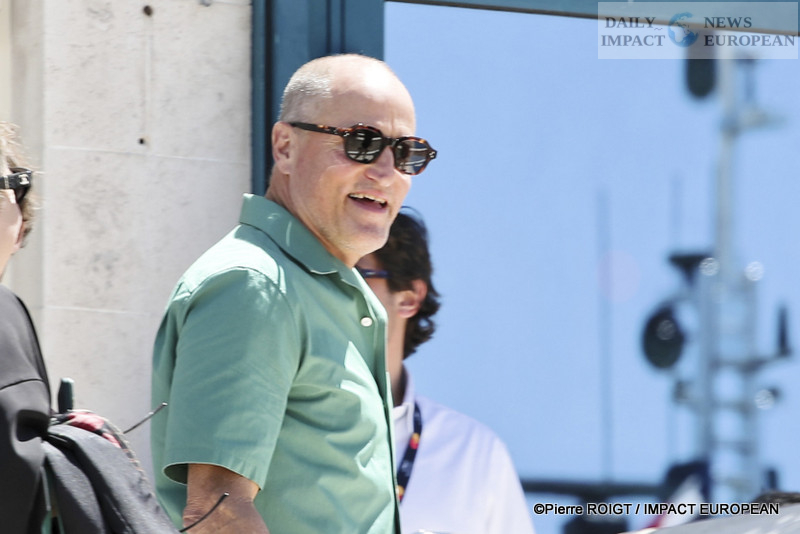
Woody Harrelson gives one of the most unexpectedly fragile performances of his recent career. Philip Doom initially appears ridiculous — an aging American millionaire trying to buy emotional intimacy with money and luxury. But Harrelson gradually reveals the sadness beneath the performance. Doom is not simply arrogant; he is emotionally lost.
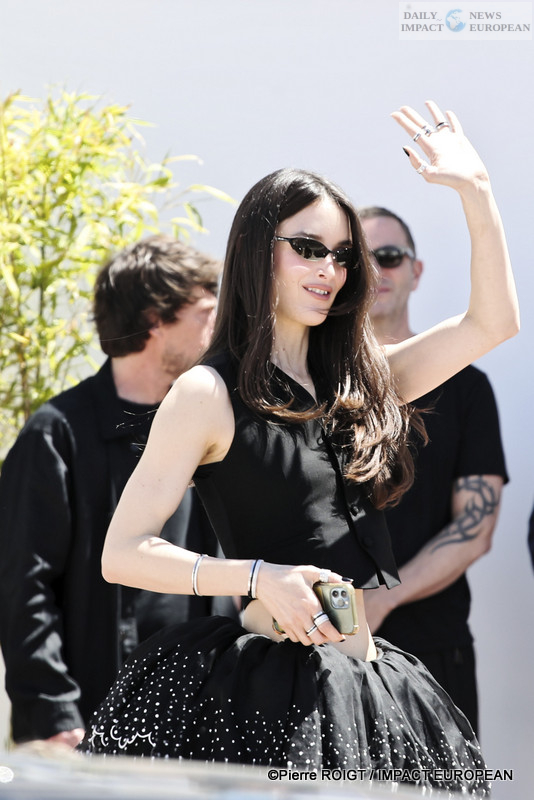
Kristen Stewart, meanwhile, fits perfectly inside Dupieux’s universe. Madeleine seems permanently detached from reality, observing everything with ironic exhaustion. Stewart’s minimalist style works brilliantly here because Dupieux’s cinema depends on emotional ambiguity. We are never entirely sure whether Madeleine is bored, angry, depressed or amused.
The film’s atmosphere grows increasingly surreal as it progresses. Paris itself becomes uncanny. Hotels feel empty. Restaurants become oppressive spaces. Everyday interactions carry the strange rhythm of dreams.
The recurring 1950s horror movie playing throughout the story functions almost like a hidden mirror of the film itself. Dupieux suggests that modern luxury and old cinematic nightmares may not be so different: both are artificial systems trapping people inside performances.
Visually, Full Phil is more polished than many of Dupieux’s earlier films. The cinematography embraces sterile luxury while constantly introducing subtle visual discomfort. Some sequences even approach Lynchian territory, especially when reality starts bending around Philip’s anxieties.
The film does, however, carry Dupieux’s familiar weaknesses. Some scenes feel intentionally unfinished. Emotional arcs are interrupted before reaching catharsis. The narrative occasionally seems to wander without purpose.
But that frustration is also part of the design.
Dupieux makes films about people unable to complete emotional connections, and Full Phil deliberately leaves viewers inside that same unresolved space.
The comparisons to The White Lotus are understandable but somewhat misleading. Mike White’s satire remains rooted in recognizable social realism. Dupieux operates closer to surrealism. He is less interested in exposing wealthy hypocrisy than in showing how absurd human behavior already is beneath civilization’s polished surfaces.
What finally emerges is not simply comedy, but sadness.
Behind the awkward humor, bizarre interruptions and absurd situations lies a portrait of a father and daughter who no longer know how to speak to each other in any meaningful way.
That hidden emotional emptiness gives Full Phil surprising depth.
Quentin Dupieux may have moved into English-language filmmaking, but he has not abandoned his core obsession: the terrifying absurdity of modern existence.
Copyright © 2026 IMPACT EUROPEAN










Views: 7
More Stories
Paris Pride 2026: From Political Mobilisation to a European Message of Solidarity
France’s September 29 Strike: When Pay Becomes a Question of Public-Service Capacity
Pope Leo XIV in France: From Human Dignity to Europe’s Search for Peace