

BANGKOK — As Thailand’s capital prepares to elect its next governor, the campaign has moved far beyond traffic congestion, public transport and infrastructure projects. Human rights, social inclusion and equal access to public services have emerged as key election issues after Amnesty International Thailand and a coalition of civil society organizations called on candidates to publicly commit to building a more inclusive city.
Rather than endorsing a political party, the organizations have framed the election as an opportunity to redefine how one of Southeast Asia’s largest metropolitan areas addresses inequality, discrimination and access to essential services. Their proposals focus on issues ranging from homelessness and migrant workers to disability rights, LGBTQIA+ inclusion, public healthcare and citizen participation in local government.
A Local Election with National Significance
With more than ten million residents across its metropolitan area, Bangkok is not only Thailand’s political capital but also its economic engine. Decisions made by the city’s governor affect transportation, environmental policies, public health, education, housing and emergency management, making the position one of the country’s most influential elected offices.
While previous municipal campaigns largely focused on infrastructure and economic development, this year’s debate has expanded to include broader questions about social justice and human rights. Civil society organizations argue that local governments should be evaluated not only on their ability to build roads or improve mobility, but also on how effectively they protect vulnerable communities and ensure equal access to public services.
Human Rights as an Urban Policy Framework
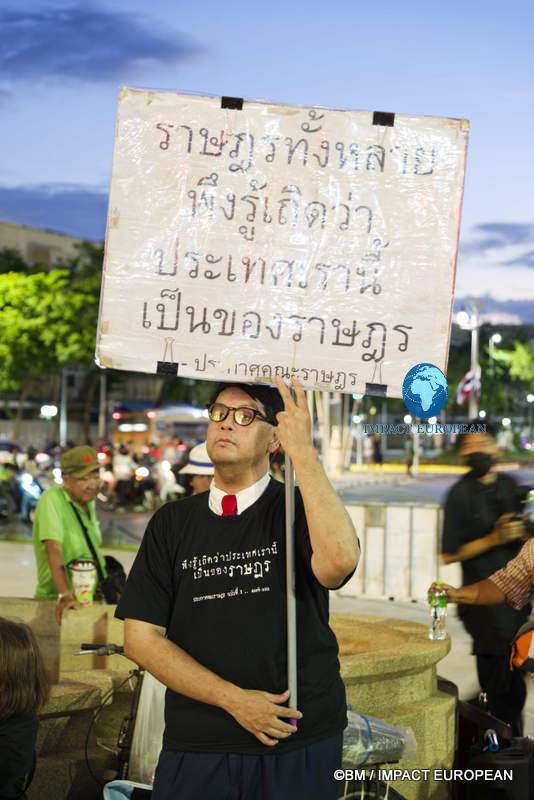
At the center of Amnesty International Thailand’s campaign are six commitments that candidates have been asked to endorse. These include protecting public spaces for peaceful civic activities, improving conditions for public assemblies, expanding citizen participation in municipal decision-making, ensuring non-discriminatory access to public services, promoting environmentally equitable urban development and embedding human rights principles into Bangkok’s governance.
The campaign reflects a growing international trend in which local administrations are increasingly expected to address issues traditionally associated with national governments. Housing affordability, access to healthcare, climate resilience, discrimination and public participation have become defining challenges for major cities worldwide.
The City’s Invisible Communities
One of the campaign’s strongest messages concerns communities that often remain overlooked in urban planning.
Organizations representing homeless people argue that emergency shelters alone cannot solve homelessness without coordinated access to healthcare, mental health services, employment assistance and administrative support. Disability rights groups continue to call for accessible public transport and barrier-free public buildings, while migrant worker organizations highlight obstacles to healthcare and municipal services.
LGBTQIA+ advocates have also urged future city leaders to strengthen anti-discrimination policies, improve public safety and develop inclusive public facilities. Women’s organizations have raised concerns about reproductive healthcare and access to reliable information, while street vendor associations continue to seek policies balancing economic livelihoods with urban management. Together, these issues illustrate how urban governance increasingly extends beyond infrastructure into the broader protection of fundamental rights.
Copyright © 2026 IMPACT EUROPEAN







Views: 6
More Stories
Violence Against Women: French Protesters Push Parliament to Preserve Landmark Protection Bill
Paris Pride 2026: From Political Mobilisation to a European Message of Solidarity
France’s September 29 Strike: When Pay Becomes a Question of Public-Service Capacity