

There are filmmakers who evolve constantly, reinventing themselves from one project to the next. And then there are filmmakers like James Gray, whose greatness comes precisely from their refusal to abandon the same emotional territory.
With Paper Tiger, presented in competition at Cannes 2026, Gray returns once again to New York, to fractured families, to criminal temptation, to masculine guilt and to the slow collapse of the American Dream.
But what could have felt repetitive instead becomes deeply moving.
Because Paper Tiger is not simply another James Gray crime drama. It feels like the culmination of everything he has explored for the past three decades.
The film opens with a quote from Aeschylus. That decision immediately establishes the film’s ambition: this is not a conventional gangster thriller but a modern Greek tragedy disguised as urban noir.
Gray has always understood that crime stories are fundamentally about fate.
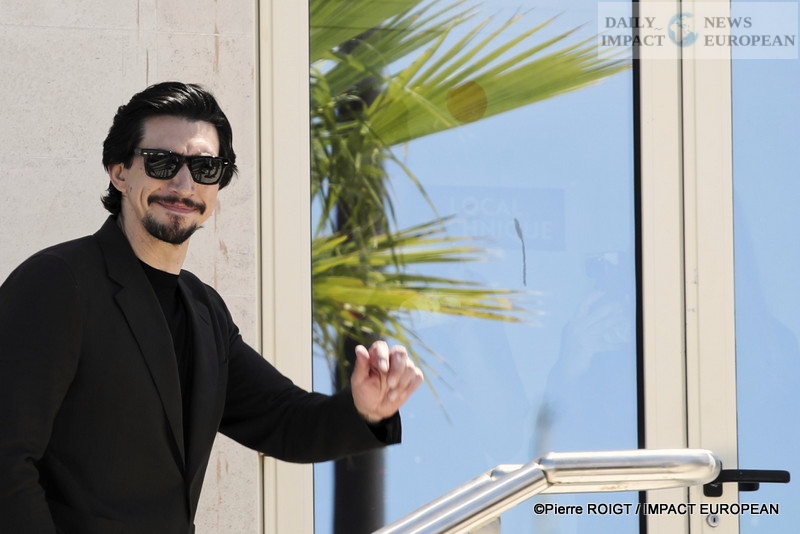
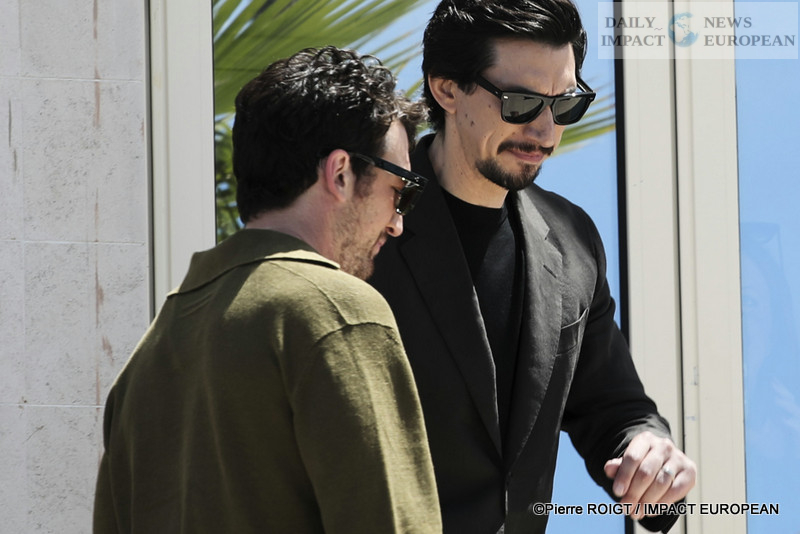
Adam Driver and Miles Teller play Gary and Irwin, two brothers whose personalities could not be more different. Gary is morally ambiguous, emotionally volatile, permanently drawn toward danger. Irwin is stable, rational, deeply attached to his family and ordinary life.
Their relationship becomes the emotional engine of the entire film.
Gray directs them with extraordinary tenderness. The brothers clearly love each other, yet every gesture of loyalty gradually becomes destructive. Gary tries to save Irwin while simultaneously dragging him toward disaster.
The mafia plot itself is almost secondary.
What truly fascinates Gray is the emotional corruption produced by ambition. The Russian mob merely accelerates contradictions that already existed inside the characters.
The film’s title becomes increasingly meaningful as the story unfolds. A “paper tiger” refers to something that appears powerful while actually being fragile. But Gray cleverly applies the idea to nearly everyone in the film — gangsters, institutions, masculinity itself.
The choice to set the story in 1986 proves essential. America is entering a more ruthless capitalist era while Soviet influence weakens abroad and Russian criminal networks grow stronger domestically.
Gray presents New York as a city already losing its soul.
Visually, Paper Tiger is magnificent.
The decision to shoot on film rather than digital gives the movie an almost haunted texture. The warm tungsten lighting creates a nostalgic glow constantly threatened by violence and fear.
Gray shoots New York like a dying empire.
Every apartment, every street corner, every diner feels emotionally exhausted.
The performances are extraordinary across the board.
Adam Driver delivers what may be the finest performance of his career. His Gary is terrifying not because he is violent but because he appears permanently on the edge of emotional collapse. Driver turns every silence into internal warfare.
Miles Teller is equally impressive. His restrained performance gives the film its tragic center. Irwin slowly realizes that decency alone cannot protect him from moral catastrophe.
Scarlett Johansson brings surprising emotional delicacy to the film. Her presence introduces moments of tenderness that make the surrounding violence even more painful.
One of the film’s greatest achievements lies in how Gray stages violence. He refuses spectacle. The terrifying car sequence involving the Russian gangsters — inspired by Gray’s own memories — is shot with suffocating realism.
You do not watch the violence.
You feel trapped inside it.
The film occasionally risks self-repetition. Some scenes echo We Own the Night or Little Odessa so directly that longtime Gray admirers may briefly sense self-imitation.
Yet that familiarity ultimately strengthens the movie.
Because Paper Tiger feels less like repetition than confession.
Gray is no longer simply revisiting his cinematic obsessions. He is confronting them emotionally. The death of his father clearly transformed the film into something more personal and more vulnerable.
Underneath the crime narrative lies a deeply painful meditation on inheritance, fatherhood and the fear of failing the people you love most.
And that is why Paper Tiger becomes far more than a gangster movie.
It is James Gray’s most intimate film disguised as his darkest one.
Copyright © 2026 IMPACT EUROPEAN





Views: 9
More Stories
Paris Pride 2026: From Political Mobilisation to a European Message of Solidarity
France’s September 29 Strike: When Pay Becomes a Question of Public-Service Capacity
Pope Leo XIV in France: From Human Dignity to Europe’s Search for Peace