

France’s political future is not decided exclusively in the corridors of the National Assembly or behind the doors of the Élysée Palace. Across the country, municipal councils make decisions that shape the everyday lives of millions of citizens, often dealing with the immediate consequences of policies adopted at national level.
It is this relationship between national government and local democracy that gives particular significance to the annual Congress of French Mayors.
On Wednesday, 25 November, the second day of the 108th Congress at the Porte de Versailles exhibition centre in Paris, local elected representatives renewed the leadership of their national association.
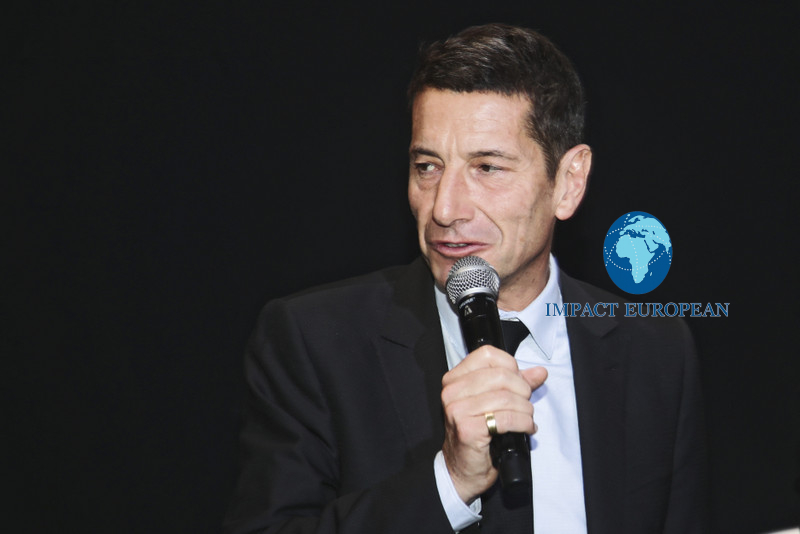
David Lisnard, mayor of Cannes and a candidate in France’s forthcoming presidential election, will remain at the head of the Association of Mayors of France, known by its French initials AMF, for another three years.
His victory settles the question of the association’s leadership. It does not, however, resolve the wider debate surrounding the distribution of power between central government and local authorities.
A third term with a clear electoral majority
According to the results published by the AMF, David Lisnard received 9,505 votes, while Philippe Laurent, mayor of Sceaux, obtained 3,686.
Turnout reached 40.43%, with 13,826 participants. A further 635 submitted blank ballots.
The election gives Lisnard a substantial majority among those who expressed a preference, although most registered electors did not participate.
The distinction matters when assessing the political significance of the result. The AMF leadership election is an internal democratic process rather than a national popular vote. Its electorate consists of eligible mayors and presidents of intermunicipal authorities.
Lisnard welcomed the outcome as a victory for collective action and the independence of local elected representatives.
His new term begins just months after France’s municipal elections in March 2026, providing the association with renewed leadership at the beginning of a six-year municipal cycle.
For local authorities, the immediate concern is how to turn electoral commitments into functioning public services and sustainable investment.
An association built across political divisions
Unlike a political party, the AMF brings together elected representatives whose political convictions, economic priorities and territorial circumstances may differ considerably.
Its governing structure reflects the need to accommodate these differences.
A joint right-left leadership arrangement received 86.32% support in the executive bureau election and 86.62% in the governing committee election. Neither contest involved a competing list.
Jean-François Debat, the Socialist mayor of Bourg-en-Bresse, is expected to succeed André Laignel as the association’s senior delegated vice-president.
The arrangement illustrates an important distinction in French municipal politics.
While national political competition often encourages opposing parties to emphasise their differences, local government regularly requires cooperation across ideological boundaries.
Water infrastructure, school maintenance, waste collection and public transport cannot always be organised effectively within the limits of a single municipality. Nor can their long-term management depend entirely on the political composition of national institutions.
The AMF’s ability to maintain this cooperation will be particularly important over the coming year.
The approaching presidential election
David Lisnard’s national political ambitions were among the principal issues raised during the leadership contest.
His opponent, Philippe Laurent, questioned whether the association could maintain its independence while its president pursued a candidacy in the 2027 presidential election.
Following the announcement of the results, Laurent reiterated his preference for an independent, pluralistic association capable of working with representatives across the political spectrum.
Lisnard, meanwhile, presented his leadership as a collective undertaking rather than an individual political project.
This tension is not unique to France. Organisations representing local government must frequently maintain working relationships with national administrations whose policies their members may support or oppose.
The challenge becomes more visible when the head of such an organisation is also pursuing national elected office.
For the AMF, maintaining a distinction between the collective interests of municipalities and the political ambitions of individual members will be essential to its credibility.
Its capacity to negotiate with the government must remain intact regardless of the political developments surrounding next year’s presidential election.
Understanding the place of mayors in French democracy
For international observers, the importance attached to France’s mayors cannot be fully understood without considering the country’s administrative structure.
France has an extensive network of municipalities, ranging from small rural communities to major metropolitan centres.
French citizens elect municipal councillors, who subsequently elect the mayor. The mayor is therefore closely connected to both the municipal council and the community it represents.
The office also has a distinctive legal character. A French mayor exercises responsibilities on behalf of the municipality while carrying out certain duties on behalf of the state, including functions relating to civil registration.
This dual role illustrates the complexity of French decentralisation.
Municipalities possess their own elected institutions and responsibilities, yet remain part of a broader administrative system shaped by national legislation.
Over successive decades, decentralisation reforms have transferred significant responsibilities to local and regional authorities. Intermunicipal cooperation has also become increasingly important, allowing neighbouring municipalities to share services and infrastructure.
However, transferring responsibilities does not automatically provide the financial or administrative capacity needed to exercise them.
The relationship between authority, accountability and resources remains one of the central questions facing French local government.
Local freedom and the limits of public finance
The theme of this year’s congress, Regagnons nos libertés — reclaiming our freedoms — reflects demands for greater local discretion.
For a municipality, freedom to govern has practical consequences.
A council may wish to renovate a school, improve public spaces or invest in infrastructure. Its ability to proceed depends not only on the support of local elected representatives but also on available funding, regulatory requirements and the financial commitments already facing the municipality.
France’s public finance framework generally requires local authorities to balance their operating budgets. Borrowing is intended to finance investment rather than routine operating expenditure.
These constraints distinguish local budget management from the financial arrangements available to central government.
They also help explain why decisions concerning national taxation, grants and public spending can generate considerable concern among municipal leaders.
A reduction in financial resources may require a local authority to reconsider investment plans, reorganise services or seek additional cooperation with neighbouring municipalities.
The debate over local freedom is therefore inseparable from the question of financial responsibility.
Where public policy meets industry
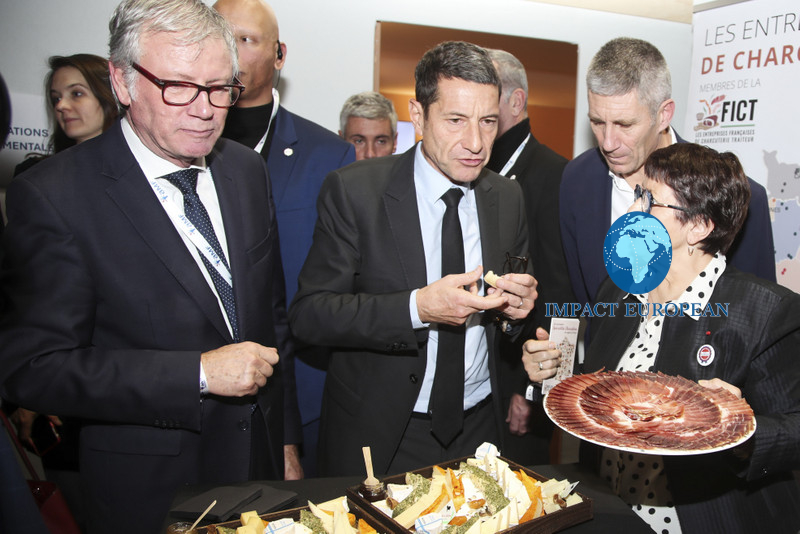
Alongside the congress, the Mayors and Local Authorities Exhibition provides a professional setting in which local government meets the companies and specialists involved in delivering public infrastructure and services.
The relationship between these two events is particularly relevant at the beginning of a new municipal term.
Political commitments concerning energy efficiency, mobility, accessibility or environmental protection eventually require technical solutions, procurement decisions and practical implementation.
The construction industry, technology providers, equipment manufacturers and public service specialists all have a role in this process.
Yet the needs of French municipalities vary considerably.
An urban authority may be looking for ways to improve transport networks or manage large public buildings. A rural municipality may be more concerned with maintaining essential services, preserving local infrastructure or sharing equipment with neighbouring communities.
For suppliers, understanding these differences is as important as developing new products.
For local elected representatives, the challenge is to distinguish between innovations that genuinely improve services and those whose cost or complexity might outweigh their benefits.
Public procurement ultimately involves decisions about the use of citizens’ money, often with consequences extending beyond a single municipal term.
A question shared by local governments elsewhere
The difficulties facing French municipalities are familiar to local authorities in many other countries.
Governments are asking cities and towns to contribute to climate adaptation, digital transformation and infrastructure modernisation while maintaining essential services.
The institutional arrangements through which these responsibilities are organised differ considerably.
Some countries provide municipalities with substantial fiscal autonomy. Others rely more heavily on national redistribution or regional administrative structures.
France’s experience demonstrates that decentralisation cannot be assessed solely through the existence of elected local institutions.
The practical capacity of those institutions to make decisions, finance projects and respond to local circumstances is equally important.
Internationally, debates about subsidiarity and local self-government continue to raise questions about which level of administration is best placed to exercise public responsibilities.
Some decisions require national coordination. Others can be more effectively managed by authorities with direct knowledge of local conditions.
Finding the appropriate balance remains a continuing task rather than a permanent institutional settlement.
The responsibilities of a renewed leadership
The election on 25 November provides the AMF with leadership continuity until 2029.
It also comes during a period of overlapping political cycles. France’s municipal administrations are beginning their 2026–2032 terms, the association has renewed its leadership for three years, and the country is approaching a presidential election in 2027.
These different timetables do not necessarily lead to the same priorities.
National campaigns may concentrate on questions of political leadership and electoral programmes. Municipal administrations must continue maintaining infrastructure, managing services and responding to residents throughout those campaigns.
The renewed AMF leadership will have to represent these local responsibilities while engaging with an increasingly competitive national political environment.
David Lisnard’s electoral victory is clear. The next test will concern the association’s ability to defend municipal autonomy, preserve cooperation across political divisions and translate its demands into meaningful changes for local authorities.
Ultimately, the significance of the congress will be measured not only by the strength of the electoral mandate delivered in Paris, but by what municipalities are able to achieve when their elected representatives return home.
©2026 IMPACT EUROPEAN – All rights reserved

Views: 0
More Stories
Inside France’s Mayors Congress: Politics and People
France’s mayors seek to reclaim their local freedoms
Cate Blanchett lights up Paris as Christmas returns to the Champs-Élysées