
How an ordinary Parisian square became the stage for one of the Tour de France’s most unforgettable moments
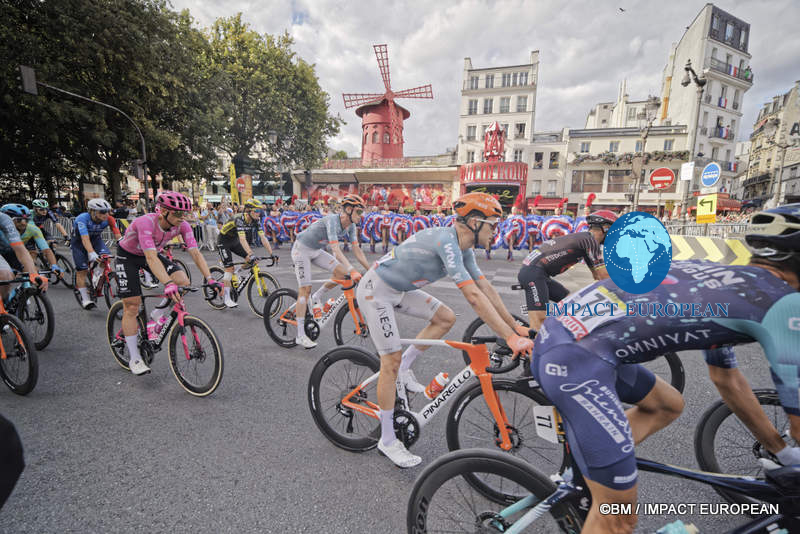
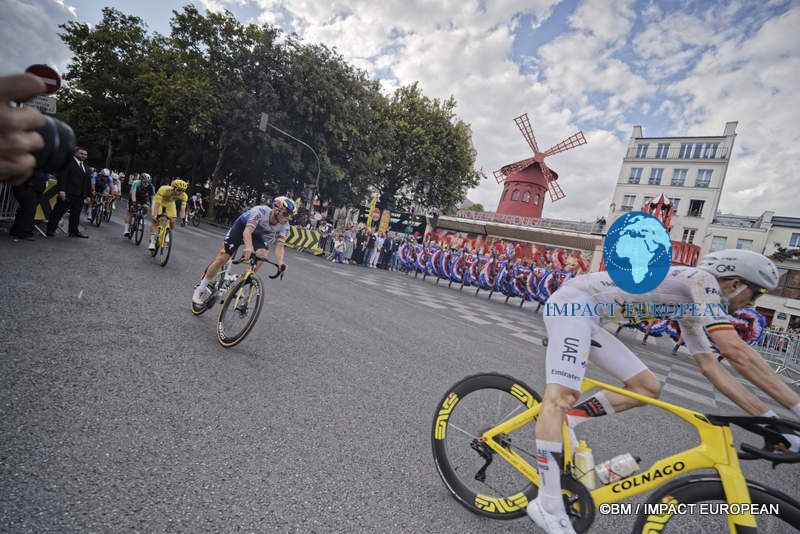
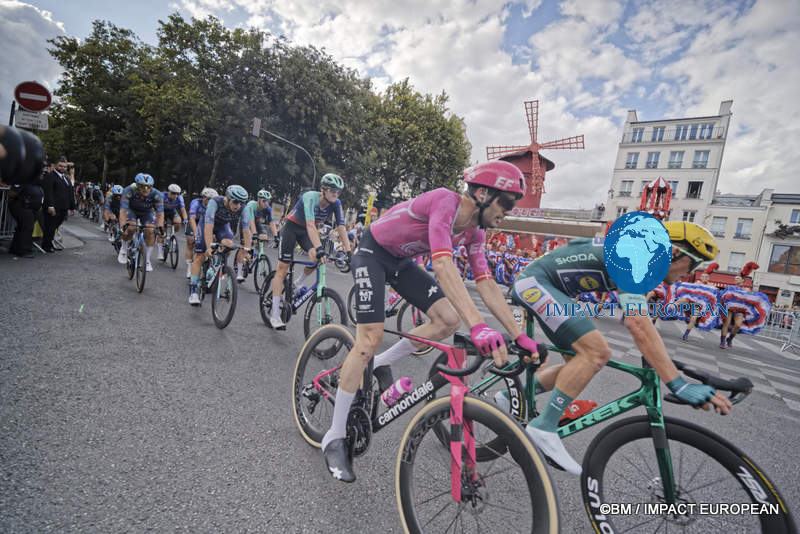
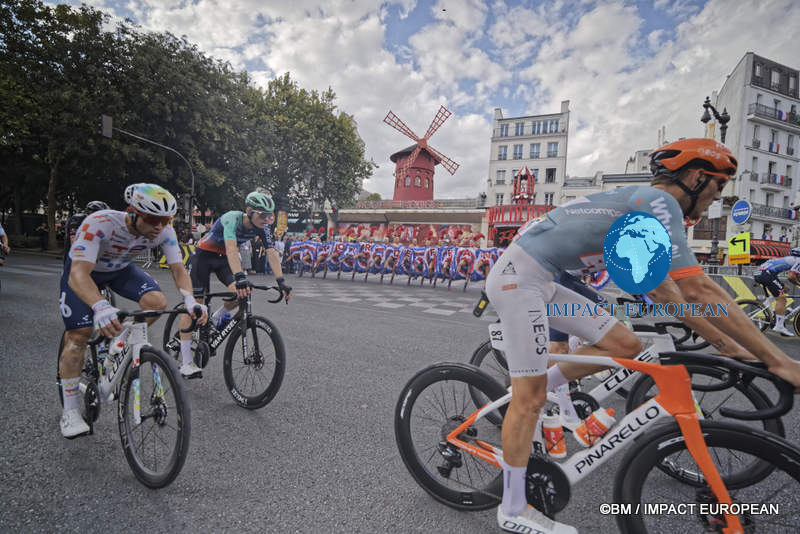
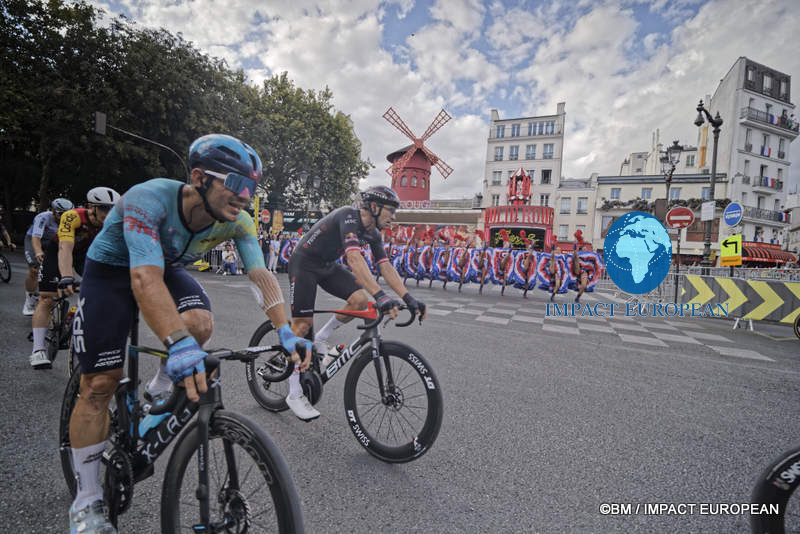
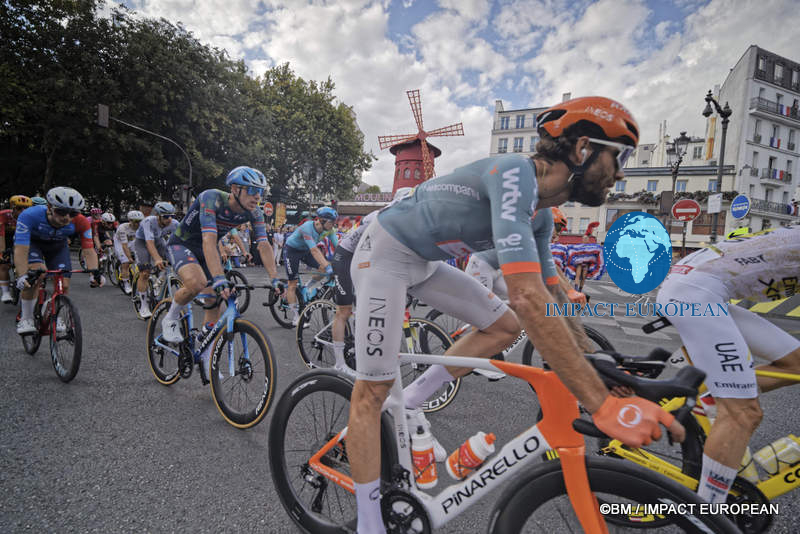
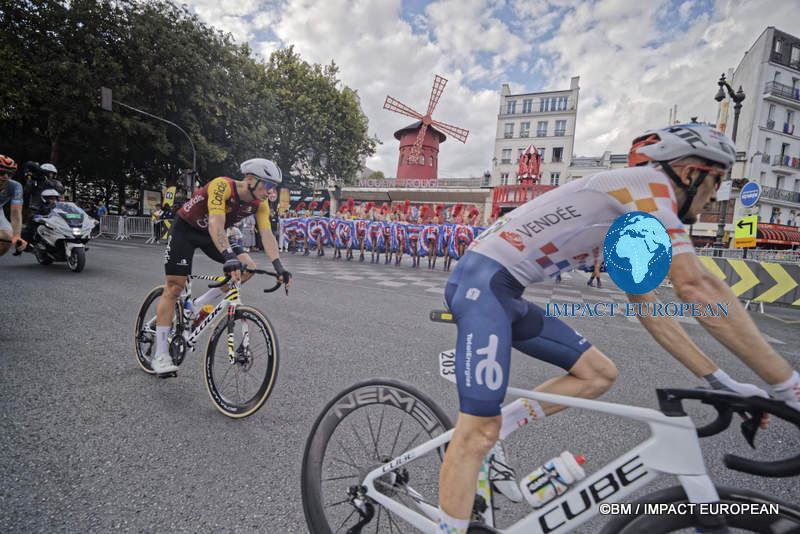
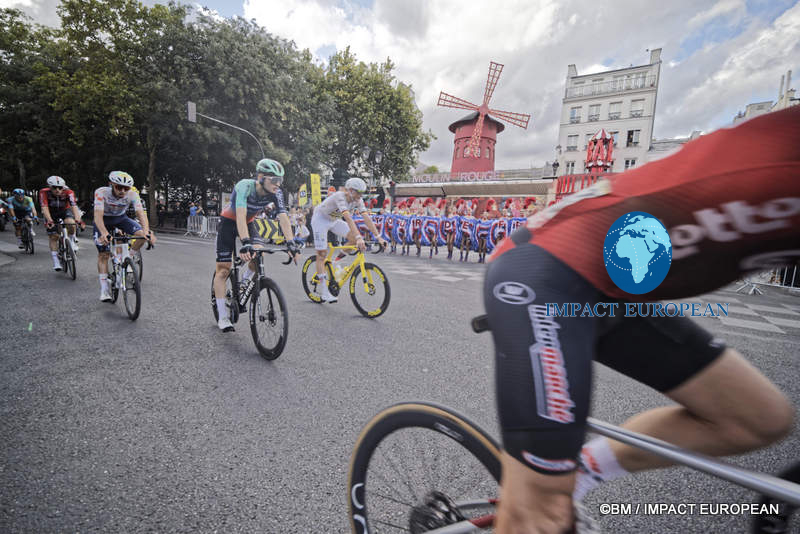
PARIS — Long before the roar of the crowd announced the arrival of the Tour de France, another performance had already taken over Place Blanche.
It wasn’t about speed.
It wasn’t about competition.
It was about Paris.
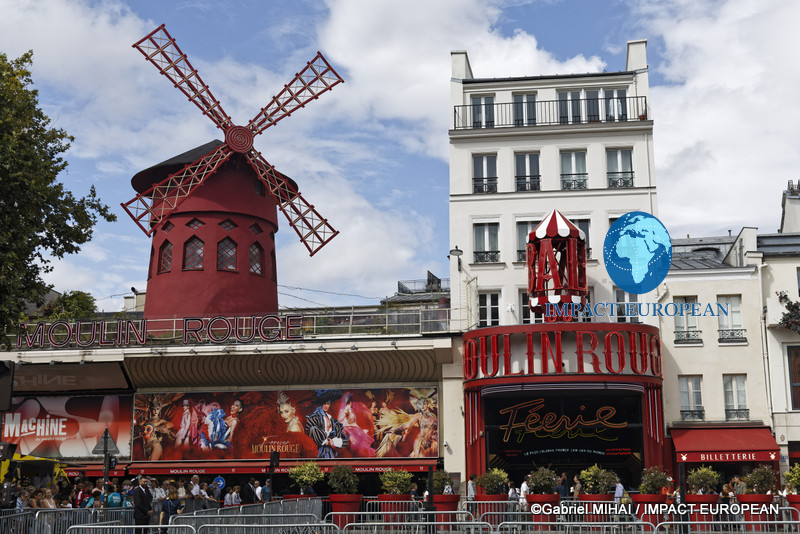
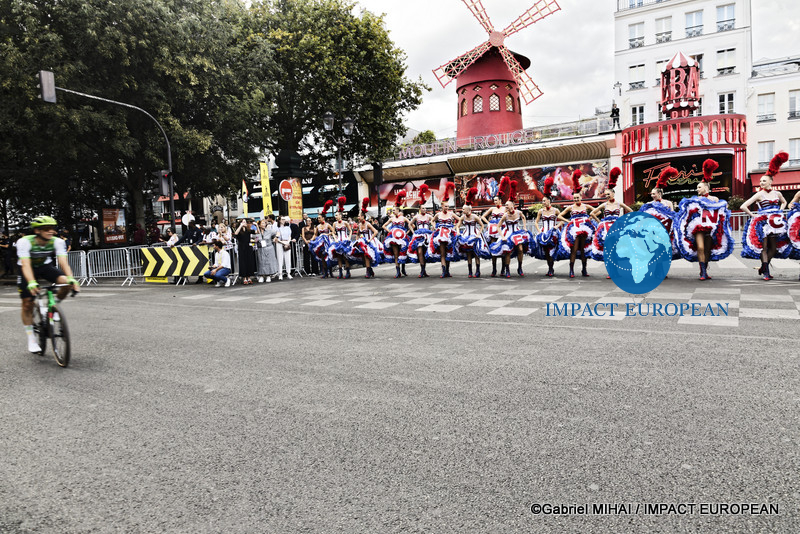
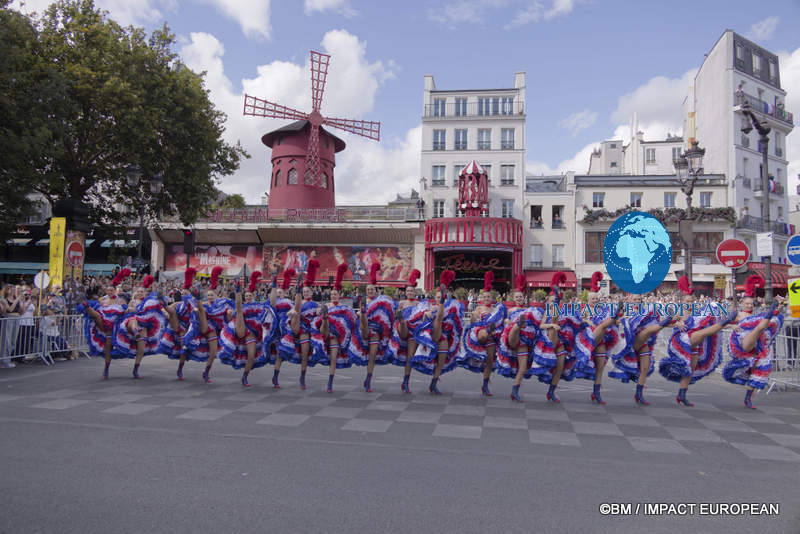
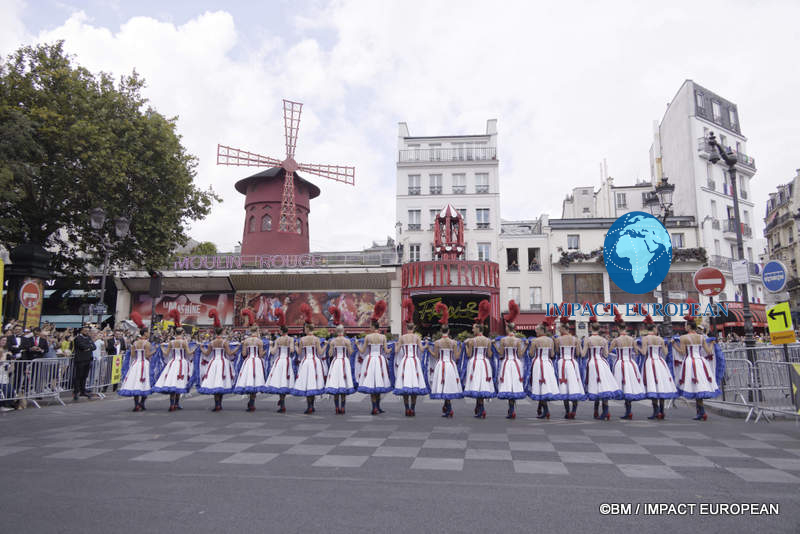
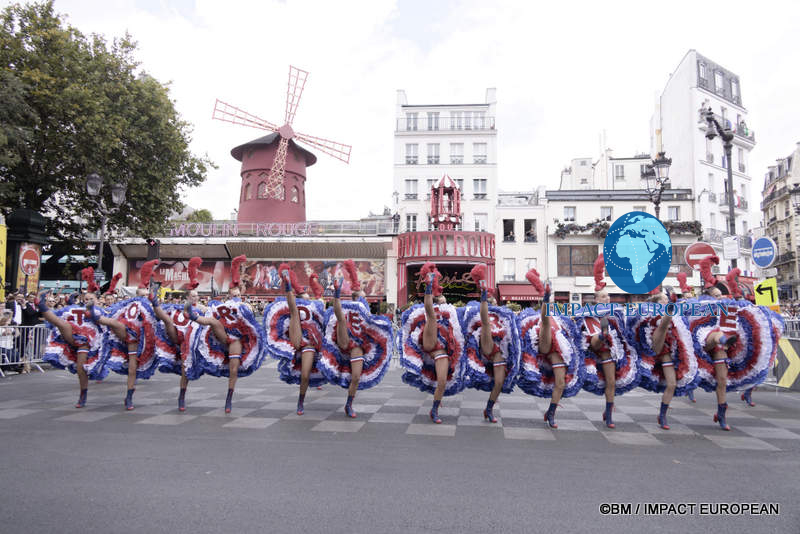
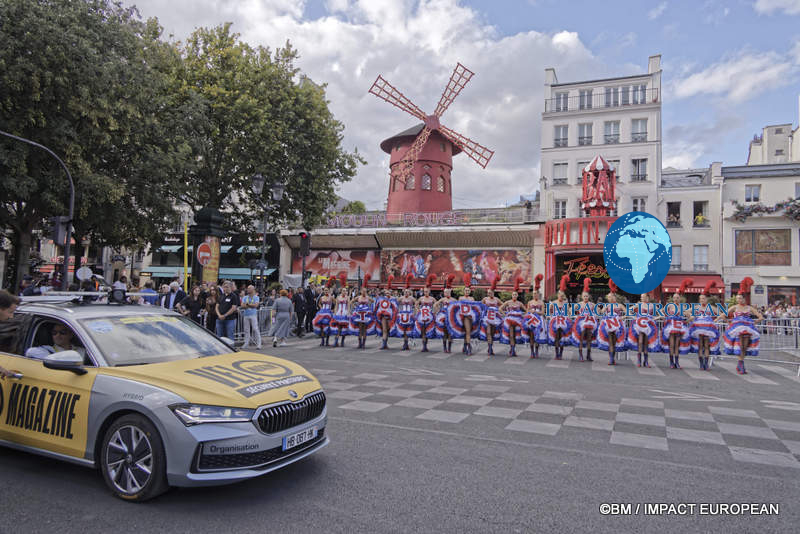
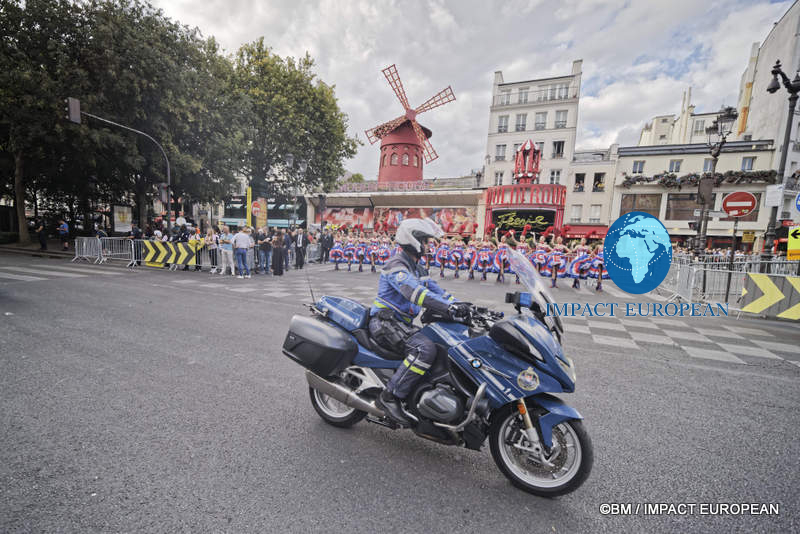
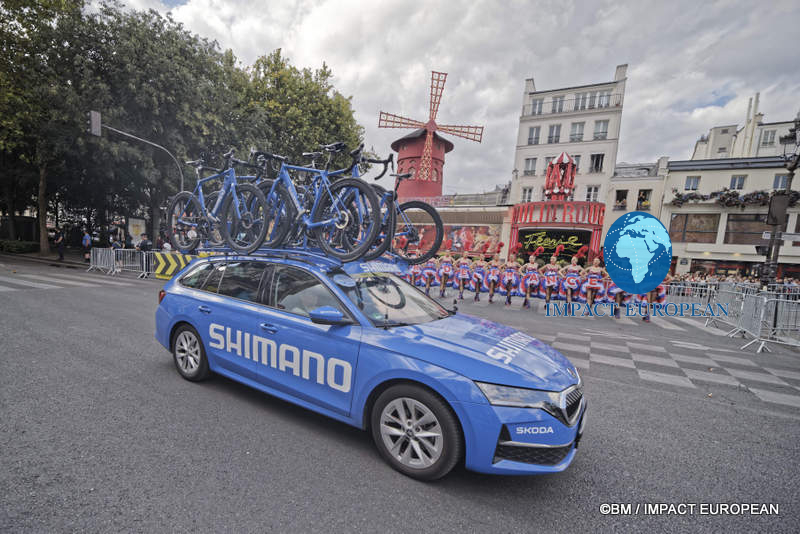
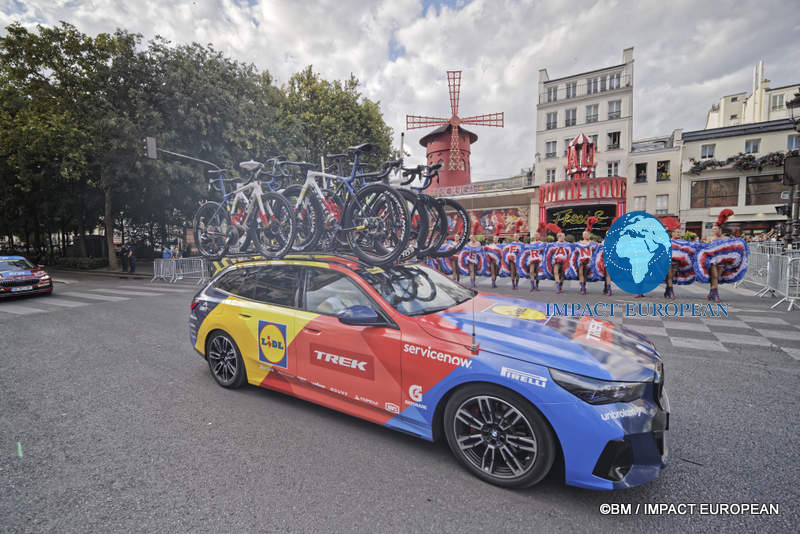
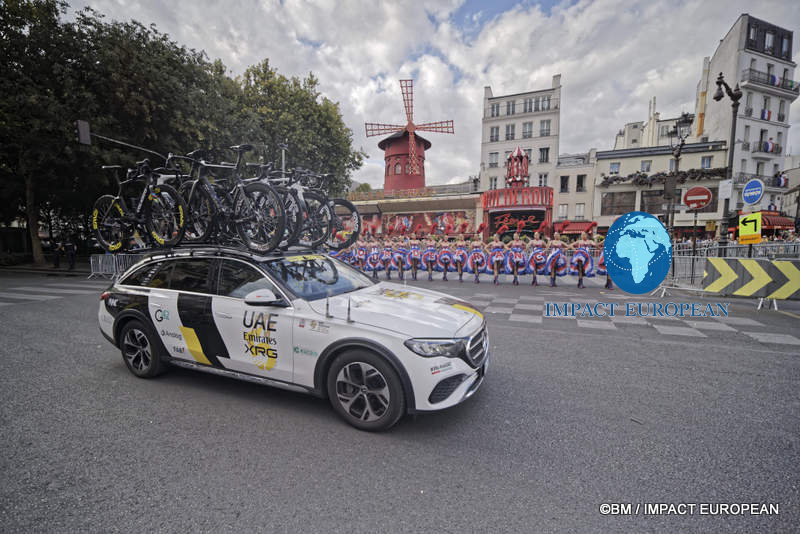
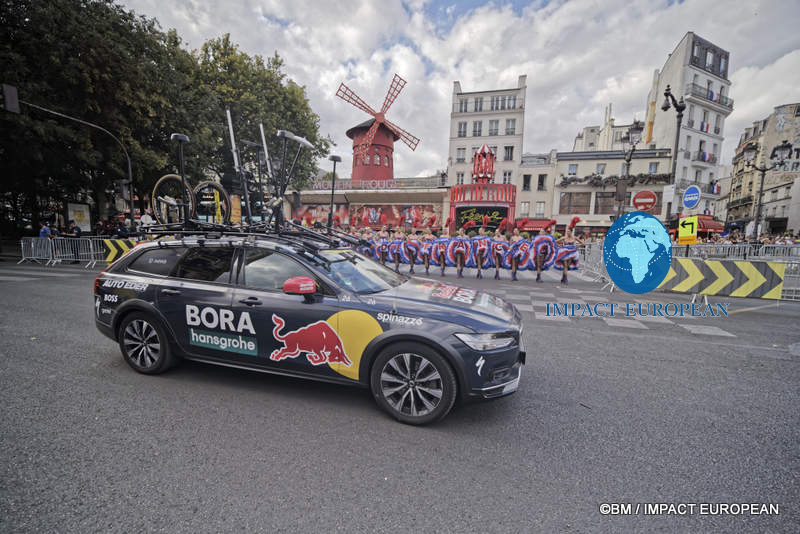
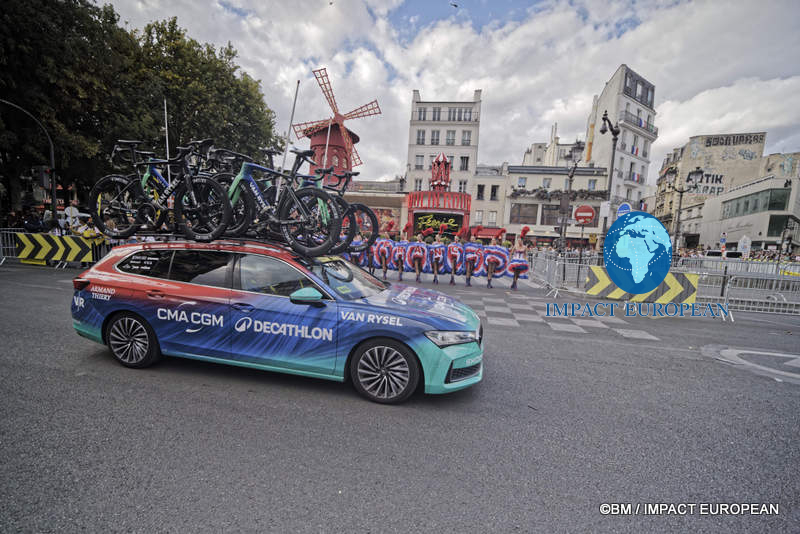
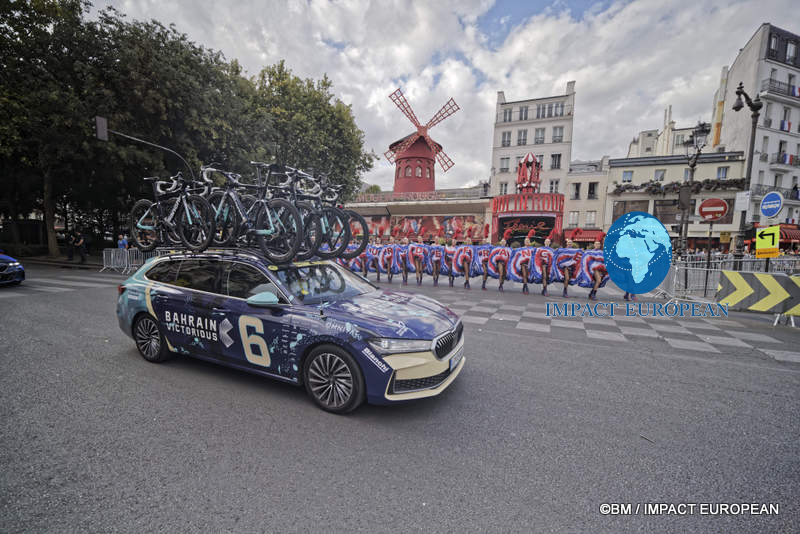
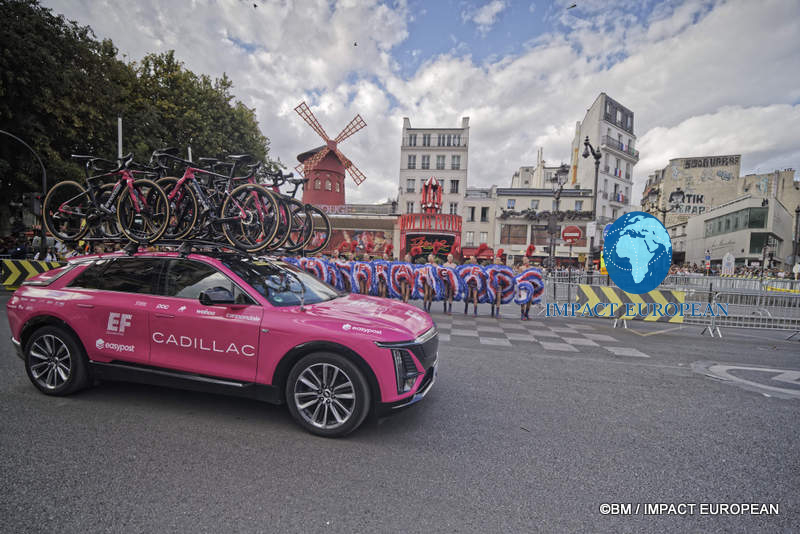
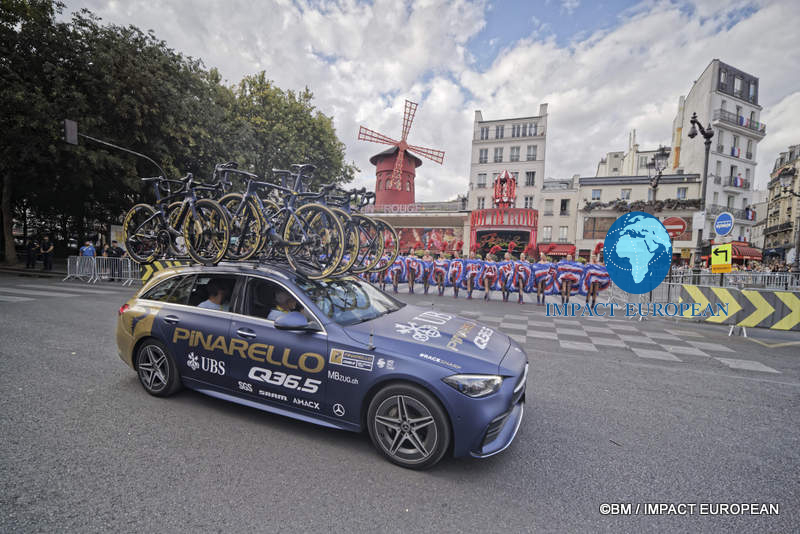
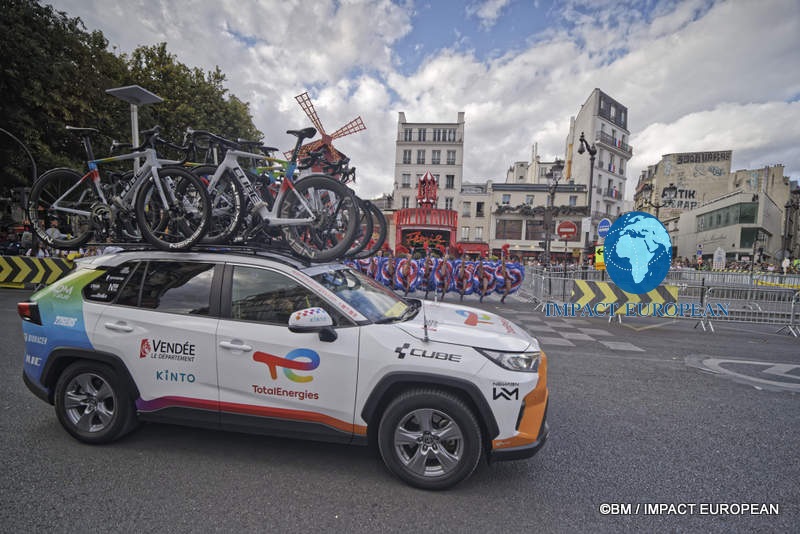
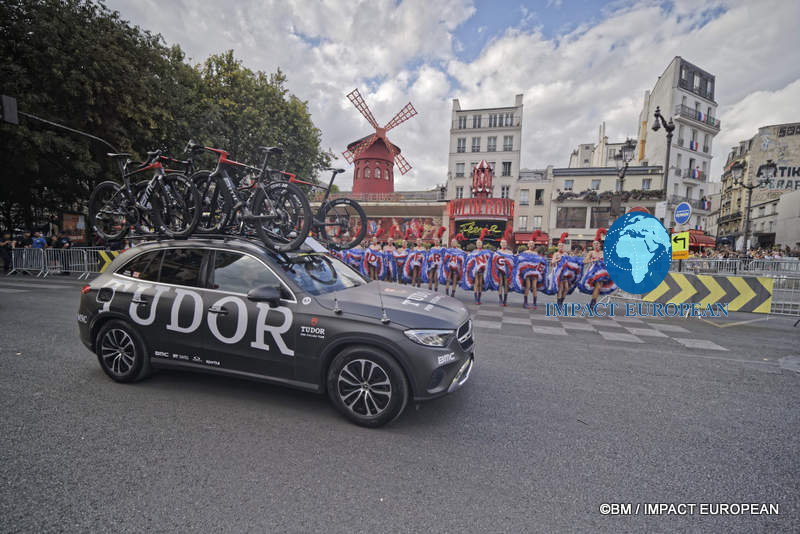
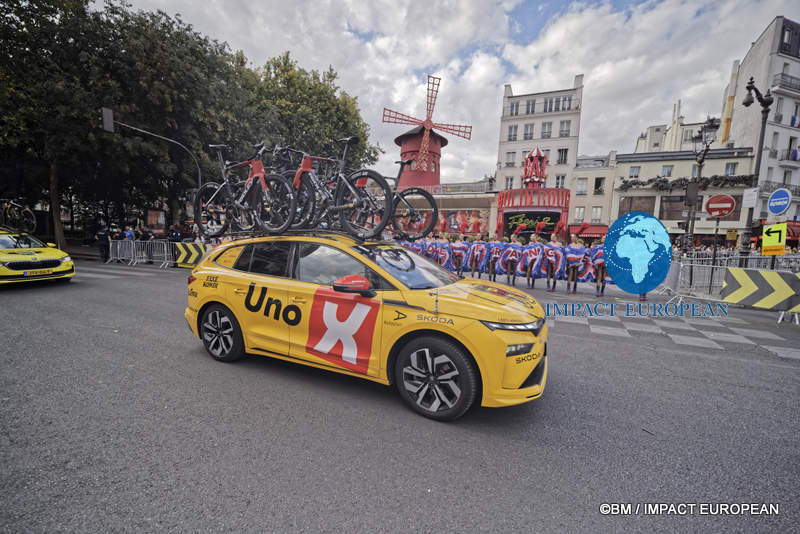
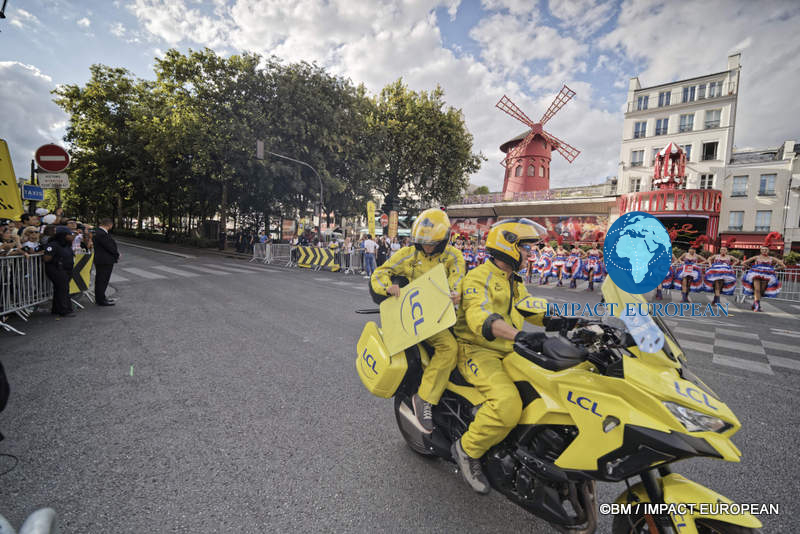
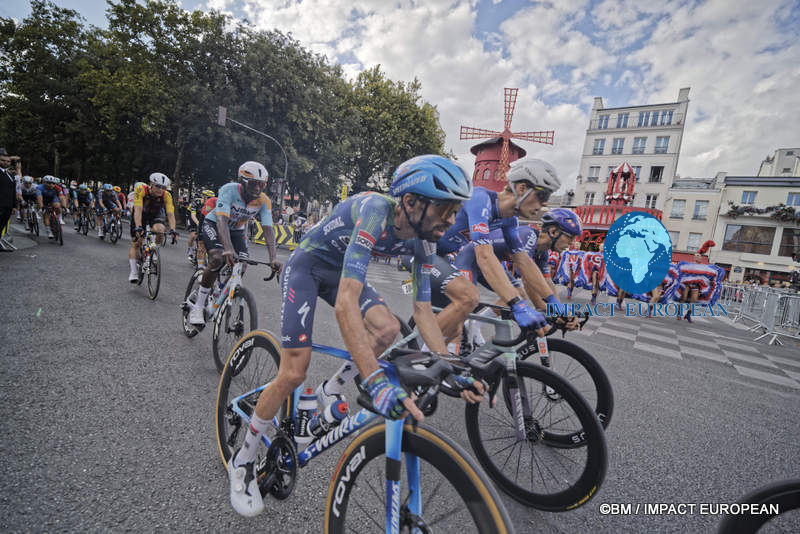
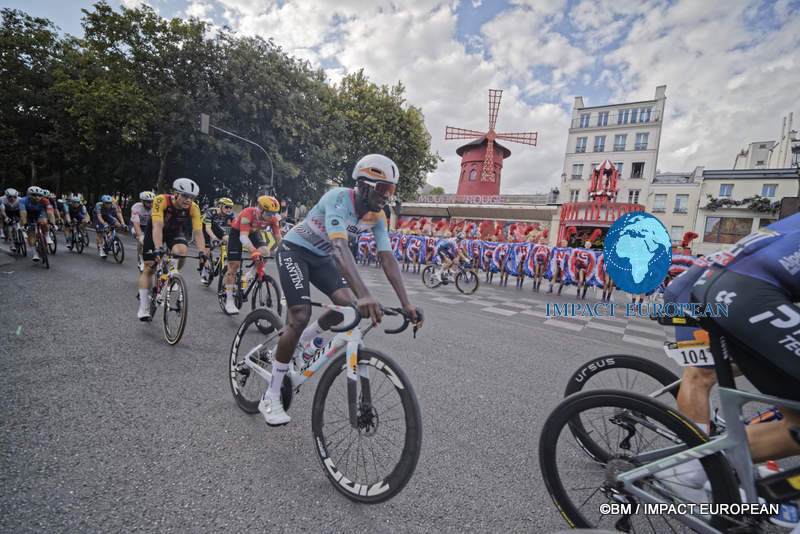
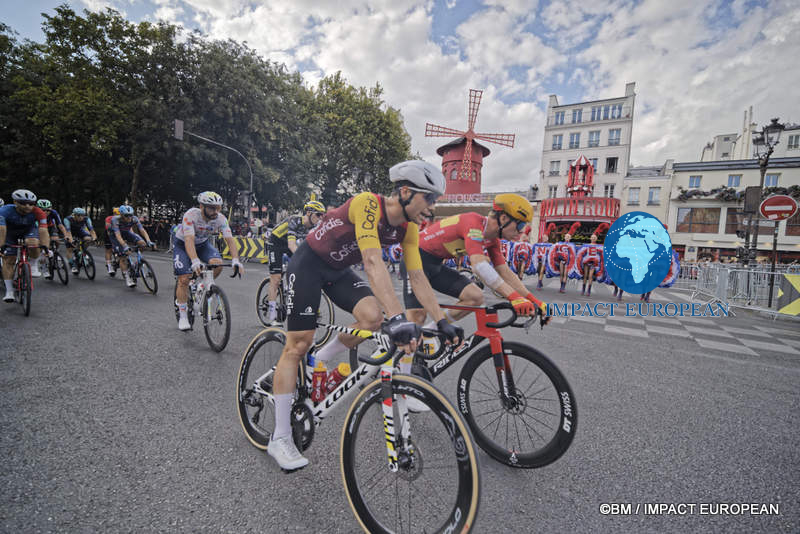
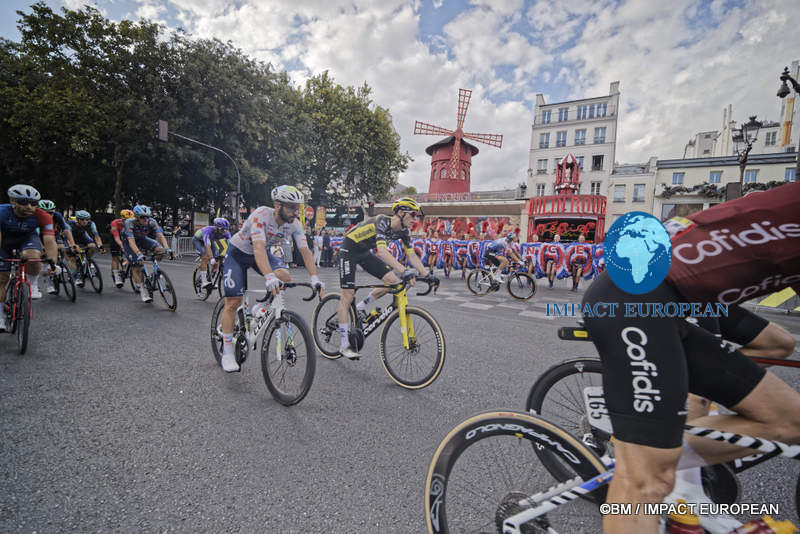
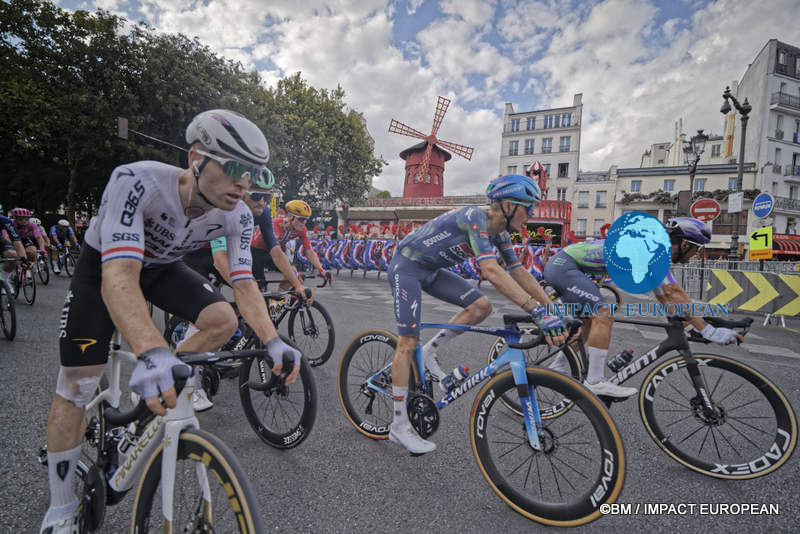
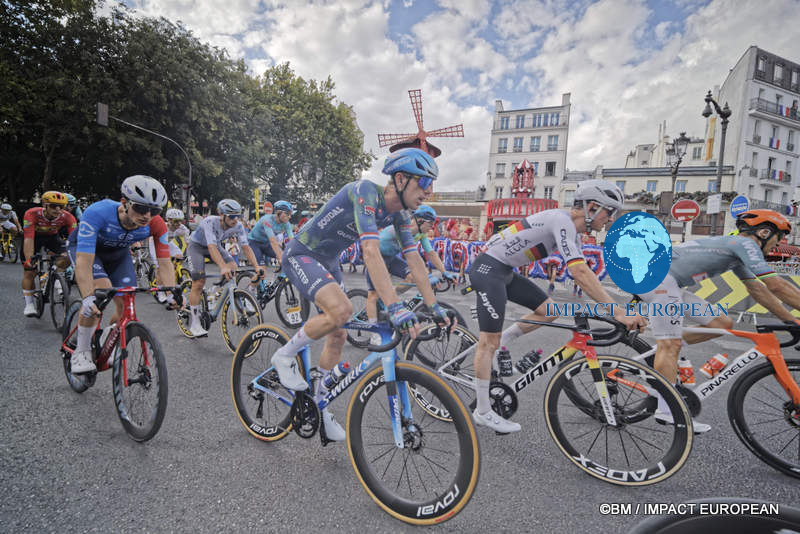
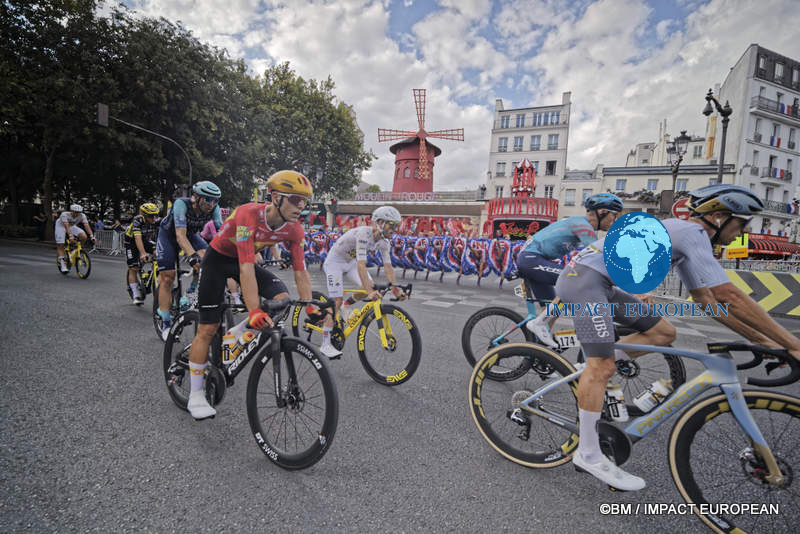
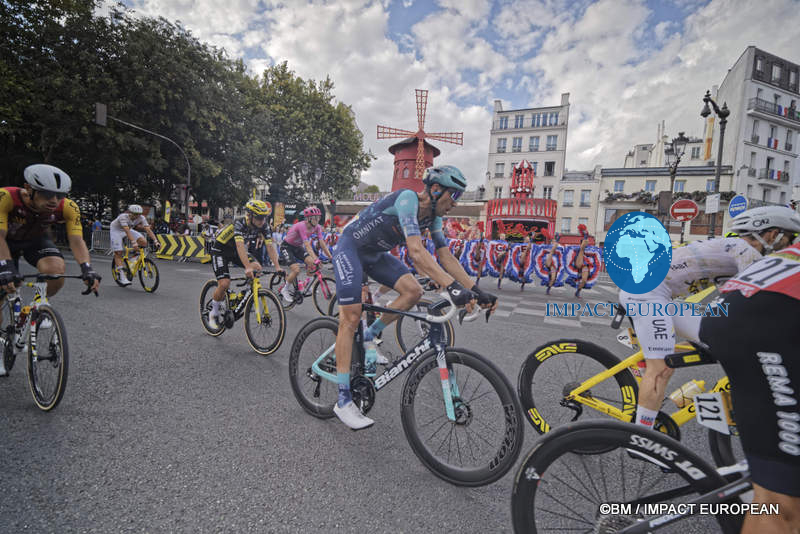
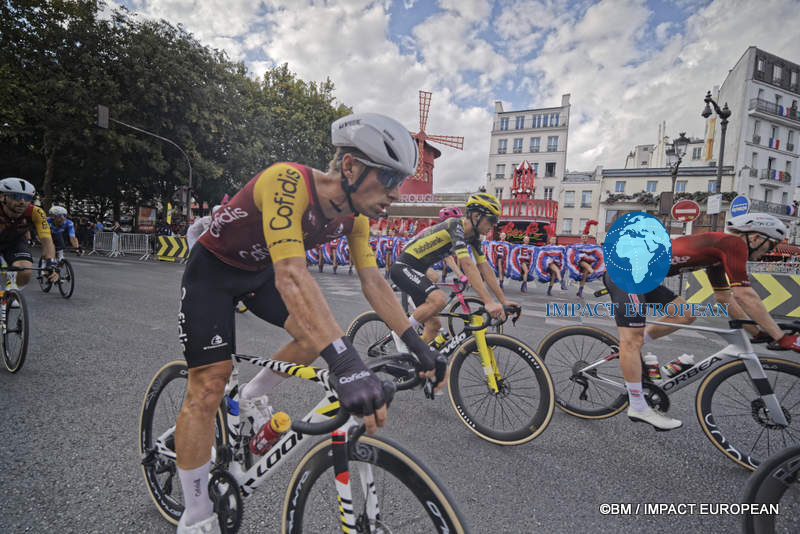
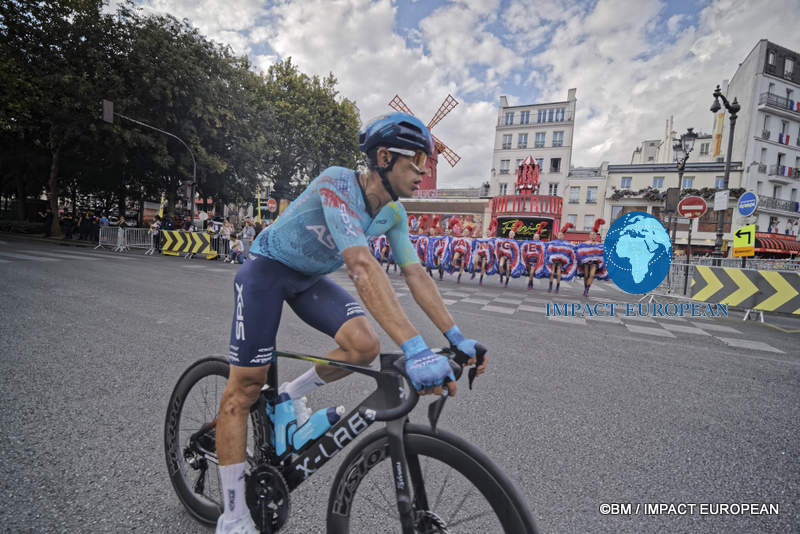
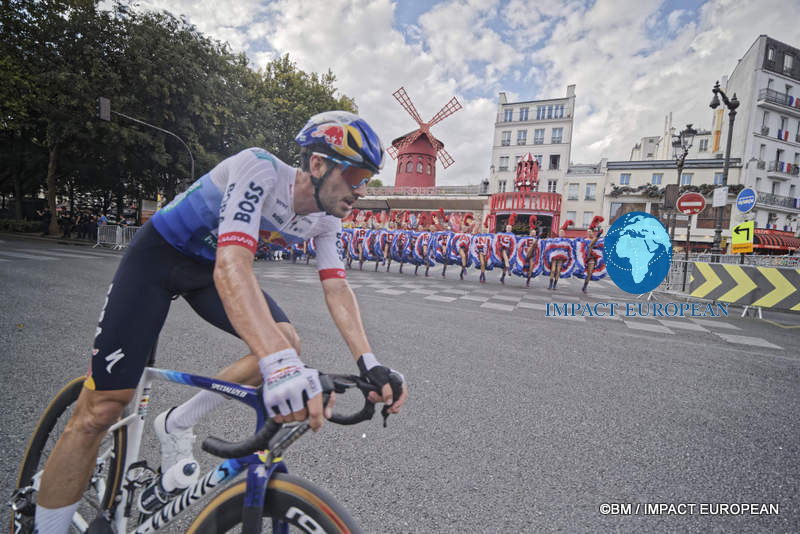
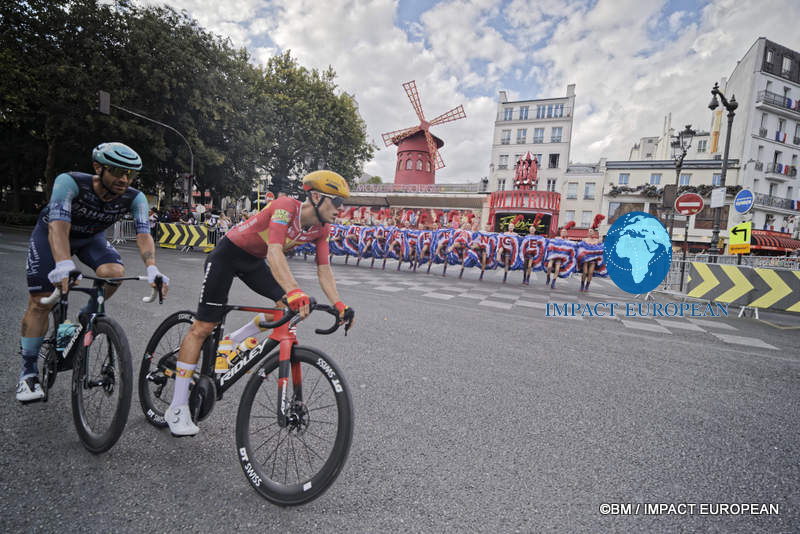
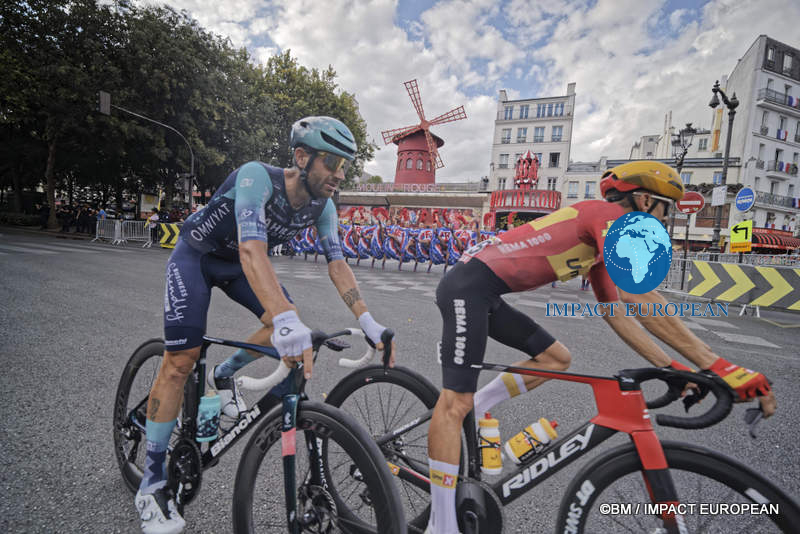
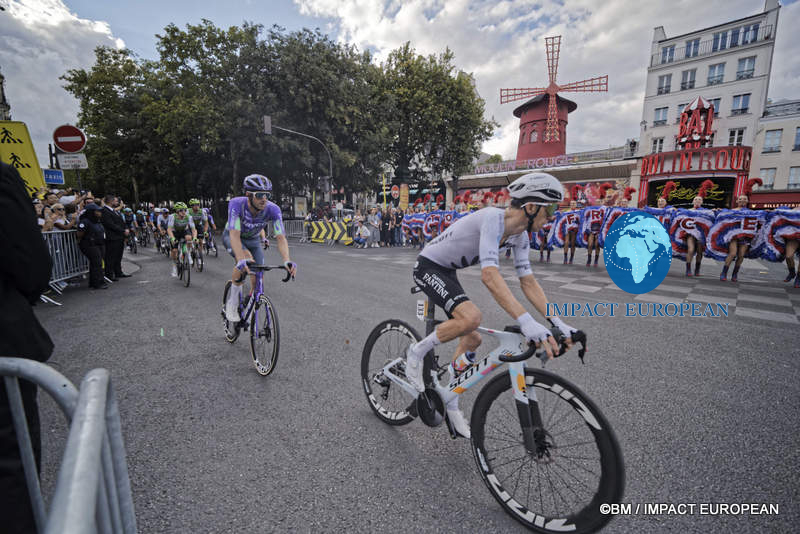
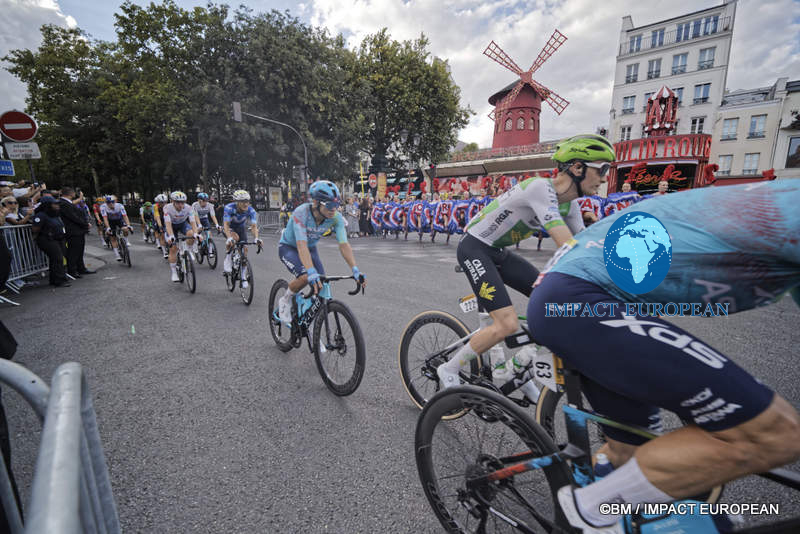
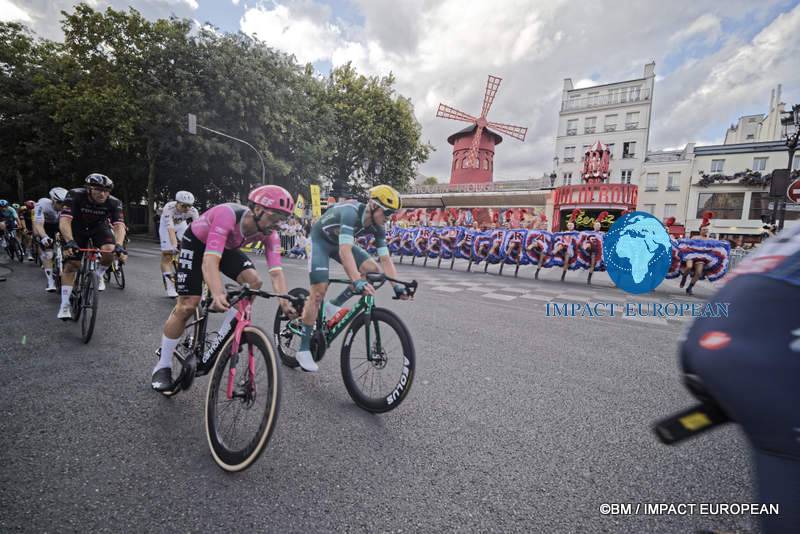
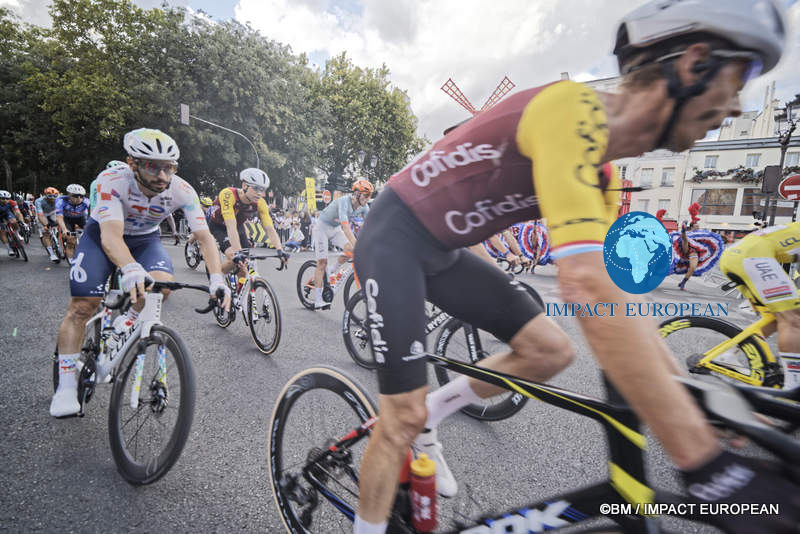
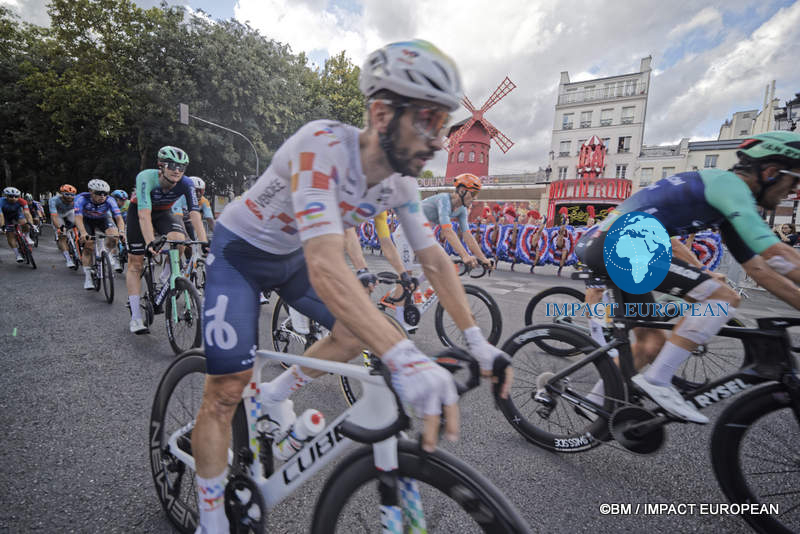
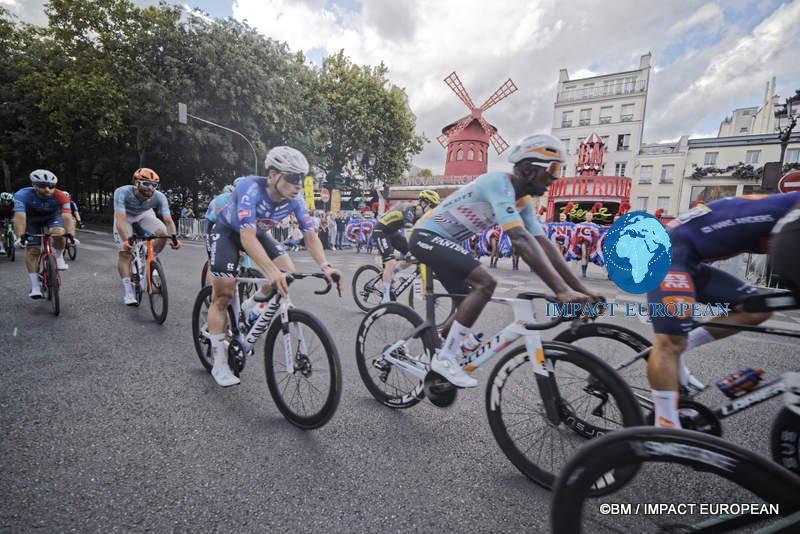
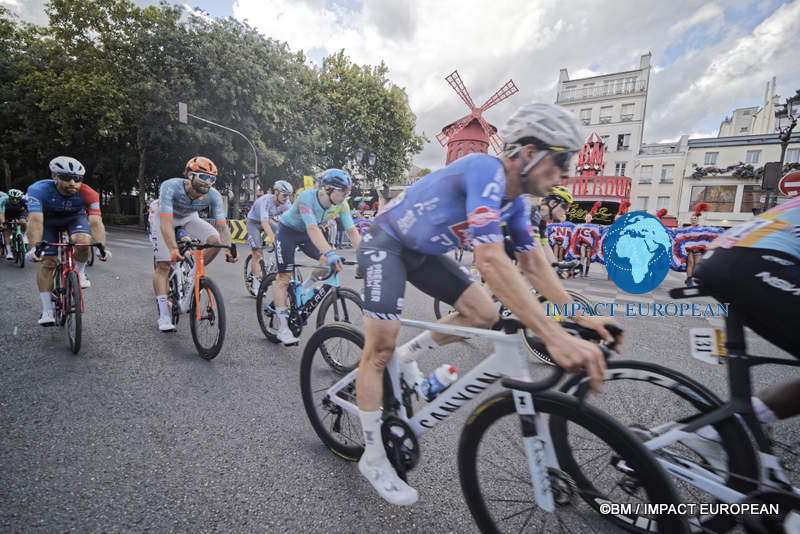
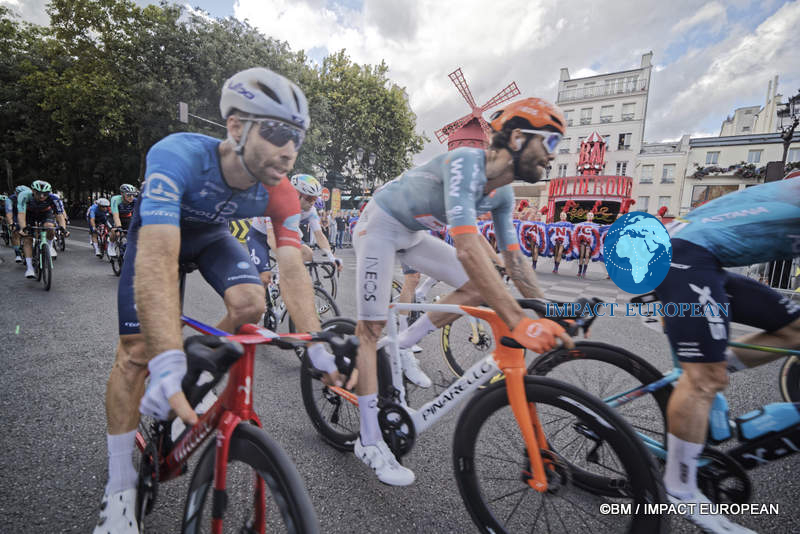
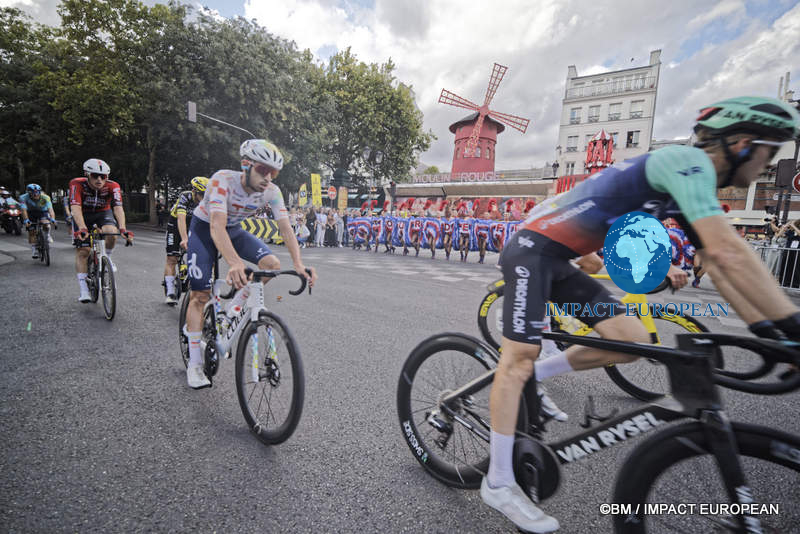
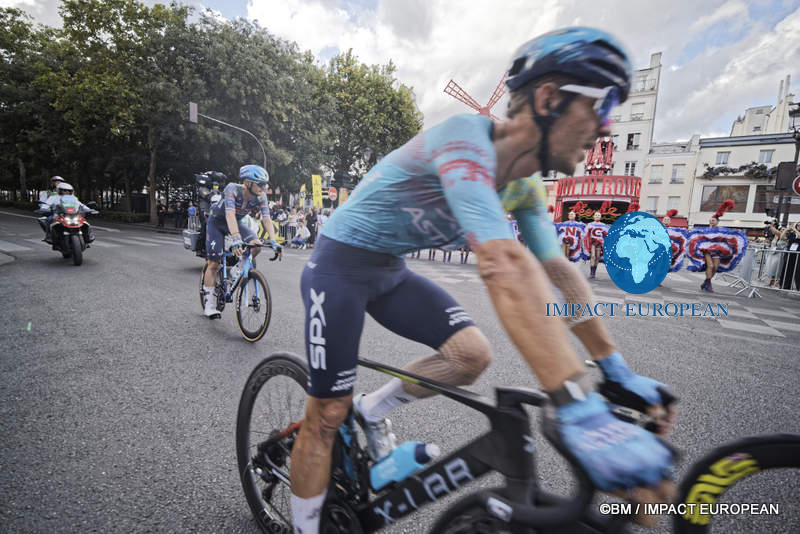
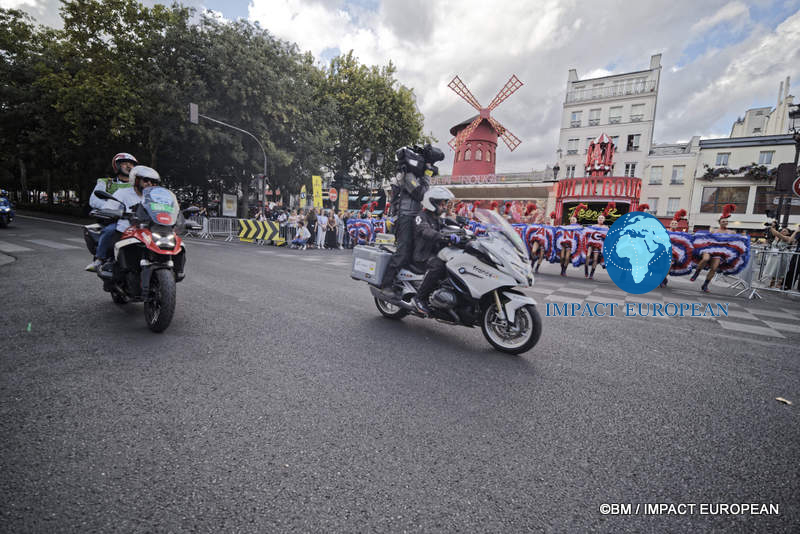
Beneath the iconic red windmill of the Moulin Rouge, music drifted across the square as spectators slowly gathered throughout the day. Some had arrived shortly after 8:00 a.m., determined to secure the best possible view of the world’s most famous cycling race. They expected to witness elite athletes sprint through the French capital.
Instead, they first discovered something equally unforgettable.
They discovered a city performing its own story.
As afternoon turned into evening, Place Blanche no longer looked like a finish-line venue. It became an open-air theatre where tourists, local residents, photographers and cycling fans shared the same space, united by curiosity long before the riders appeared.
At 5:30 p.m., the atmosphere changed.
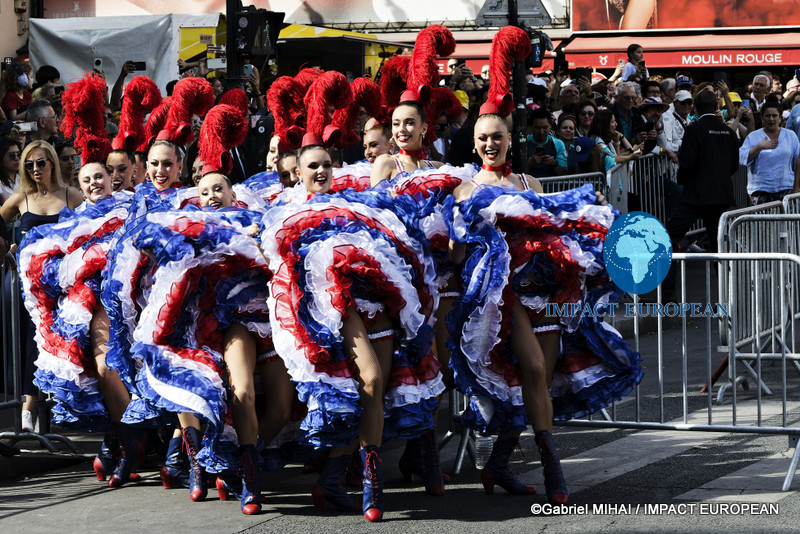
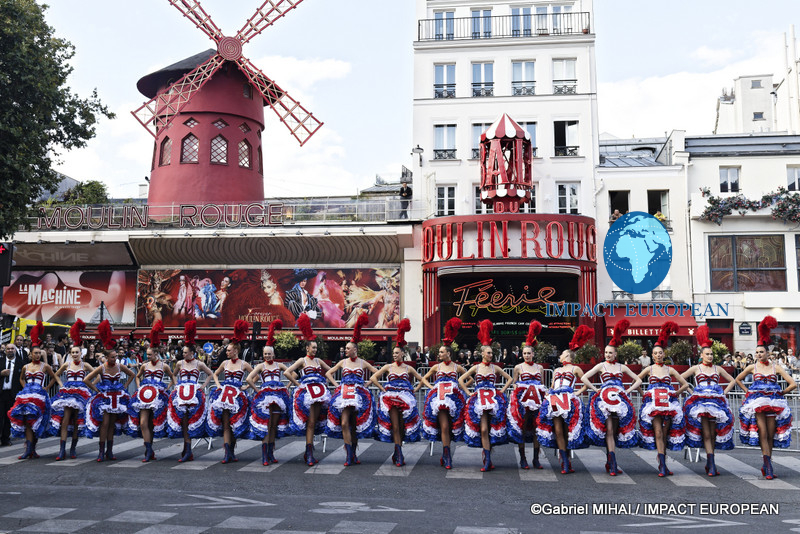
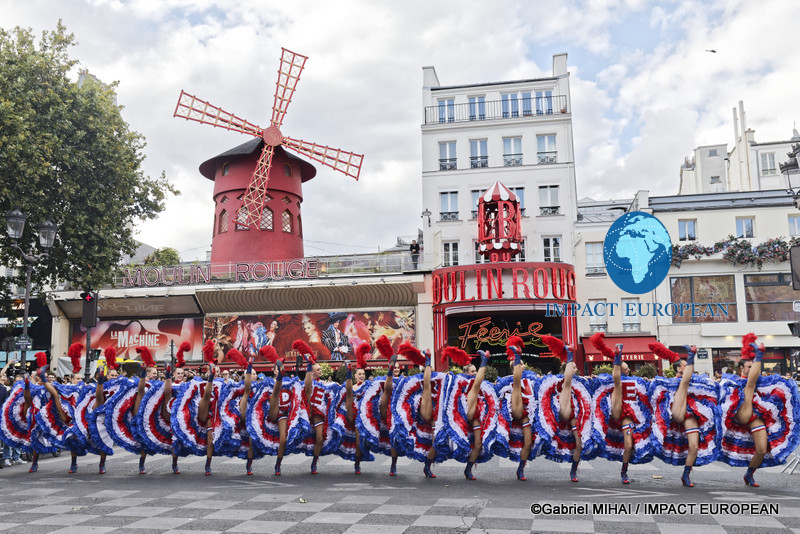
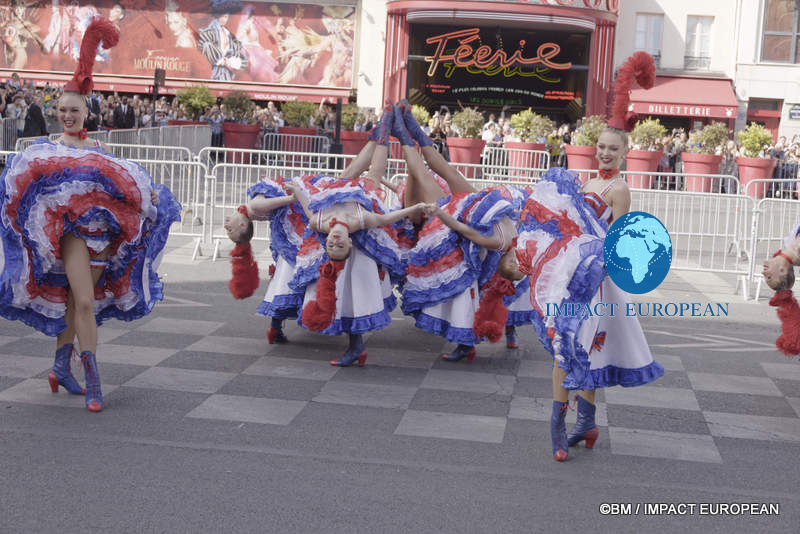
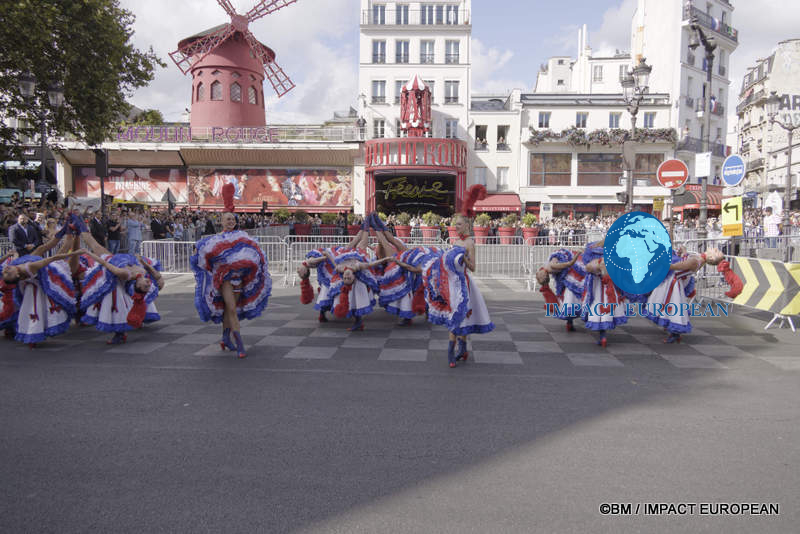
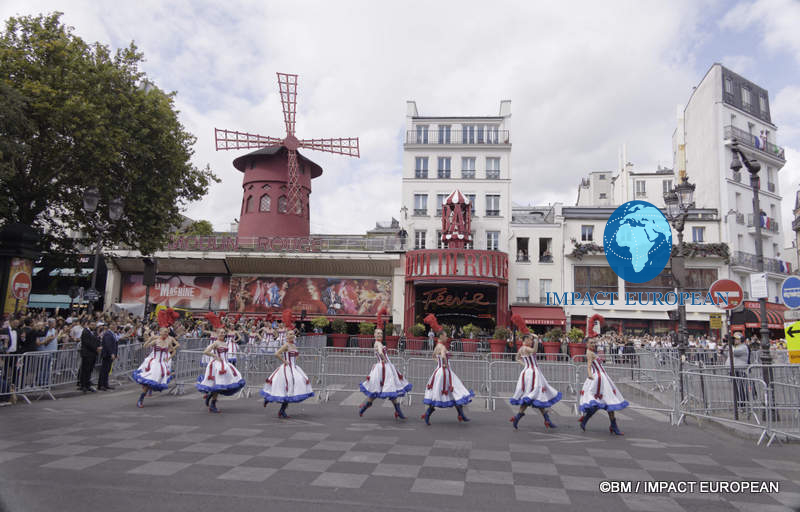
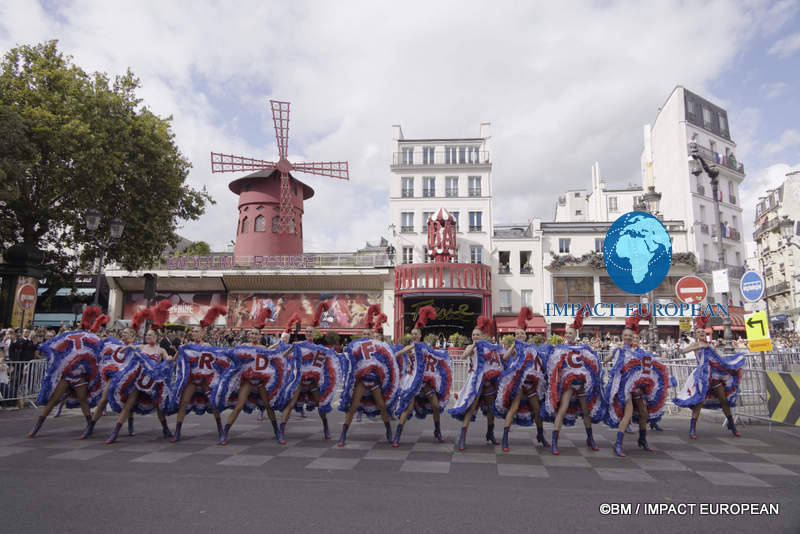
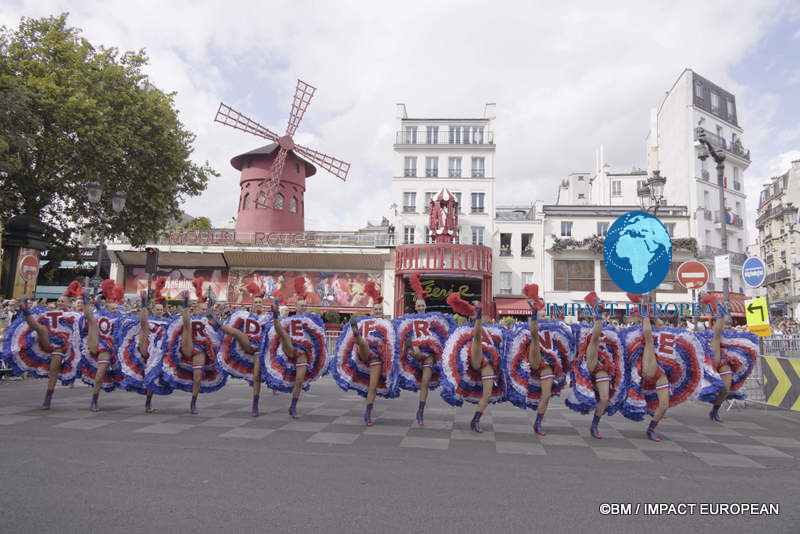
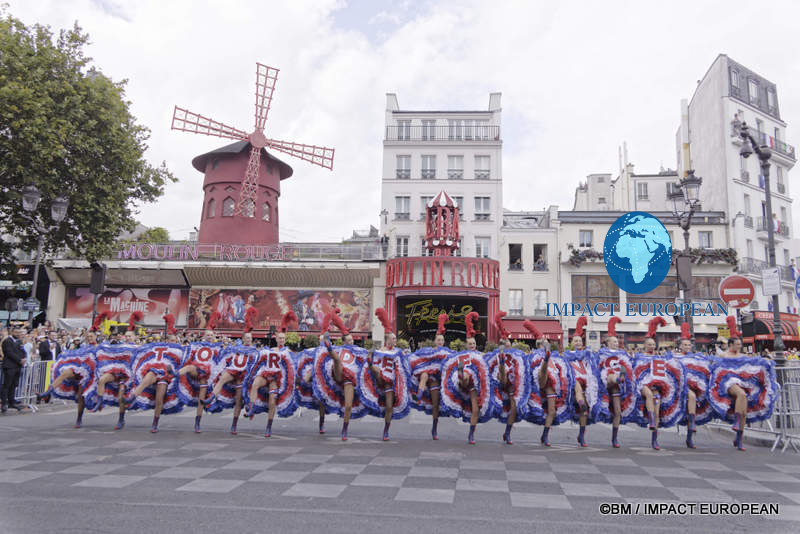
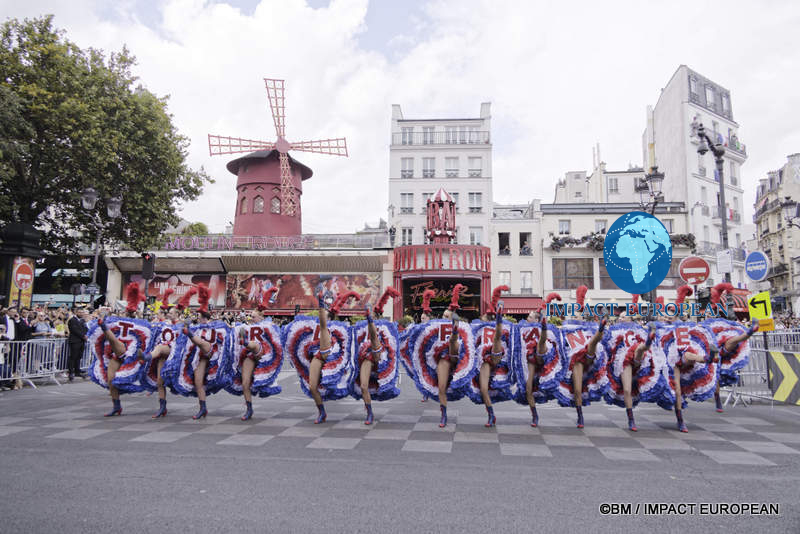
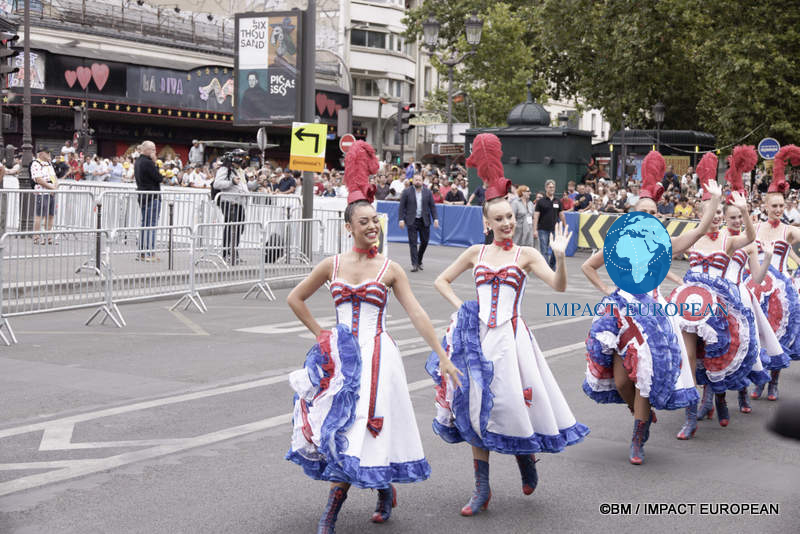
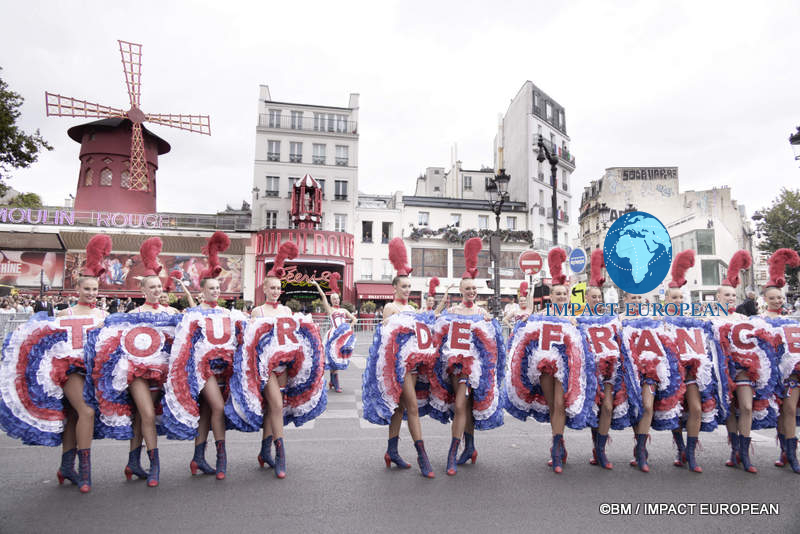
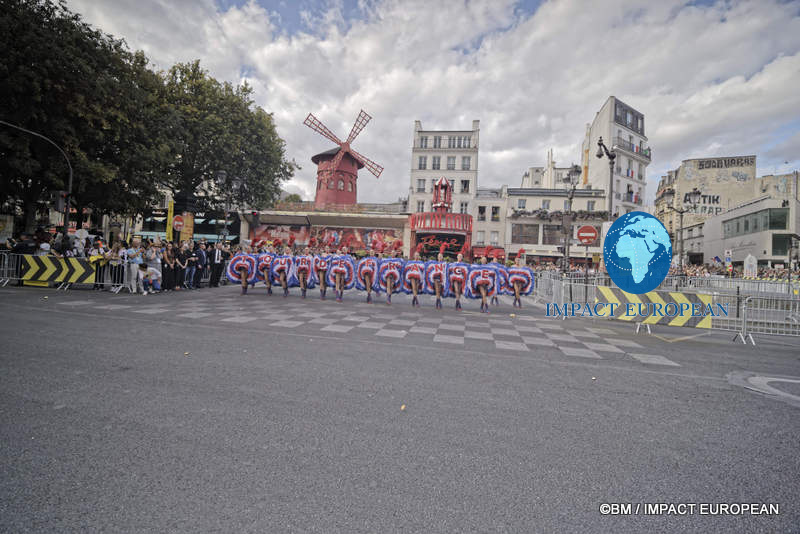
The first notes of the French Cancan echoed across the square, drawing applause even from visitors who had never before experienced one of France’s most famous cultural traditions.
The Moulin Rouge had transformed the waiting time into part of the celebration.
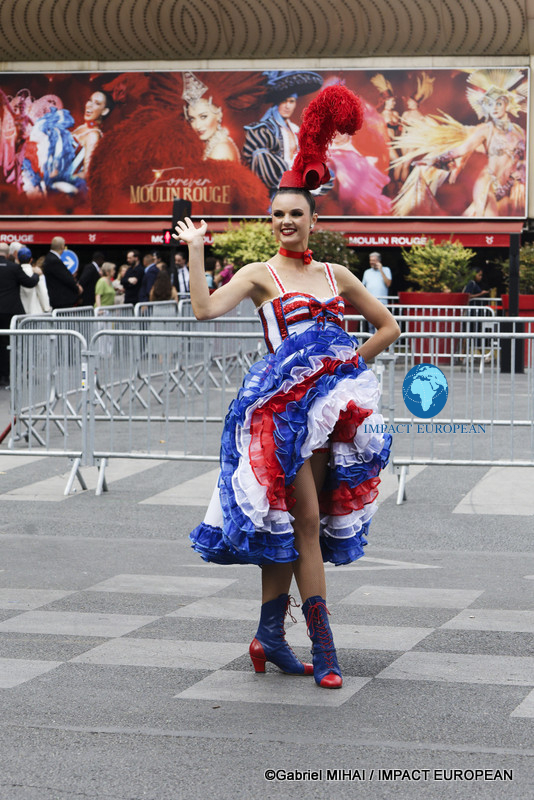
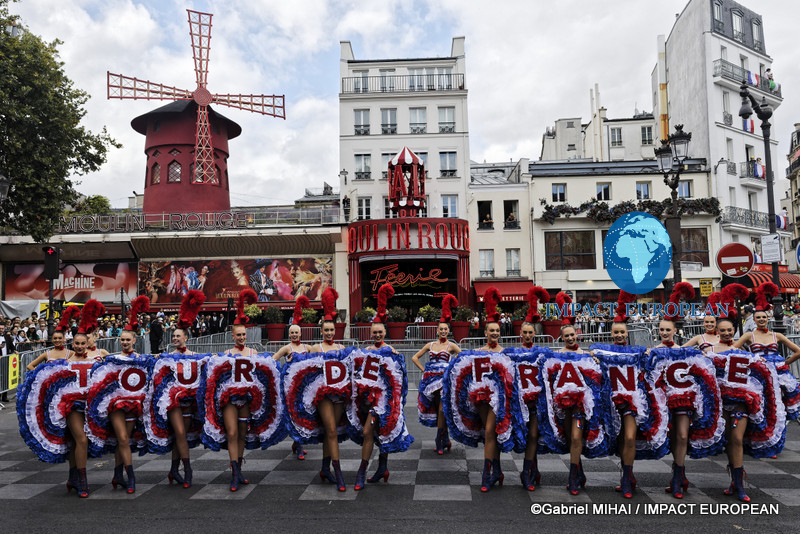
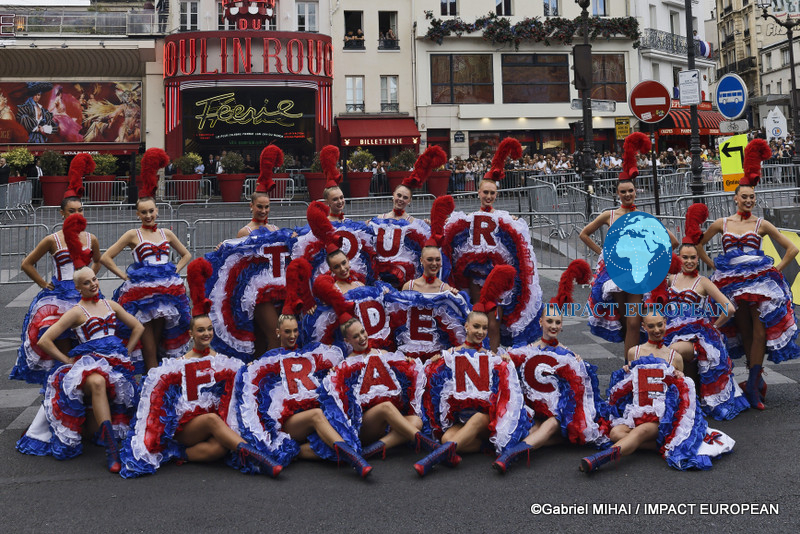
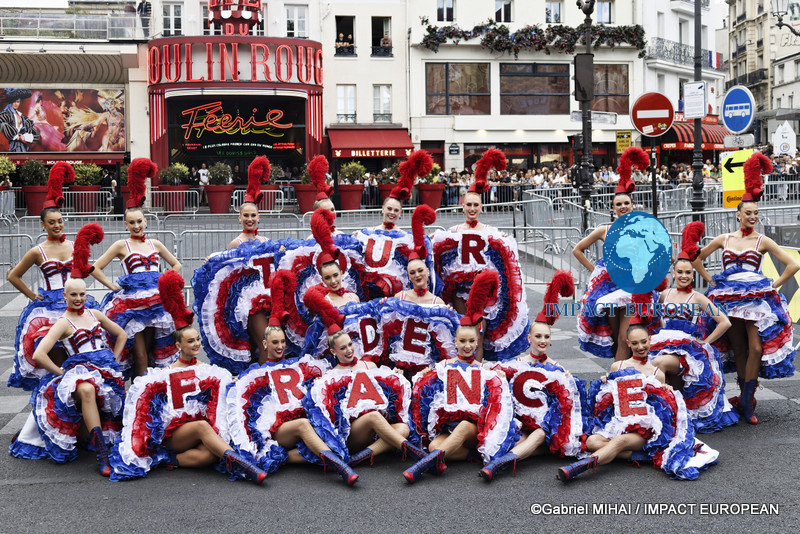
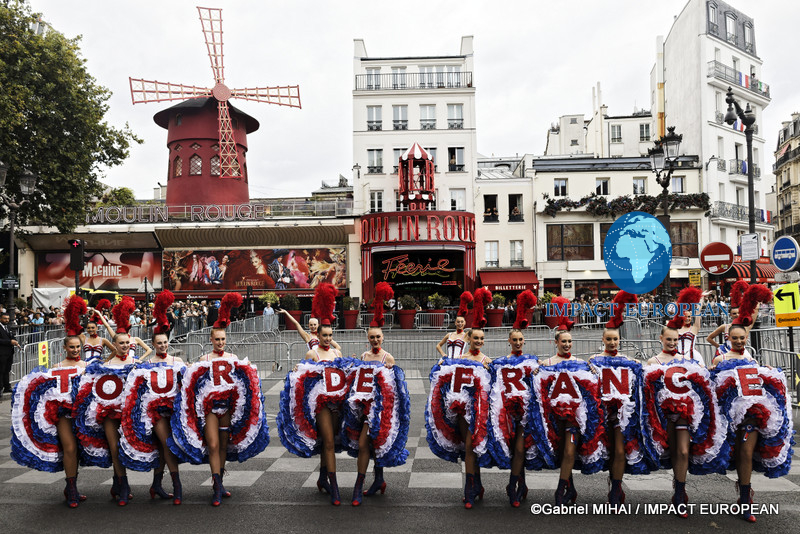
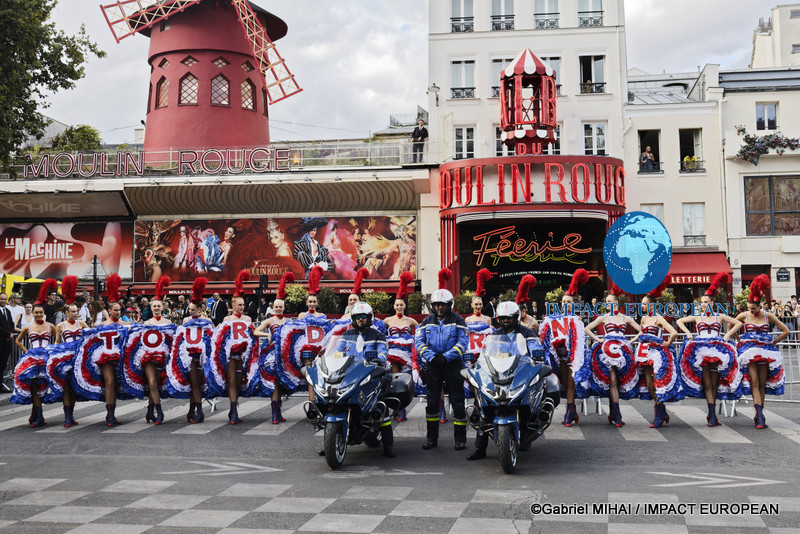
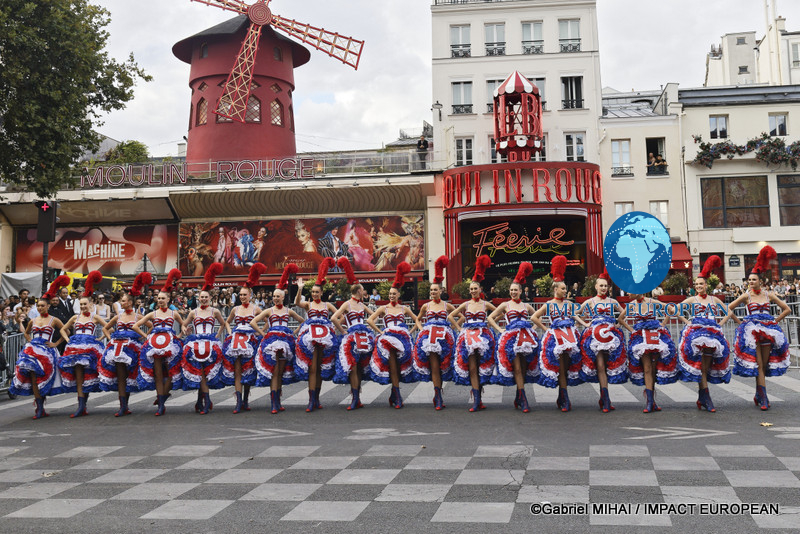
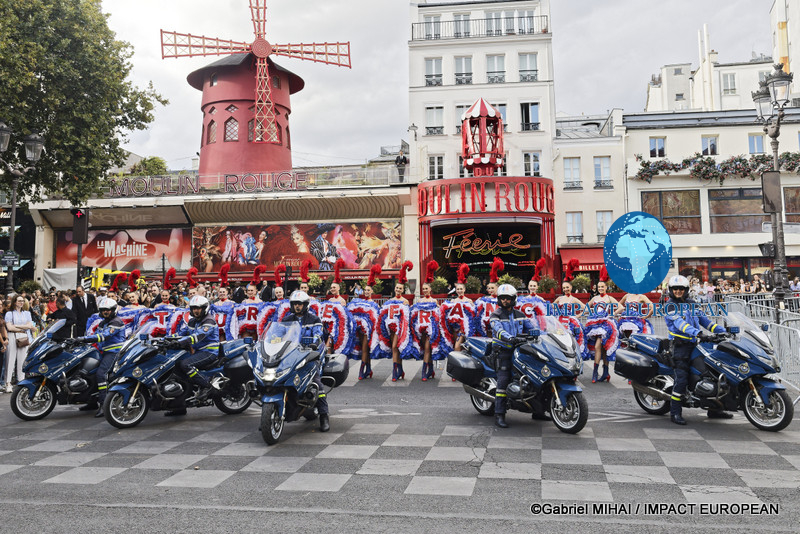
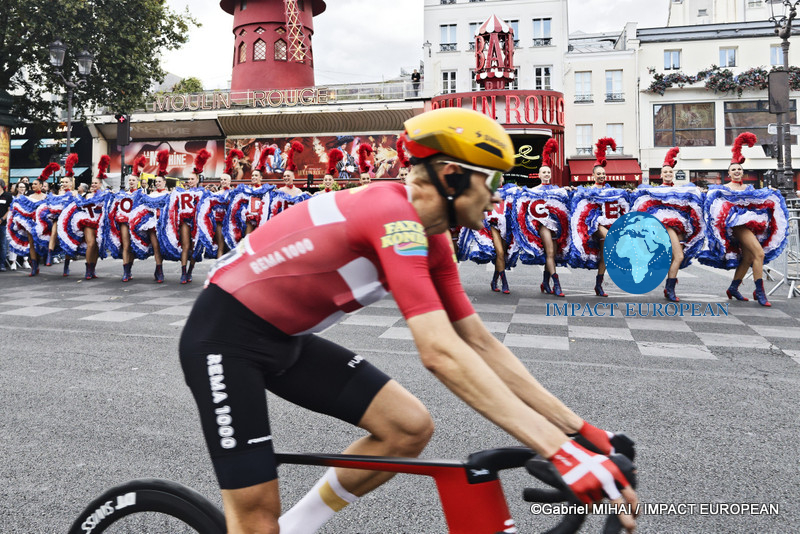
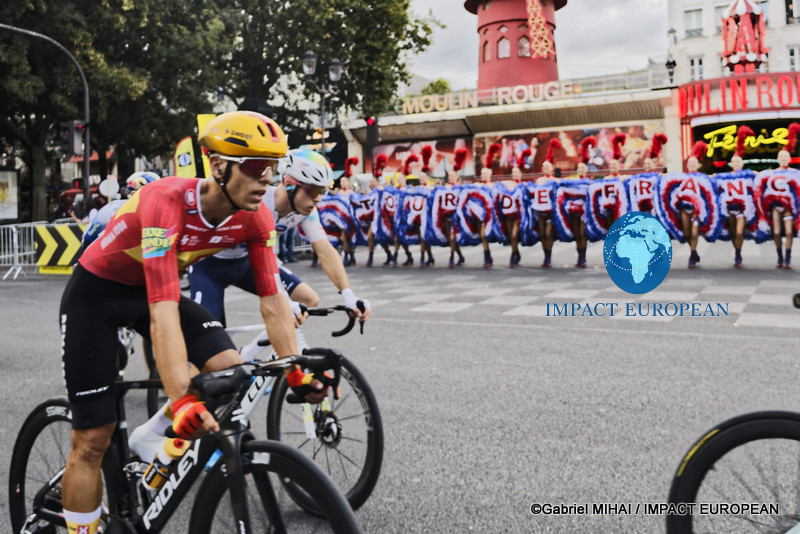
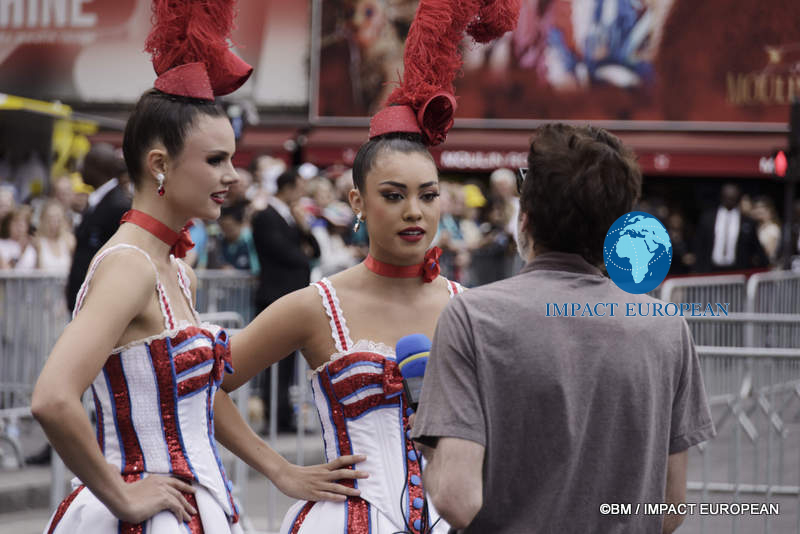
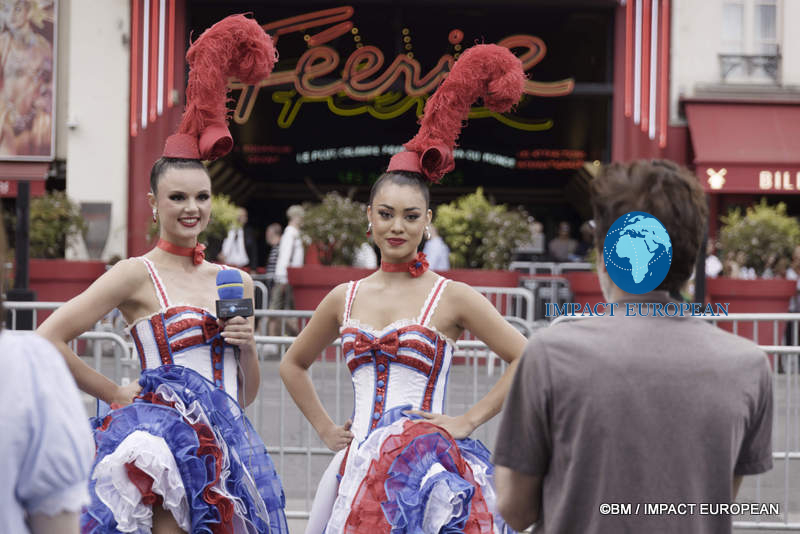
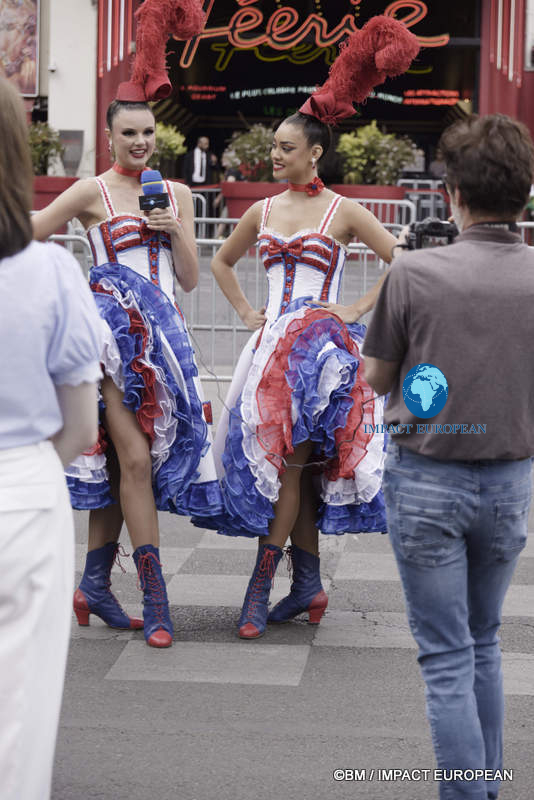
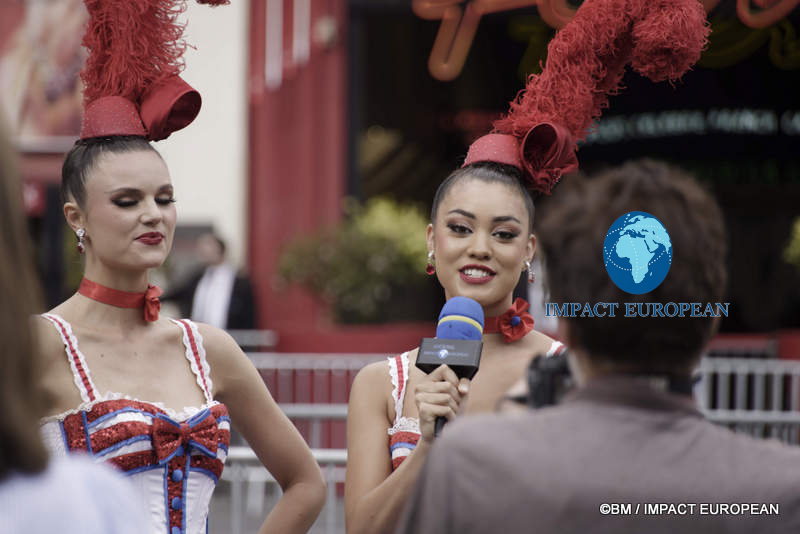
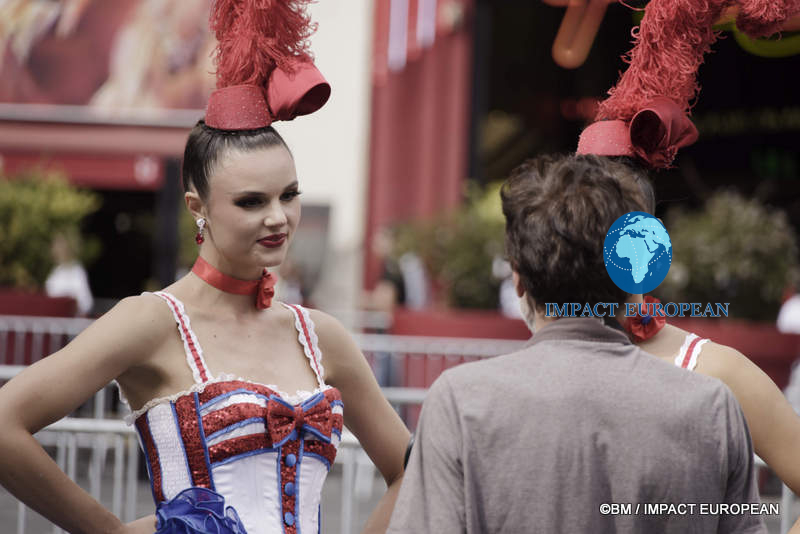
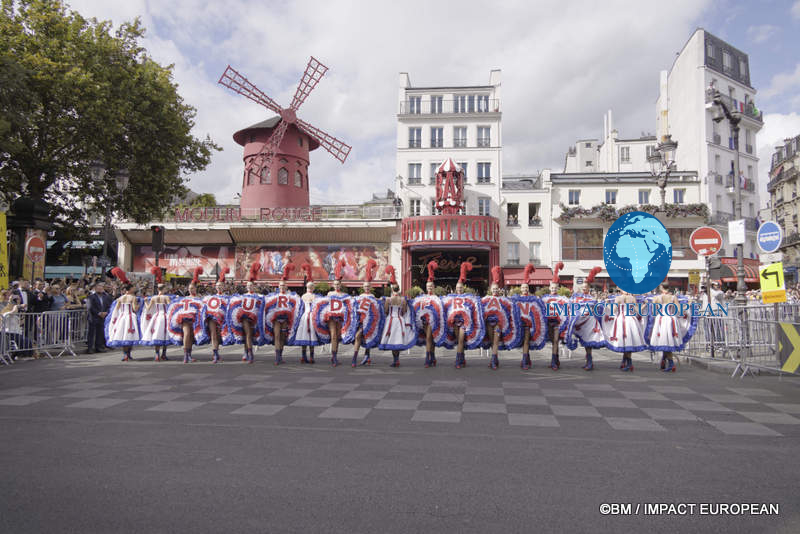
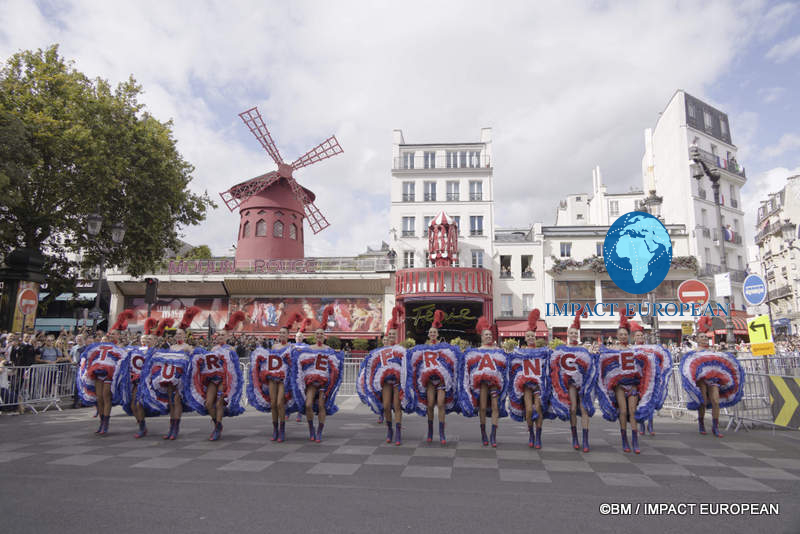
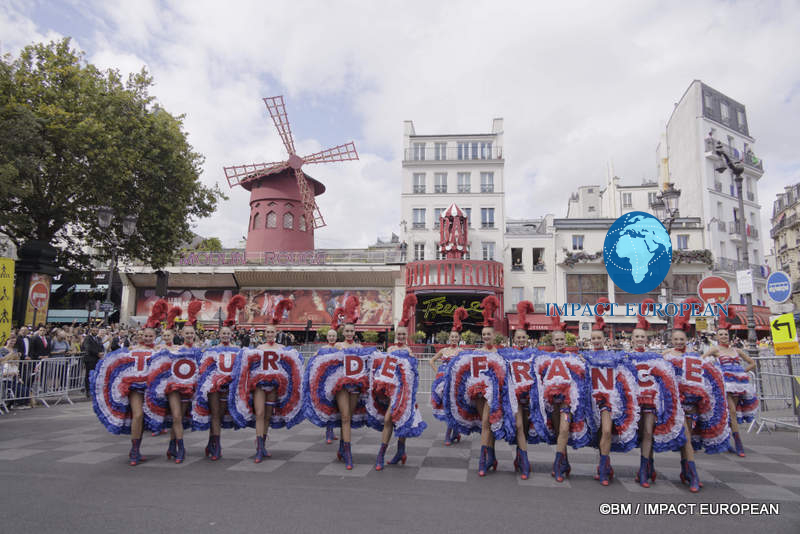
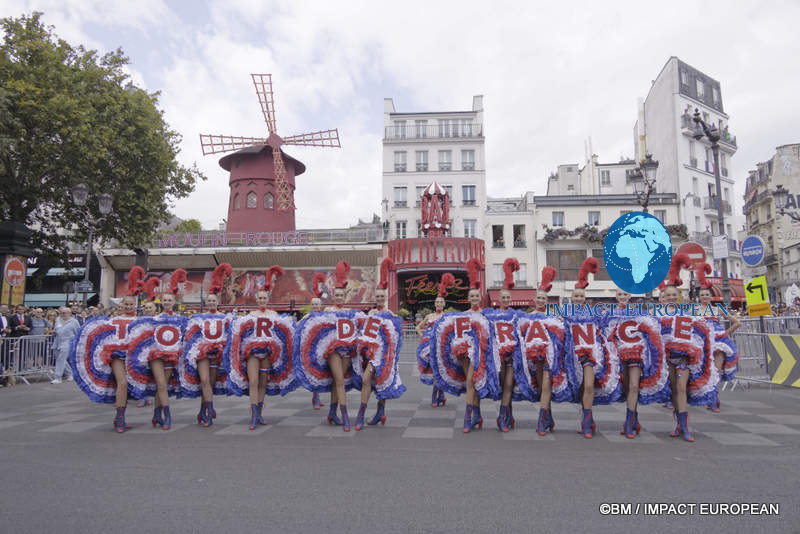
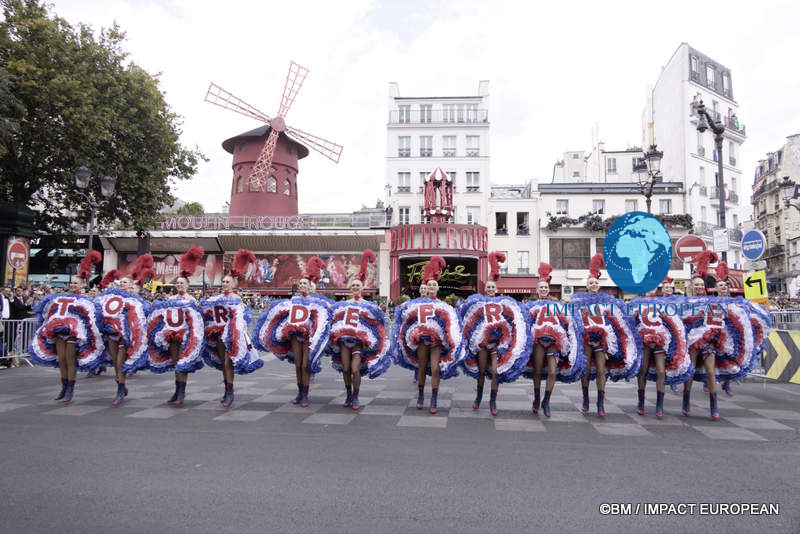
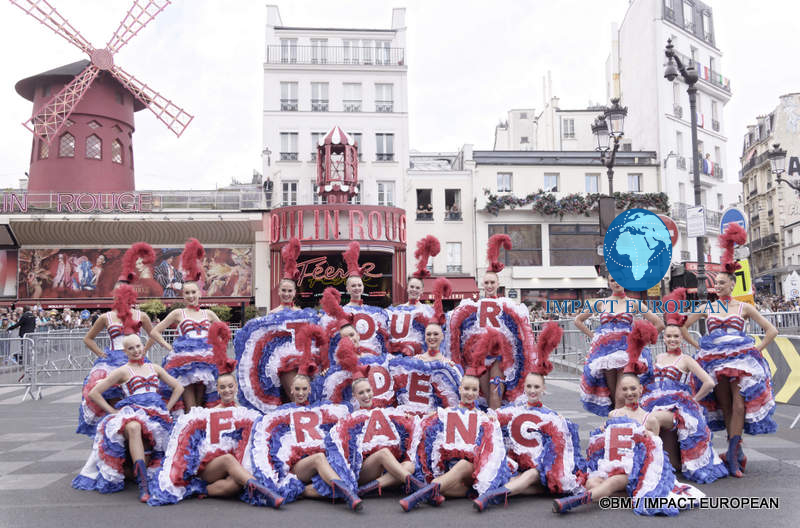
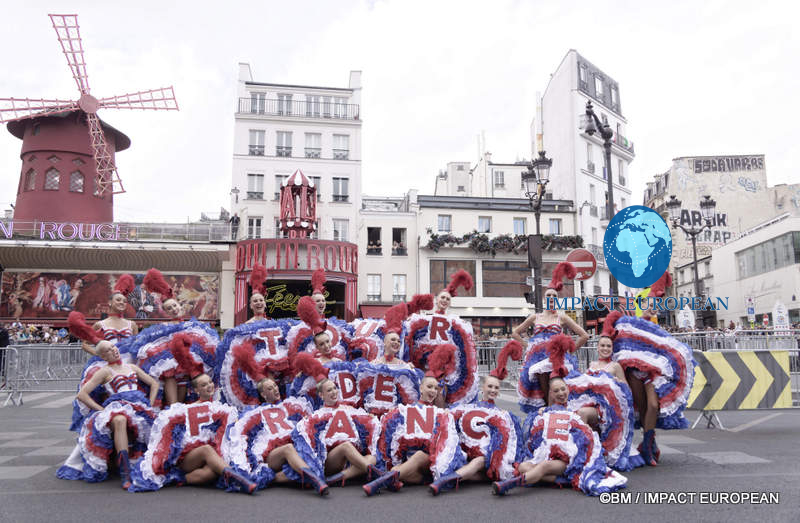
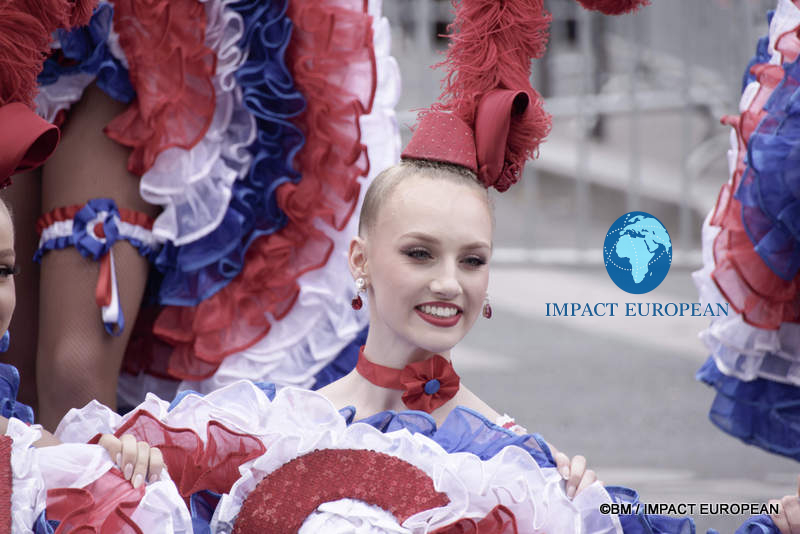
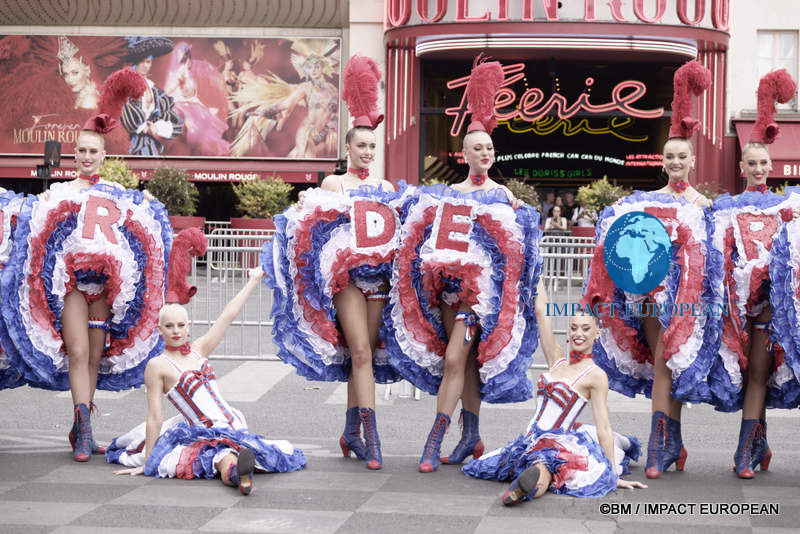
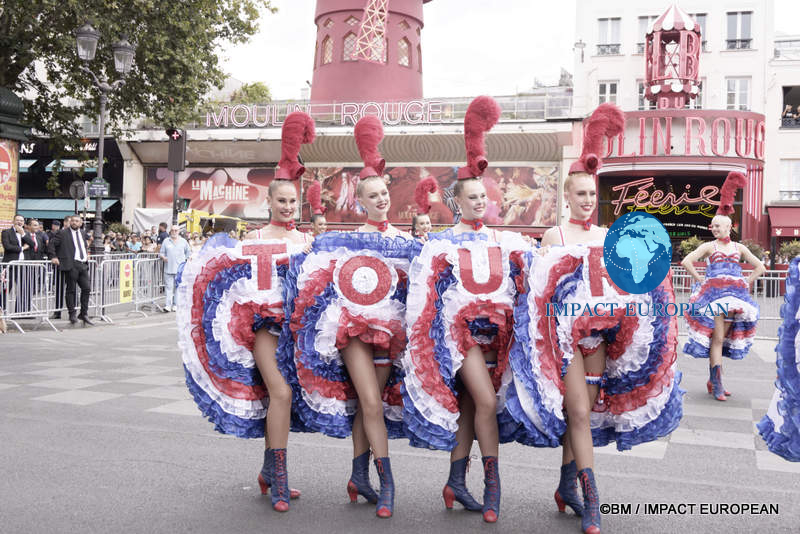
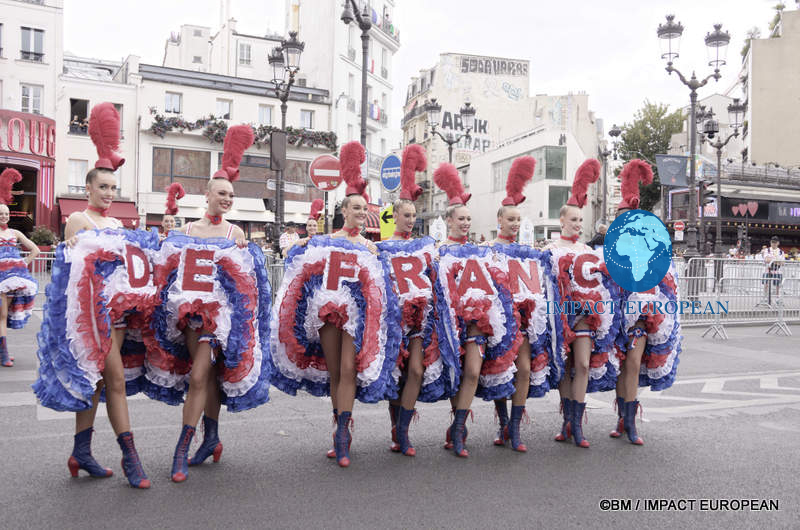
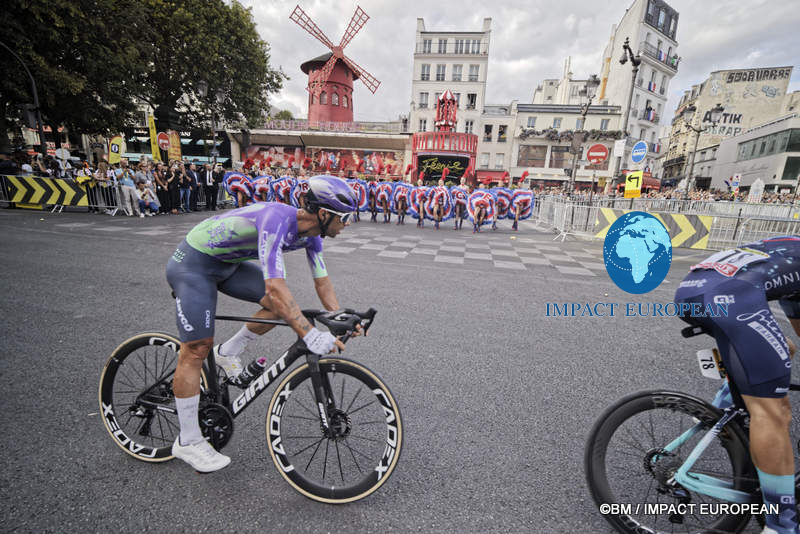
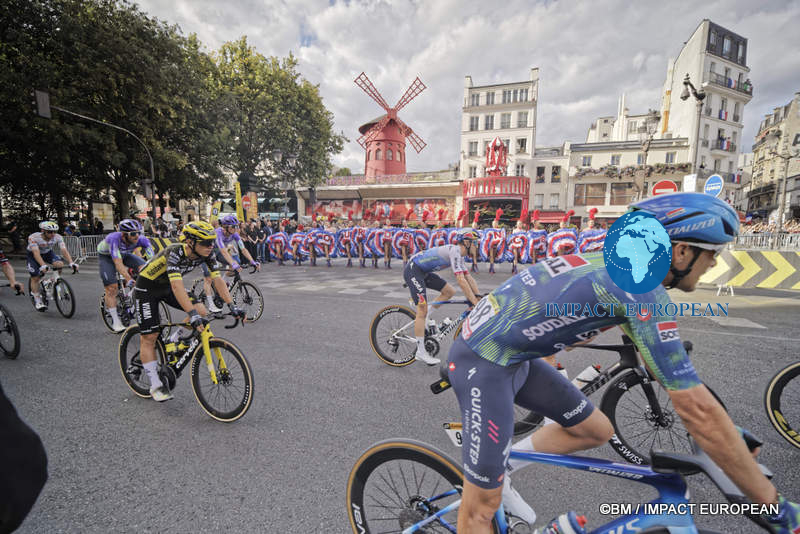
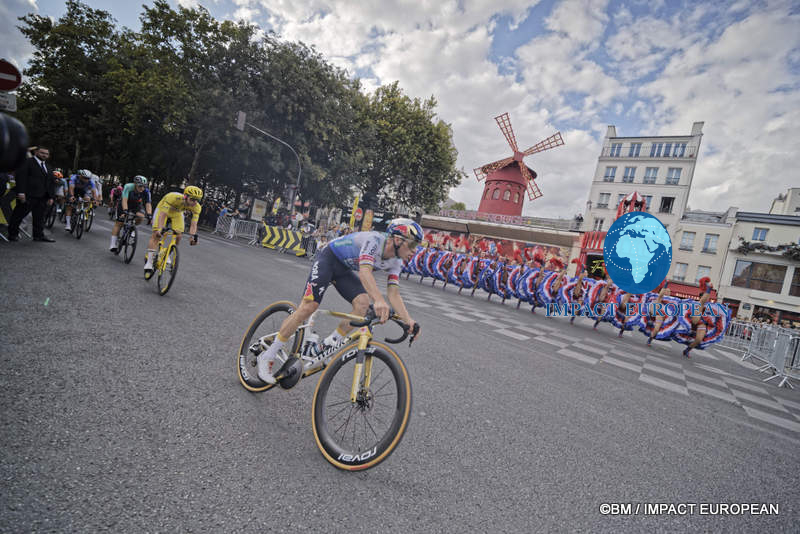
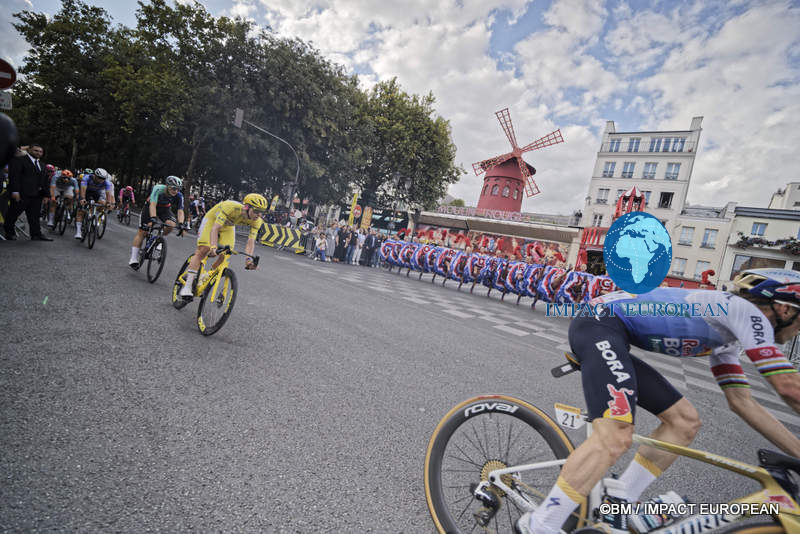
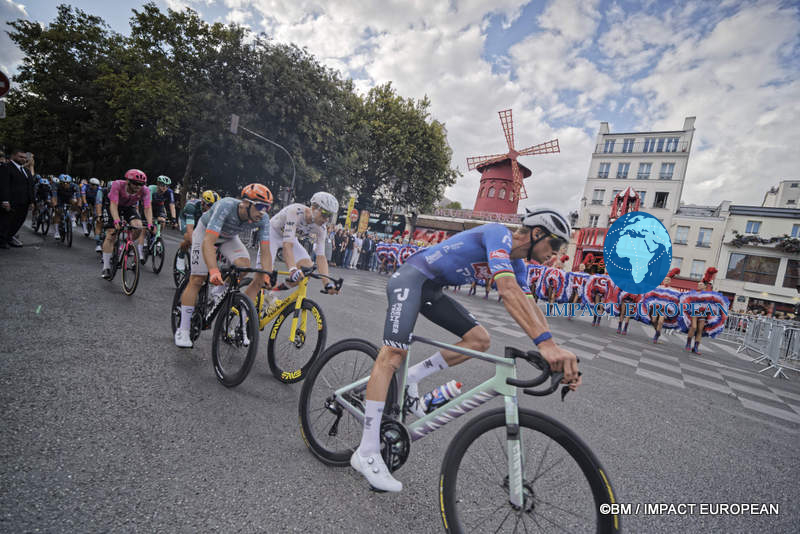
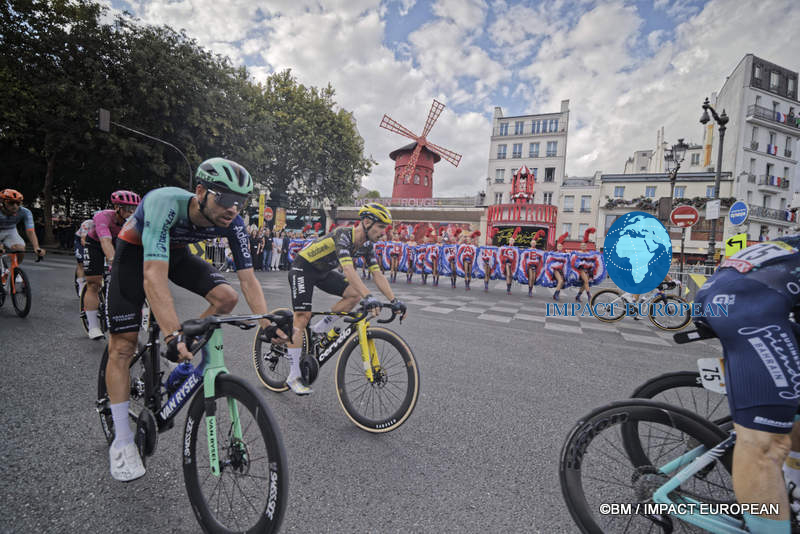
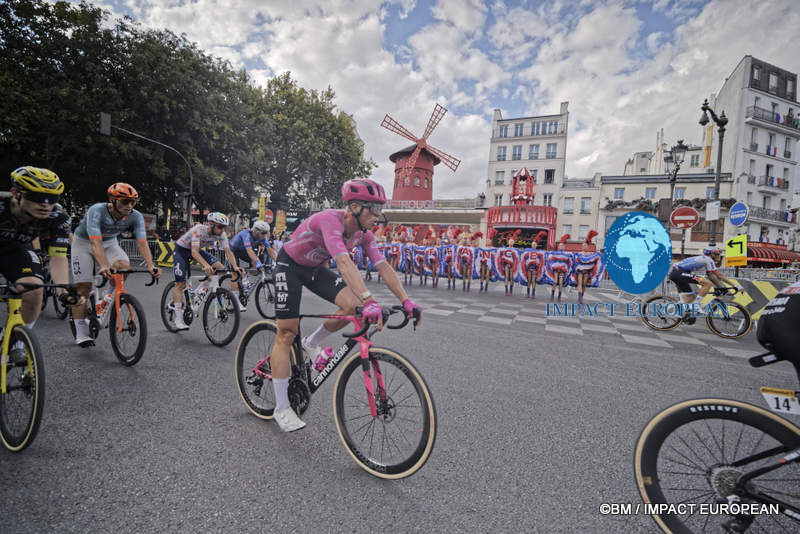
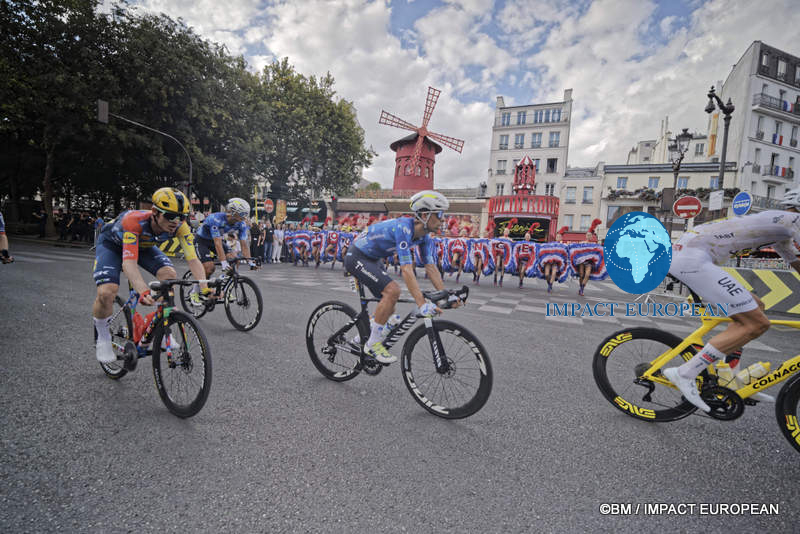
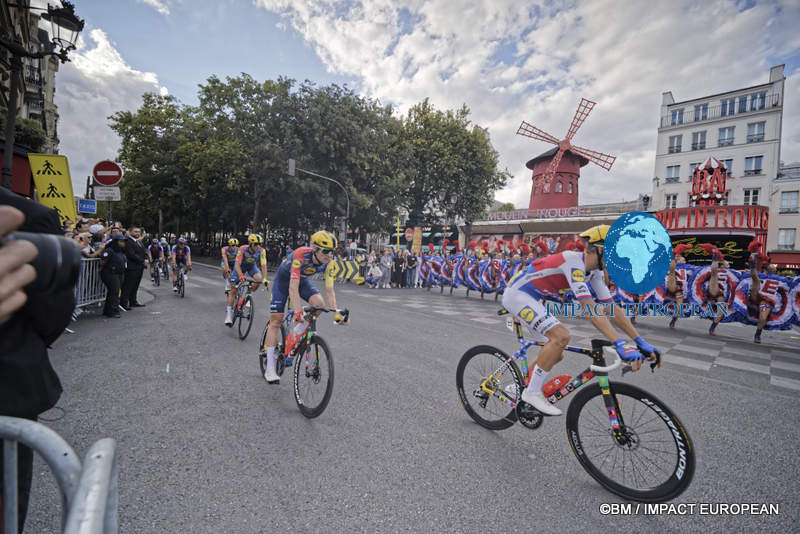
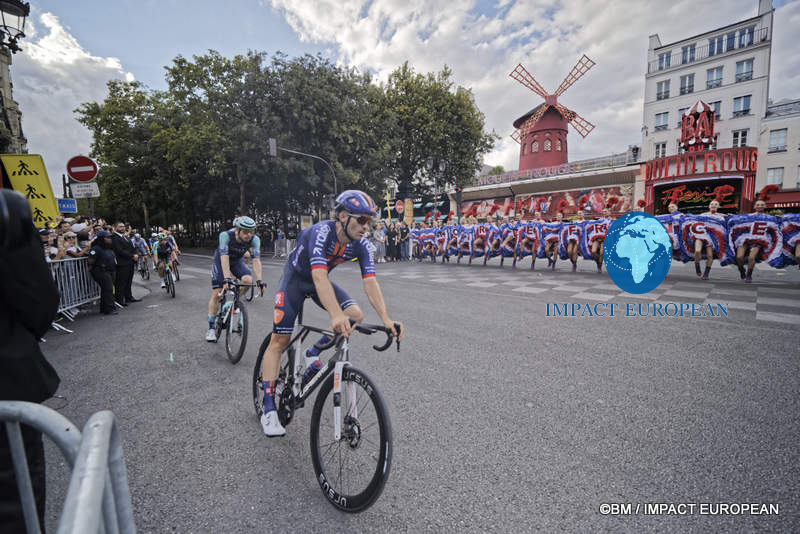
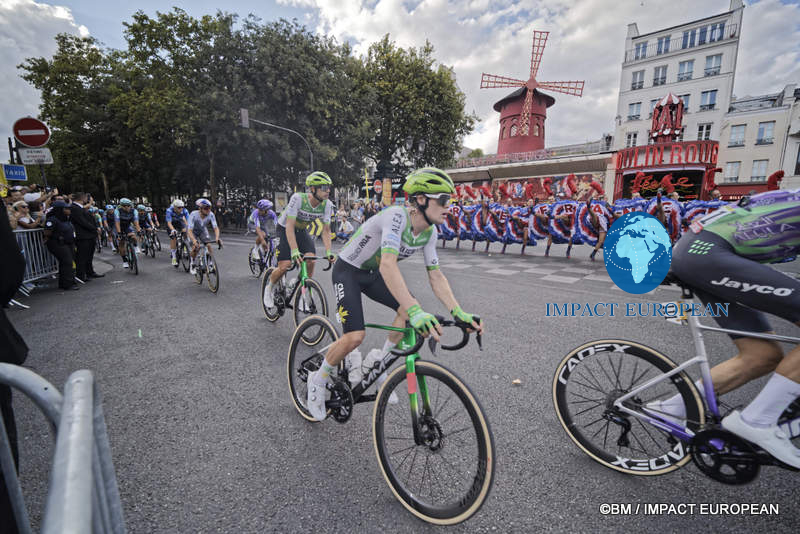
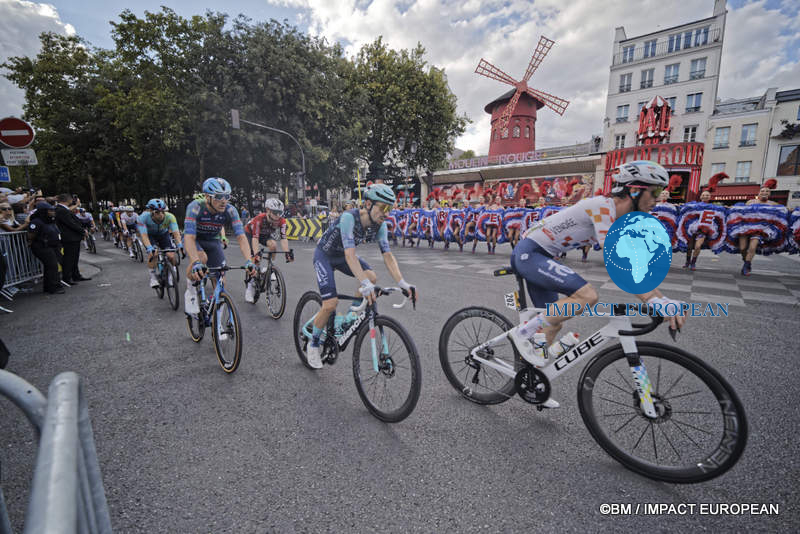
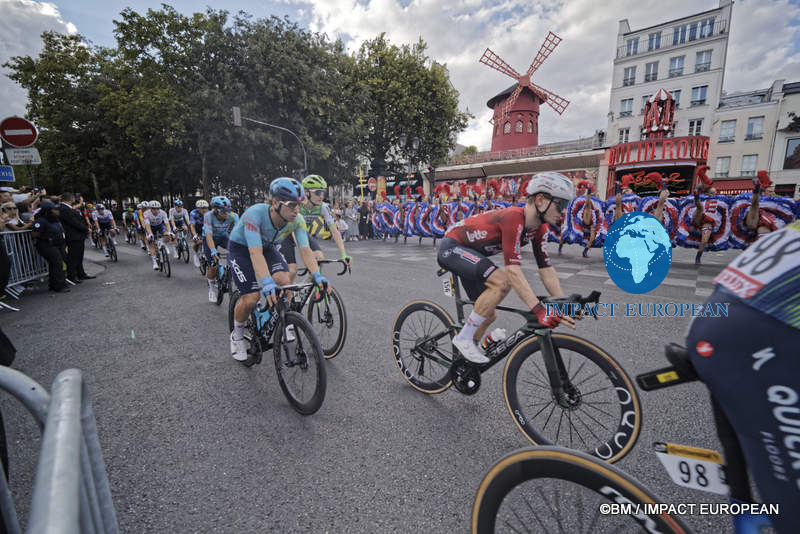
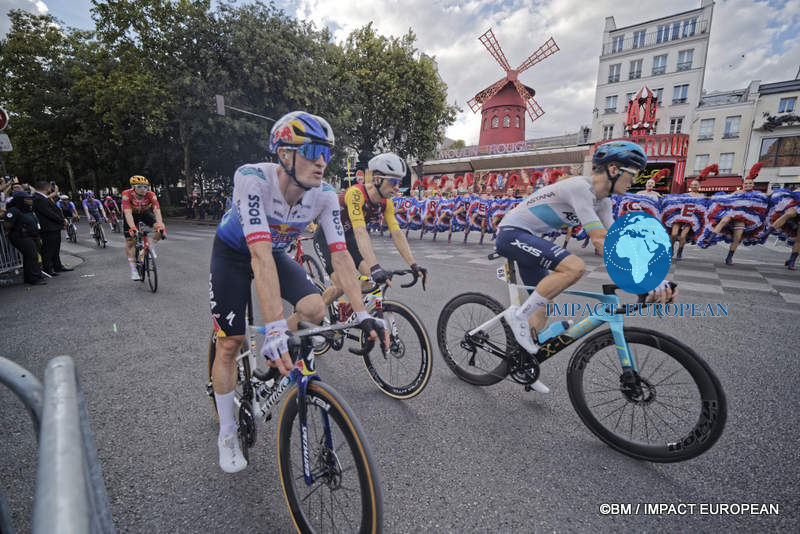
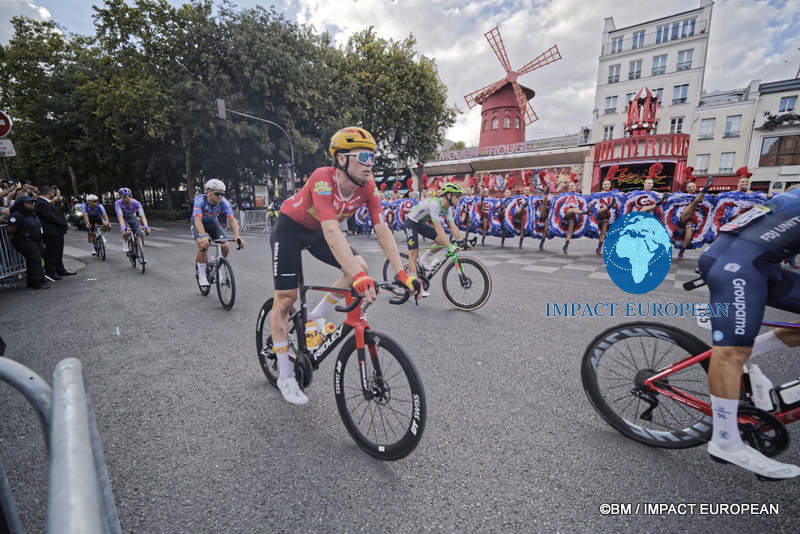
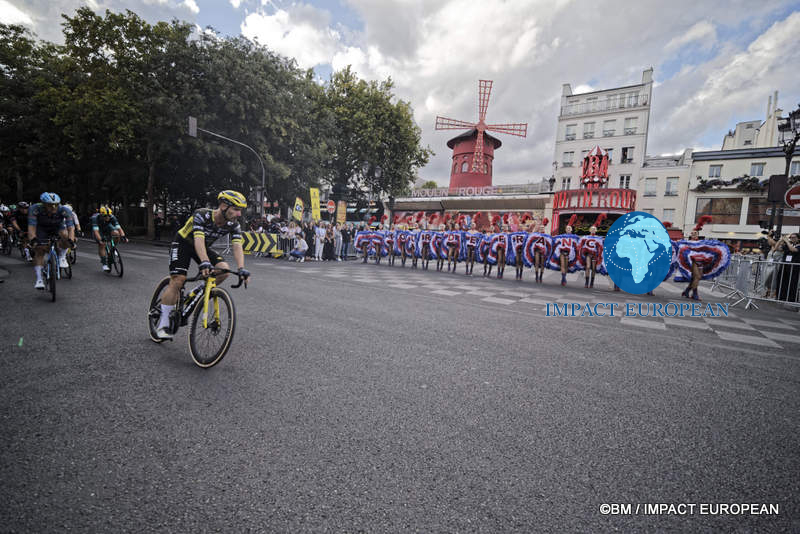
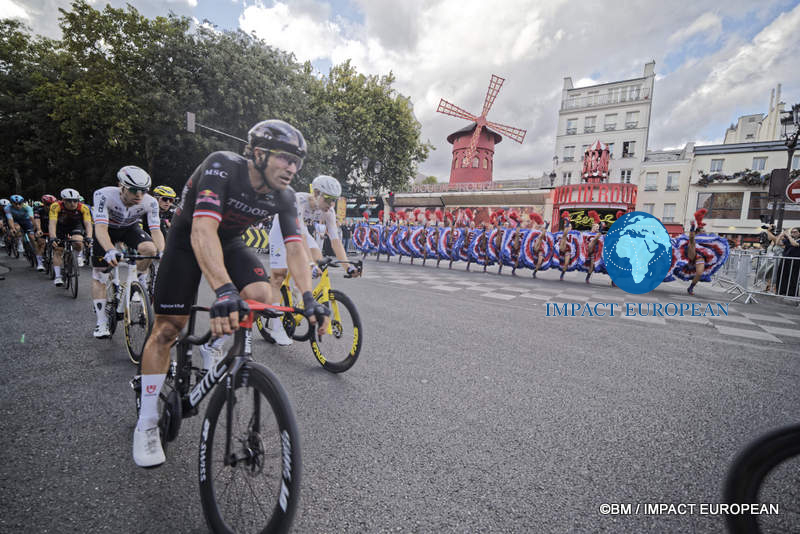
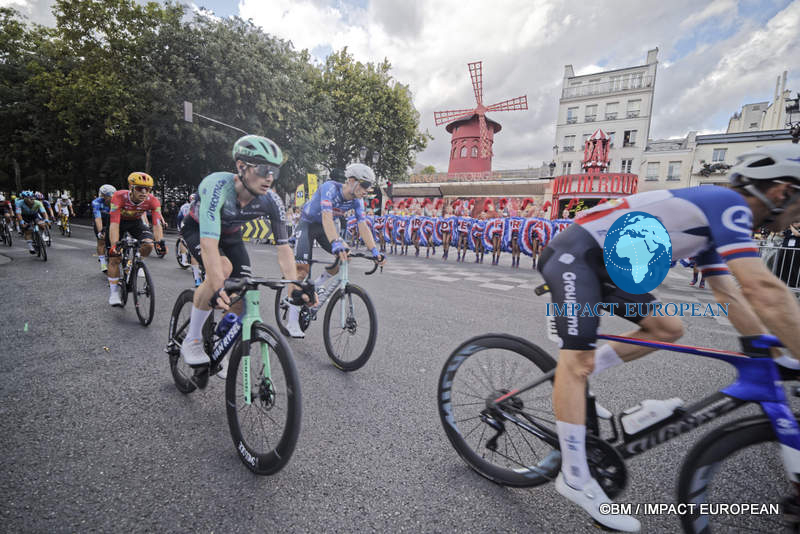
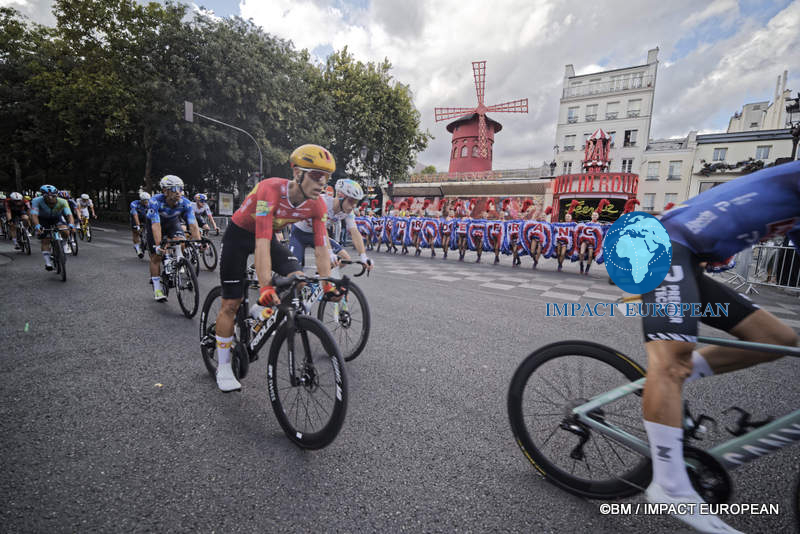
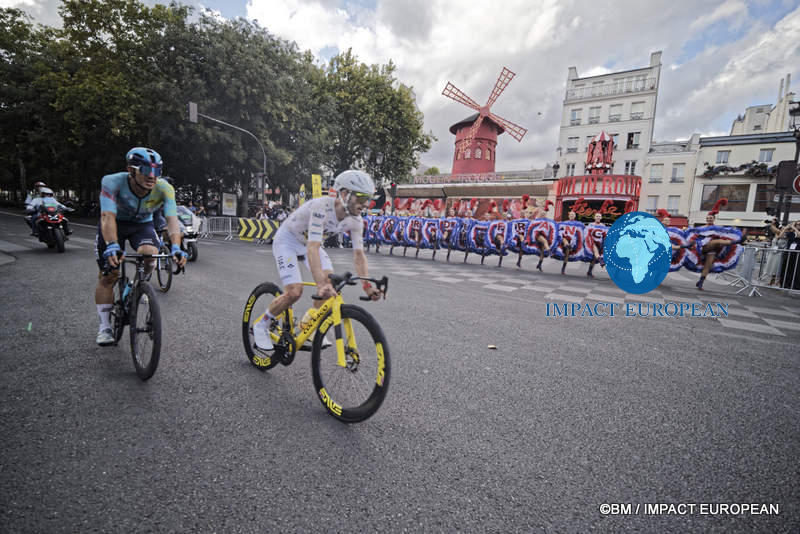
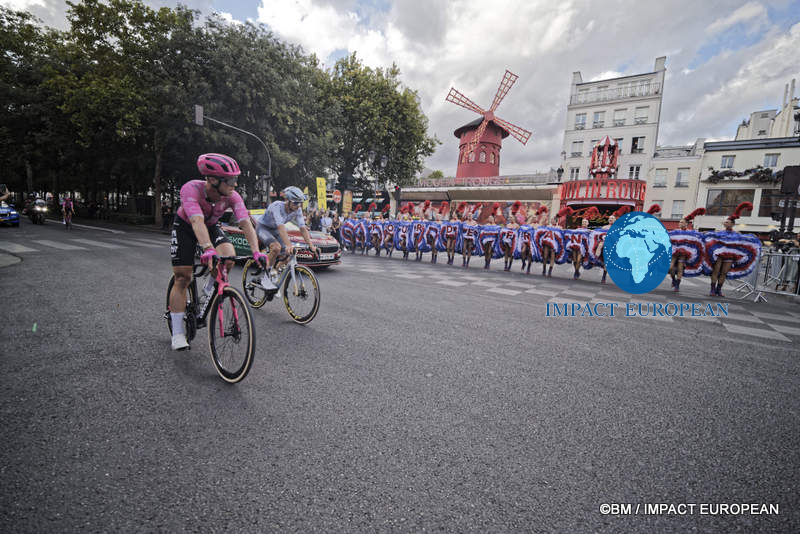
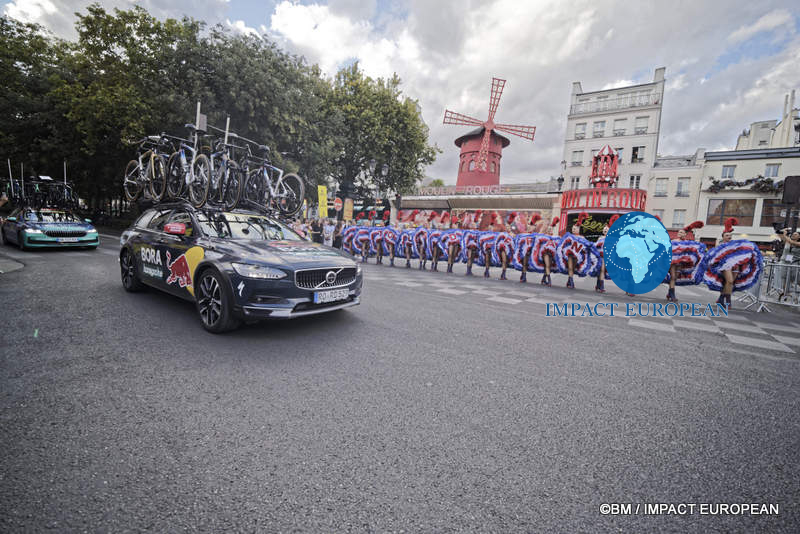
Eighteen dancers stepped into the performance. Twelve wore costumes that collectively spelled « TOUR DE FRANCE », while six others linked each sequence together, creating a continuous choreography inspired by movement, colour and rhythm. Blue, white and red costumes reflected the colours of France, while the famous high kicks of the Cancan drew smiles from children, visitors and photographers alike.
For many international visitors, this was not simply entertainment.
It was their first encounter with a living tradition that has represented Paris for generations.
The Tour de France is often described as the world’s greatest cycling race, yet anyone standing on Place Blanche that evening quickly realised it is something much larger. Every stage tells the story of a different landscape, a different town and a different community. Paris, for its part, chose to tell its story through music, dance and one of its best-known cultural landmarks.
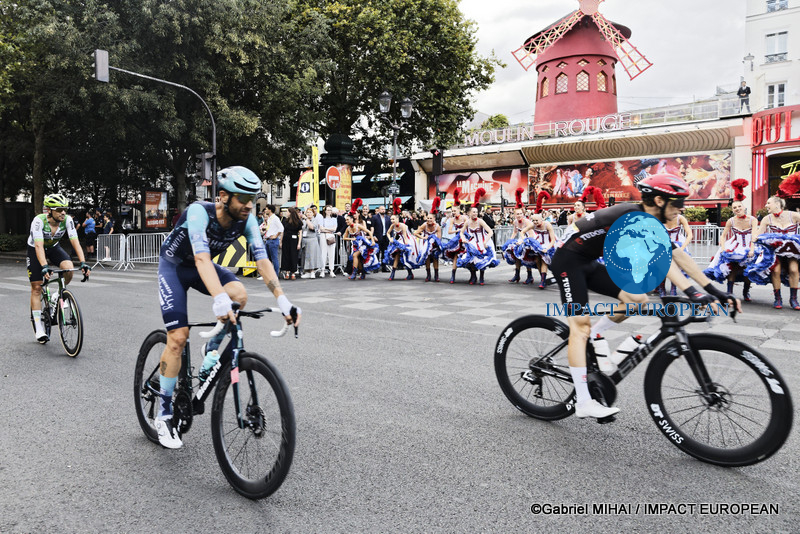
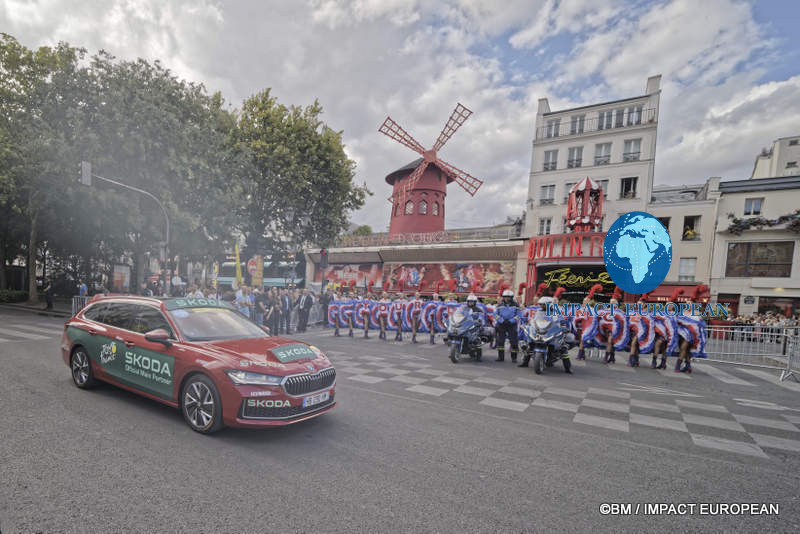
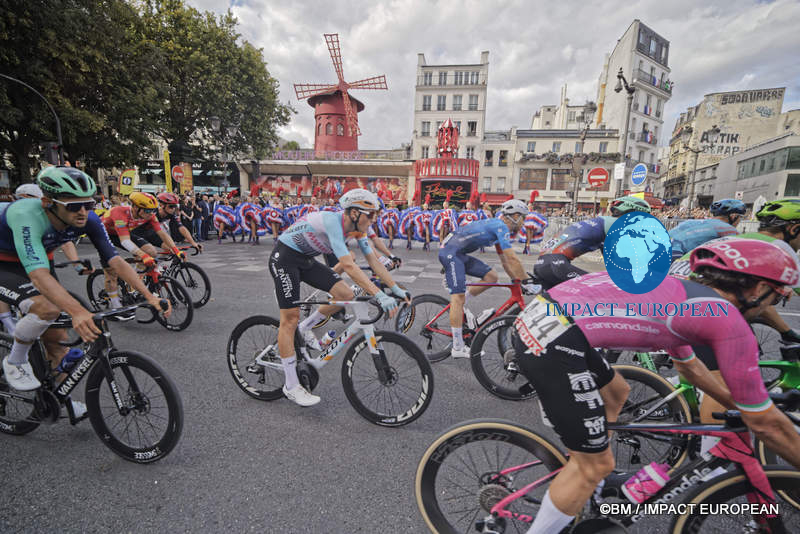
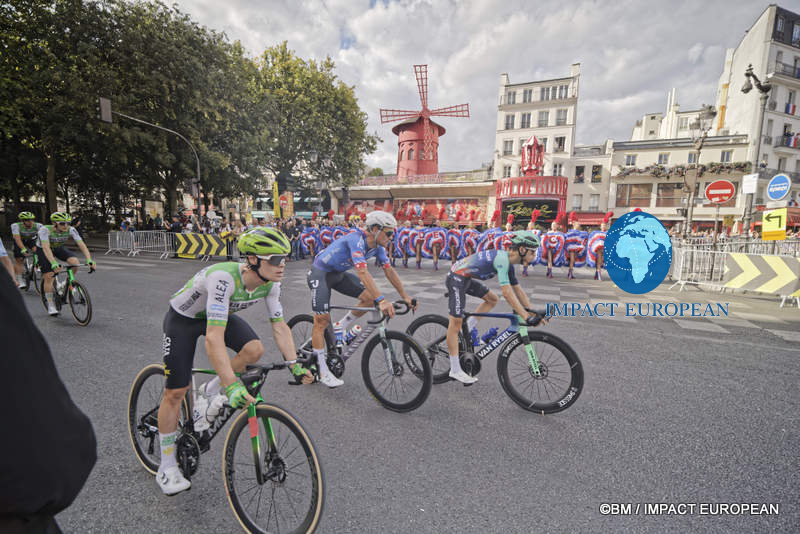
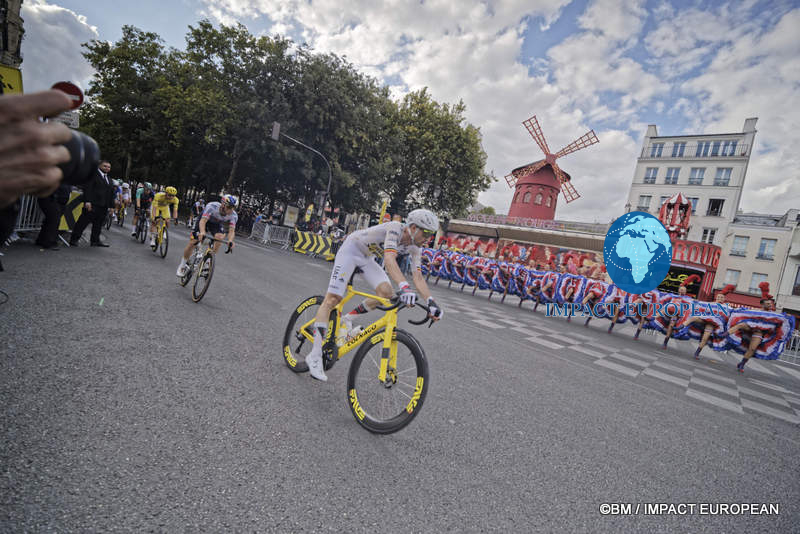
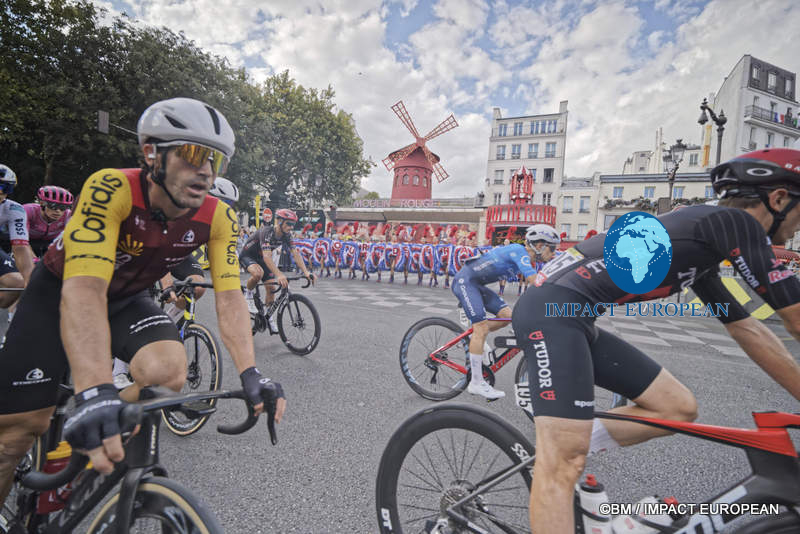
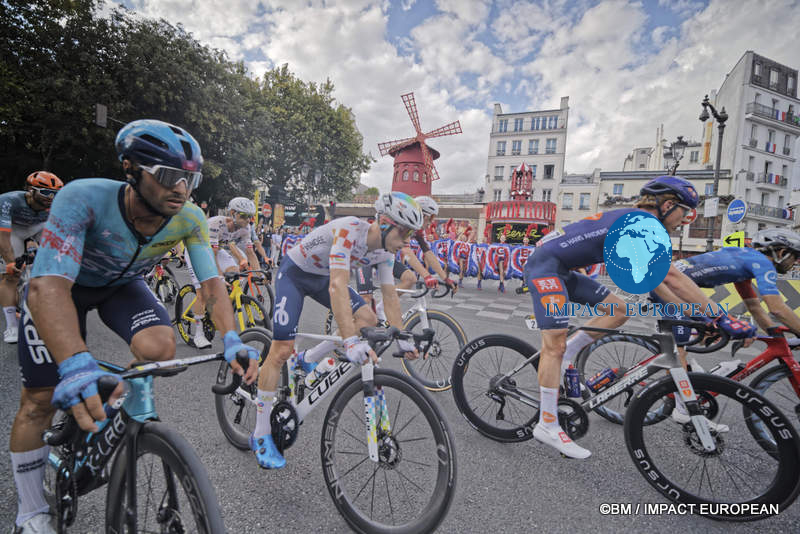
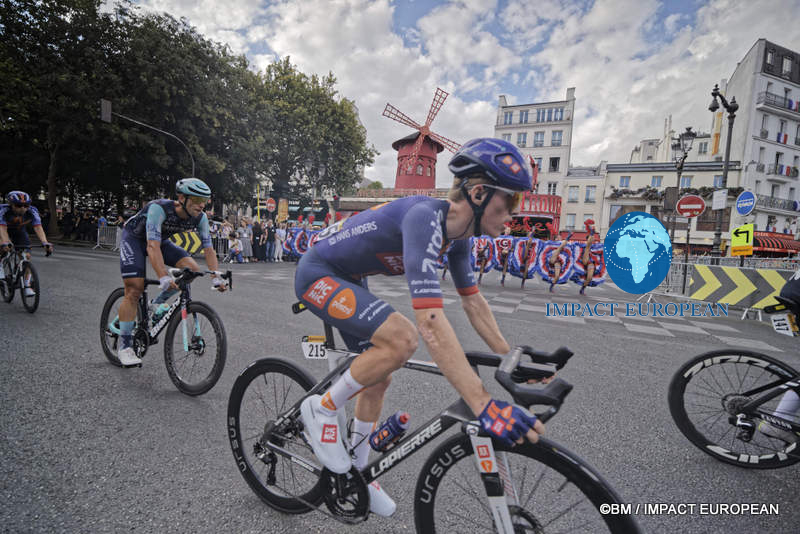
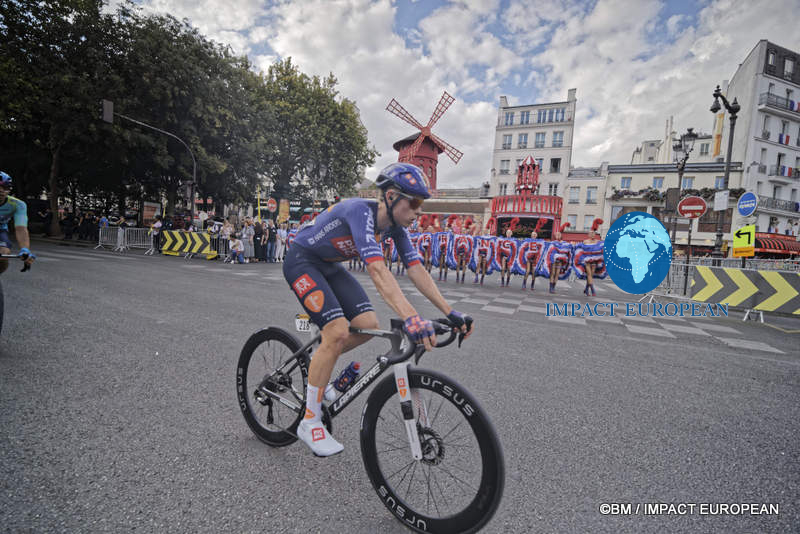
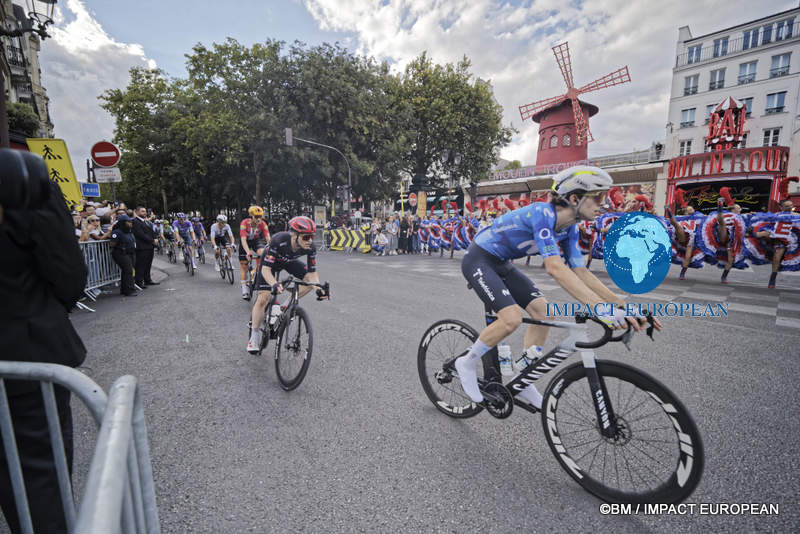
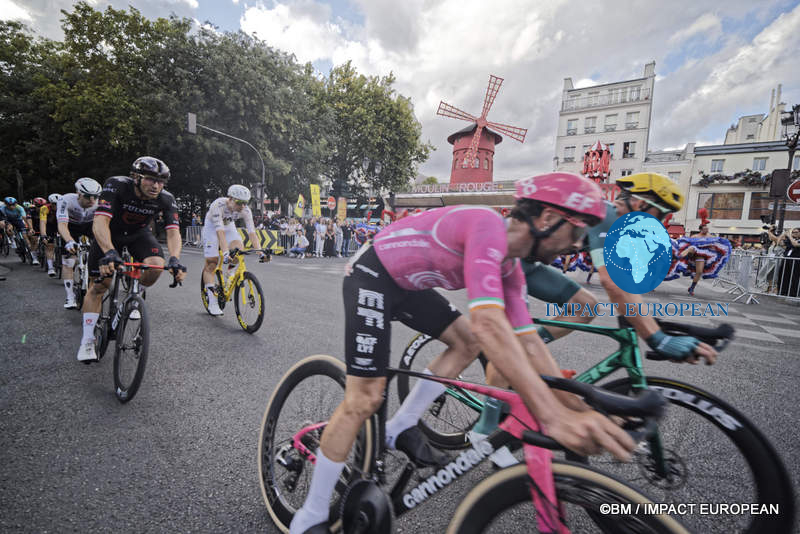
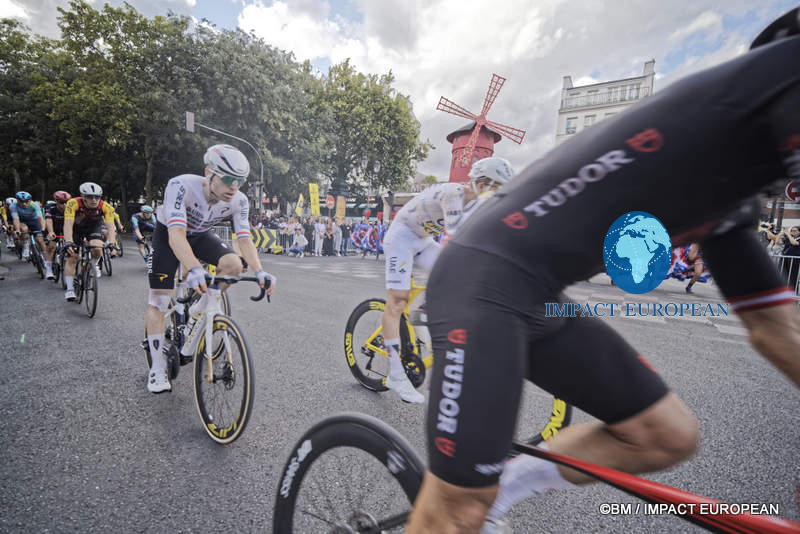
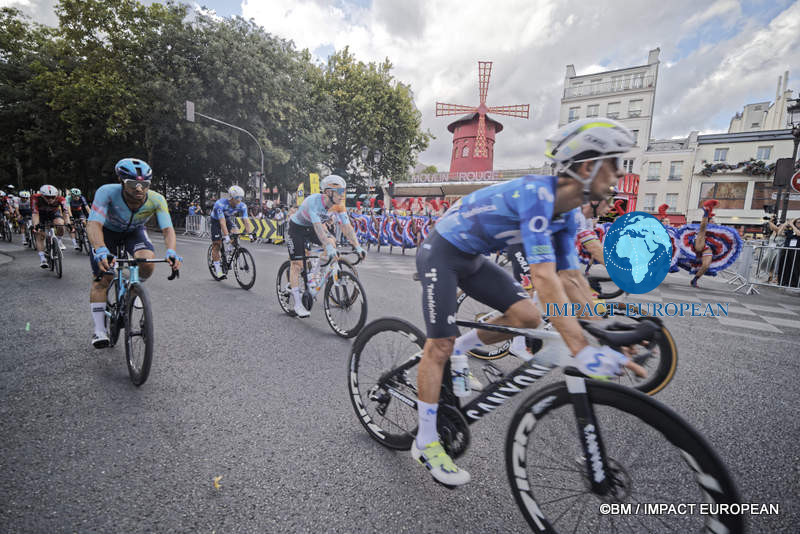
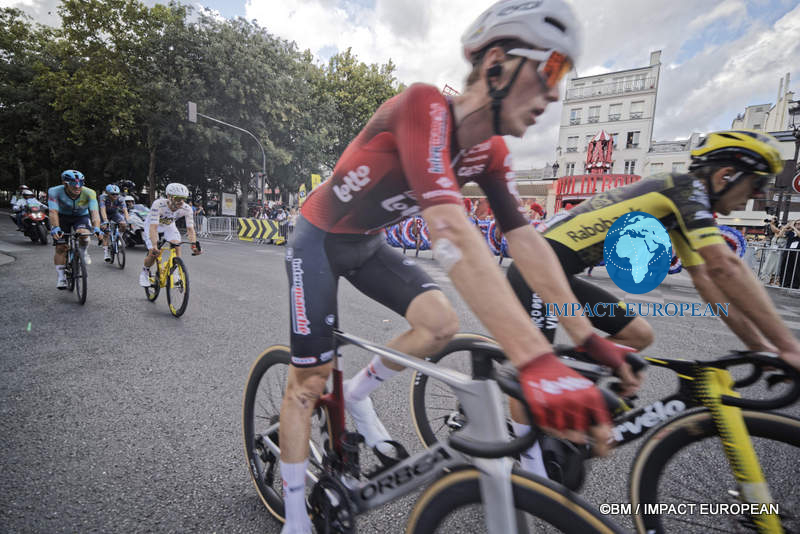
When the first riders finally swept through the square at 7:06 p.m., sixteen minutes later than expected, anticipation instantly became excitement. Cameras rose above the crowd, applause rolled along the barriers and, within seconds, the peloton had disappeared again into the streets of the capital.
But the celebration did not end there.
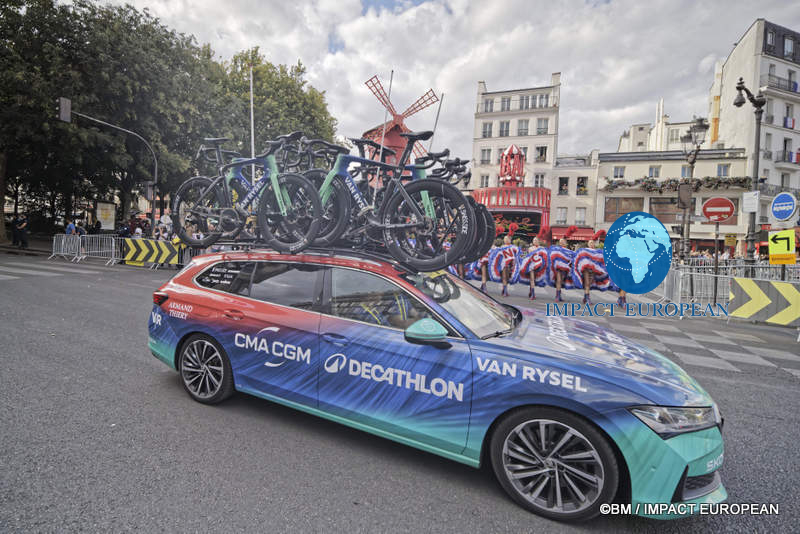
The second and third passages brought the same excitement, each followed by another burst of music as the Moulin Rouge performers reclaimed the square. Rather than interrupting the race, the performances became part of its rhythm, filling every pause with energy and giving spectators an experience that extended well beyond the cyclists themselves.
As twilight settled over Montmartre, the final choreography ended at 7:51 p.m. The crowd lingered. Some took one last photograph beneath the illuminated windmill. Others simply stood for a moment, absorbing the atmosphere before drifting away into the surrounding streets.
For visitors from abroad, the memory they carried home would not be limited to the Tour de France.
They would remember the sound of music echoing through Place Blanche.
They would remember dancers spelling the name of the race beneath one of the world’s most recognisable landmarks.
And they would remember that, in Paris, even waiting for a sporting event can become a cultural experience.
Perhaps that is what makes the French capital unique.
It does not simply host global events.
It transforms them into stories that belong to the city itself.
©2026 IMPACT EUROPEAN – All rights reserved
Views: 21
More Stories
France Protests on October 17: Mass Mobilization Overshadowed by Violence Across the Country
Work Palace Opens in Paris: INSITU Brings Luxury Hospitality Into the Workplace
Rugby Pro D2: Colomiers Defeat Narbonne 49-28 to Claim Bonus-Point Victory