

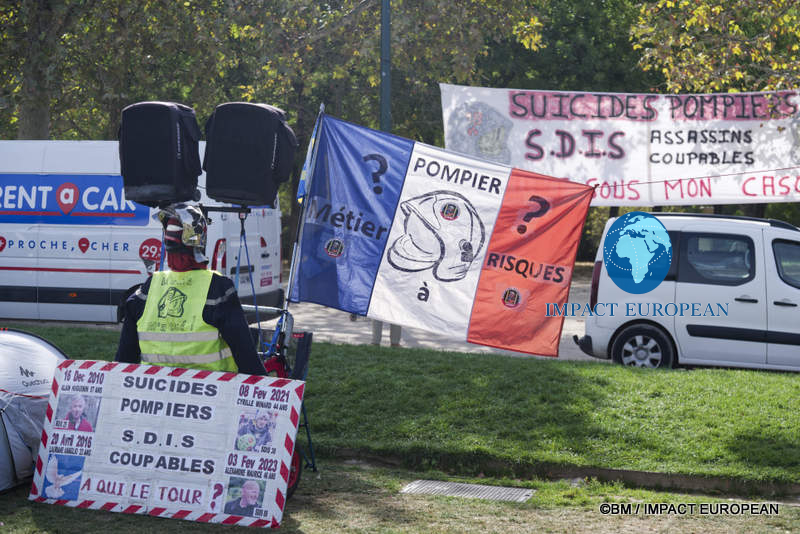
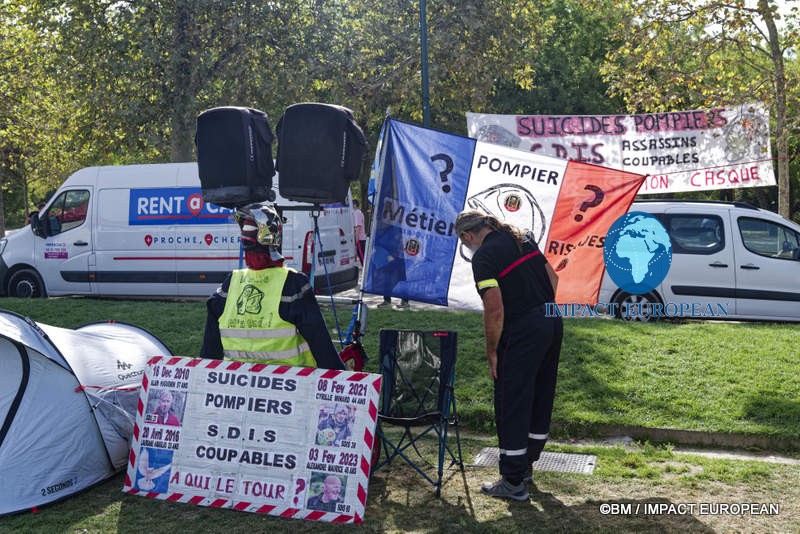
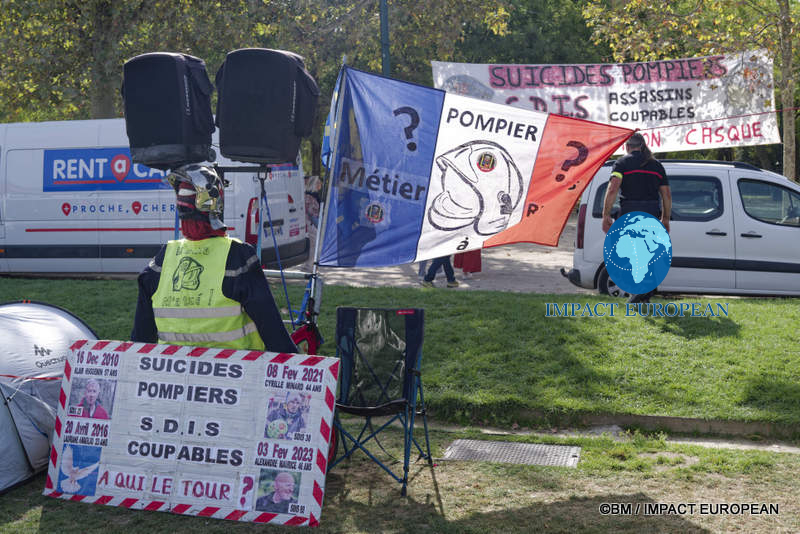
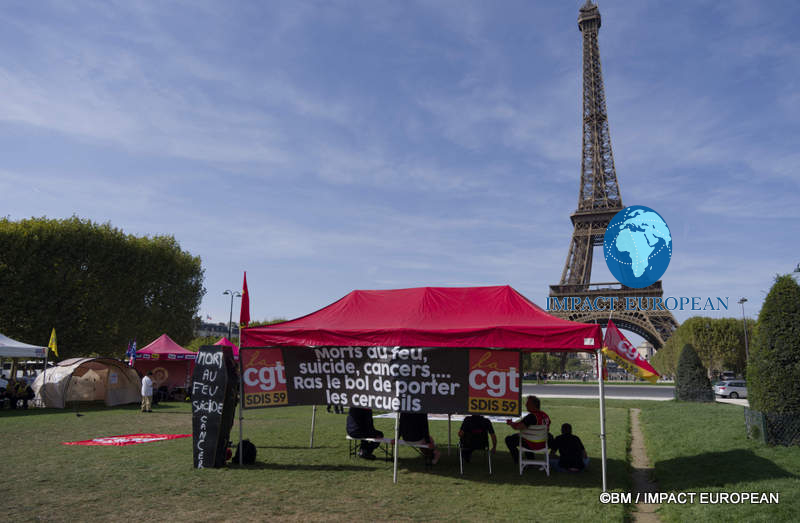
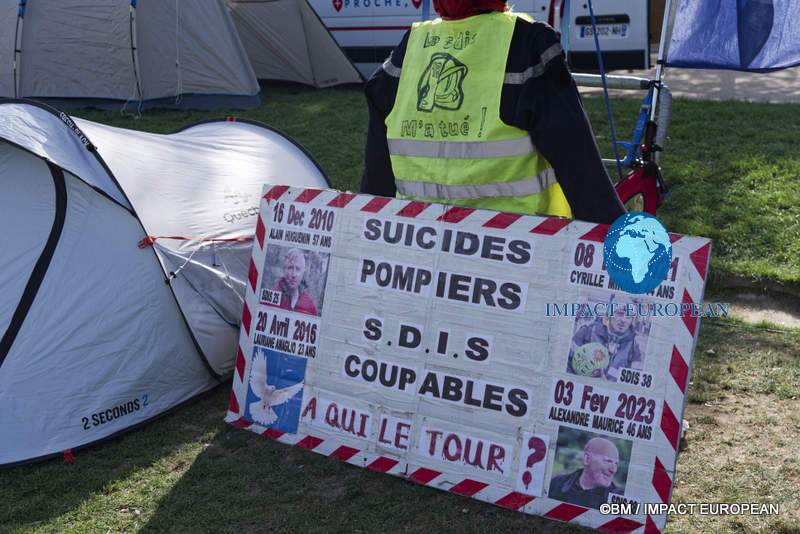
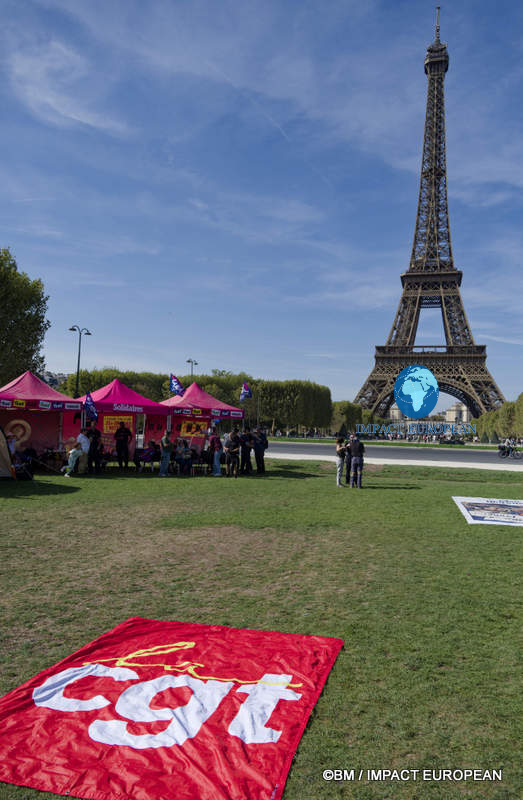
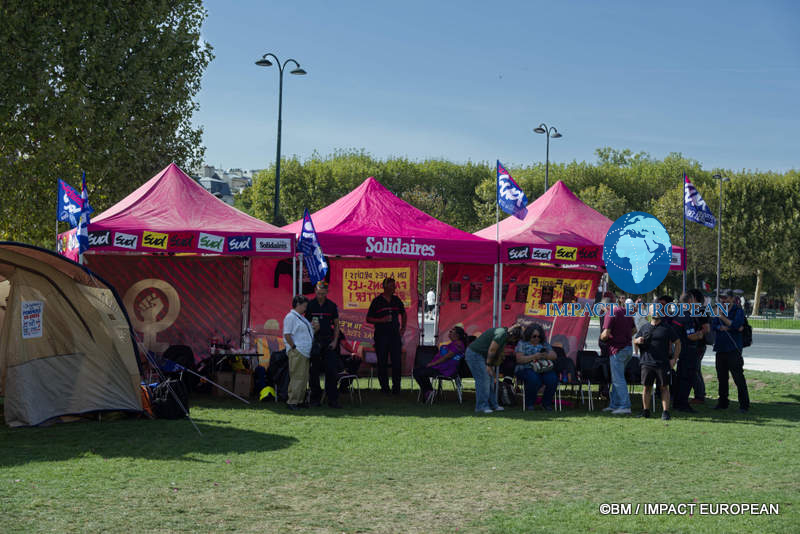
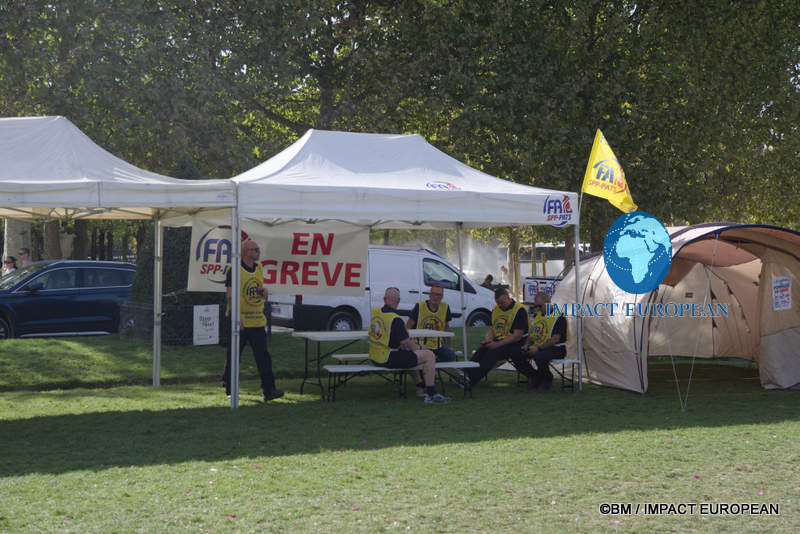
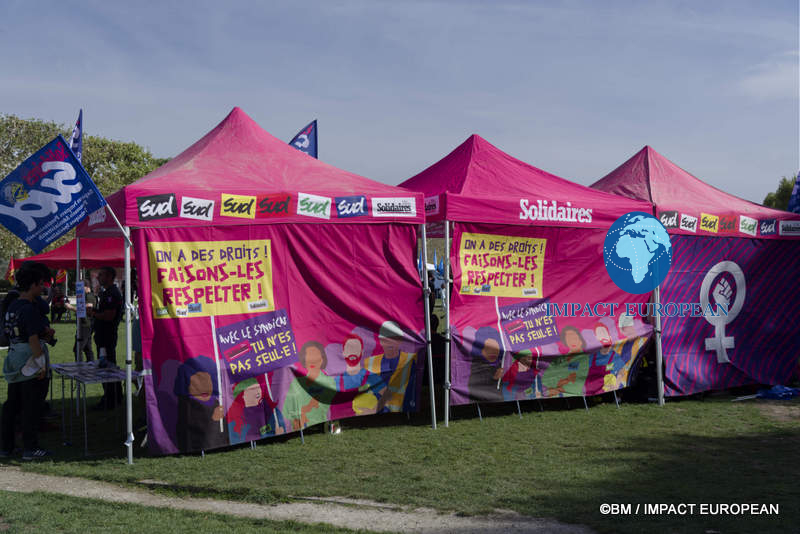
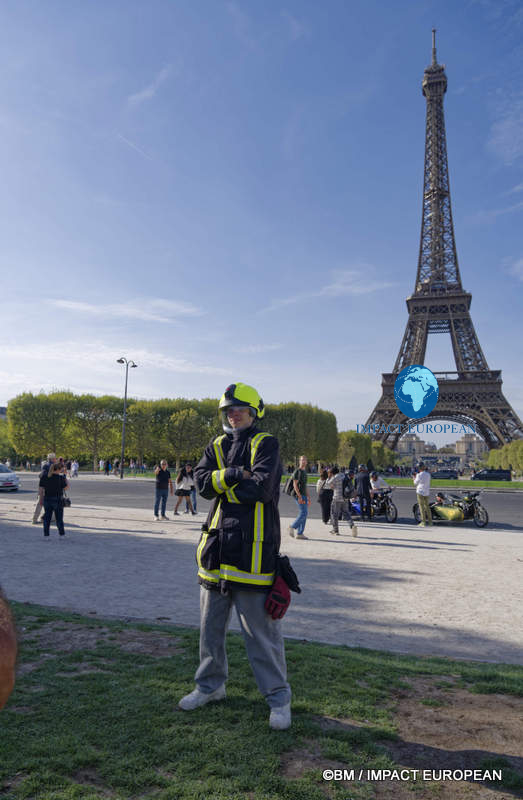
Professional firefighters have brought weeks of frustration into the heart of Paris. On Sunday, September 27, 2026, dozens set up tents and shelters on the Champ-de-Mars, beneath the Eiffel Tower, demanding more staff, greater resources, better health protection and a clearer definition of their missions. After an exceptionally demanding wildfire season, their protest is exposing a broader challenge: how can an emergency-response system protect the public as climate hazards, medical calls and pressure on those providing the rescue all increase at the same time?
A “reinforcement column of anger” in central Paris
Firefighters are accustomed to reinforcement columns.
When a major wildfire, flood or other disaster overwhelms local resources, personnel and equipment can be deployed from other territories to strengthen the response.
This Sunday in Paris, firefighters have turned that operational language into a message of protest.
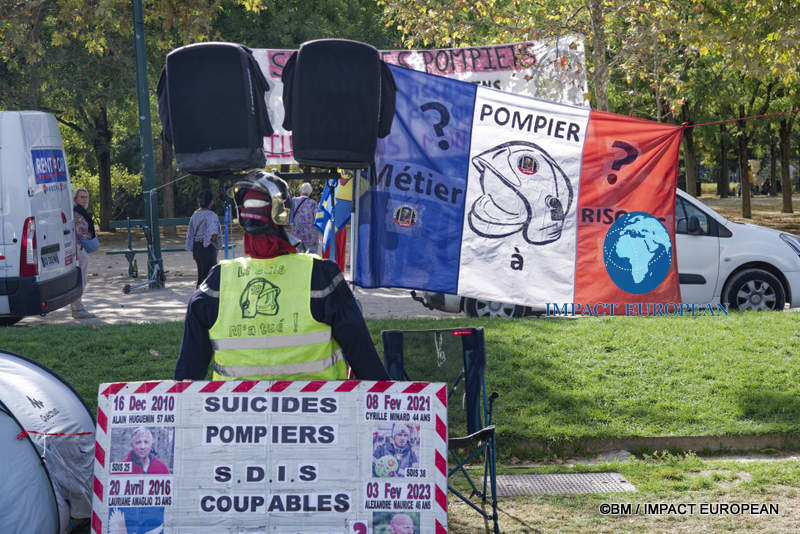
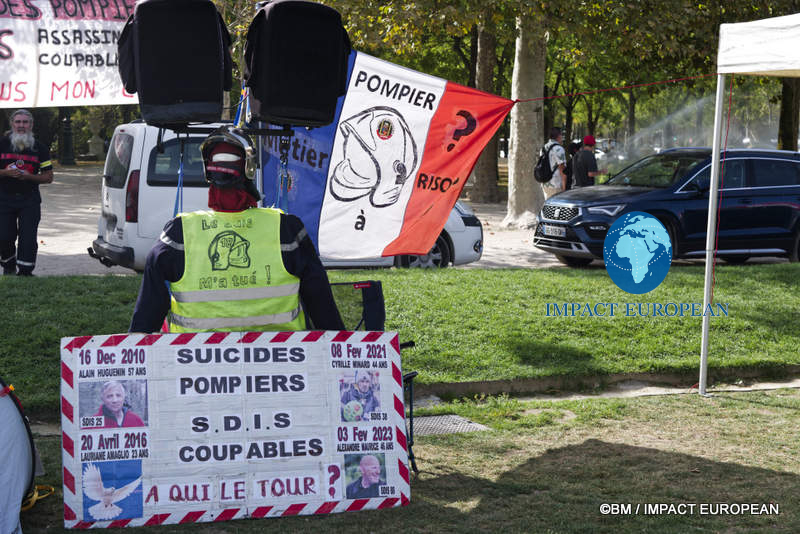
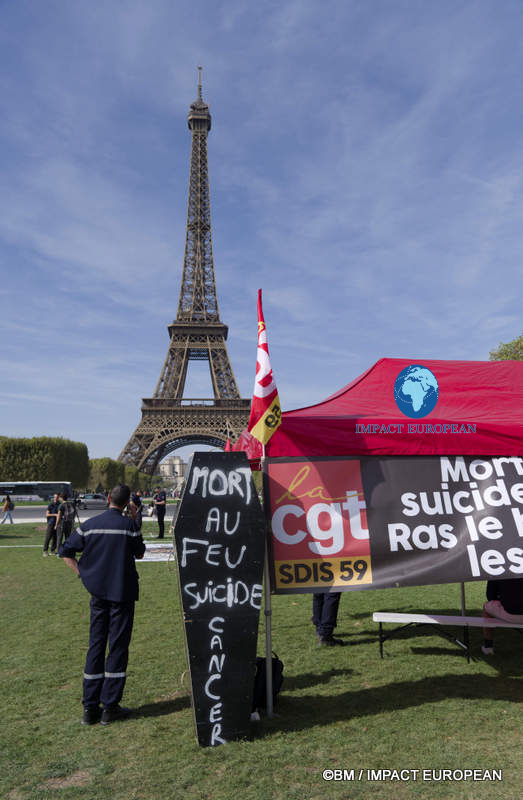
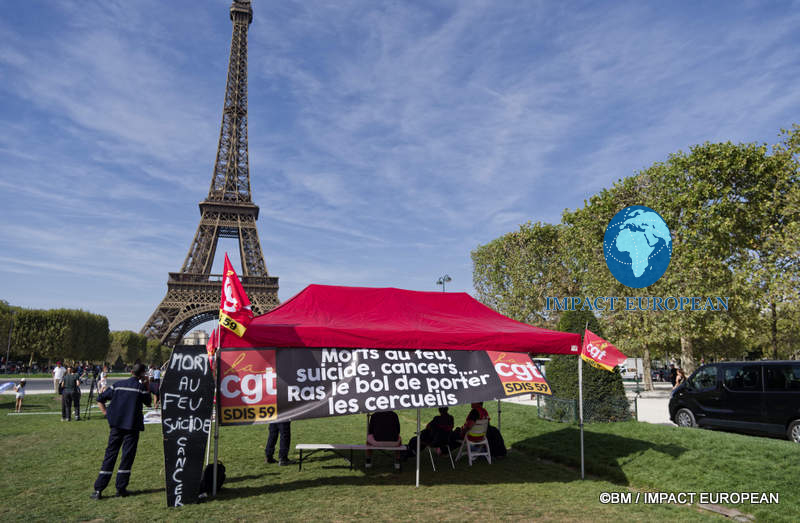
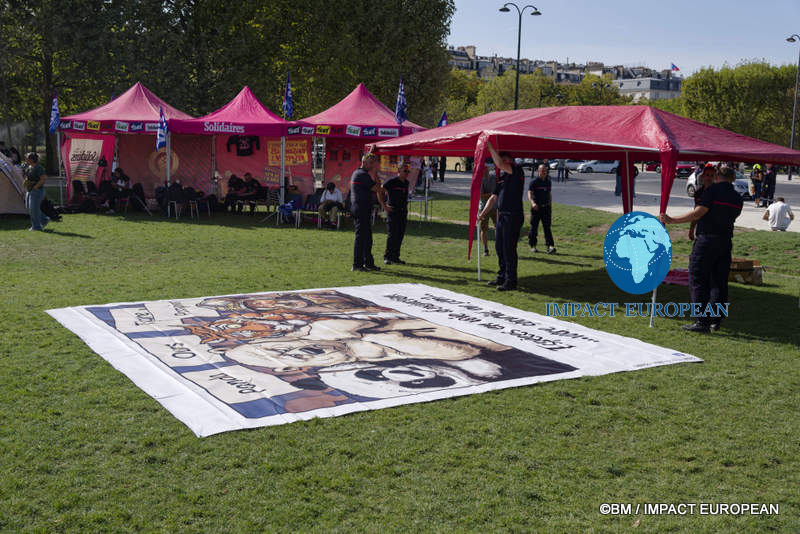
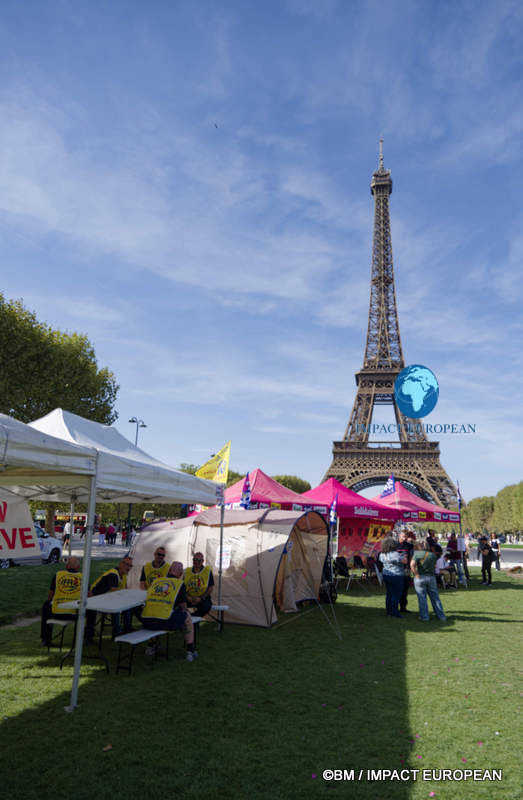
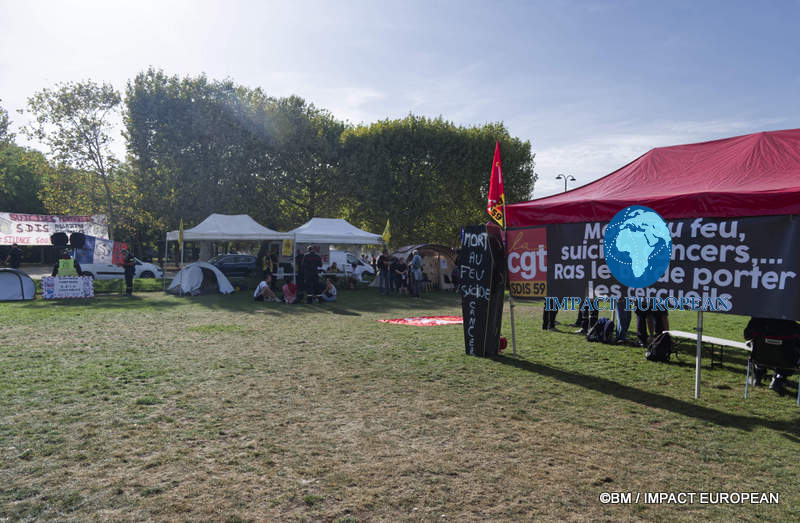
Dozens of professional firefighters from different parts of France, including the north of the country, have set up a camp on the Champ-de-Mars, within sight of the Eiffel Tower.
The inter-union group calls it a “reinforcement column of anger” — colonne de renfort de la colère.
This time, the firefighters themselves are asking for reinforcement.
They want to meet residents and elected representatives and explain why their anger has persisted for weeks.
David Saquet, from UNSA Sapeurs-Pompiers, says firefighters want to tell people what they have “on their hearts,” express their “peaceful anger” and demonstrate their determination to be heard by the government.
The location gives their message national and international visibility.
But behind the symbolic setting lies a very practical dispute about the future capacity of France’s emergency services.
A strike notice running from September 8 to October 20
The Paris camp is not the beginning of the movement.
France’s representative firefighter unions launched a strike notice on September 8, covering approximately 44,000 professional firefighters, excluding military personnel.
It is scheduled to continue until October 20.
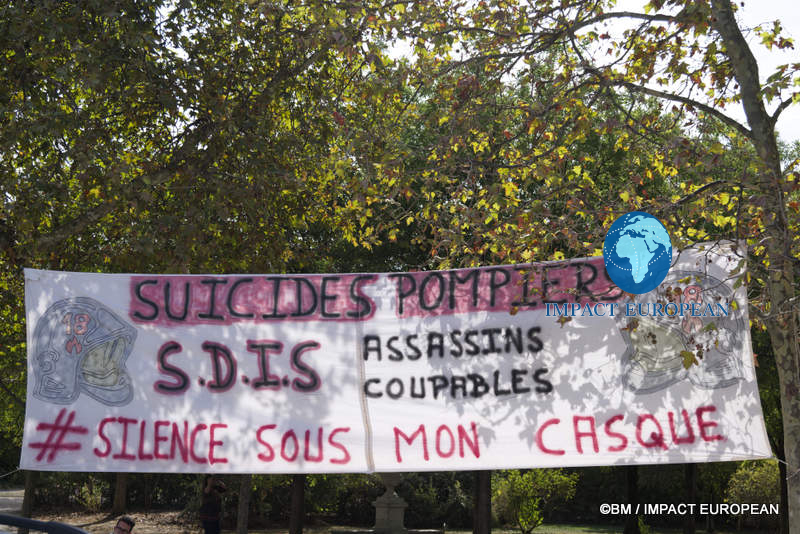
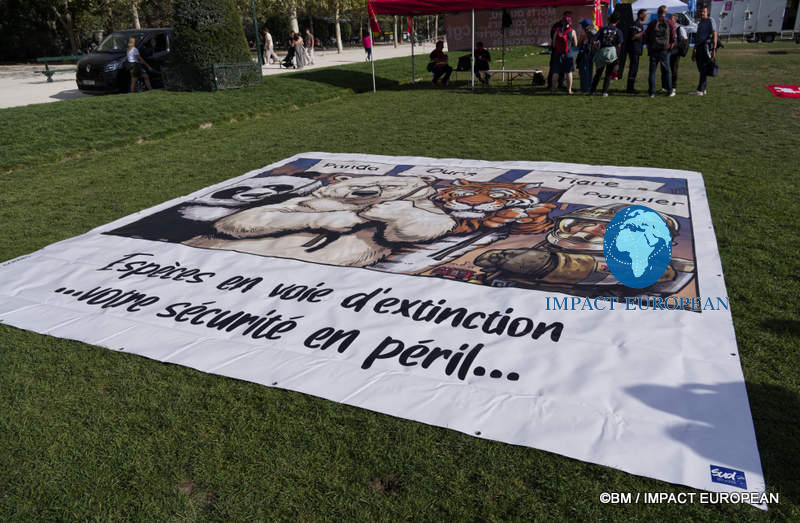
Since the movement began, protest banners, signs and messages have appeared on emergency vehicles and at fire stations.
According to figures provided by France’s Civil Security authorities, an average of 2,682 professional firefighters have been recorded as striking each day since September 8, representing 9.3% of the workforce.
A firefighters’ strike, however, does not function like many other industrial actions.
Emergency response must continue.
The public still calls when a house catches fire, when a road accident occurs or when someone needs urgent assistance.
That makes visibility particularly important to the protesters.
The Champ-de-Mars camp brings a dispute that has been developing inside fire and rescue services directly into public space.
After the wildfires, firefighters say the pressure cannot be ignored
The mobilisation follows an exceptionally demanding fire season.
According to figures presented during the mobilisation, approximately 98,000 hectares have burned in France since January, a level described as the highest in fifty years.
Across all types of operations, eight firefighters have died, according to the National Federation of French Firefighters.
The wildfire figures matter beyond the amount of land destroyed.
Large fires can require personnel and equipment to be moved across regions for extended periods.
Yet a major wildfire does not suspend ordinary emergencies.
While reinforcement teams are fighting flames elsewhere, local services must remain capable of responding to road crashes, house fires, medical emergencies and other calls.
The challenge is therefore not simply having enough firefighters for a major disaster.
It is having enough capacity to confront an exceptional event without weakening everyday emergency response elsewhere.
Firefighting is no longer mainly about fire
The popular image of a firefighter remains closely associated with flames.
The operational reality is considerably broader.
Figures cited in the material surrounding the mobilisation show 19.9 million responses to calls and 4.89 million interventions, with more than three quarters involving assistance to people.
Firefighters are therefore increasingly present at medical emergencies, accidents and other situations that extend far beyond their historic firefighting role.
This evolution is central to one of the unions’ demands: a refocusing of firefighters’ missions.
The underlying question is how much pressure fire and rescue services can absorb when other parts of the health or social-response system cannot immediately provide an alternative.
Every additional call requires personnel, time and often a vehicle.
What appears on paper as an expansion of responsibilities becomes, inside a station, a question of who is available for the next emergency.
More personnel means maintaining operational capacity
The demand for recruitment is therefore not isolated from the other grievances.
Staffing determines how many crews can be deployed.
It affects rest periods and working conditions.
It determines whether reinforcements can be sent to a major incident while sufficient personnel remain available locally.
And it becomes increasingly important when several emergencies occur simultaneously.
The firefighters’ argument is therefore not simply that they want larger numbers.
They are questioning the amount of operational reserve the system needs to withstand increasingly demanding situations.
That distinction matters.
Emergency services are judged not only by their ability to handle what is happening now, but by their capacity to respond when another emergency begins before the first one has ended.
Climate risks are changing the equation
The wildfire season also places the French dispute within a much wider challenge.
Large fires, heatwaves, floods and extreme weather can place intense pressure on emergency services.
These events can require rapid mobilisation of personnel, specialised equipment and reinforcement units from other territories.
The firefighters’ demands therefore raise a longer-term issue.
If the nature and intensity of risks change, can emergency-response resources remain unchanged?
Preparing for future crises requires more than equipment.
It requires trained people who are available when a disaster occurs.
It requires the capacity to move resources without leaving another territory exposed.
And it requires a workforce able to sustain repeated periods of intense activity.
The debate over staffing is consequently also a debate over resilience.
Protecting firefighters’ physical health
The unions are also demanding stronger health protection.
Firefighters can be exposed to smoke, combustion products, extreme heat, toxic substances, injuries and accidents.
Some consequences are immediate.
Others may appear much later.
Repeated or prolonged exposure adds another dimension to the debate over working conditions, particularly as large-scale fires and other complex emergencies place personnel in difficult environments for extended periods.
Health protection therefore cannot be separated from operational capacity.
A firefighter who becomes injured or ill is also a firefighter who may no longer be available to respond.
Protecting the workforce is consequently part of protecting the emergency-response system itself.
Mental health and suicide: another issue behind the uniform
Not every occupational risk can be seen.
Firefighters repeatedly encounter serious accidents, death, severe injuries and people experiencing extreme distress.
Some interventions can leave psychological consequences long after an emergency vehicle has returned to the station.
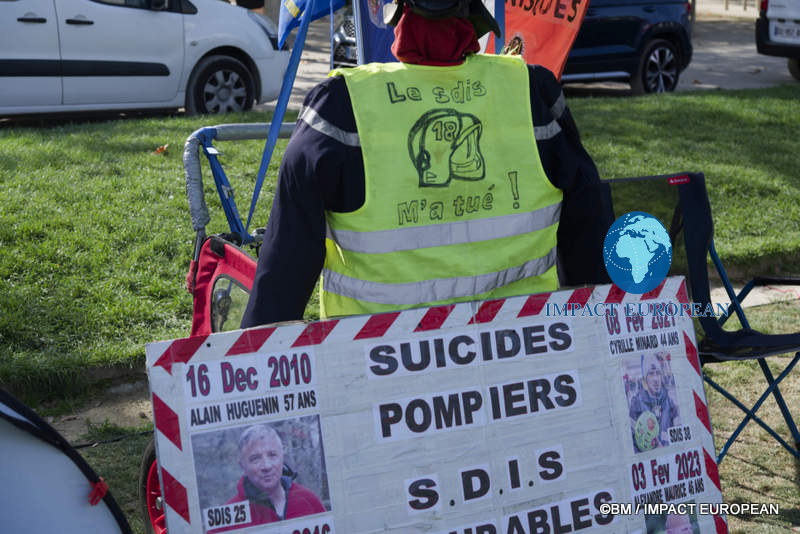
Mental health is therefore another subject raised around the profession, alongside the question of suicide.
It requires careful treatment.
A suicide cannot automatically be attributed to a person’s occupation. Individual cases may involve professional, personal or multiple factors, and a causal connection should not be asserted without evidence.
That necessary caution does not eliminate the broader issue of prevention.
Psychological support, recognition of exhaustion, assistance following traumatic incidents and early identification of vulnerable personnel are legitimate occupational-health concerns for emergency services.
Suicide does not define the firefighters’ mobilisation. It is one of the human issues that the debate over working conditions brings into view.
One individual case surfaces within the wider protest
Collective movements can also become places where individual grievances emerge.
A leaflet distributed in the context of the mobilisation presents the case of Denis Braye, described in the document as a “firefighter whistleblower.”
According to the leaflet, Braye served as an operational firefighter for 36 years, including service with the Paris Fire Brigade, and received a decoration for courage and devotion.
The document describes a long-running dispute with SDIS 25 involving occupational injuries, his administrative status, pay and the end of his career.
It also states that a judicial decision dated July 4, 2023 annulled a sum claimed from him and required a new decision concerning the recognition of injuries.
These points are claims contained in the leaflet and should not be treated as independently established judicial findings without examining the relevant court and administrative documents.
Its presence at the mobilisation nevertheless illustrates something broader.
National disputes about staffing, health and professional recognition are ultimately experienced through individual careers.
Behind institutional statistics are people whose relationship with the emergency services can extend over decades.
Firefighters challenge plans to modernise Civil Security
The protest also comes as France considers the future organisation of its Civil Security system.
A first synthesis of a modernisation project was presented on September 8, the same day the strike notice began.
It has not ended the dispute.
Frédéric Monchy, from SNSPP-PATS, says the proposal “satisfies no one” and has effectively united opposition against it.
The Association of Directors of Departmental Fire and Rescue Services has also argued that the project does not provide the structural answers required by changing risks, increasingly intense crises and growing demands on fire and rescue services.
The dispute therefore extends beyond immediate working conditions.
Firefighters are questioning how France intends to organise emergency response for the years ahead.
Eventually, every demand reaches the question of funding
Recruitment requires money.
Training requires money.
Vehicles and protective equipment must be maintained and replaced.
Health monitoring and prevention require resources.
Preparing for larger or more frequent crises requires investment.
The different strands of the firefighters’ anger therefore converge on the financing of France’s departmental fire and rescue services.
The unions want their demands heard before upcoming budget decisions.
That places the mobilisation at the intersection of operational reality and political choice.
The question is not simply how much emergency services cost.
It is what level of resources is required for them to perform the missions society expects from them.
Paris mobilisation is only beginning
On Sunday, September 27, the Paris sequence is still at its beginning.
The camp on the Champ-de-Mars is the first stage.
On Monday, September 28, firefighters are due to march through Paris.
Then, on Tuesday, September 29, they plan to join the wider public-sector demonstration, called by trade unions over issues including pay and public resources.
Those events have not yet happened.
Their outcome cannot be anticipated.
The firefighters’ own strike notice is scheduled to remain in place until October 20, meaning that the mobilisation may continue well beyond the three days in Paris.
Rémy Chabbouh, from SUD SDIS, has made the unions’ position explicit: they do not intend to lift the notice until their demands have been addressed.
When emergency responders issue an emergency call of their own
The tents beneath the Eiffel Tower tell only the most visible part of the story.
Behind them lies a chain of interconnected pressures.
Wildfires require reinforcements.
Daily emergency calls continue while those reinforcements are deployed.
Broader missions require more crews.
Greater operational pressure affects working conditions.
Physical and psychological exposure raises questions about health.
And almost every proposed solution eventually depends on funding.
These issues are not identical, and they should not be merged into a single explanation.
But they interact.
That interaction is what gives the mobilisation its broader significance.
France’s firefighters are not only asking how many people or vehicles should be available today.
They are raising a longer-term question about what happens when climate risks, emergency demand and human pressure increase simultaneously.
On September 27, there is no answer yet.
There is a camp beneath the Eiffel Tower.
There is a march planned for Monday.
There is a public-sector demonstration to join on Tuesday.
And there is a strike notice running until October 20.
The people society calls when an emergency begins are now issuing a warning of their own: an emergency-response system can remain resilient only if the people inside it can withstand the pressure placed upon them.
©2026 IMPACT EUROPEAN – All rights reserved


Views: 23
More Stories
France Protests on October 17: Mass Mobilization Overshadowed by Violence Across the Country
Work Palace Opens in Paris: INSITU Brings Luxury Hospitality Into the Workplace
Rugby Pro D2: Colomiers Defeat Narbonne 49-28 to Claim Bonus-Point Victory