

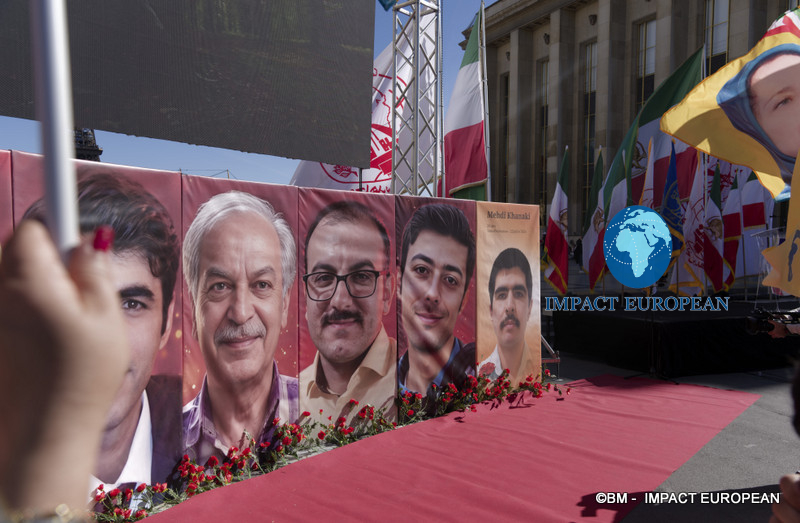
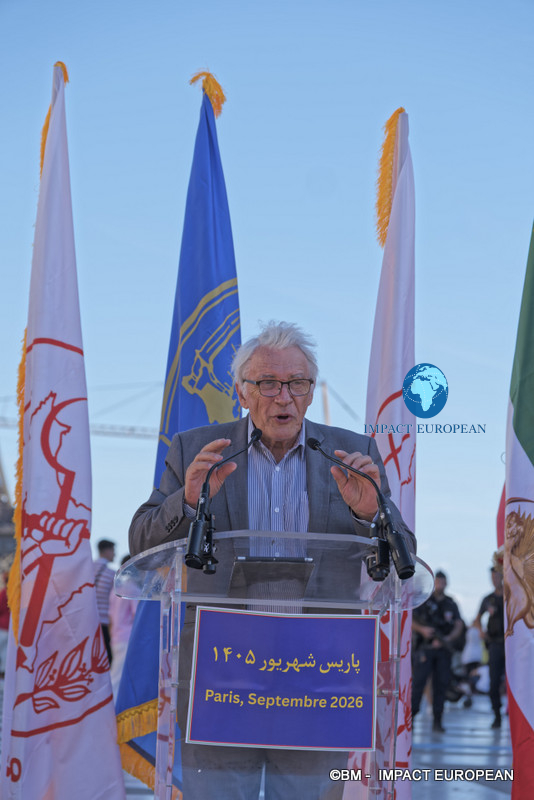
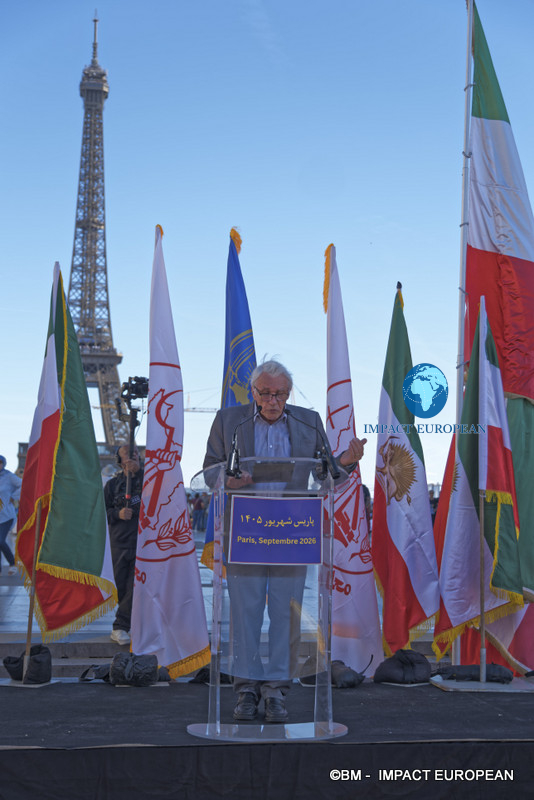
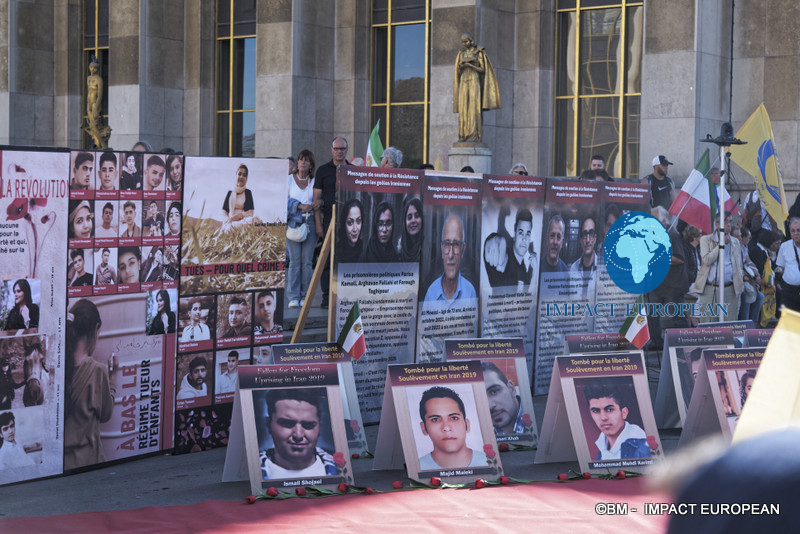
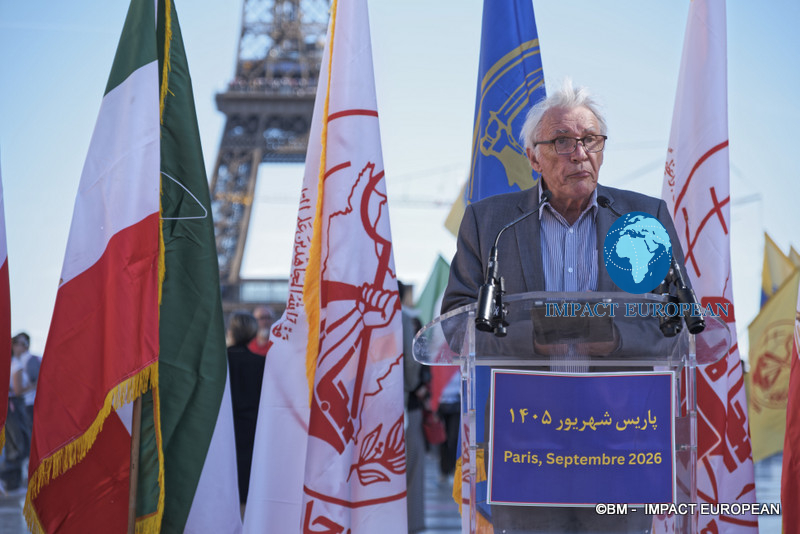
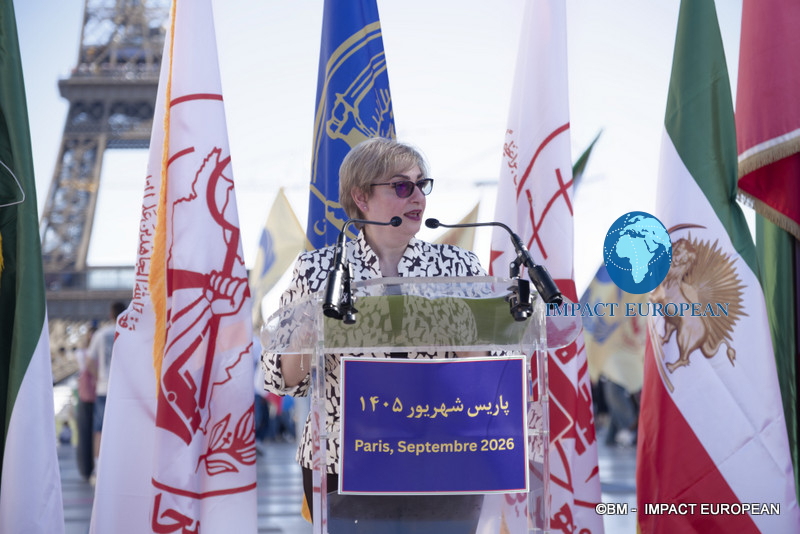
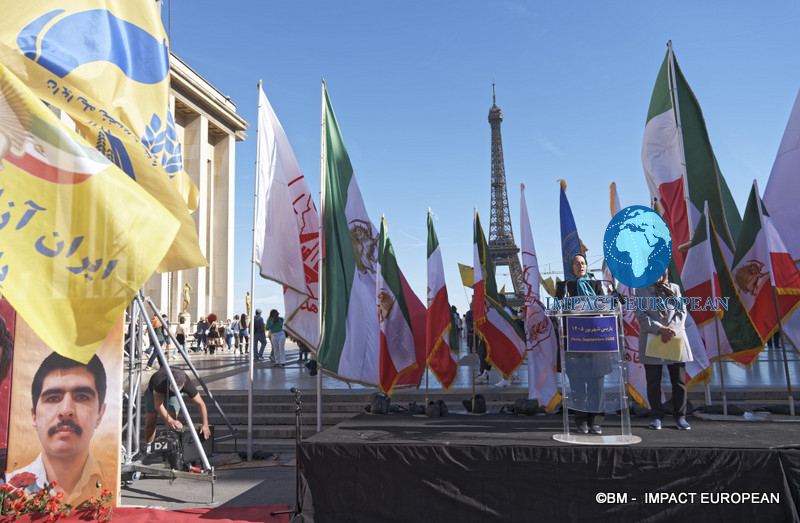
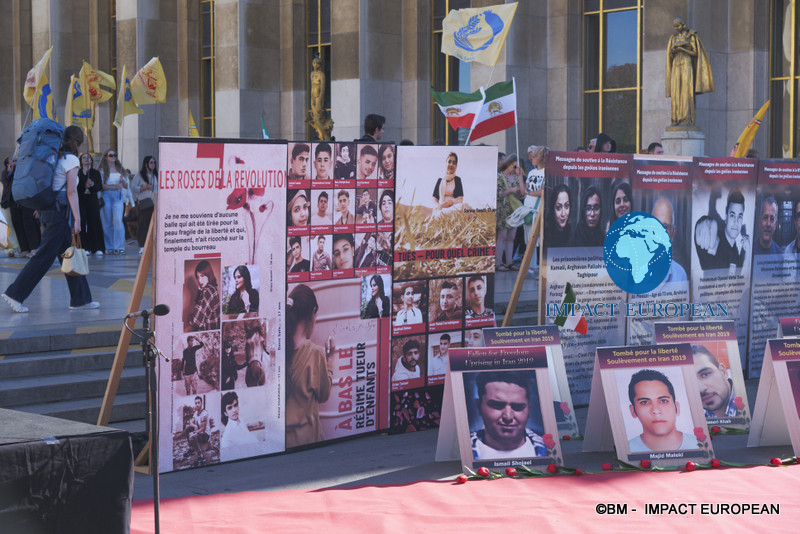
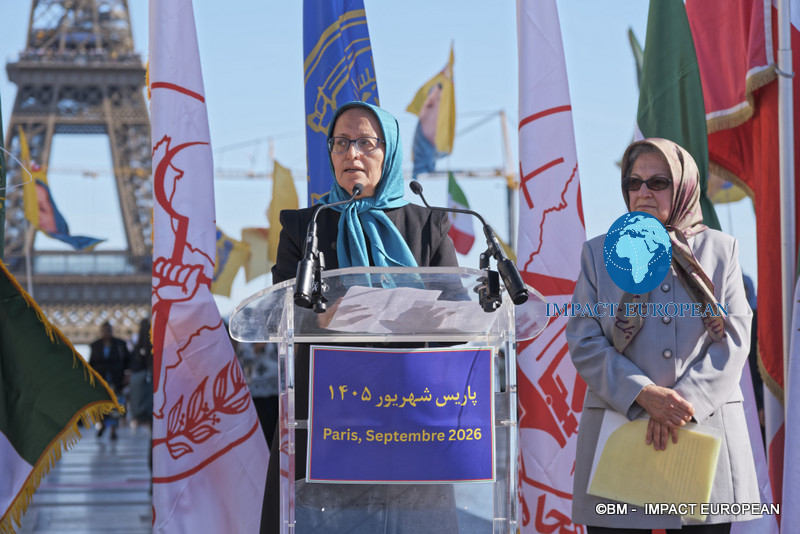
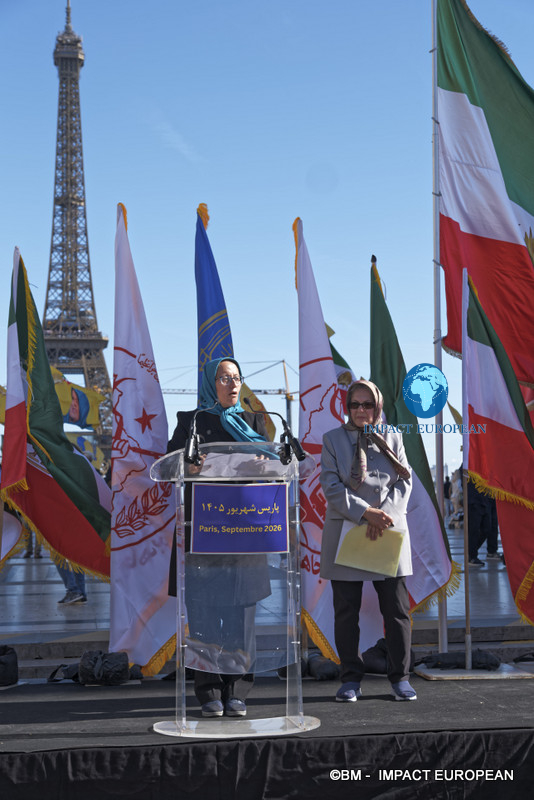
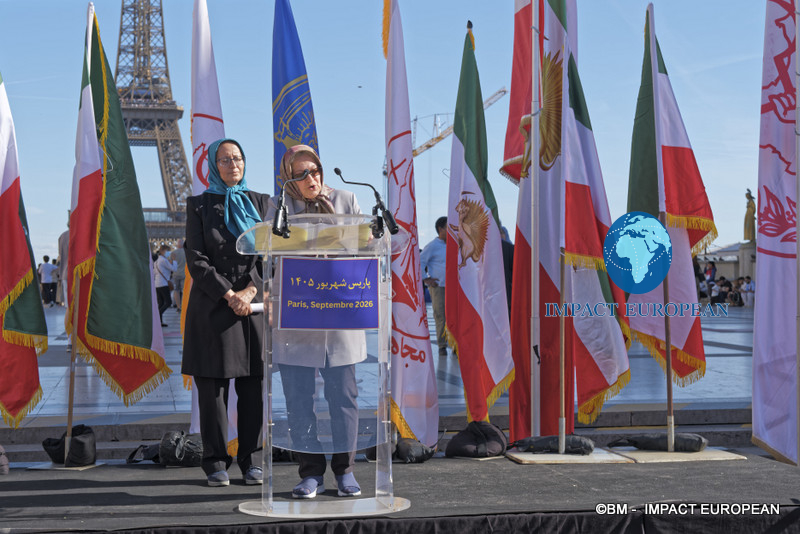
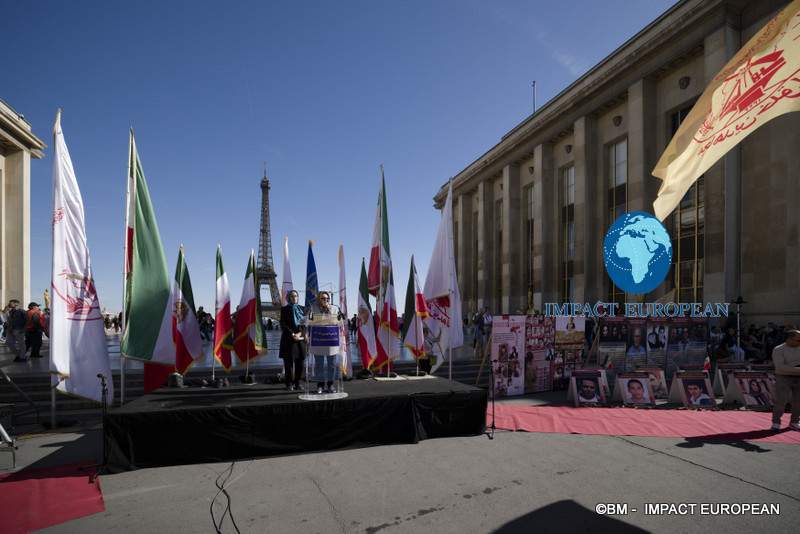
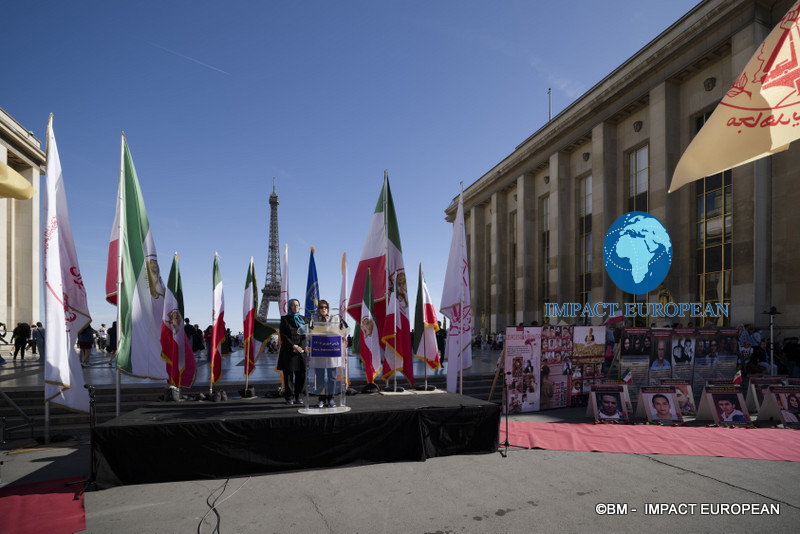
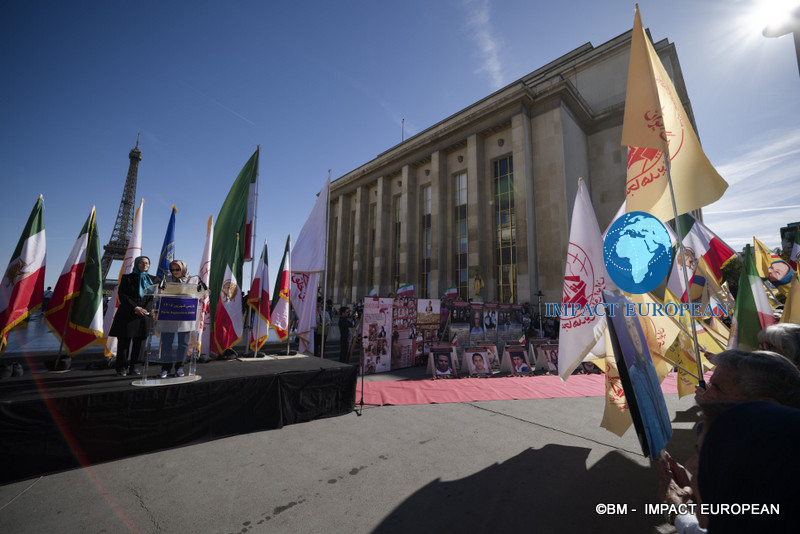
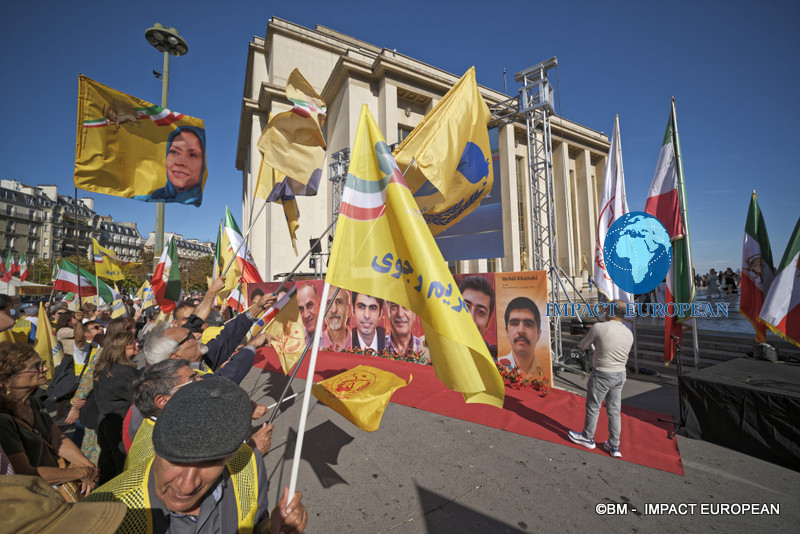
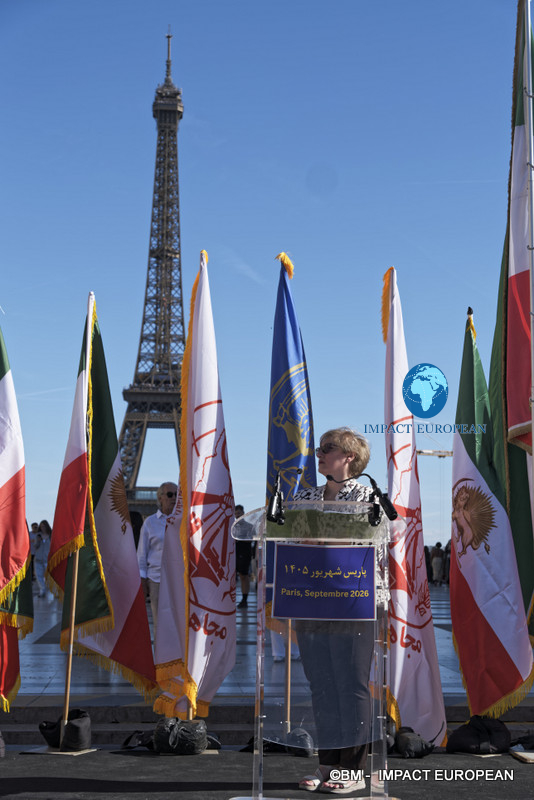
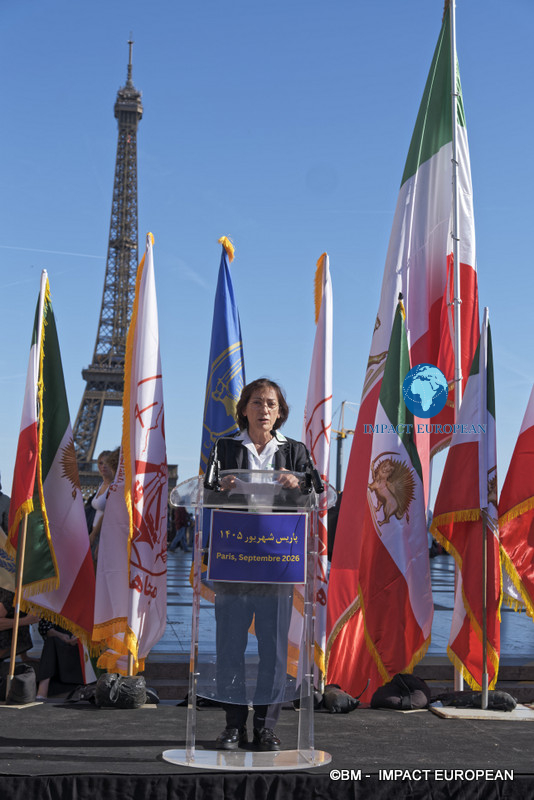
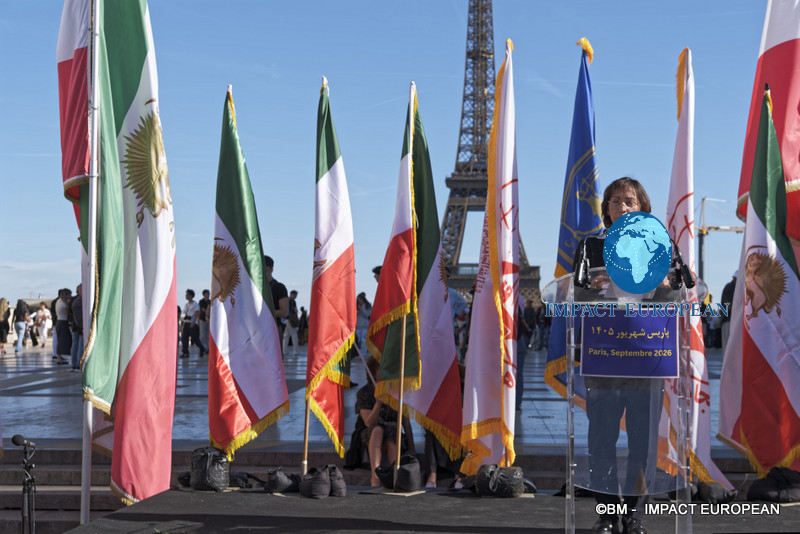
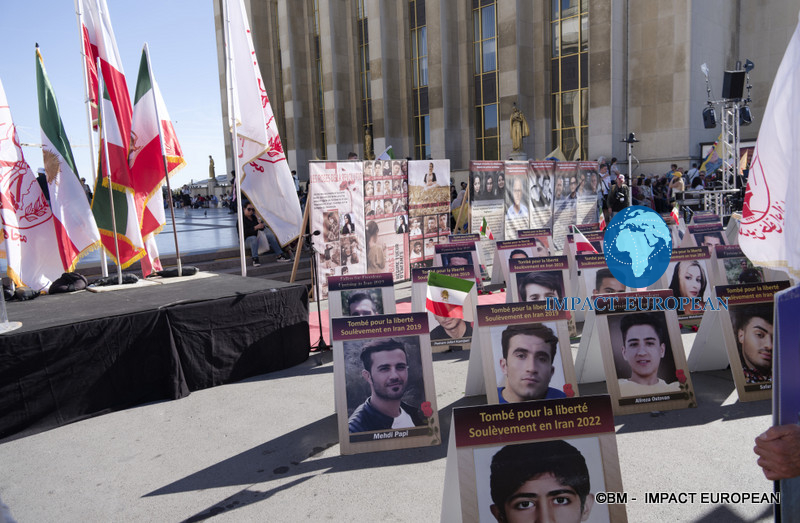
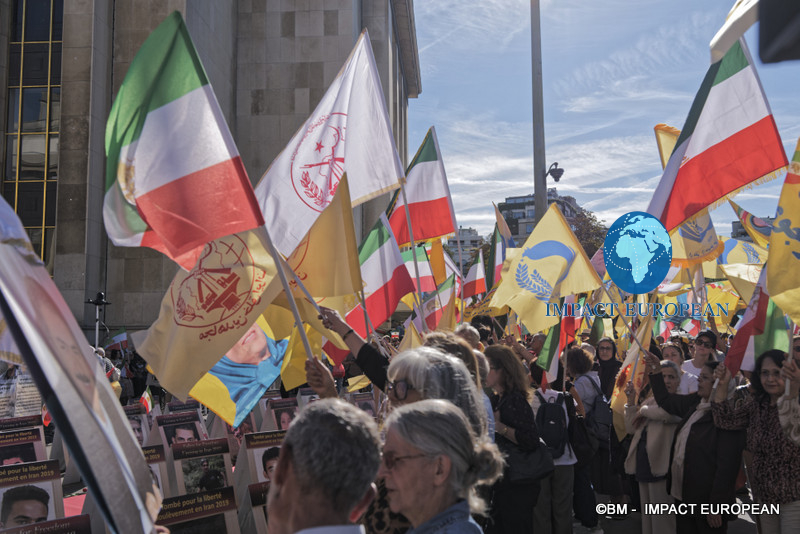
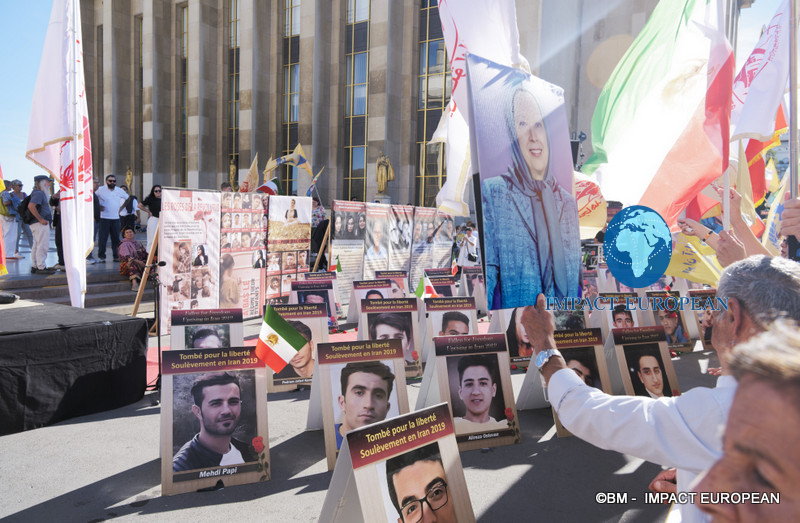
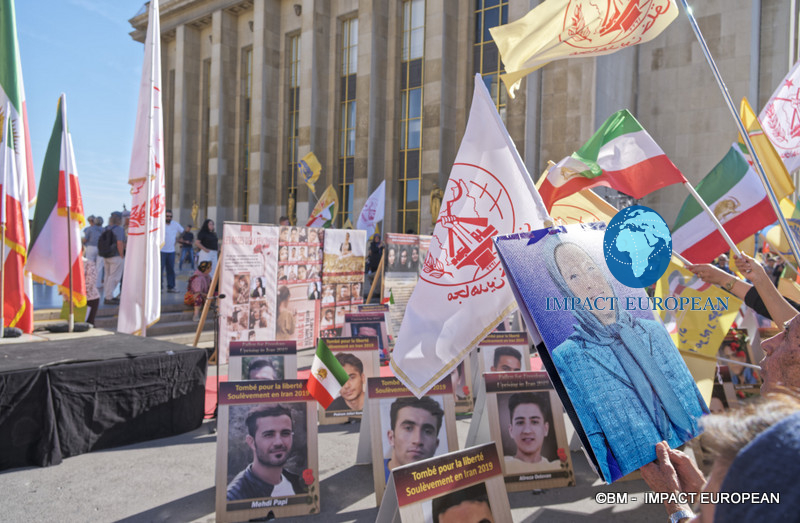
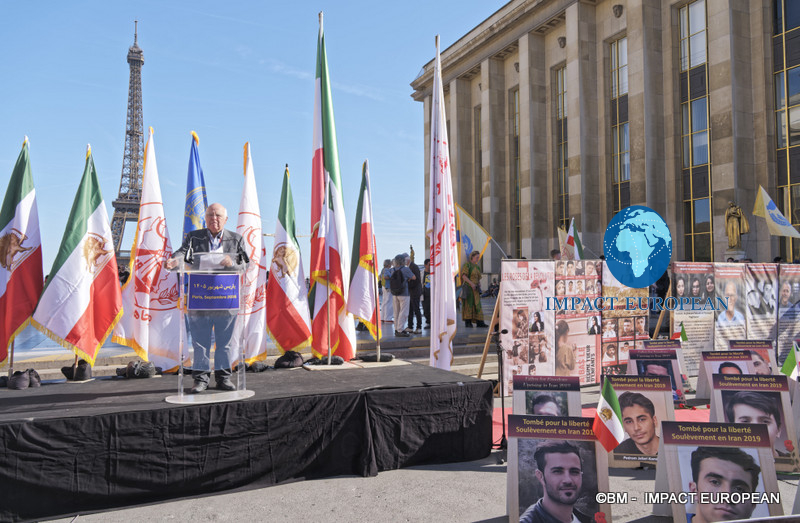
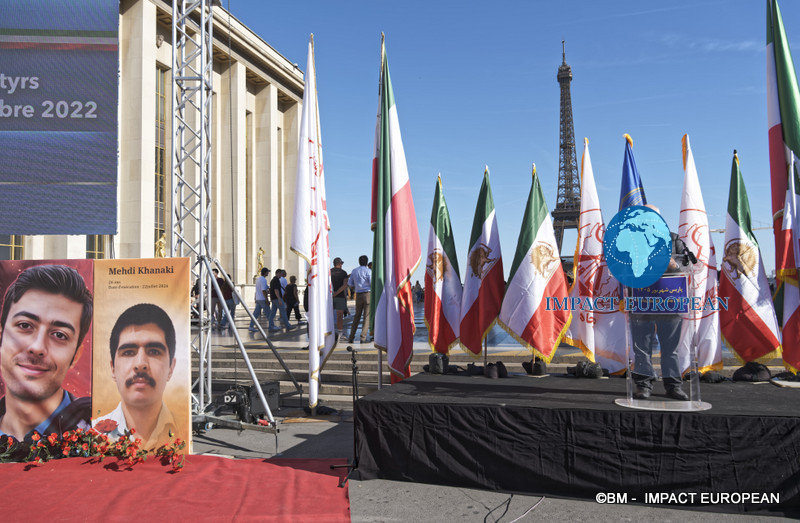
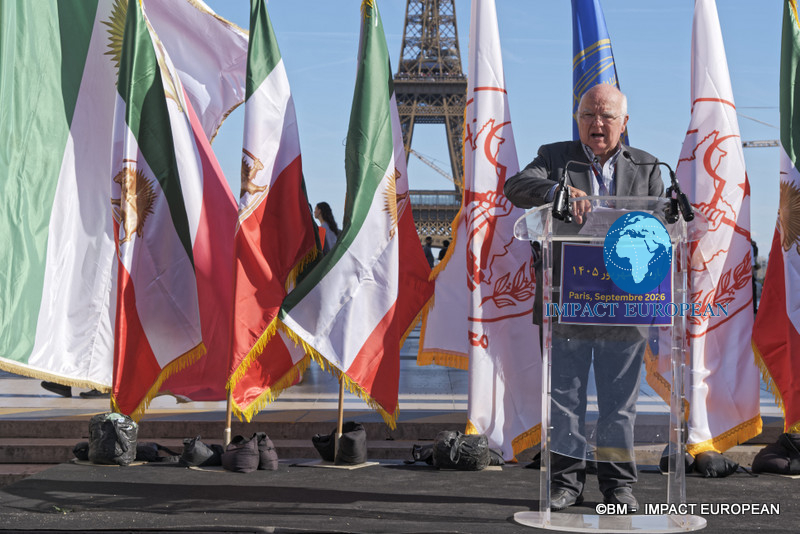
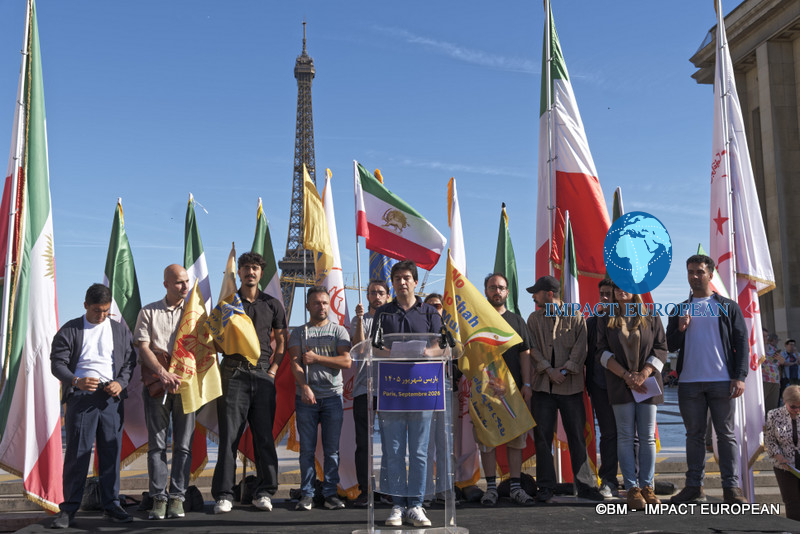
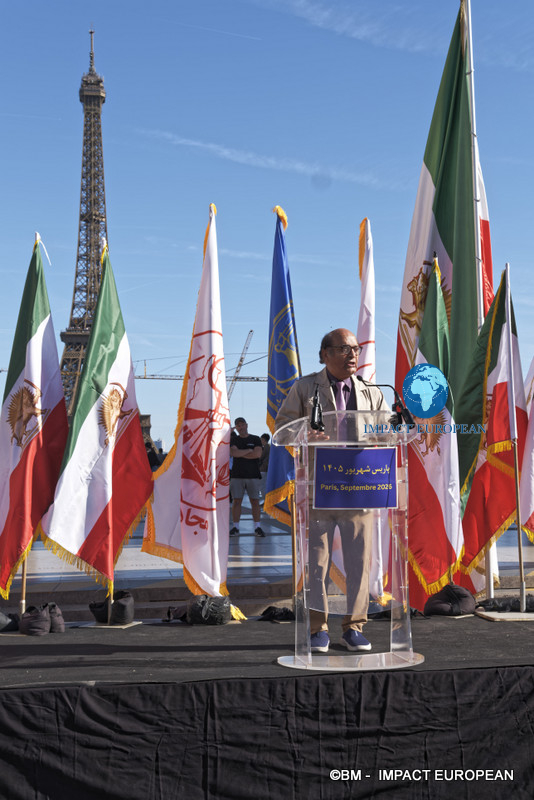
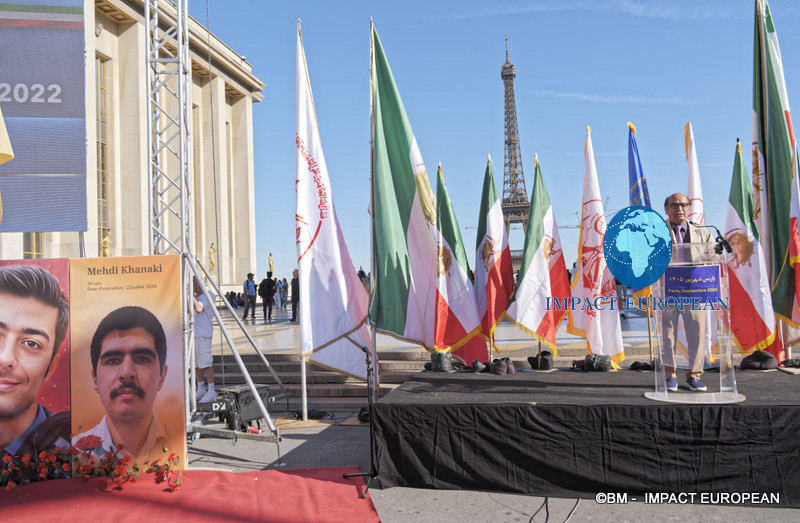
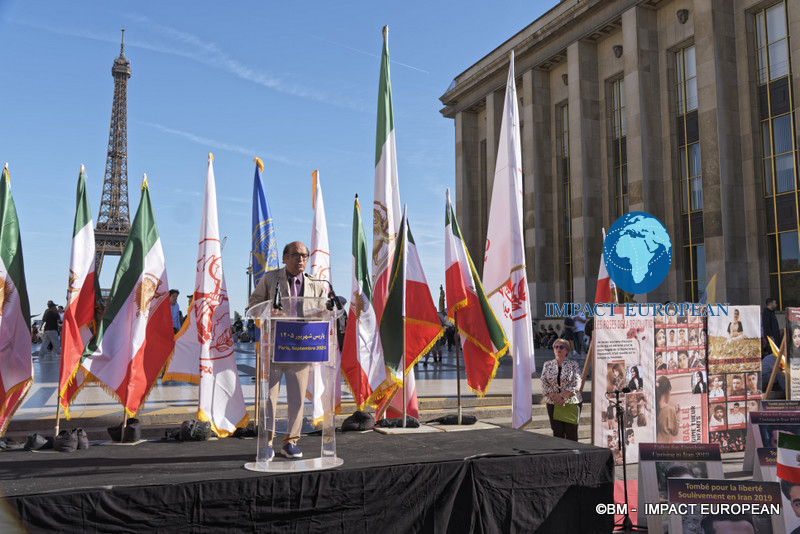
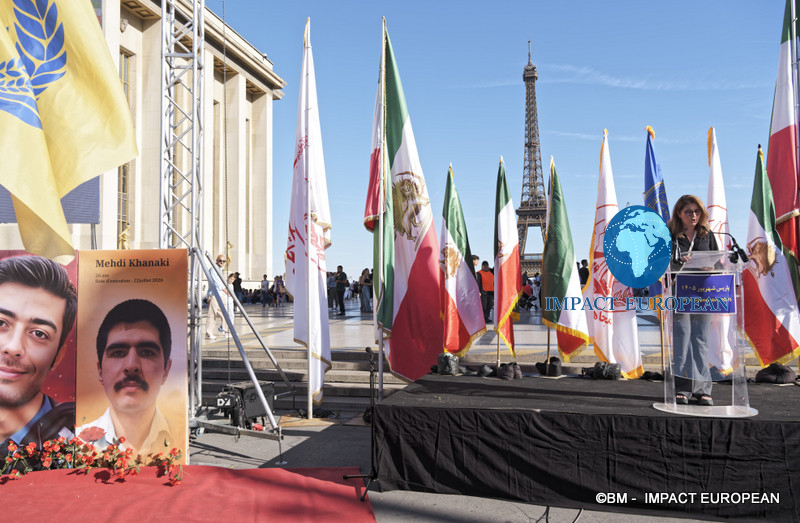
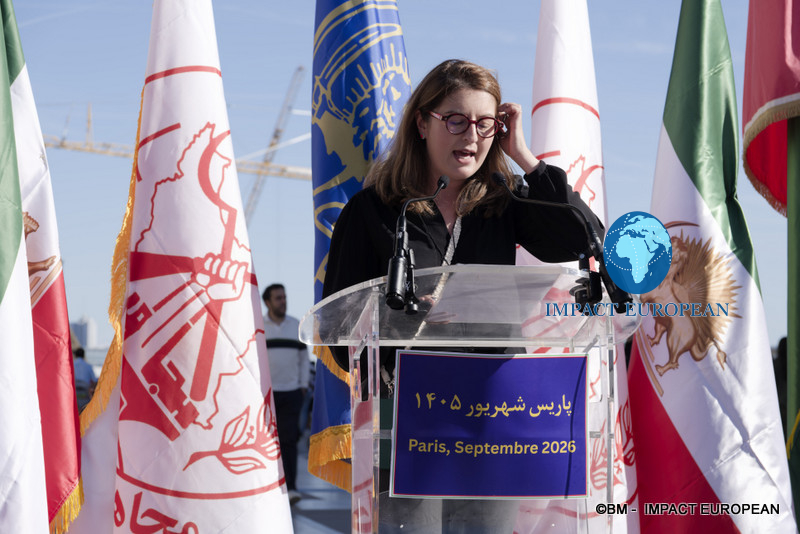
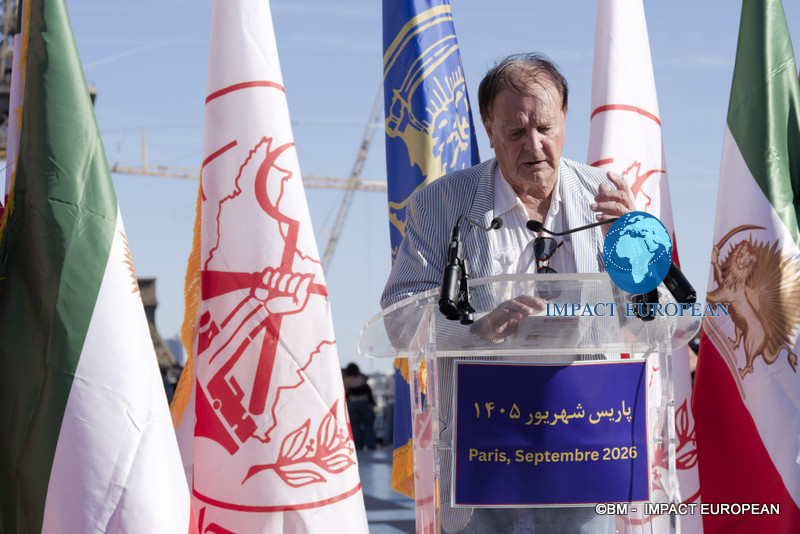
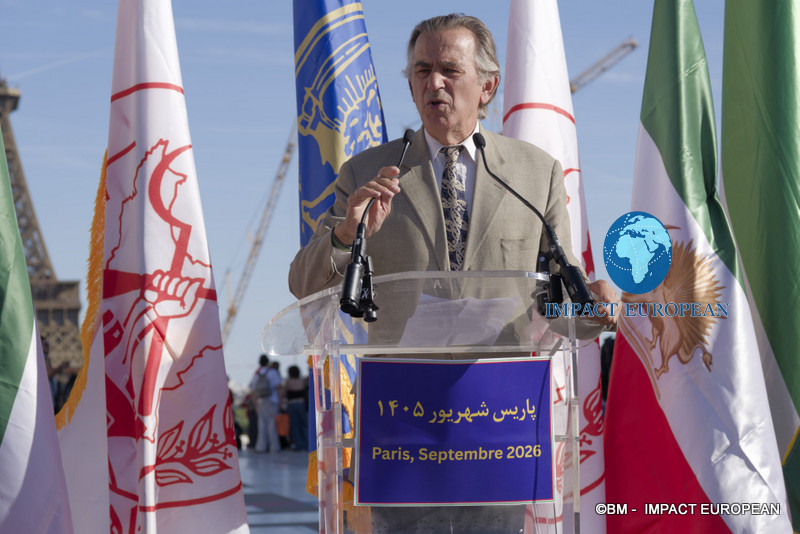
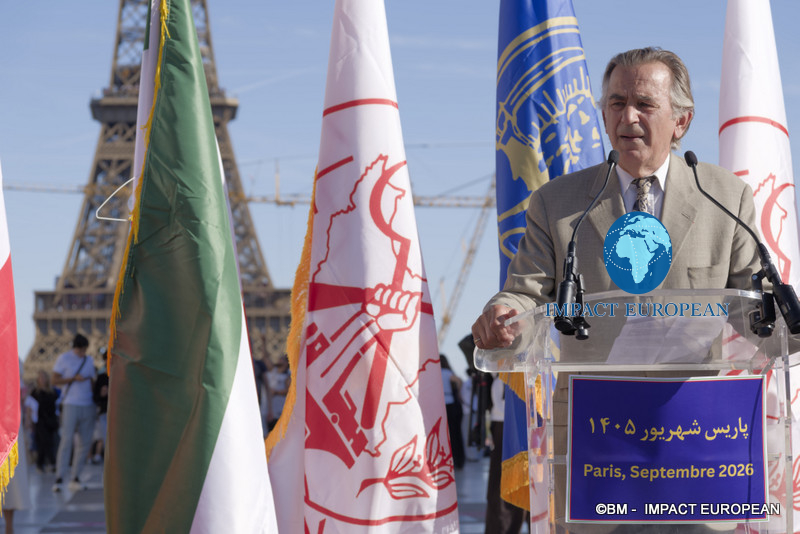
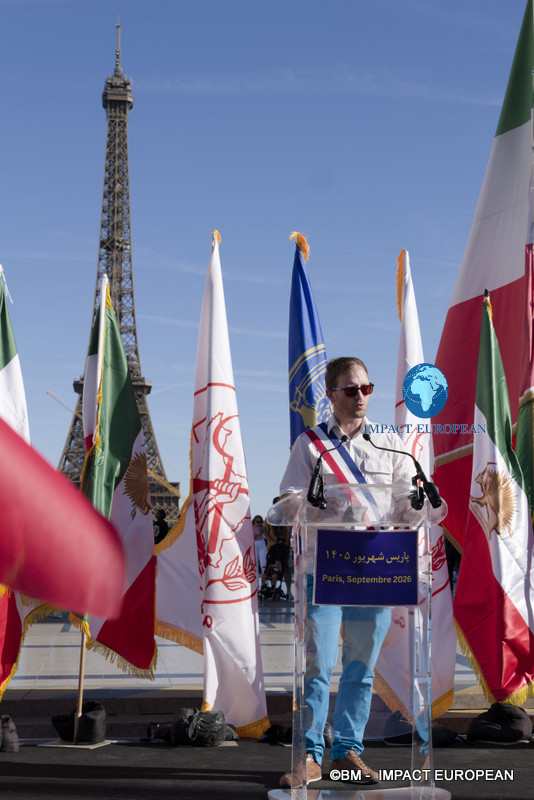
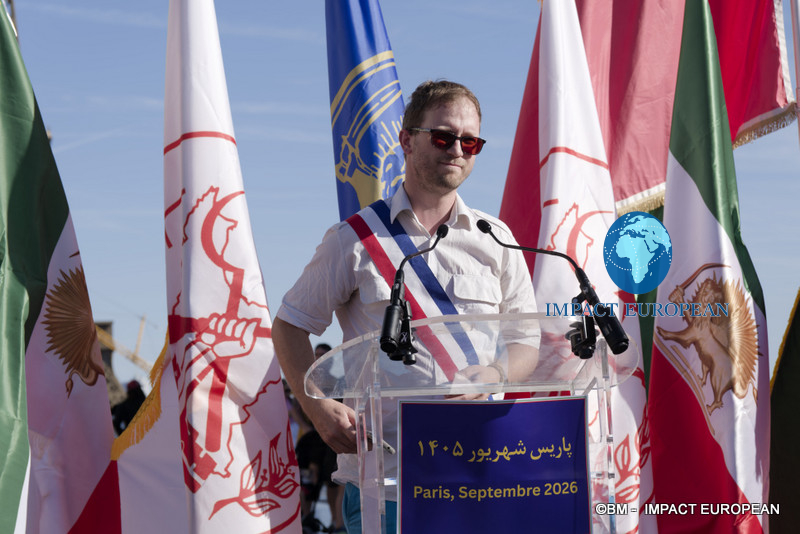
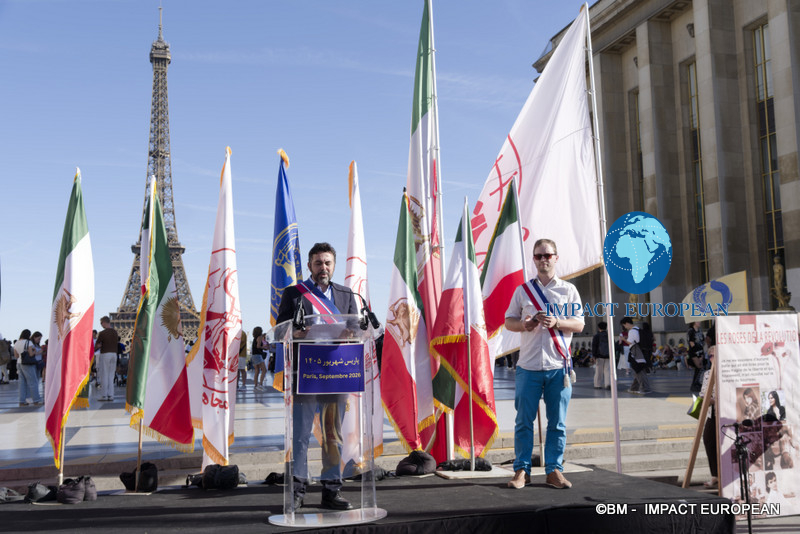
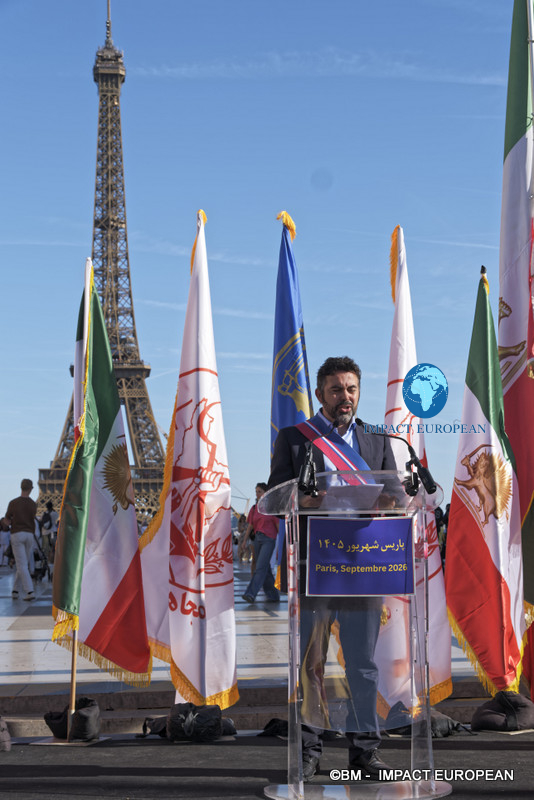
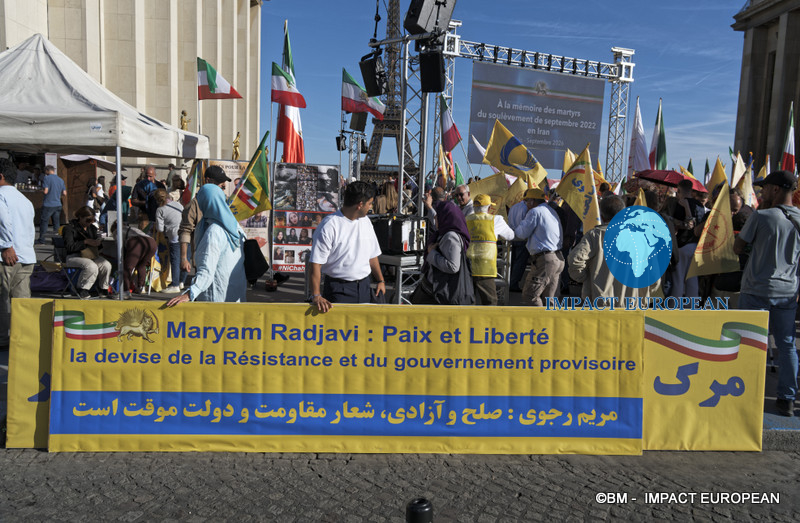
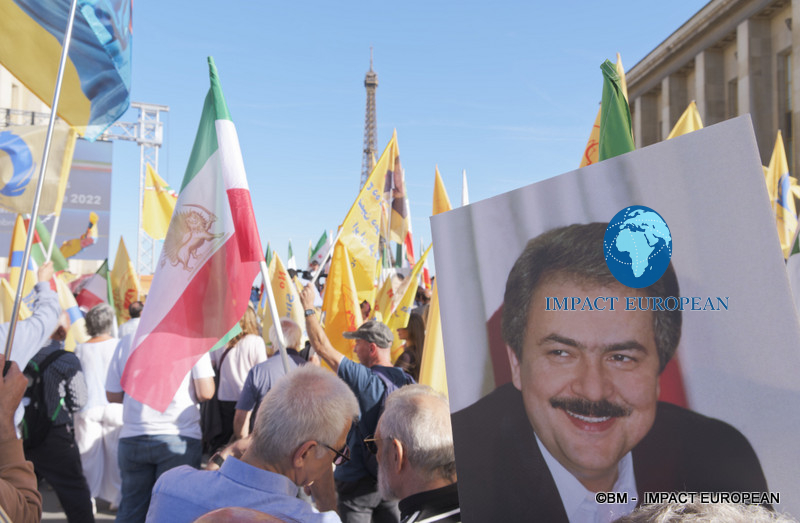
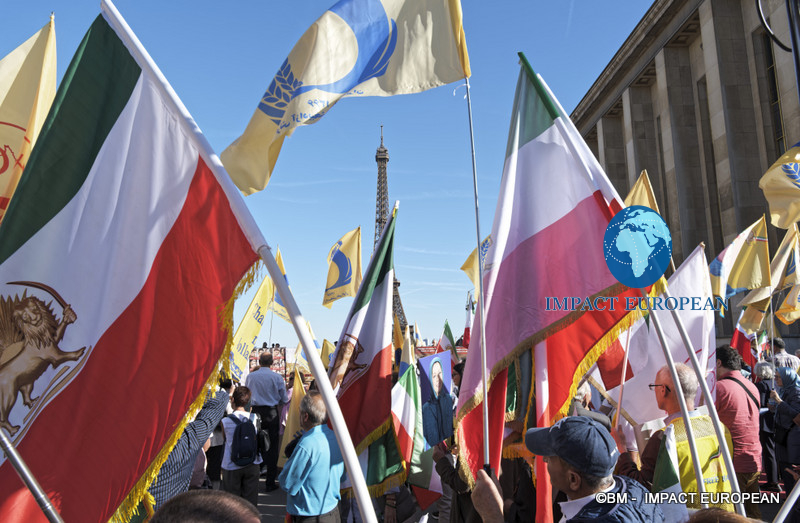
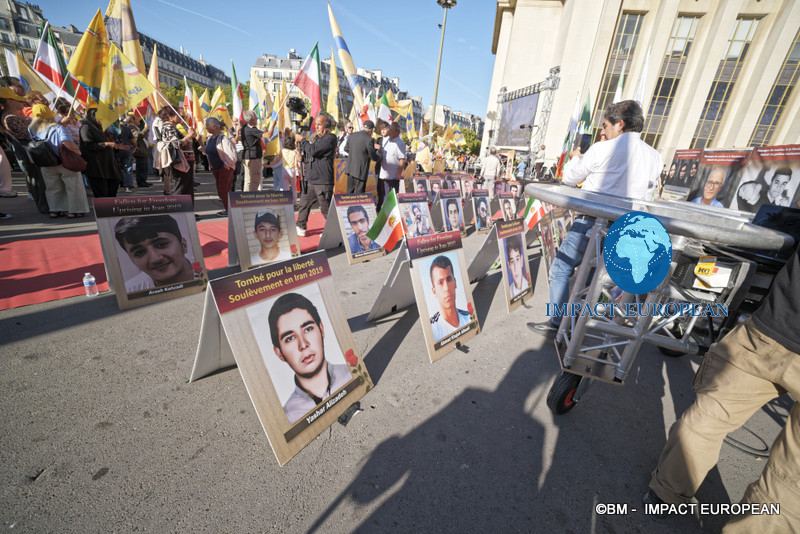
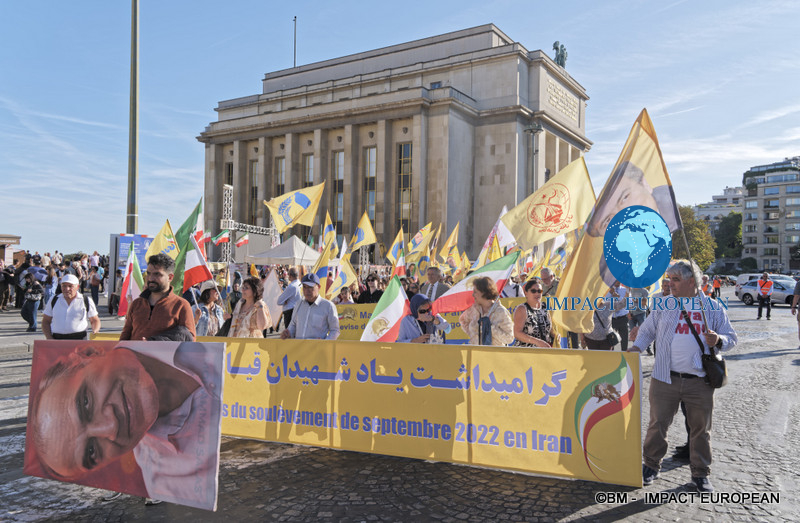
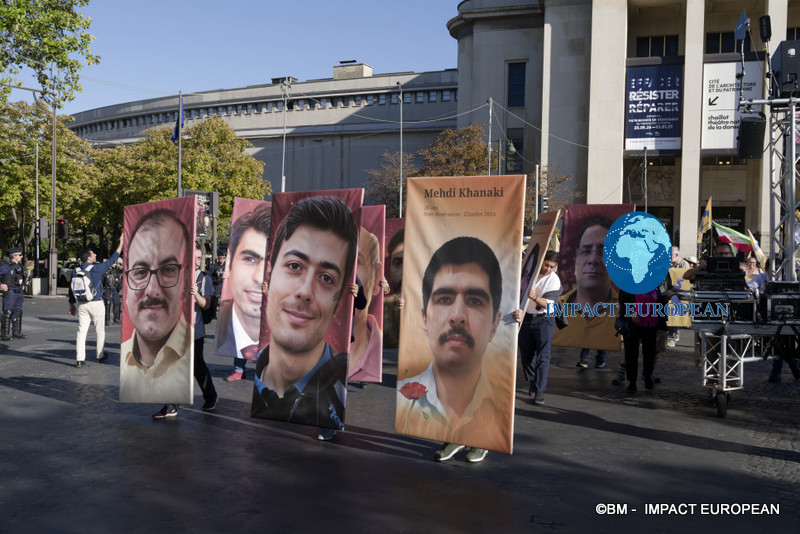
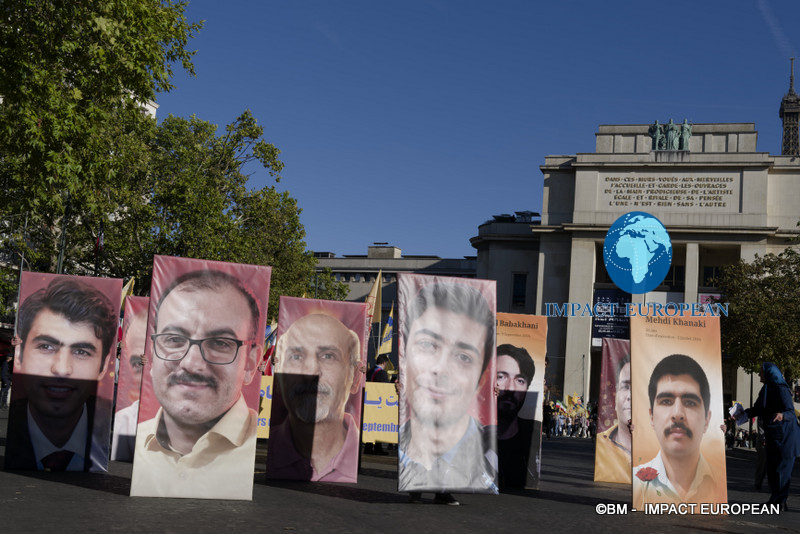
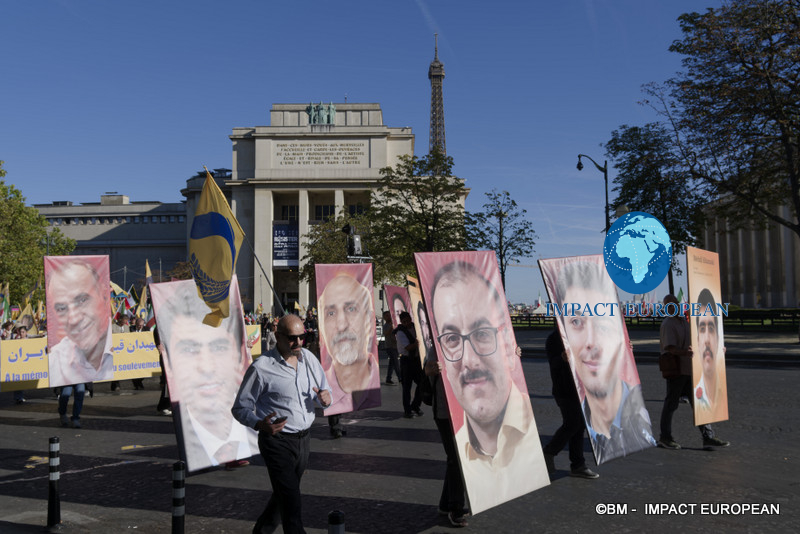
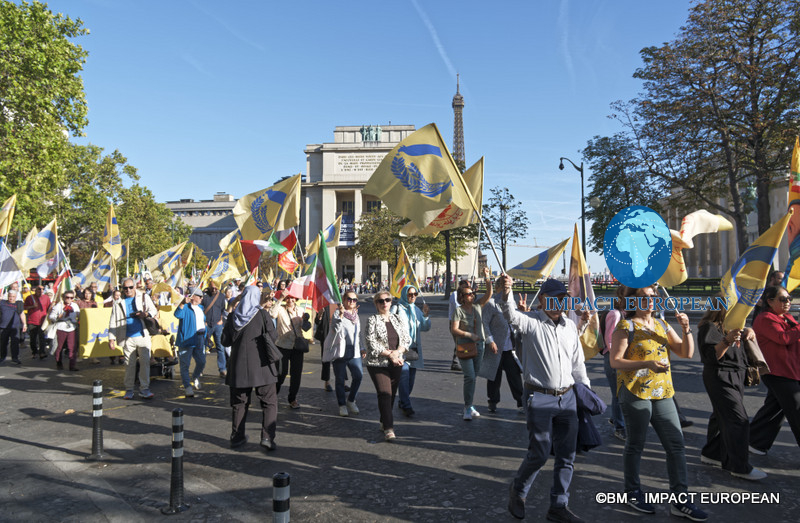
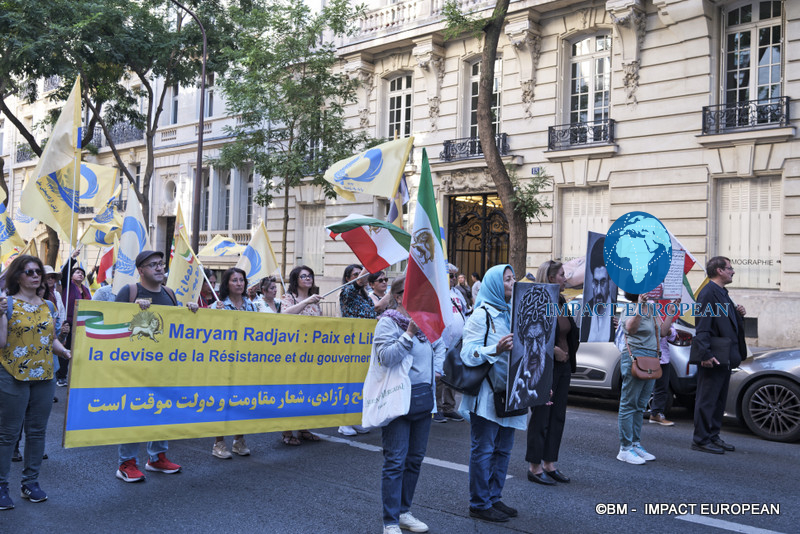
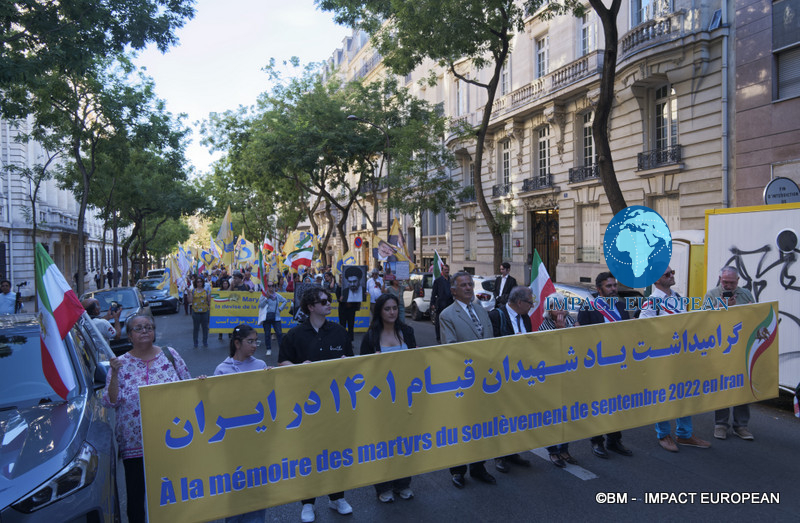
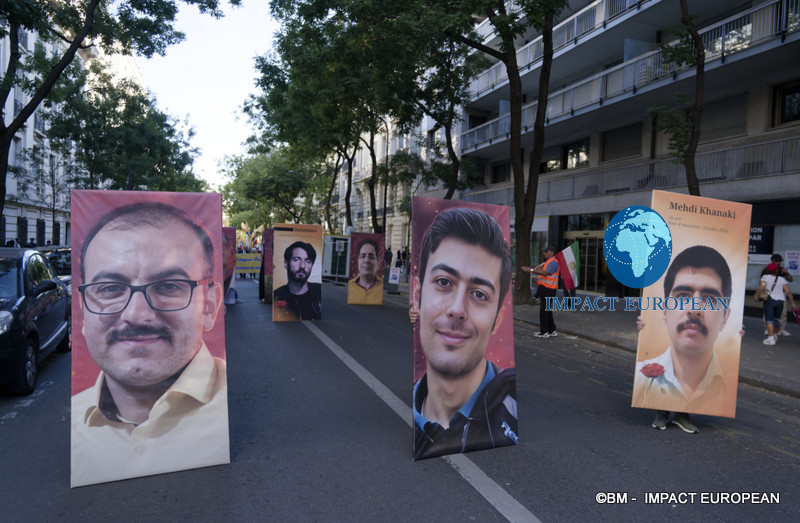
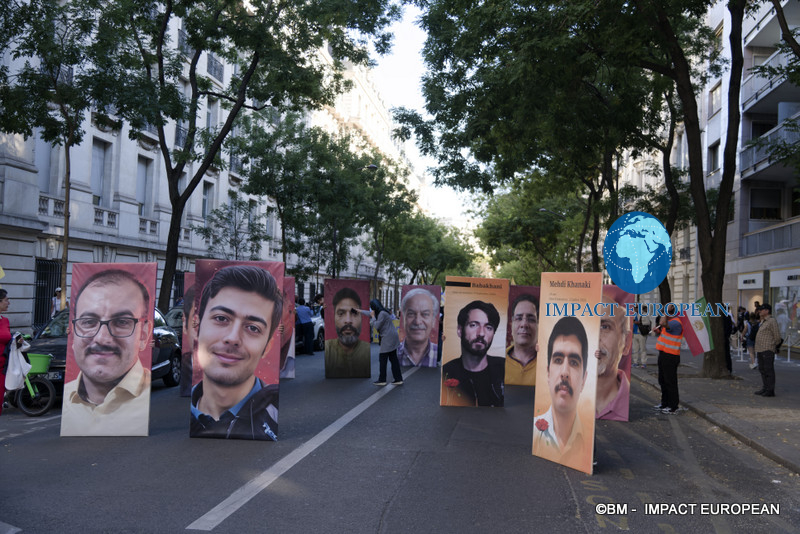
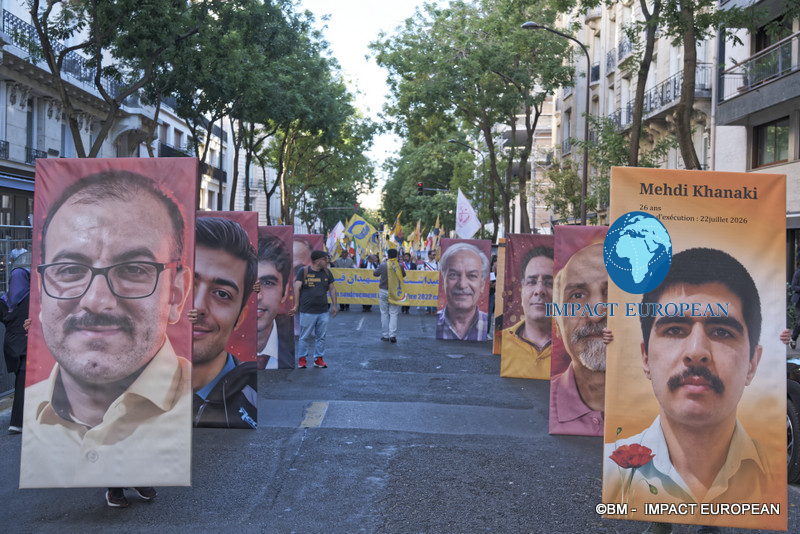
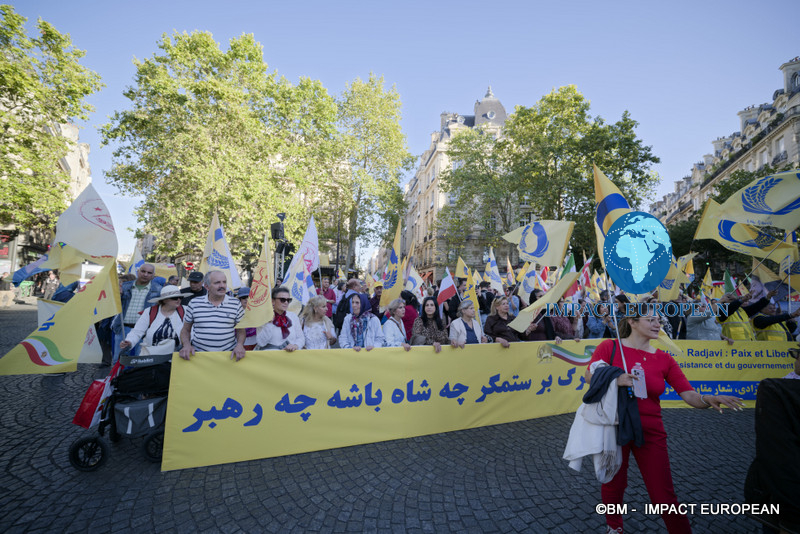
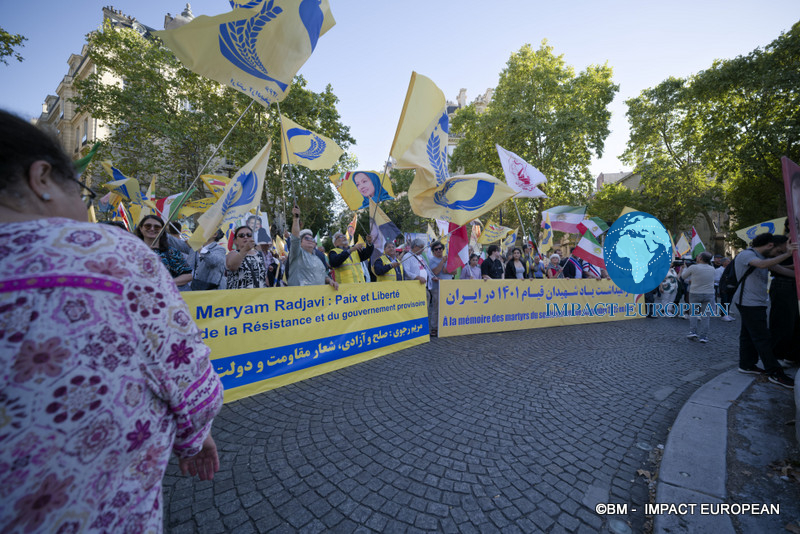
PARIS — Beneath Iranian flags and within sight of the Eiffel Tower, rows of portraits faced the crowd gathered at the Trocadéro on September 12, 2026.
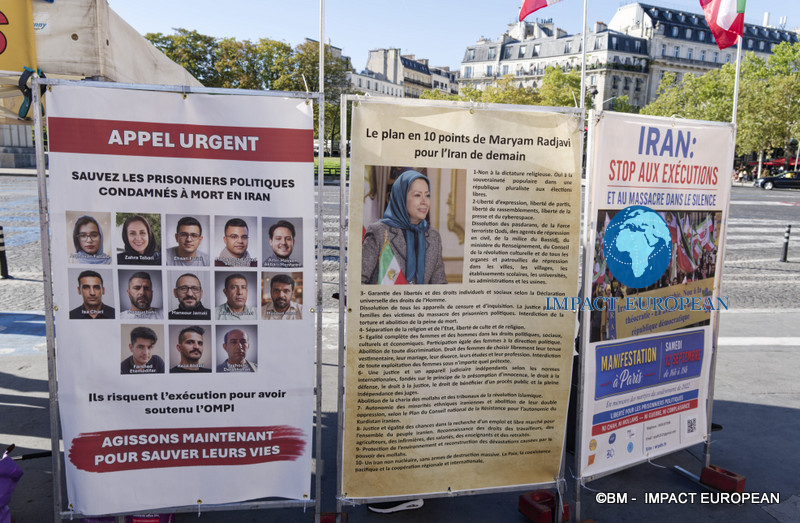
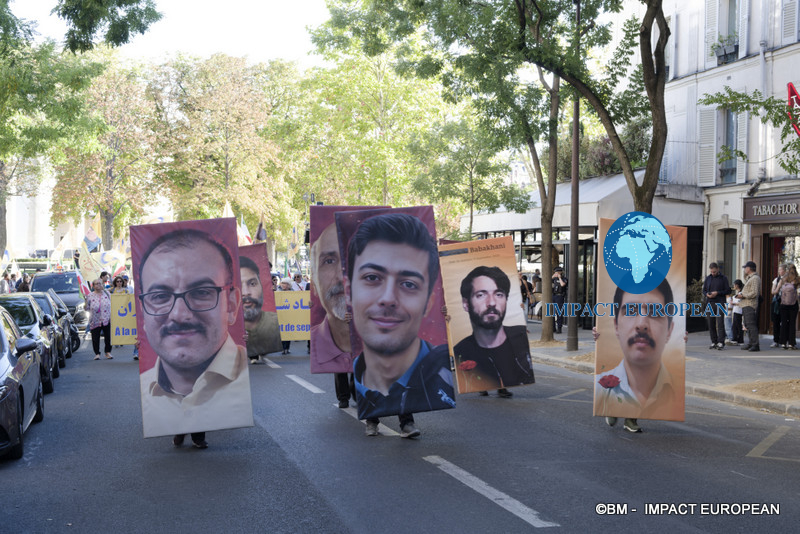
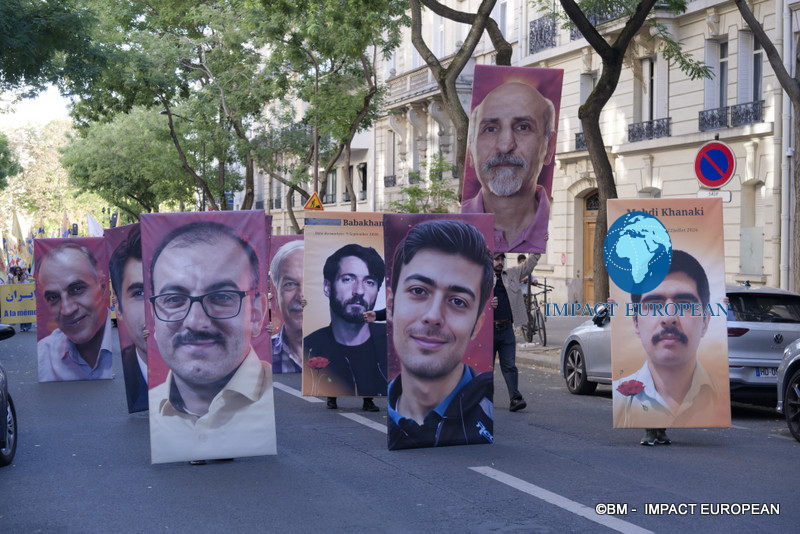
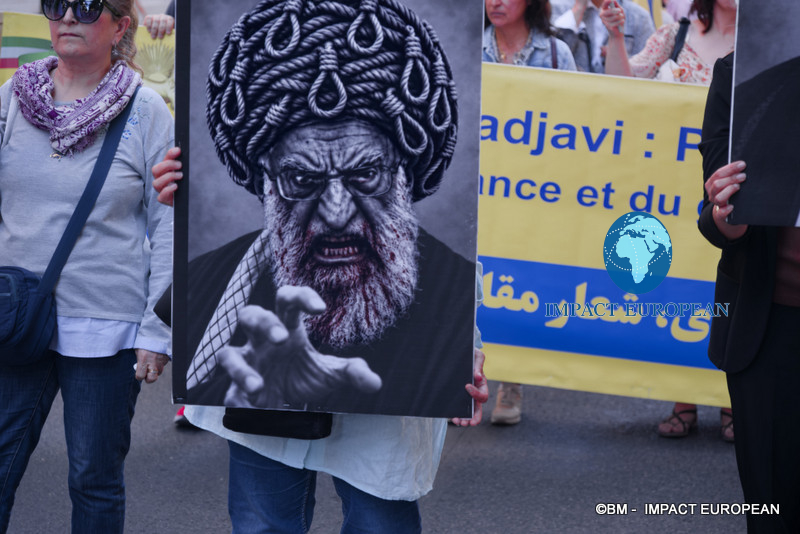
Some represented people whose lives had ended during successive periods of protest and repression in Iran. Around them, speakers took turns addressing the gathering, while participants carried a message that reached beyond commemoration.
Four years after the death of Jina Mahsa Amini and the beginning of the 2022 Woman, Life, Freedom uprising, the Paris rally connected three different moments in Iran’s recent history: the victims of the past, the human rights concerns of the present, and the political choices that could shape the country’s future.
Its message was built around four powerful ideas:
Stop the massacre. Freedom. Justice. Democracy.
A message carried beyond Iran’s borders
The gathering took place thousands of kilometers from Iran.
Yet Iran was everywhere.
It was present in the flags, in the portraits displayed across the square, in the speeches and in the stories carried by members of the Iranian diaspora.
This distance is one of the defining characteristics of diaspora movements.
Outside their country of origin, communities can create new spaces in which domestic issues become international ones.
Paris offered such a space on September 12.
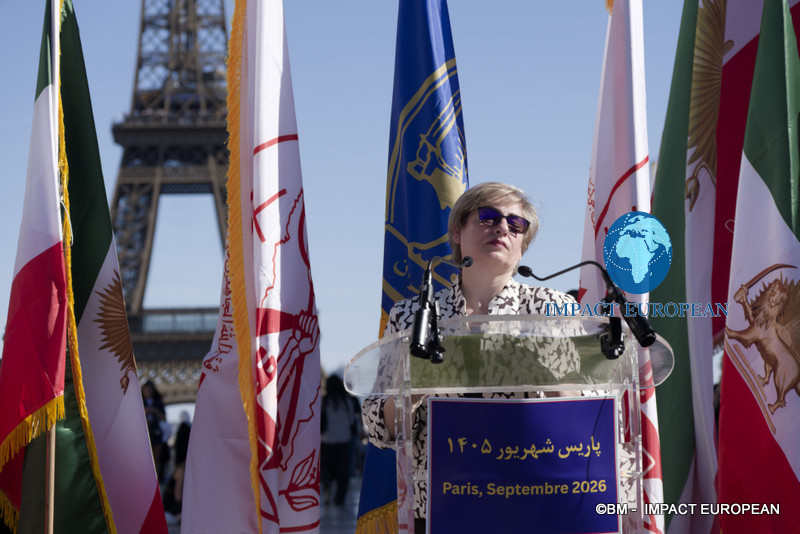
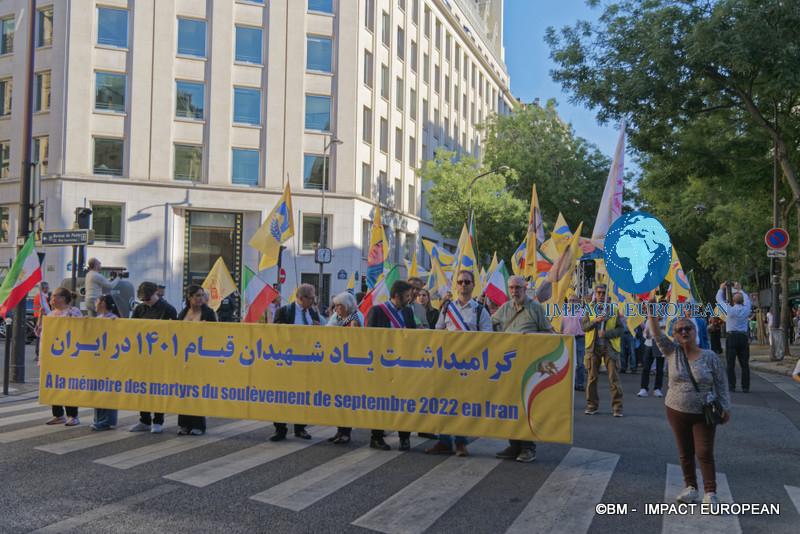
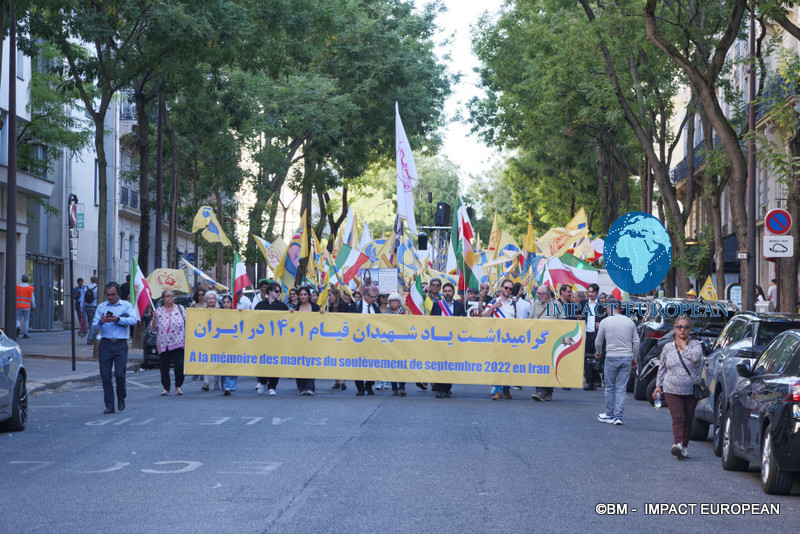
The organizers had called for a gathering at Place du Trocadéro from 4 p.m. to 6 p.m. to commemorate victims of the 2022 uprising and support demands for freedom, justice and democracy in Iran.
The location gave those demands immediate international visibility.
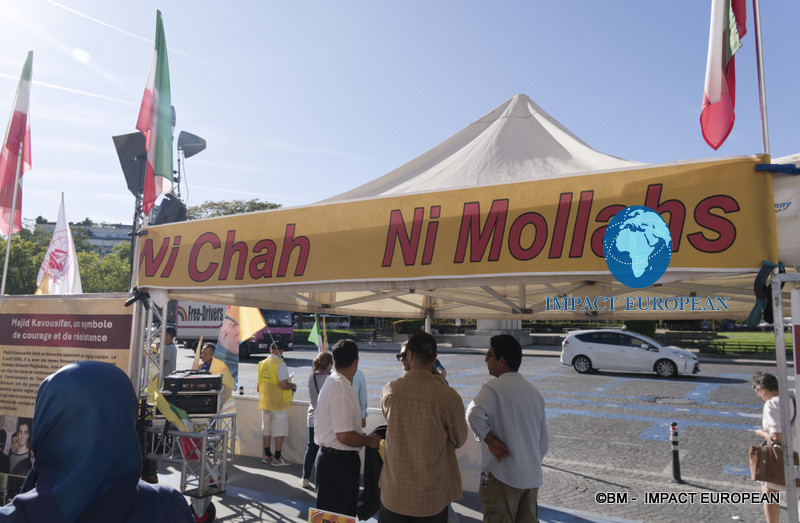
Tourists crossed the square.
Residents encountered the demonstration.
The Eiffel Tower stood behind the stage.
A political and human rights issue rooted in Iran entered one of the world’s most recognizable public spaces.
From one woman’s death to a nationwide uprising
At the center of the anniversary remains Jina Mahsa Amini.
The 22-year-old Kurdish Iranian woman died in custody on September 16, 2022, after being arrested by Iran’s morality police over alleged violations of compulsory veiling rules.
Her death triggered nationwide protests.
Women and girls moved to the forefront. Images of women removing or burning headscarves circulated internationally. The words Woman, Life, Freedom became associated with demands that extended far beyond compulsory veiling.
Four years later, the consequences of that uprising are still being investigated.
On September 16, 2026, Amnesty International concluded after an extensive investigation that Iranian authorities committed crimes against humanity during the suppression of the 2022 uprising, including murder, torture, rape and other sexual violence, enforced disappearance, imprisonment and persecution.
The organization documented the deaths of 377 protesters and bystanders, including 56 children, and called for international criminal accountability.
Those findings give the fourth anniversary a significance extending beyond remembrance.
They place justice and accountability at the center of the debate.
“Stop” is about the present
The portraits displayed in Paris looked backward.
The word “stop”, however, looked toward the present.
The rally’s concerns were not confined to events that happened four years ago. Participants also raised the issue of executions and political prisoners and connected the repression of 2022 with more recent developments.
Amnesty International says the absence of accountability for earlier crackdowns contributed to a recurring pattern of violations. Its latest investigation links the impunity surrounding 2022 to subsequent repression, including the deadly crackdown on protests in January 2026.
This continuity changes the meaning of commemoration.
Remembering those who died becomes inseparable from asking what can be done for those who are still alive.
That is where memory becomes urgency.
Freedom begins with individual lives
Freedom is an enormous political concept.
At the level of an individual life, however, it becomes much more concrete.
It means being able to speak.
To protest.
To disagree.
To choose how to dress.
To participate in public life.
To avoid imprisonment for peacefully exercising fundamental rights.
Amnesty International’s investigation into the 2022 uprising describes tens of thousands of arbitrary arrests and concludes that many people were detained for acts protected under international human rights law, including peaceful protest, chanting slogans, removing headscarves and expressing solidarity.
This is why the women and young people associated with Iran’s protest movements occupy such an important place in the story.
Their demands connect personal autonomy with political freedom.
The individual and the political become inseparable.
Justice turns memory into accountability
Justice adds another dimension.
A victim can be remembered without anyone being held responsible.
Justice asks a different question:
Who is accountable?
Amnesty International’s 2026 investigation identified 87 Iranian officials whom the organization says should be criminally investigated in connection with crimes against humanity committed during the suppression of the 2022 uprising.
The organization is calling for an international criminal justice mechanism and argues that effective accountability remains unavailable inside Iran.
These are Amnesty International’s legal findings and recommendations. They are separate from the political programs promoted by Iranian opposition organizations.
That distinction matters.
Human rights accountability and political opposition may intersect, but they are not the same thing.
The diaspora amplifies — but does not replace — Iran’s political diversity
The Paris gathering also revealed another important reality.
There is no single Iranian opposition.
Organizations and individuals opposing the authorities can disagree profoundly over the political system they want to see in the future.
The September 12 gathering included figures associated with the National Council of Resistance of Iran and the People’s Mojahedin Organization of Iran, among others, alongside French personalities and human rights advocates. Those organizations promote specific political proposals for Iran.
Their presence must therefore be understood as one part of a broader and politically diverse Iranian landscape.
A demonstration in Paris can amplify voices.
It cannot, by itself, determine the views of an entire country.
That distinction becomes particularly important when the conversation moves from freedom and justice to democracy.
Democracy asks who chooses the future
Stopping repression addresses the present.
Justice addresses what has happened.
Freedom concerns how people are able to live.
Democracy introduces another question entirely:
Who gets to decide what comes next?
Different Iranian political movements offer different answers.
Republicans, monarchists, the NCRI and other opposition currents do not necessarily share the same vision for a future political order.
Nor can the views of Iranians living abroad automatically be treated as identical to those of people living inside the country.
The democratic principle therefore reaches beyond any particular opposition organization.
At its core lies the question of political choice.
Whatever future political arrangements Iranians debate, democracy ultimately concerns their ability to participate freely in determining them.
Women and youth connect the present to the future
This is where another generation enters the story.
The 2022 uprising was remarkable for the visibility of women and young people.
Amnesty International’s documentation found that children were among those killed during the repression and that women and girls faced violations intersecting political, gender and religious discrimination.
Four years later, youth remains more than a demographic category.
It represents time.
Those who are young today will live longest with whatever political, social and economic system emerges tomorrow.
Their presence therefore connects freedom with future.
The same is true for women.
When demands concern bodily autonomy, equality, political participation and freedom from discriminatory rules, democracy becomes something experienced in daily life rather than merely an institutional arrangement.
Paris as an international echo
The Trocadéro cannot decide Iran’s future.
Neither can Paris.
But international spaces can affect whether people, victims and demands remain visible.
This is one of the roles played by diaspora mobilization.
A portrait displayed in Tehran and the same portrait displayed beneath the Eiffel Tower exist in radically different political environments.
In Paris, that image can reach tourists, journalists, politicians, activists and international audiences.
The geography changes.
The person represented does not.
And this is how a national struggle acquires an international echo.
From stopping death to choosing a future
Seen separately, the words carried by the September 12 mobilization appear straightforward.
Together, they form a progression.
Stop the massacre expresses urgency.
Freedom concerns the ability to live, speak and choose.
Justice connects victims with accountability.
Democracy turns toward the political future.
The portraits at the Trocadéro therefore represented more than the past.
They stood at the beginning of a question extending far beyond one afternoon in Paris.
From the Woman, Life, Freedom uprising of 2022 to the renewed concerns of 2026, the central issue has progressively moved from remembering those who were lost to protecting those who remain — and ultimately to determining who will have the right to shape what comes next.
For the people gathered beneath the Iranian flags in Paris, the answer was expressed through four interconnected demands:
Stop the massacre. Freedom. Justice. Democracy.
Behind them lies an even larger question:
the right of a society to choose its own future.
©2026 – IMPACT EUROPEAN / All rights reserved
Views: 4
More Stories
Cannes Yachting Festival 2026: The Sea Becomes a New Frontier for Technology and Lifestyle
Global Black Pride Paris 2026: When a Global Movement Takes Its Voice to the Streets
Alzheimer’s Care Beyond Medicine: The Daily Infrastructure That Keeps Life Possible