


Alzheimer’s disease is usually described through diagnosis, cognitive decline and loss of independence. But outside the clinic, the disease is also managed through thousands of ordinary decisions: whether to help or wait, whether a task can still be done independently, when a home needs to be adapted, when a caregiver needs relief, and when remaining at home is no longer safe. Drawing on the field experience of Brice Barat Renouf, IMPACT EUROPEAN examines this invisible infrastructure of care and compares his observations with current scientific evidence.
A diagnosis may belong to one person.
Care rarely does.
As Alzheimer’s disease evolves, everyday life begins to reorganize around it. Someone starts checking whether a meal has been prepared. Another person takes over an administrative task. A route through the home becomes less safe. A familiar appliance becomes difficult to use. Questions are repeated. Sleep is interrupted. An informal caregiver begins sacrificing personal time.
None of these changes, taken alone, explains Alzheimer’s disease.
Together, however, they show how dementia progressively creates an entire care environment around the person living with it.
For Brice Barat Renouf, who works with people affected by neurodegenerative disorders, the home is where much of this transformation becomes visible.
He says that working inside a person’s home allows him to see how cognitive difficulties affect organization, safety and everyday routines, while also revealing forms of communication that may be less visible elsewhere.
His starting point is not a standardized list of losses.
He first observes the person — eye contact, posture, gestures and whether his presence is accepted — before adapting his approach.
Behind that practice lies a fundamental idea:
Alzheimer’s does not produce identical lives.
Barat Renouf emphasizes that the course of the disease, the symptoms, personality and personal history differ from one person to another.
That makes individualized care more than a professional preference.
It becomes a practical necessity.
Care begins with what the person can still do
A decline in ability can easily produce an automatic response: someone else takes over.
It is faster.
Sometimes safer.
Often easier for the family.
But it may also remove a task that the person was still capable of performing with support.
Barat Renouf therefore favors what he describes as a supportive rather than substitutive approach.
In his account, the aim is to continue stimulating cognitive and motor abilities, avoid unnecessarily increasing the caregiver’s workload and preserve autonomy and self-esteem for as long as realistically possible.
The interventions can appear almost trivial.
Clothing can be changed to items that are easier to put on.
Labels or pictograms can help a person identify what is stored in cupboards.
A simplified instruction sheet can make a television remote usable again.
Yet these small adaptations change the logic of care.
The question is no longer simply:
What can this person no longer do?
It becomes:
What can this person still do if the environment stops making the task unnecessarily difficult?
Barat Renouf says he uses everyday activities — shopping, meals, dressing, personal hygiene and some administrative tasks — to identify abilities that remain available and those that now require assistance.
This distinction is consistent with the broader evidence base for non-pharmacological dementia care. The World Health Organization states that dementia has no cure, while rehabilitation, physical activity, cognitive interventions, social engagement and caregiver support can help improve functioning and quality of life.
Preservation, in that sense, is not a claim that the disease has stopped.
It is an attempt to keep functional life possible.
Independence is not the same as absence of supervision
Preserving autonomy immediately creates another problem: risk.
A person may still be capable of performing an activity while becoming more vulnerable to falls, disorientation or accidents.
Barat Renouf makes a distinction that is central to his work:
Allowing autonomy does not mean removing all supervision.
He gives the example of someone who still wants to walk independently to the bathroom at night. Instead of immediately taking over that movement, motion-activated lighting can make the route safer.
The example is small, but the principle is much larger.
Care constantly moves between three competing requirements:
independence, assistance and protection.
The balance cannot remain fixed because the person does not remain fixed.
An adaptation that works today may no longer be sufficient later.
A level of supervision that would be excessive at one stage may become essential at another.
This is one reason dementia care cannot be reduced to a checklist established at diagnosis.
It has to be reassessed.
Routine can become part of the environment
The environment includes time as well as space.
As memory, orientation and organizational abilities decline, predictable routines can reduce the amount of uncertainty the person must process.
Barat Renouf says familiar routines may help reduce confusion and anxiety when memory and orientation become more fragile.
Routine does not restore lost memory.
It creates external stability around a person whose internal reference points may be changing.
This illustrates a recurring mechanism in dementia support: sometimes care does not restore a capacity directly.
Instead, it changes the conditions surrounding that capacity.
Repetition tests the caregiver as much as the patient
Repeated questions are one of the places where this relationship becomes particularly difficult.
For the caregiver, the question may have been answered several times.
For the person with Alzheimer’s, the previous answer may no longer be available.
Barat Renouf strongly advises against responding in frustration with words equivalent to:
“But I’ve told you a hundred times.”
He recommends looking for possible triggers, redirecting attention when appropriate, avoiding unnecessary confrontation with the disease and repeating important reassurance where necessary.
One part of his response requires caution, however.
He also says repetitive questions should not be answered. That cannot reasonably be turned into a universal rule.
The appropriate response depends on what the repeated question expresses: forgotten information, anxiety, discomfort, insecurity or another unmet need.
This is precisely where professional experience and evidence must remain distinct.
A useful practice observed in one context is not automatically a general clinical rule.
Dementia reorganizes the family
The consequences of Alzheimer’s rarely remain contained within the person diagnosed.
Barat Renouf says that as cognitive difficulties accumulate, relatives tend to take over more tasks and maintain greater vigilance.
Some of the most difficult changes occur in areas families rarely discuss openly.
He points to personal hygiene and incontinence as particularly sensitive issues because they affect intimacy and dignity.
A spouse may gradually become a caregiver.
An adult child may begin helping with activities that were once entirely private.
Family roles are not merely adjusted administratively.
They can be transformed emotionally.
A difficulty experienced by the person with dementia becomes a task for someone else.
That task becomes a recurring responsibility.
The responsibility consumes time.
The loss of time can become fatigue.
And fatigue can eventually affect the quality and continuity of care.
This is how an individual illness can produce a collective strain.
The caregiver is part of the care system
Barat Renouf describes caregiver exhaustion as something that can become visible over time.
He mentions a more closed posture, tired facial features, irritability, reduced patience, raised voices and declining emotional availability. Caregivers themselves may report poor sleep, constant demands, fewer personal activities and the feeling that there is no longer any time for themselves.
Scientific research supports the importance of addressing this burden.
A 2025 systematic review included 43 studies, of which 24 were randomized controlled trials, examining psychosocial interventions for family caregivers of people with dementia. Caregiver burden was reduced in 19 studies, while another 10 reported improvement on at least one burden measure. Psychoeducation and multicomponent interventions were the most commonly studied approaches.
The findings do not imply that one intervention will work for every caregiver.
They do show that caregiver burden is not merely an unfortunate side effect of dementia.
It is itself an appropriate target for intervention.
The WHO recommends psychosocial interventions for carers of people living with dementia with a strong recommendation, although the certainty of evidence is rated low. Respite care should also be considered, under a conditional recommendation with low-certainty evidence.
Caregiver health therefore becomes part of the infrastructure supporting the person with dementia.
If that infrastructure collapses, the care arrangement may collapse with it.
Respite can protect continuity
This is why Barat Renouf challenges the guilt that some caregivers associate with taking time away.
He says an exhausted or chronically stressed caregiver cannot sustain the role indefinitely.
Rest may mean a walk, reading, going to the cinema, a weekend away or another activity that temporarily returns part of the caregiver’s life to them.
The apparent contradiction is important.
Leaving for a few hours can sometimes help care continue for longer.
Relief is not always the opposite of commitment.
Sometimes it is what makes commitment sustainable.
A resource only matters if people can reach it
Care systems are also shaped by access.
Barat Renouf says that, from his own experience, respite and support services appear more available in large urban areas than in some small towns or rural communities. He also identifies cost and lack of information as barriers.
His observations should not be treated as national or international measurements of service inequality.
But they point to a universal issue in dementia care.
A service may formally exist and still remain functionally unavailable.
People must know that it exists.
They must be able to reach it.
They may need to afford it.
And it must be available when the family actually needs it.
The WHO’s Global Dementia Observatory similarly treats accessibility of psychosocial and respite support for carers as a distinct policy issue, rather than merely asking whether such services exist on paper.
Home care has a boundary
Home is often treated as the ideal location for care.
But home is not automatically the safest or most sustainable location at every stage of dementia.
Barat Renouf says his aim is to help people remain at home for as long as it can be done in suitable conditions.
At advanced stages, however, that possibility depends heavily on family support and available care.
A person with strong support may remain at home longer.
For someone who is isolated and increasingly dependent, institutional care may eventually provide greater safety.
The question should therefore not be reduced to home versus institution.
The more useful question is whether the current environment can still provide an acceptable balance between autonomy, safety, support and caregiver capacity.
When that balance no longer holds, changing the location of care does not necessarily mean ending the family’s role.
As Barat Renouf puts it:
“Entering a care facility does not mean that you stop supporting your relative. It means changing the way you support them.”
ARPA began with a practical gap
Barat Renouf places the origins of his ARPA programme in another problem of access.
He says some of the people he supported wanted activities they could continue at home but had few resources available between professional sessions.
Some asked him directly for exercises to use independently.
According to his account, those requests led him to develop ARPA.
He describes it as a free resource containing simple cognitive stimulation activities, motor exercises and practical support tools.
He explicitly rejects the idea that it is a “miracle” solution or a replacement for medical or professional care.
He also says the exercises were developed by him while drawing inspiration from numerous types of cognitive stimulation activities encountered during his professional work. He acknowledges that some activities may resemble existing forms of exercise and says the programme also includes adapted gentle exercise, compensatory tools and information about support services.
That history makes scientific scrutiny necessary.
ARPA has not been clinically validated
When IMPACT EUROPEAN directly asked whether ARPA had undergone a clinical study, scientific publication or independent evaluation, Barat Renouf answered that it had not.
That fact defines the limit of any claim made about the programme.
ARPA cannot currently be described as a clinically validated method.
It is nevertheless legitimate to ask whether some of its components correspond to interventions that have been studied independently.
Several do.
The WHO says physical exercise should be offered to people living with dementia, specifically referring to programmes delivered three to four times per week, for 30 to 45 minutes, over more than 12 weeks. The recommendation is strong, with high certainty of evidence. Cognitive stimulation therapy and cognitive training may also be considered, but these carry a conditional recommendation with low certainty of evidence.
A 2024 meta-analysis of 15 randomized controlled trials found that physical exercise had a statistically significant positive effect on activities of daily living in people with Alzheimer’s dementia, with a standardized mean difference of 0.312 and a 95% confidence interval of 0.039 to 0.585.
These findings establish something specific.
They show that some themes and components used in ARPA overlap with interventions independently examined by researchers.
They do not demonstrate that ARPA itself produces the same outcomes.
The distinction between correspondence and validation is essential.
What ARPA claims to be
Barat Renouf himself describes ARPA primarily as a stimulation programme and a practical tool for caregivers, not as a validated medical treatment.
Accessibility is central to that definition.
He says the programme is free so that financial barriers do not prevent people from using it, and he links free access to the possibility of continuing activities over time.
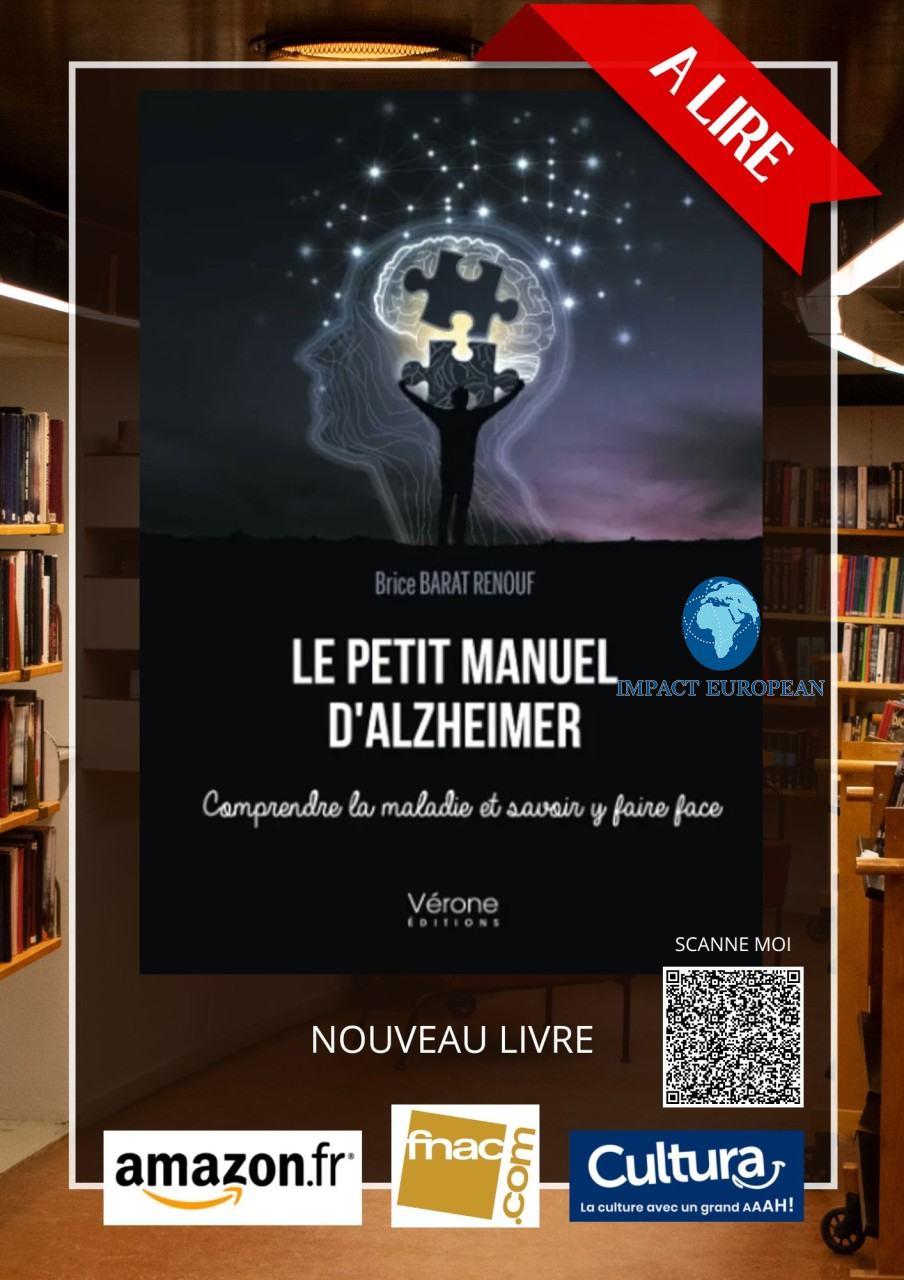
He has also produced two books and a podcast, NEUROMINUTES, which he describes as another way of translating his experience in geriatrics and Alzheimer’s care into material intended to be practical and understandable.
None of this establishes efficacy.
It establishes purpose: access, continuity and transmission.
Accessible does not mean risk-free
Practical exercises also need boundaries.
Barat Renouf says that although he does not identify broad contraindications to using ARPA, physical exercises require additional caution for people with major balance problems, repeated falls, pain, severe fatigue, cardiovascular issues or another condition that might make exercise inappropriate.
In those situations, he recommends seeking advice from a physician or another health professional.
The principle extends beyond ARPA.
An intervention can be simple without being universally appropriate.
Individual assessment remains necessary.
Preserving function is not the same as slowing Alzheimer’s biology
The most important scientific boundary concerns the word progression.
ARPA is associated with the idea of slowing Alzheimer’s progression.
But Barat Renouf acknowledges that cognitive and motor stimulation do not slow Alzheimer’s disease on a purely biological level.
That distinction is consistent with current international guidance.
The WHO supports several non-pharmacological interventions for people already living with dementia because of potential benefits for function and quality of life. It does not equate those benefits with proof that the underlying disease process has been halted or reversed.
The distinction is especially important in 2026 because the WHO has also issued updated recommendations on dementia risk reduction. Those recommendations concern people without dementia, including adults with normal cognition or mild cognitive impairment. They should not be used as evidence that lifestyle or stimulation programmes biologically slow an already established Alzheimer’s disease.
In practical care, therefore, preservation has a different meaning.
It may mean keeping a person involved in dressing.
Maintaining a safe route through the home.
Continuing adapted physical activity.
Supporting a caregiver before exhaustion.
Keeping a familiar routine.
Or preserving some form of relationship.
These outcomes may matter deeply.
They are not the same as modifying Alzheimer’s pathology.
The emotional relationship requires scientific caution too
Barat Renouf strongly resists defining a person solely through memory loss.
He argues that the emotional bond can remain even when cognitive capacities decline.
He also suggests that people with Alzheimer’s may have a heightened perception of emotions.
That second claim requires qualification.
A 2026 meta-analysis involving 24 studies found a large and statistically significant impairment in emotion recognition among people with Alzheimer’s disease compared with healthy older adults, with an overall Hedges’ g of –1.059. Higher global cognitive scores were associated with smaller deficits.
This does not mean emotional attachment disappears.
It means two different questions must not be merged.
A person may retain attachment, respond to familiarity, seek reassurance or participate in an emotional relationship while also having difficulty accurately identifying emotions in standardized cognitive tasks.
Human connection and laboratory-measured emotion recognition are not interchangeable concepts.
Alzheimer’s creates several timelines at once
The deeper challenge of dementia care is that many forms of progression occur simultaneously.
The disease evolves.
Functional ability changes.
Safety needs increase.
The home must be modified.
Family roles shift.
Caregiver workload grows.
Fatigue accumulates.
Support services become necessary.
And eventually, the original care arrangement may no longer be sustainable.
These processes do not always move at the same speed.
That is why care cannot simply follow the disease from behind.
It must anticipate changes without prematurely treating the person as incapable.
It must preserve without promising permanence.
It must protect without unnecessarily erasing independence.
And it must recognize that the caregiver is not an unlimited resource.
At the end of his interview with IMPACT EUROPEAN, Barat Renouf was asked what single piece of advice he would give to a family receiving an Alzheimer’s diagnosis.
His answer began simply:
“Do not be afraid.”
Fear is understandable.
Alzheimer’s can lead to profound dependency. It can destabilize families, exhaust caregivers and make continued home care impossible.
But diagnosis does not mean that every remaining capacity disappears at once.
Between independence and complete dependency lies a long and changing territory.
That is where daily care is built.
Not only through medicine, but through people, time, adapted environments, information, respite, professional support and decisions that must repeatedly be reconsidered.
The challenge is not to promise that Alzheimer’s can be stopped. It is to preserve what remains possible, support the people who make that possible, and prepare for change before the system around the person reaches breaking point. with mild cognitive impairment, and must therefore be distinguished from treatment of established Alzheimer’s disease.
Scientific evidence and references
This investigation distinguishes between Brice Barat Renouf’s professional observations, the resources he has developed, and findings established through independent scientific research. The studies below provide the main scientific evidence used in the article.
World Health Organization — Dementia
WHO states that there is currently no cure for dementia, while non-pharmacological interventions including rehabilitation, physical activity, cognitive stimulation, social engagement and caregiver support can improve quality of life and daily functioning.
WHO — Dementia fact sheet
WHO — Non-pharmacological interventions for people living with dementia
Physical exercise delivered three to four times per week for 30–45 minutes over more than 12 weeks carries a strong recommendation with high certainty of evidence. Cognitive stimulation therapy and cognitive training carry a conditional recommendation with low certainty of evidence.
WHO — Non-pharmacological interventions for dementia
Physical exercise and activities of daily living — 2024
A meta-analysis by Liu, Gao and Li included 15 randomized controlled trials and found a statistically significant positive effect of physical exercise on activities of daily living in people with Alzheimer’s dementia.
PubMed — Liu, Gao & Li, PMID 38882523
Family caregiver burden — 2025
A systematic review by Kirisik Surer and colleagues examined 43 studies, including 24 randomized controlled trials, assessing psychosocial interventions designed to reduce burden among family caregivers of people with dementia.
PubMed — Kirisik Surer et al., PMID 41162317
Emotion recognition in Alzheimer’s disease — 2026
A meta-analysis by Zamora and colleagues included 24 studies and found a large, statistically significant impairment in emotion recognition among people with Alzheimer’s disease compared with healthy older adults.
PubMed — Zamora et al., PMID 42114728
Resources by Brice Barat Renouf
Editorial disclosure — The following links are provided so readers can directly consult the resources discussed by Brice Barat Renouf during the interview. Their inclusion by IMPACT EUROPEAN does not constitute scientific validation of ARPA, an endorsement of its effectiveness, or medical advice. These resources should be distinguished from the independent scientific studies listed above.
ARPA Method
The platform presenting Brice Barat Renouf’s ARPA programme and its resources.
Visit the ARPA Method platform
Alzheimer: conseils et astuces — guide for caregivers
An article presenting Brice Barat Renouf’s practical guide for people supporting someone living with Alzheimer’s disease.
Read the presentation of Brice Barat Renouf’s guide
NEUROMINUTES
Brice Barat Renouf’s podcast addressing geriatrics, Alzheimer’s disease and related care issues.
Listen to NEUROMINUTES on Spotify
©2026 IMPACT EUROPEAN – All rights reserved

Views: 17
More Stories
France Protests on October 17: Mass Mobilization Overshadowed by Violence Across the Country
Work Palace Opens in Paris: INSITU Brings Luxury Hospitality Into the Workplace
Rugby Pro D2: Colomiers Defeat Narbonne 49-28 to Claim Bonus-Point Victory