

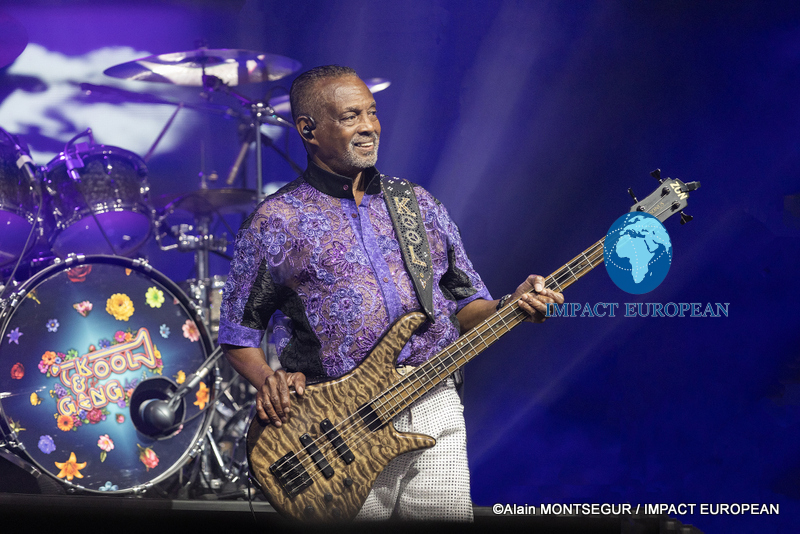
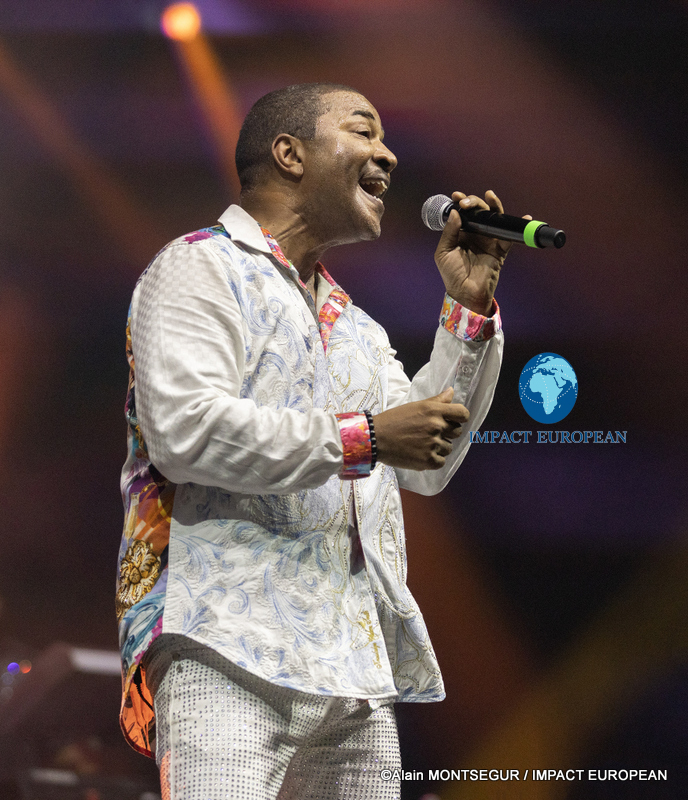
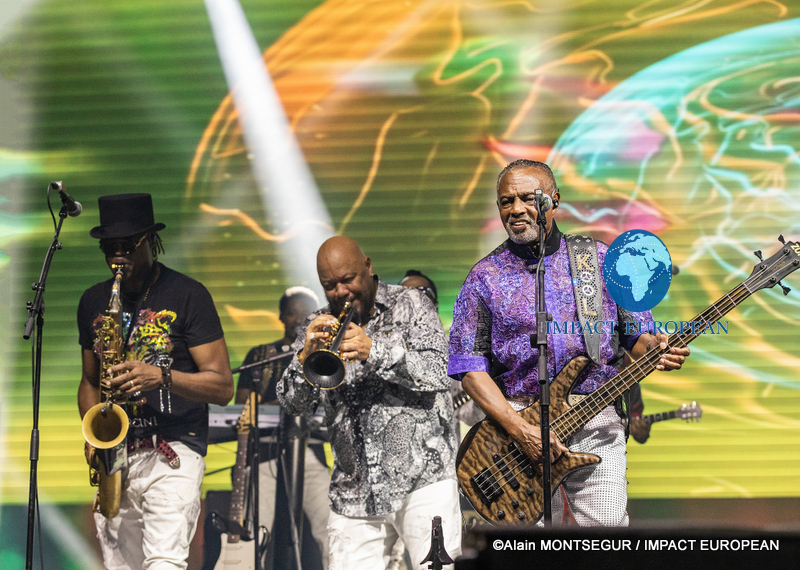
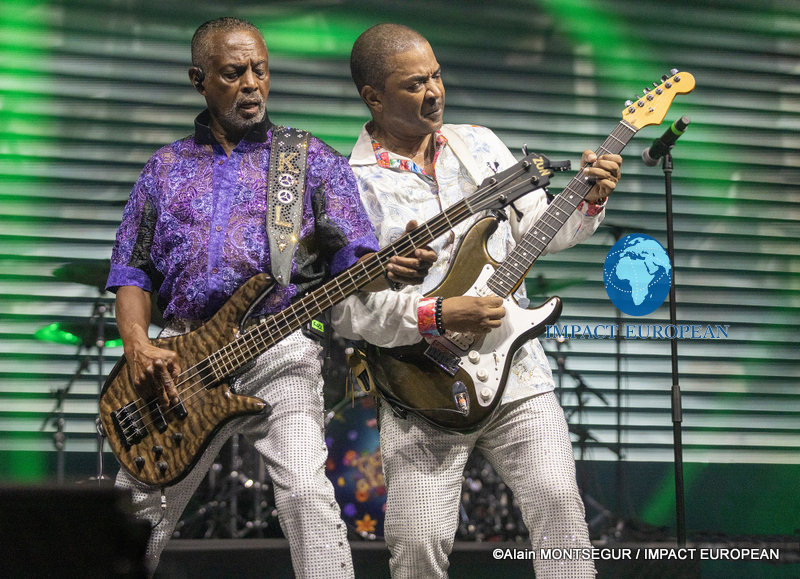
On August 4, Jazz in Marciac welcomes Kool & The Gang for a night connecting more than six decades of Black American music. From the jazz foundations of Jersey City to funk, soul, R&B, disco and worldwide success, the band has crossed genres and generations. At the centre of that extraordinary continuity stands bassist and co-founder Robert “Kool” Bell, the only original member still performing with the group — a living link between where the story began and the music that continues to travel around the world.
Before Kool & The Gang became a soundtrack to celebrations around the world, there was jazz.
Before Celebration, before Fresh, before Get Down On It, a group of young musicians in Jersey City was learning how instruments could speak to one another.
Among them was Robert “Kool” Bell.
More than sixty years later, Bell arrives at Jazz in Marciac carrying a bass guitar and an extraordinary piece of musical history.
The setting matters.
Marciac has built its international identity around jazz. Kool & The Gang built a global career by travelling far beyond it.
On August 4, those two histories meet.
The story begins in Jersey City
Kool & The Gang did not emerge fully formed as the hit-making band that millions would later know.
Its roots go back to the 1960s and a group of young musicians gathered around Robert Bell, his brother Ronald and their friends in Jersey City, New Jersey.
They played jazz.
One of their early incarnations was known as the Jazziacs, a name that now sounds almost like a clue left at the beginning of the story.
The musicians would experiment with different names and increasingly develop their own sound before becoming Kool & The Gang.
What followed was not the abandonment of jazz, but an expansion.
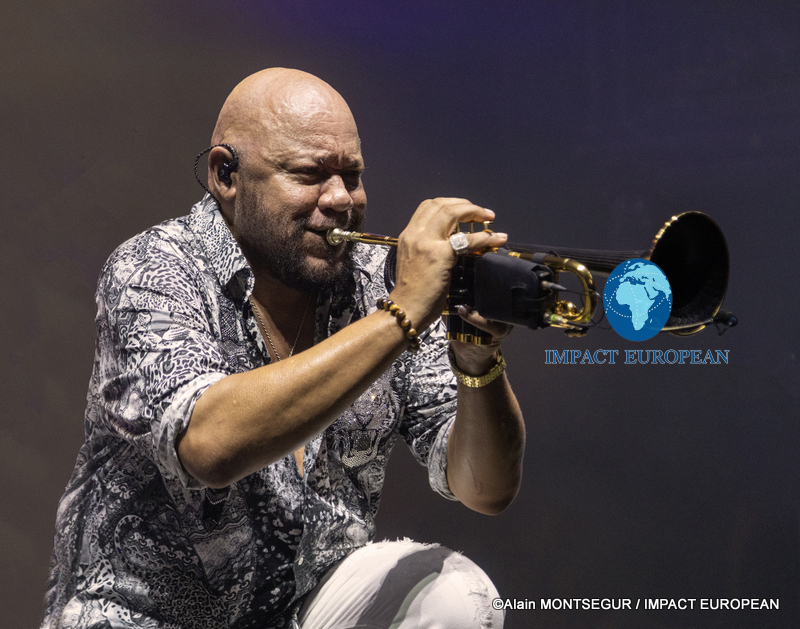
Rhythm became increasingly central. Funk developed its physical force. Soul and R&B widened the vocabulary. Horns became one of the band’s unmistakable signatures.
Later, disco and pop opened the door to an enormous international audience.
The genres changed.
The conversation between them never really stopped.
Robert “Kool” Bell remained
A sixty-year-old band is inevitably a story of arrivals and departures.
Kool & The Gang has known both.
Some of the musicians who built its original identity are no longer alive. Ronald Bell, Robert’s brother and one of the group’s principal creative forces, died in 2020. Dennis “Dee Tee” Thomas died in 2021. Drummer George Brown died in 2023.
Robert Bell remains on stage.
That fact gives the Marciac concert a significance beyond nostalgia.
Bell is not simply a founder whose name survives in the history of the group. He is still part of its present.
The bassist who participated in the band’s formative years is playing music in 2026 before audiences separated by several generations from those first Jersey City performances.
Few musical careers offer such a direct human connection across time.
Listen to the bass
The history can also be heard.
Funk depends on rhythm, but rhythm is not an abstraction.
It is produced physically by musicians.
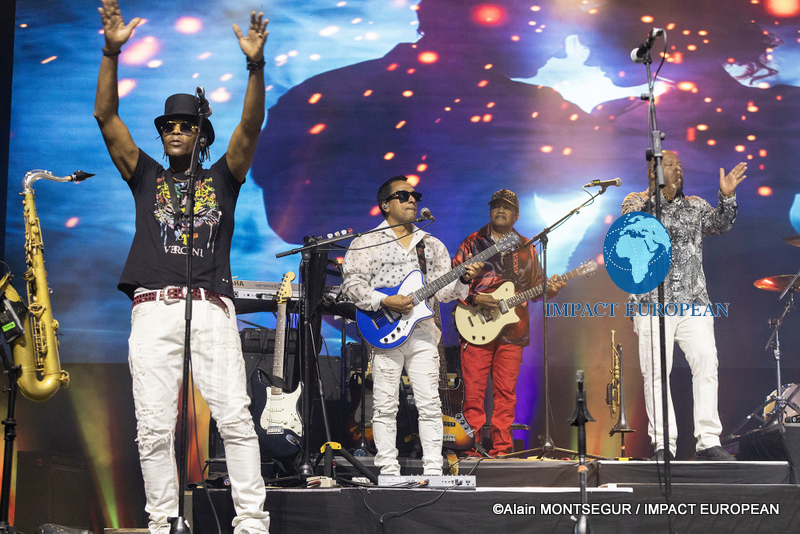
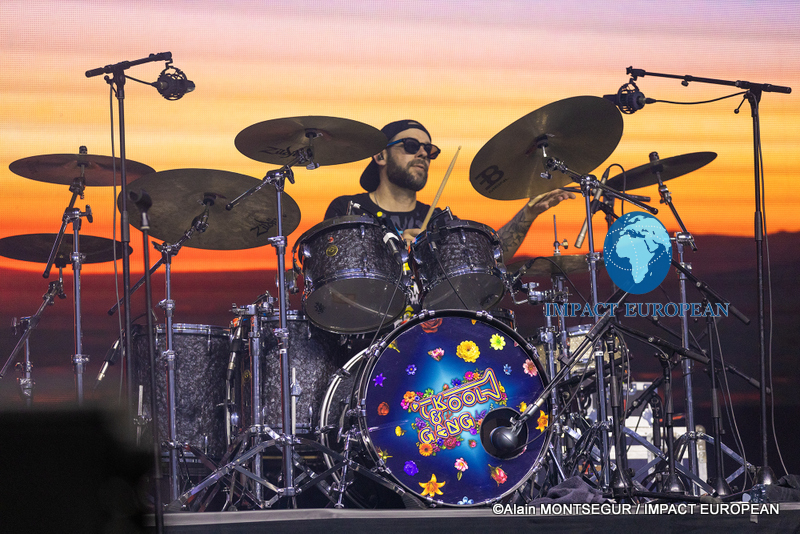
The bass and drums establish the foundation. Horns can strike above it. Voices can move across it. Guitar and keyboards add texture.
Robert Bell’s instrument occupies the centre of that architecture.
A bass line can repeat only a small number of notes and still determine how an entire audience moves.
That is one of funk’s great powers.
Kool & The Gang learned to turn that principle into a musical identity capable of surviving radical changes in popular taste.
Listen to Jungle Boogie and the raw physicality of the group’s 1970s funk is immediately apparent.
Then move forward.
Ladies’ Night opens another chapter. Celebration becomes a worldwide anthem. Get Down On It turns rhythm into an instruction. Fresh and Cherish demonstrate how far the group could move from its earlier instrumental funk while retaining a recognisable identity.
Different eras live under the same name.
Marciac brings the lineage back into focus
This is why Kool & The Gang at Jazz in Marciac should not be understood simply as a famous pop-funk act added to a jazz festival.
The musical genealogy runs deeper.
Jazz is one of the great foundations from which generations of Black American musicians developed new forms of expression.
Funk did not appear in isolation.
Neither did soul, R&B or, later, hip-hop.
Musicians moved between styles. Rhythms travelled. Horn arrangements changed. Technologies changed. Audiences changed.
The music kept circulating.
Marciac offers a stage where that circulation can be heard rather than merely explained.
Kool & The Gang arrives carrying the results of more than sixty years of it.
A festival can honour jazz by showing where jazz travelled
Jazz festivals face an interesting cultural question.
How broadly can they programme without losing their identity?
Marciac provides one possible answer.
A festival does not necessarily protect jazz by surrounding it with walls. It can also reveal its importance by showing the musical worlds it has touched.
Kool & The Gang makes that relationship particularly visible because the journey is contained within the history of the band itself.
Jazz came first.
Funk became central.
Soul and R&B entered the vocabulary.
Popular success took the music into spaces far removed from the clubs where the musicians had started.
And decades later, the journey leads to Marciac.
The August 4 programme reinforces that dialogue with Brooklyn Funk Essentials, whose own music crosses funk, jazz, soul and hip-hop.
The evening therefore connects more than artists.
It connects branches of the same musical family.
From Black American experience to a global dance floor
Kool & The Gang also belongs to a larger cultural history.
Black American music has repeatedly produced forms that began within specific communities before transforming popular culture far beyond the United States.
Jazz did it.
Rhythm and blues did it.
Soul and funk did it.
Hip-hop would do it again.
Kool & The Gang occupies a distinctive place within that circulation.
Its music became international without requiring listeners everywhere to understand the social and musical history from which it emerged.
People could simply dance.
That accessibility was part of its power.
But worldwide popularity can sometimes make origins less visible.
A song heard at weddings, parties, sporting events or on radio stations across continents can eventually feel as though it belongs everywhere and nowhere.
Marciac offers an opportunity to reconnect that universality with its history.
When “Celebration” becomes cultural memory
There are successful songs, and then there are songs that escape the period in which they were recorded.
Celebration belongs to the second category.
Its survival is not simply a matter of record sales.
The song entered collective ritual.
It is played when people win, gather, marry, mark an achievement or simply want a room to move together.
That is a remarkable transformation for a piece of recorded music.
Its meaning is no longer controlled entirely by the people who created it.
Successive audiences have adopted it.
The same phenomenon, in different ways, applies to other parts of the Kool & The Gang catalogue.
And the group’s influence extends beyond direct listening.
Funk recordings became raw material for later musicians, particularly through sampling and hip-hop culture. Sounds created in one period acquired new lives in another.
This is how musical heritage moves without becoming static.
Recognition after more than half a century
Kool & The Gang’s induction into the Rock & Roll Hall of Fame in 2024 provided formal recognition of a legacy that popular culture had already established.
The honour mattered.
But the Marciac stage offers another measure of longevity.
The music is still being performed.
An audience is still coming to hear it.
And one of the men who helped create the group is still standing inside that music rather than outside it.
Robert Bell does not need a museum display to connect 1960s Jersey City with 2026 Marciac.
He has a bass.
Several generations, one groove
The audience on August 4 does not arrive with a single memory of Kool & The Gang.
Some listeners lived through the group’s major releases.
Others inherited the songs from their parents.
Some discovered them through films, television, radio, DJs or streaming platforms.
Younger listeners may recognise musical fragments without immediately knowing their source.
Yet when a familiar rhythm begins, those different histories can temporarily disappear.
The body responds before the biography is explained.
That is the particular language of groove.
It crosses generations with unusual ease.
From Jersey City to Marciac
There is a beautiful symmetry in the journey.
Young musicians begin by playing jazz in Jersey City.
They discover funk.
Their music travels through soul, R&B, disco and pop.
Their records cross oceans.
Their rhythms influence later generations.
Their songs become part of international popular memory.
And more than sixty years later, the last original member still performing with the band arrives in a small town in southwestern France known throughout the jazz world.
Jazz in Marciac and Kool & The Gang therefore share the stage on August 4 as more than two famous names.
One represents a festival built around the continuing life of jazz.
The other demonstrates just how far that life can travel.
Robert “Kool” Bell stands between the two histories.
More than sixty years after the journey began, his bass still carries the line from Jersey City to Marciac.
©2026 IMPACT EUROPEAN – All rights reserved


Views: 3
More Stories
Saudi Arabia’s new power equation: Why Paris matters to Riyadh
Mas-d’Azil Cave: A Road Through the Mountain, a Journey Through Human Time
Tioman’s Hidden Network: The Life Beneath a Coral Reef