

Revenge Begins Long Before Kick-Off
Long before the first whistle echoed around Stade Ernest-Wallon, this fixture already carried a story that statistics alone could not explain.
For Catalans Dragons, this was not simply another regular-season match. Their previous meeting with Toulouse Olympique had left frustration, disappointment and unanswered questions. Returning to Toulouse presented an opportunity not only to collect league points but also to demonstrate how much the team had evolved since that defeat.
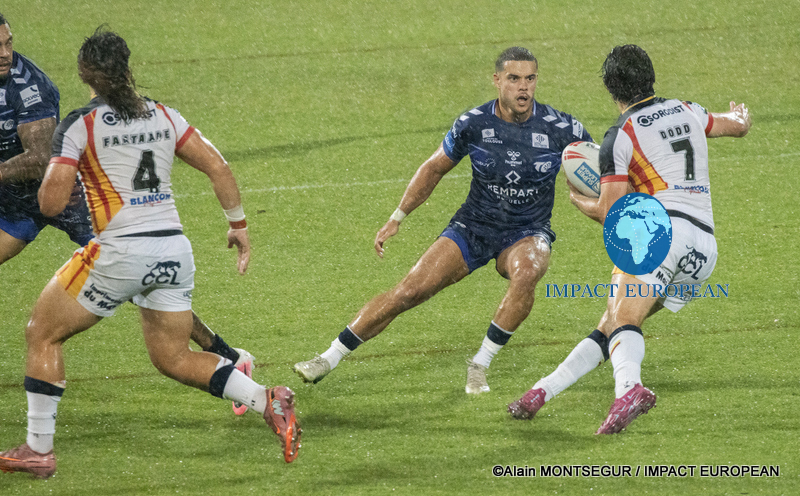
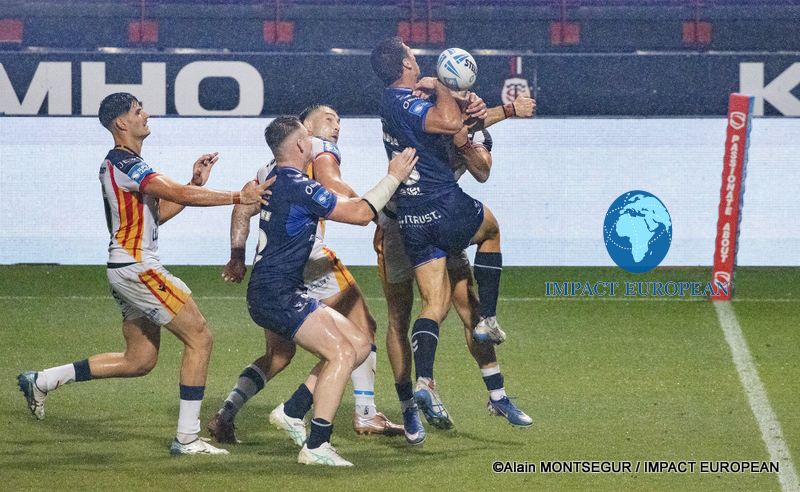
Heavy rain welcomed both squads onto the pitch.
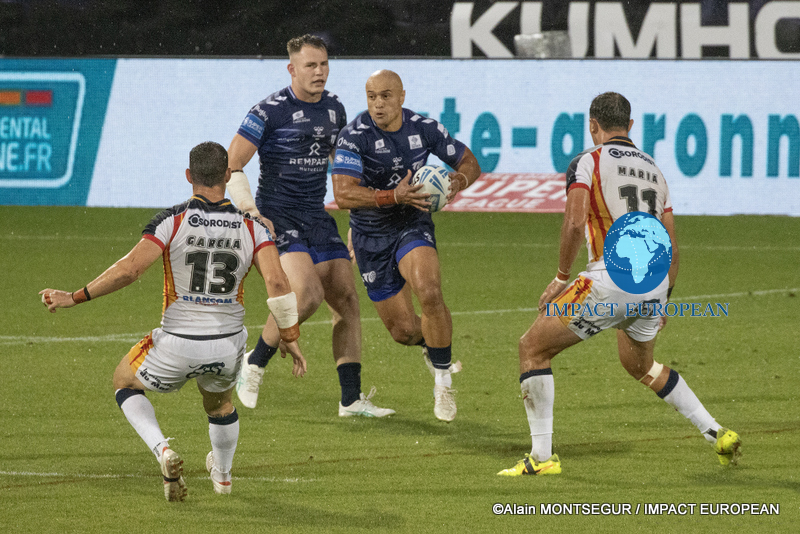
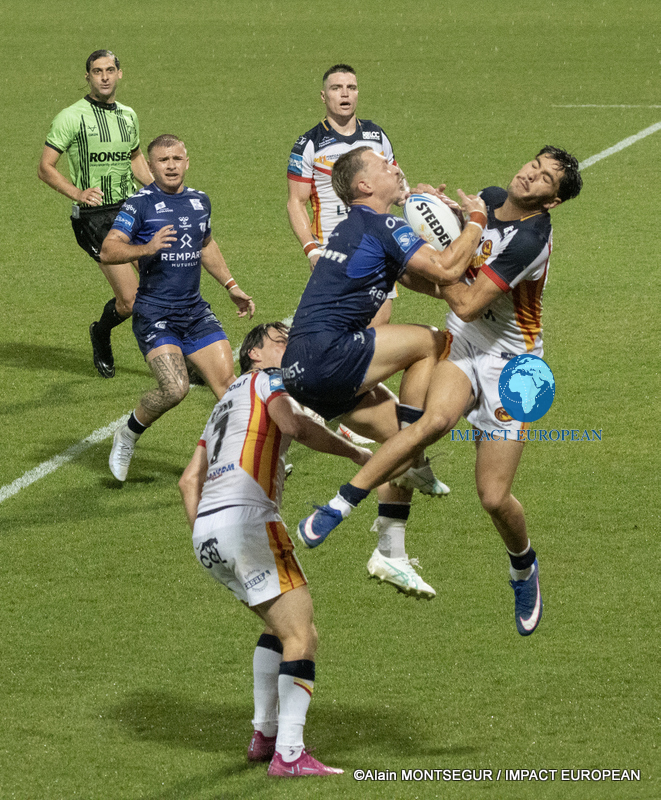
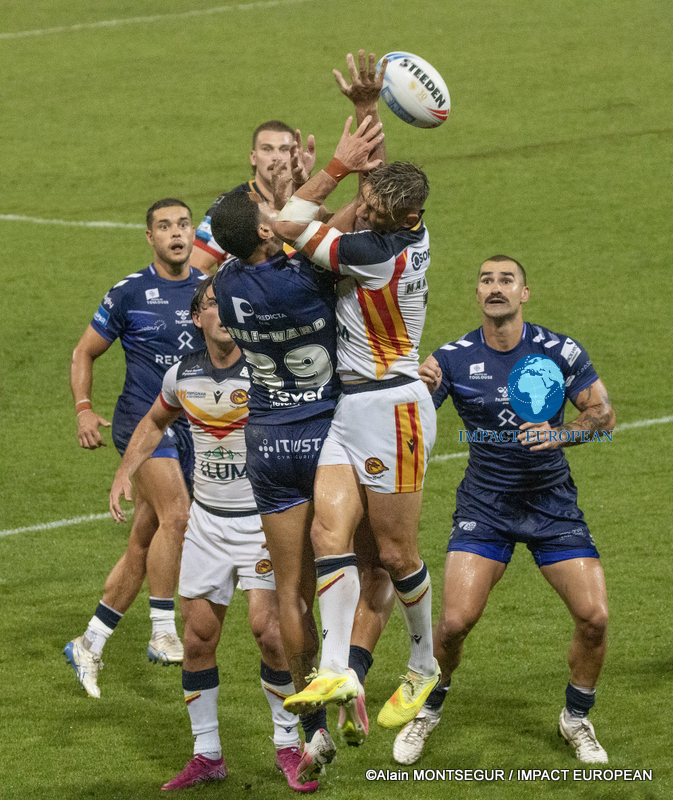
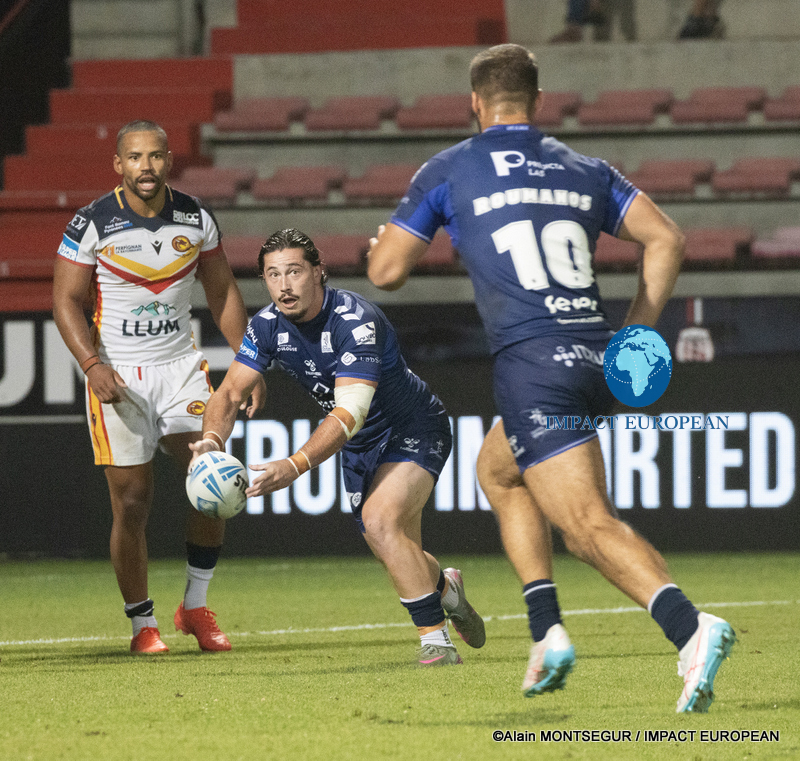
The weather immediately dictated the rhythm of the contest. Every catch became uncertain, every kick demanded precision and every tackle required absolute commitment. Rather than producing an open attacking spectacle, both teams understood that territory, patience and discipline would become the deciding factors.
Toulouse opened the scoring through a penalty, rewarding an energetic start supported by an enthusiastic home crowd.
The advantage, however, never altered Catalans’ tactical approach.
Instead of forcing ambitious attacking plays, they remained faithful to a structured game plan built around territorial pressure and defensive organisation. Every kick was designed to pin Toulouse deep inside their own half, while every defensive line moved forward with remarkable cohesion.
This patient strategy eventually created its first reward.
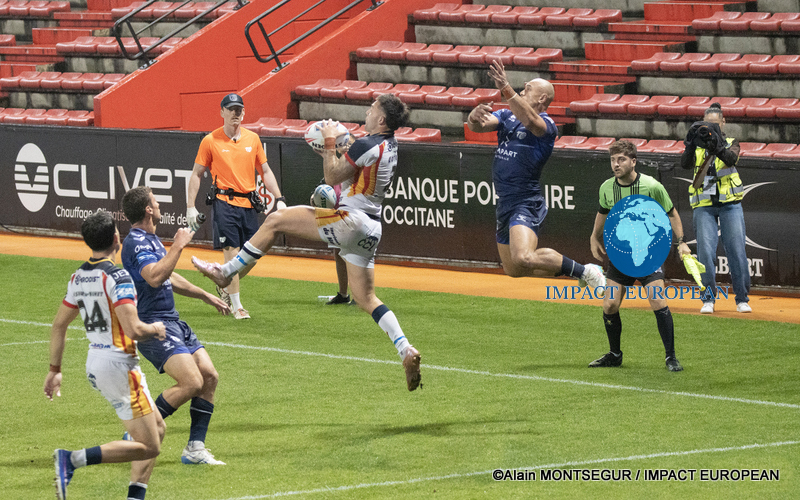
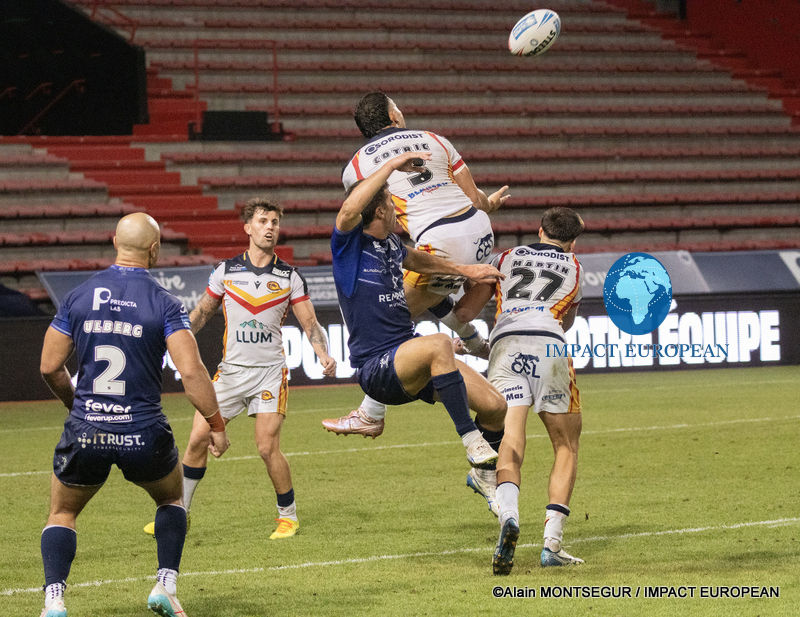
International winger Tommy Makinson timed his run perfectly to claim a high kick before grounding the opening Catalans try. It was a finish that reflected experience rather than improvisation, turning sustained territorial dominance into tangible points.
At that moment, the psychological balance of the contest began to shift.
Toulouse realised they would need to chase the game.
Catalans, meanwhile, had found exactly the type of controlled match they wanted—one in which composure mattered more than emotion.
The opening forty minutes had gradually tilted in favour of the visitors, but the Dragons understood that revenge would require far more than an encouraging first half. Toulouse Olympique had shown throughout the season that they possessed both the resilience and attacking quality to punish even the smallest lapse in concentration.
Catalans therefore refused to change their approach.
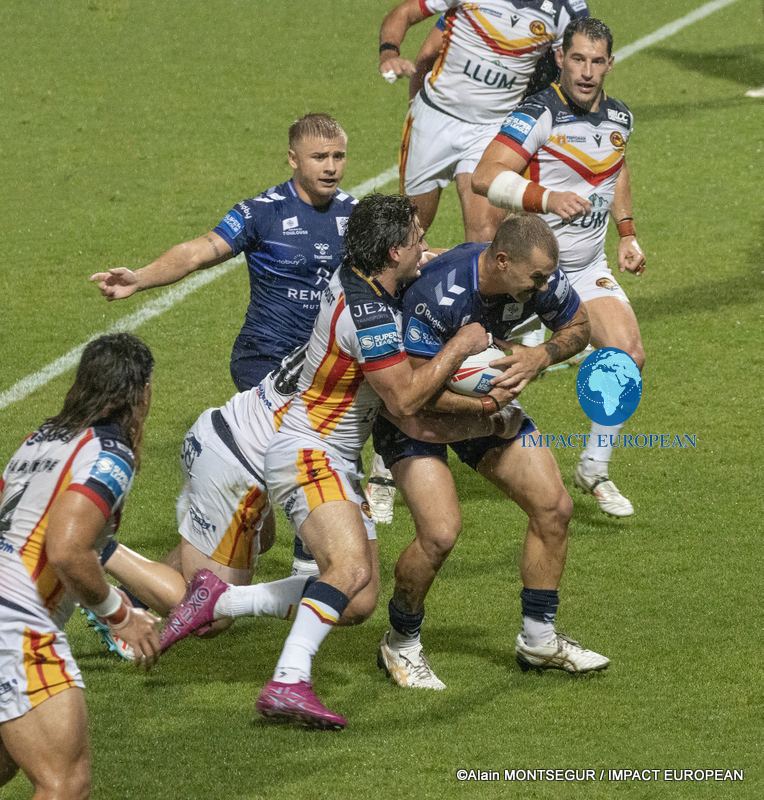
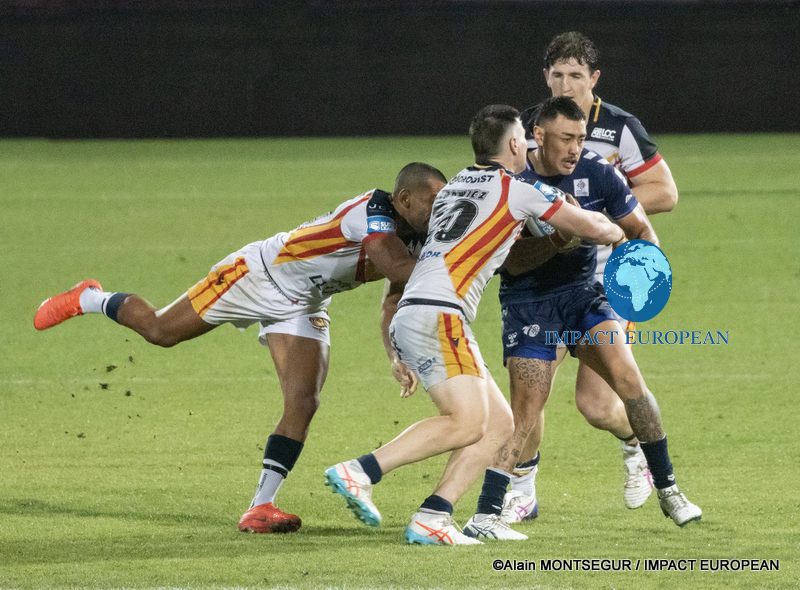
Rather than chasing spectacular plays, they continued building patiently through the middle, asking their forwards to absorb the physical contest before releasing the ball into wider channels.
Their persistence eventually created the breakthrough they had been patiently constructing.
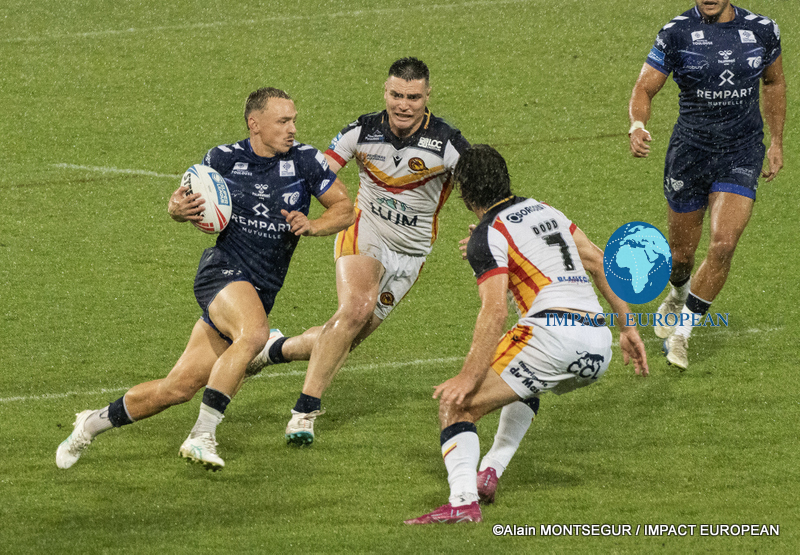
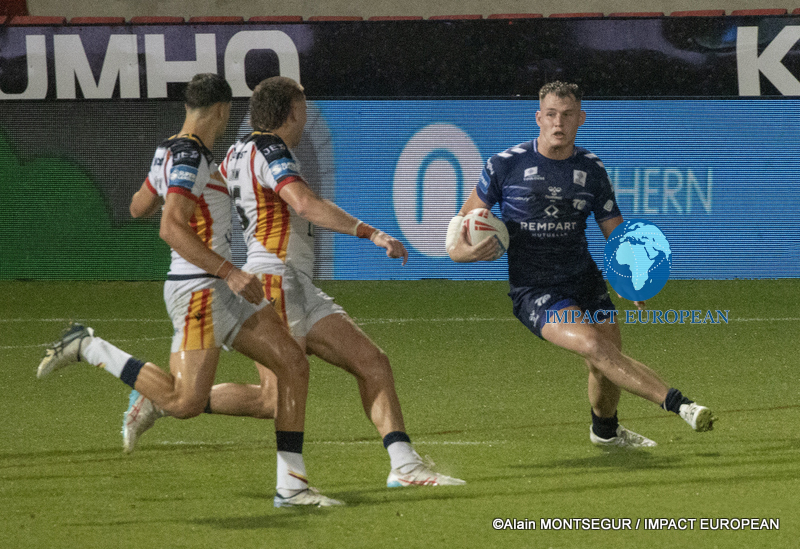
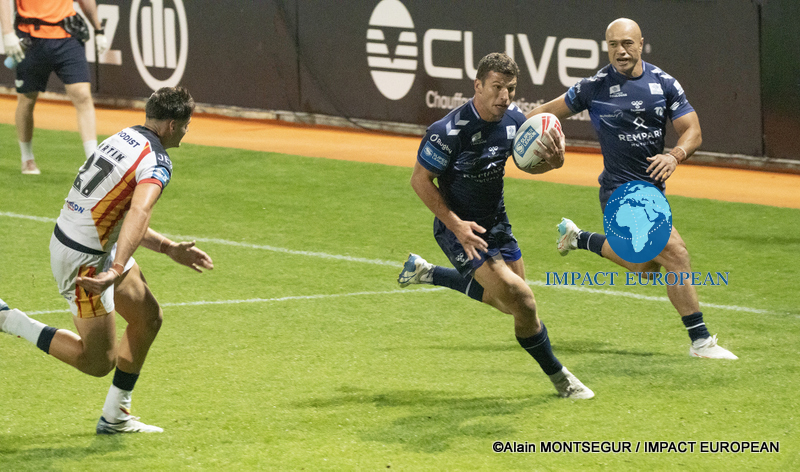
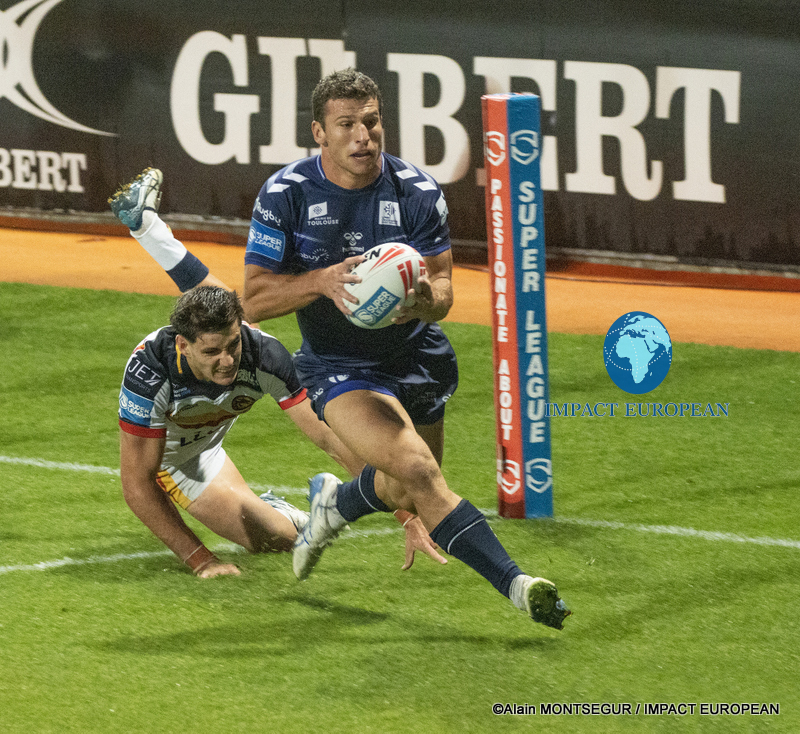
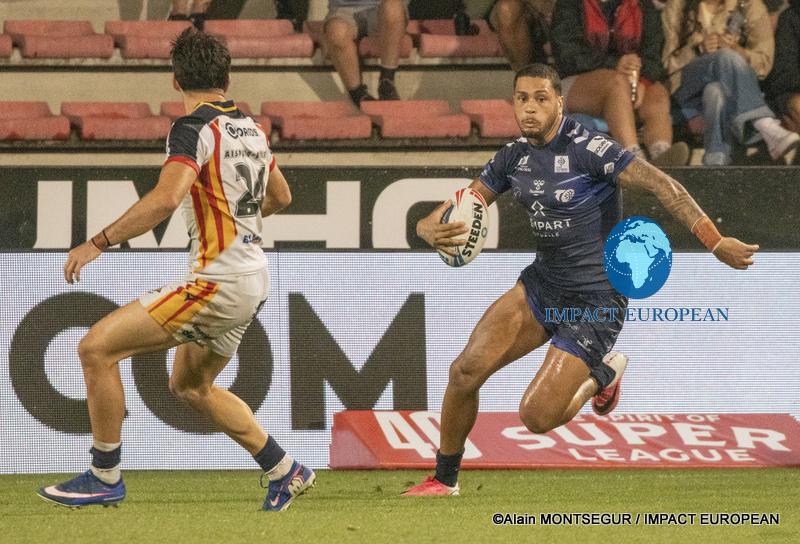
Receiving possession from Toby Sexton, Guillermo Aispuro-Bichet immediately recognised a narrow gap inside the Toulouse defensive line. Accelerating with remarkable balance despite the slippery conditions, the full-back burst through the defence before finishing an outstanding individual try.
The score reflected much more than individual brilliance.
It rewarded several minutes of territorial dominance, disciplined ball control and intelligent game management. Catalans had once again demonstrated that their attacking opportunities were carefully created rather than forced.
Crossing for that try moments before half-time carried enormous psychological value.
Instead of returning to the dressing room protecting only a narrow advantage, the Dragons entered the interval knowing they had successfully imposed both their rhythm and their tactical identity upon the contest.
For Toulouse, the restart brought an additional setback.
Ollie Ashall-Bott failed to return after suffering a hamstring injury, forcing the home side into an immediate tactical reshuffle. Losing one of their most dangerous attacking players inevitably altered both their structure and their attacking options.
Yet surrender was never part of Toulouse’s mentality.
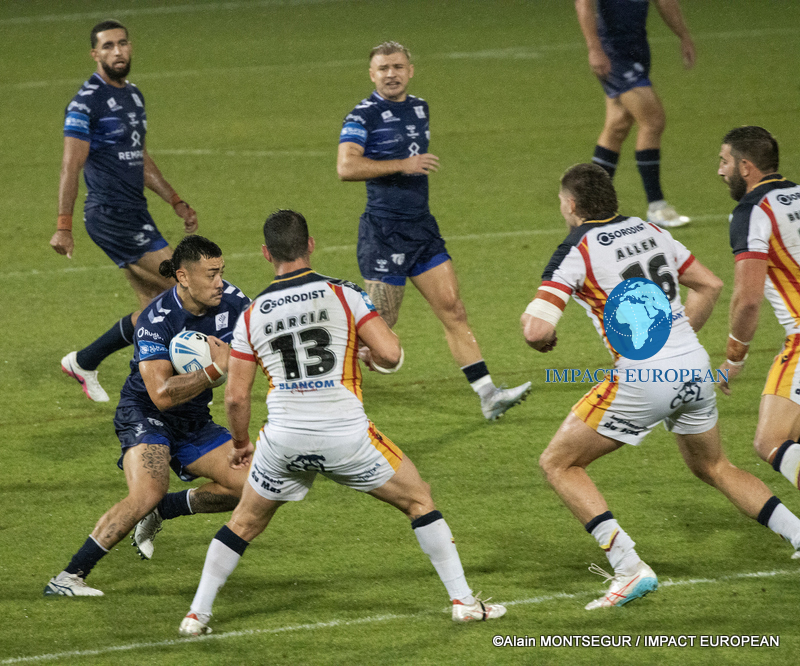
Inspired by the support inside Ernest-Wallon, the hosts increased their attacking tempo. Quicker passing, wider movement and greater ambition began stretching the Catalans defensive line in ways that had not happened during the opening stages.
Their determination was eventually rewarded.
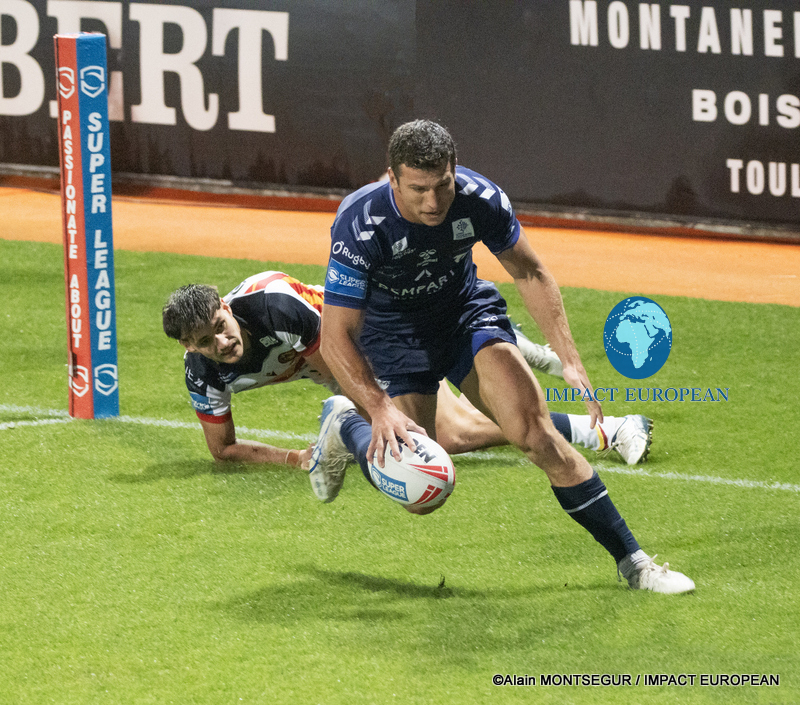
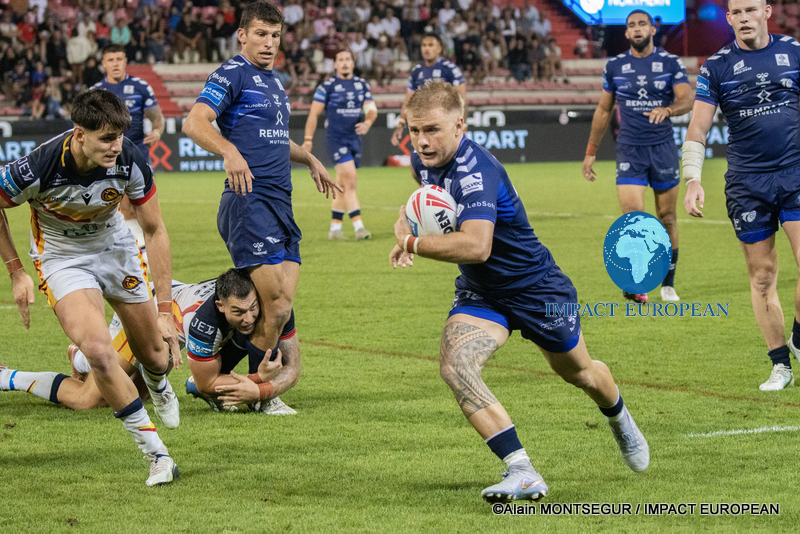
Following an excellent flowing movement across the field, Romeo Trapze finished confidently in the corner, reducing the deficit and reigniting belief among the home supporters.
Momentum briefly appeared to swing towards Toulouse.
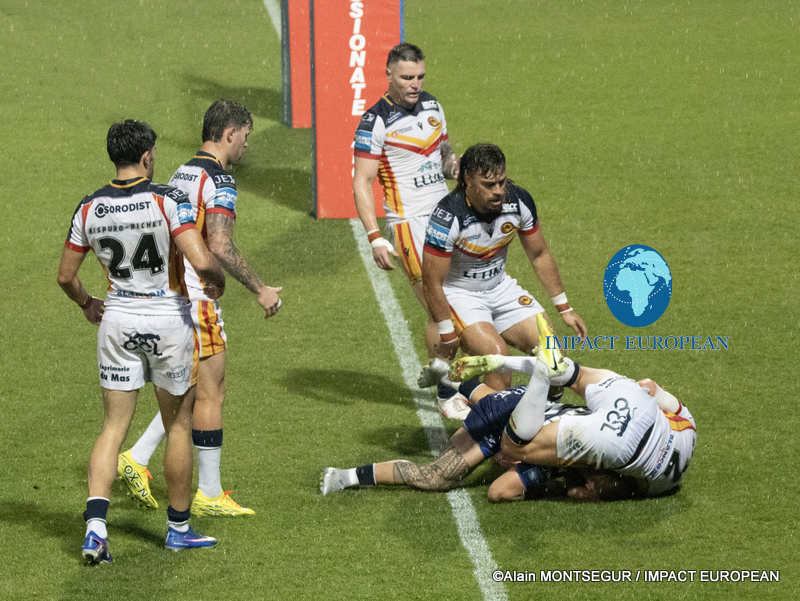
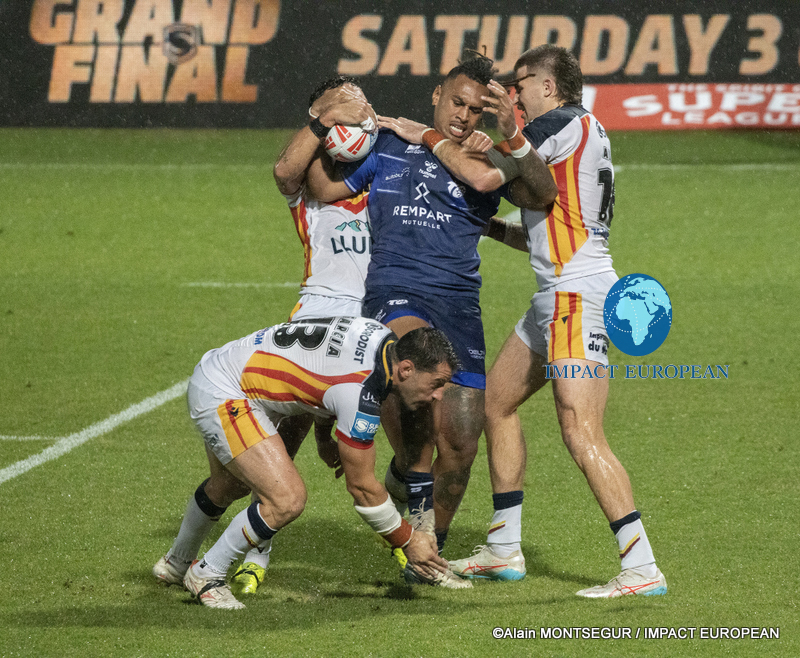
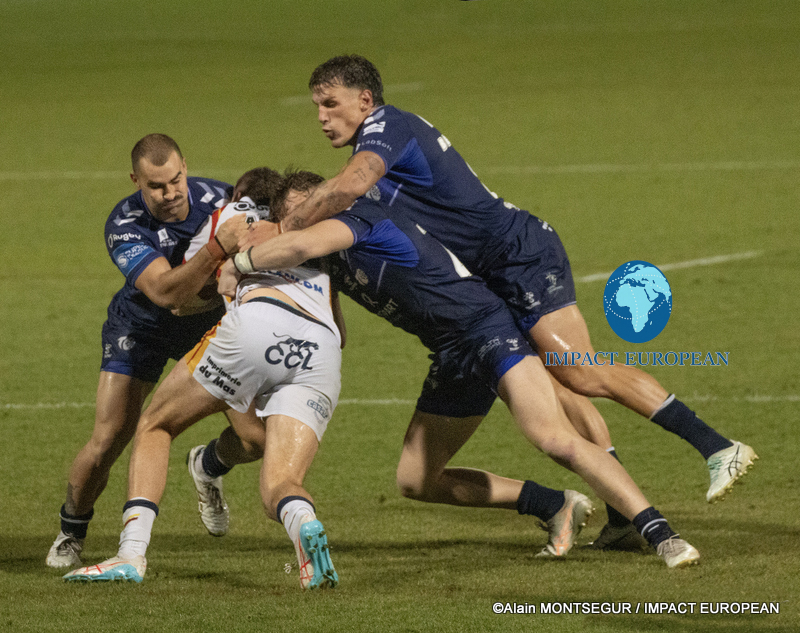
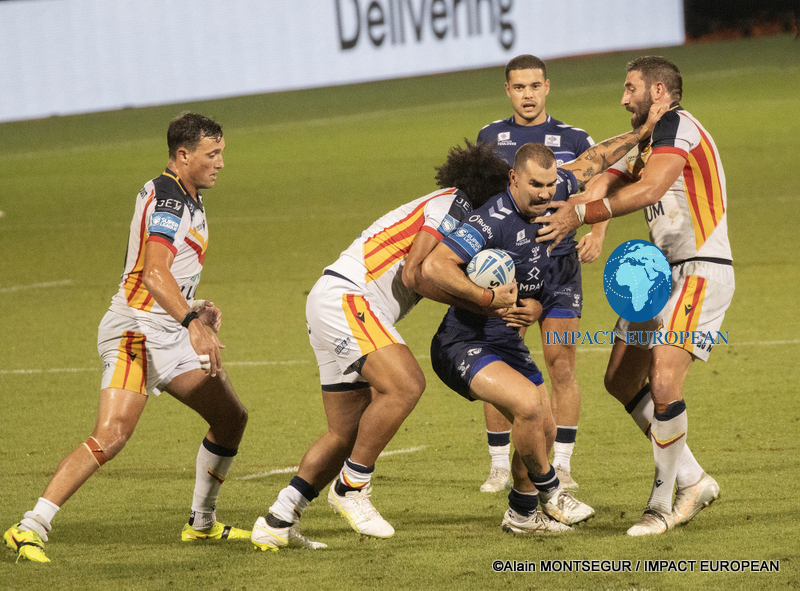
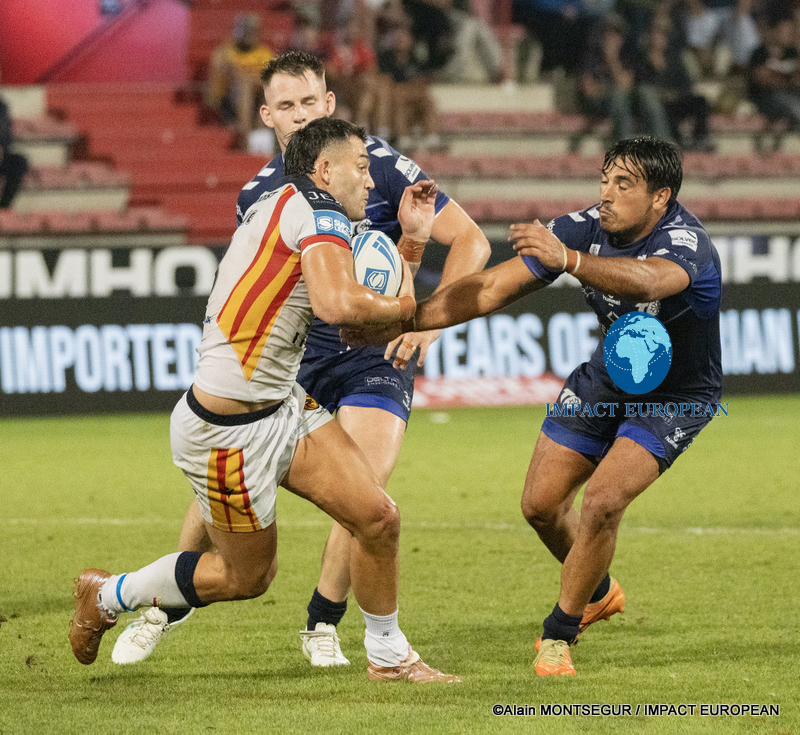
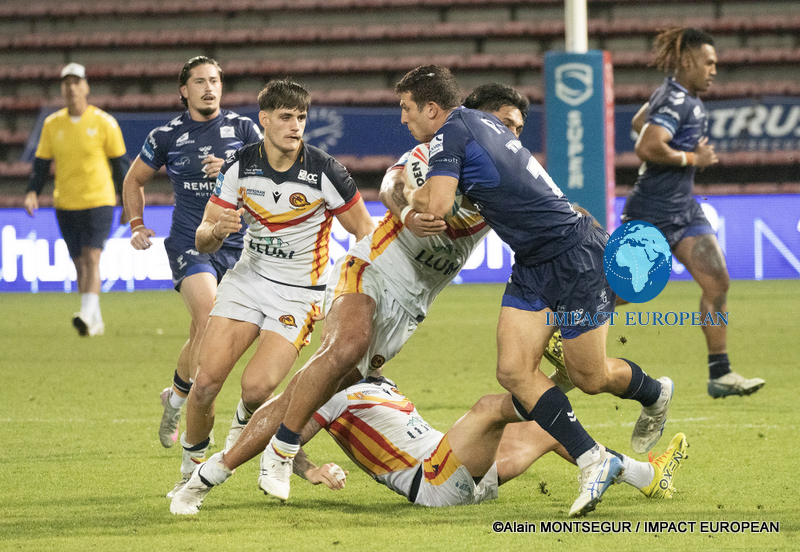
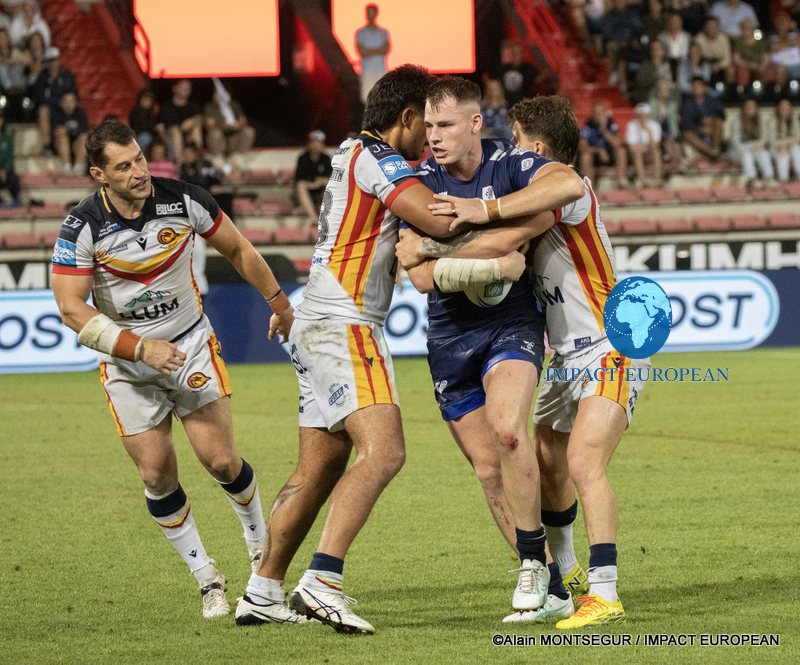
For several minutes the Dragons found themselves defending wave after wave of determined attacks. Every tackle became increasingly significant, every defensive set demanded complete concentration, and the pressure mounted with every passing minute.
Championship-winning teams, however, are often defined by how they react under pressure rather than when everything goes according to plan.
Catalans never abandoned their structure.
Instead of allowing emotion to dictate decisions, they slowed the tempo whenever necessary, controlled possession and trusted their defensive organisation.
Their patience was eventually rewarded once again.
With space finally opening near the Toulouse try line, Tommy Makinson appeared exactly where great finishers are expected to be. His second try of the evening extended Catalans’ advantage and once again highlighted the clinical efficiency that had separated both teams throughout the match.
While Toulouse had created opportunities through courage and determination, the Dragons continued converting almost every major scoring chance into points.
As the clock moved into the final quarter, everyone inside Ernest-Wallon understood that the outcome remained uncertain.
The revenge mission was within reach.
But twenty demanding minutes still separated Catalans Dragons from completing the statement victory they had travelled to Toulouse to achieve.
The final twenty minutes transformed an already compelling derby into a contest of nerve, resilience and tactical discipline.
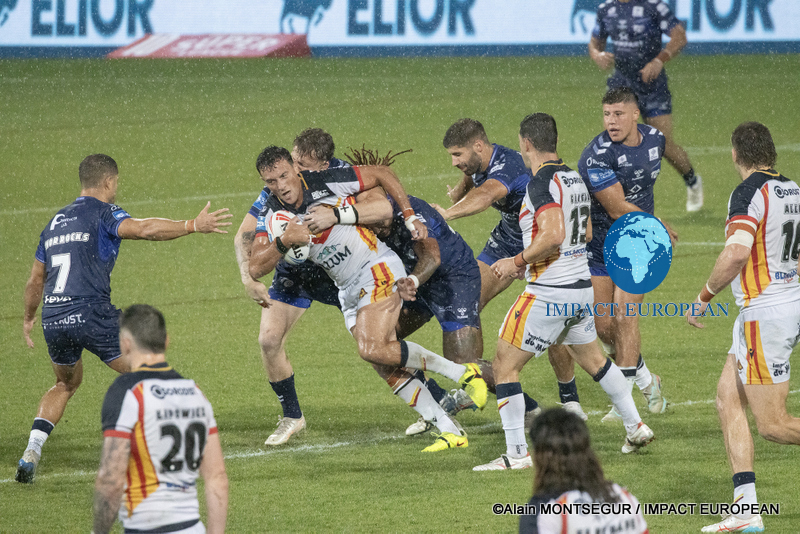
With only a handful of points separating the two teams, every possession suddenly carried enormous significance. The rain never stopped falling, making handling errors increasingly likely, while physical fatigue tested the concentration of every player on the field.
Toulouse Olympique knew there was still time to overturn the result.
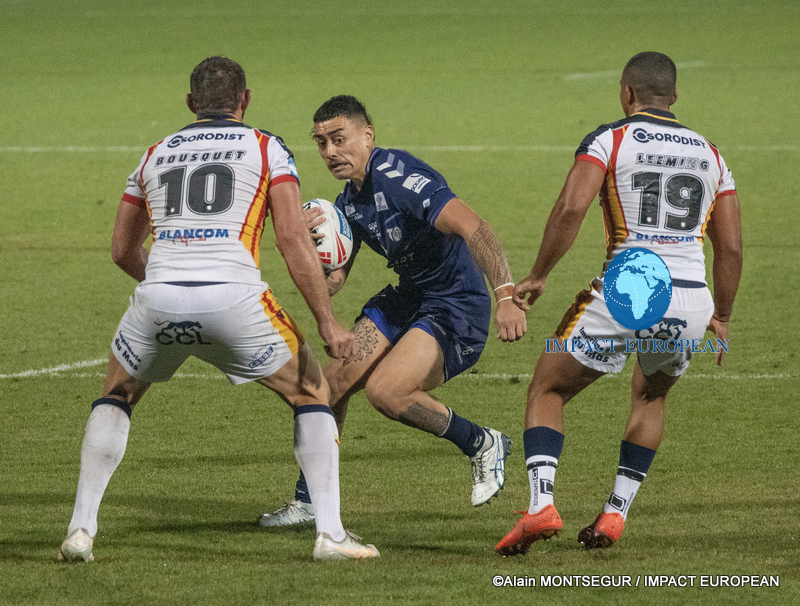
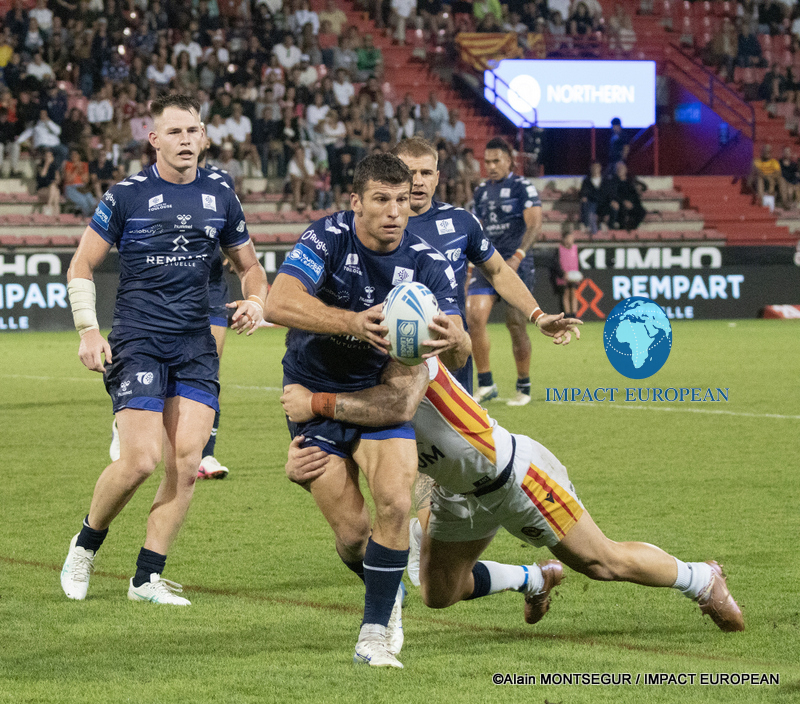
Guided by Jake Shor, the home side pushed higher up the field with renewed urgency. Their attacking sets became more ambitious, combining powerful forward carries with wider movements designed to expose gaps in the Catalans defensive line. Supported by an increasingly vocal Ernest-Wallon crowd, Toulouse appeared determined to deny their rivals the revenge they had travelled to claim.
For a brief moment, the momentum truly seemed to belong to the hosts.
One promising attack broke through the first defensive line and looked destined to produce a decisive try. But under pressure, a handling error brought the movement to an abrupt end. It was the type of fine margin that often separates victory from defeat in elite rugby league.
Catalans immediately returned to the principles that had defined their evening.
There was no panic.
No unnecessary risks.
Instead, they relied once again on controlled kicking, disciplined defensive organisation and intelligent game management. Rather than chasing spectacular attacking opportunities, they focused on forcing Toulouse to work for every metre.
That patience proved decisive.
A penalty awarded inside Toulouse territory allowed the Dragons to extend their advantage to 18-10, creating valuable breathing space as the clock entered its final minutes.
Even then, Toulouse refused to surrender.
Driven by pride as much as necessity, the home side launched one final assault. Their determination was eventually rewarded when Joe Cator crossed for a late try, reducing the deficit to just 18-16 after the successful conversion.
The final whistle followed almost immediately.
For Catalans Dragons, it represented much more than another league victory.
It was the completion of unfinished business.
After the disappointment of their previous meeting against Toulouse Olympique, they had returned to Ernest-Wallon with a clear objective. They had not sought revenge through emotion or aggression, but through organisation, discipline and execution.
Their success reflected the collective maturity of the squad.
Tommy Makinson once again demonstrated why he remains one of rugby league’s most reliable finishers, scoring twice when his team needed him most.
Guillermo Aispuro-Bichet produced one of the defining moments of the evening with a brilliant individual try that shifted momentum before half-time.
Toby Sexton controlled the tactical battle with composure, while the entire defensive unit repeatedly absorbed prolonged periods of Toulouse pressure without abandoning its structure.
Toulouse Olympique, meanwhile, left the field with genuine reasons for optimism despite the defeat.
The resilience shown after losing Ollie Ashall-Bott to injury reflected the character of the squad. Their refusal to stop attacking until the final seconds demonstrated the competitive spirit that continues to make them one of the toughest opponents in French rugby league.
Ultimately, however, this derby belonged to Catalans Dragons.
Not because they dominated every statistic.
Not because they produced spectacular rugby throughout.
But because they remained faithful to their plan from the opening whistle until the final seconds.
In elite rugby league, revenge is rarely achieved through passion alone.
It is earned through patience.
Through discipline.
Through execution.
On a wet evening in Toulouse, the Catalans Dragons delivered exactly that, leaving Ernest-Wallon with an 18-16 victory that meant far more than two competition points. It was a statement of resilience, maturity and intent as the season moves towards its decisive stages.
©2026 IMPACT EUROPEAN – All rights reserved

Views: 6
More Stories
Paris Pride 2026: From Political Mobilisation to a European Message of Solidarity
France’s September 29 Strike: When Pay Becomes a Question of Public-Service Capacity
Pope Leo XIV in France: From Human Dignity to Europe’s Search for Peace