

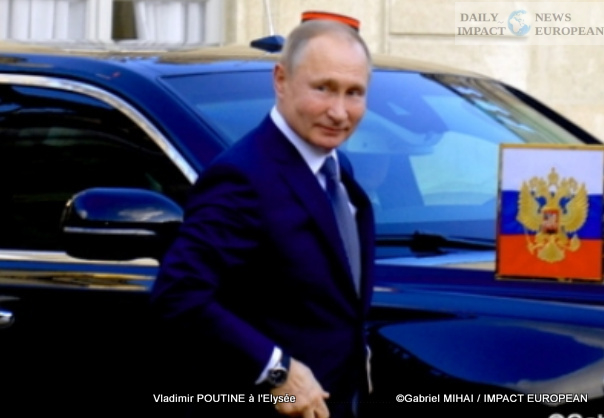
The diplomatic sequence of 29 December 2025 marks a discreet yet revealing turning point in the war in Ukraine. While Donald Trump and Volodymyr Zelensky projected what was presented as constructive momentum at Mar-a-Lago, the Kremlin almost simultaneously launched a security-driven counter-narrative with far-reaching implications: the announcement of an alleged Ukrainian drone attack on the Russian presidential residence in the Novgorod region.
This juxtaposition of diplomatic engagement and military communication raises a central question: are we witnessing genuine progress toward peace, or a classic Russian maskirovka operation designed to reshape the balance of power without abandoning the battlefield?
Mar-a-Lago: A Displayed Peace, Lingering Ambiguities
The meeting between Ukrainian President Volodymyr Zelensky and U.S. President Donald Trump on 28 December 2025 in Florida was framed by both sides as a breakthrough moment. According to Zelensky, 90% of a 20-point peace plan had been approved, with U.S. security guarantees “100% agreed” for a 15-year period, potentially extendable.
Trump, more cautious, spoke of talks being “very close,” stating that he believed Vladimir Putin was sincere about concluding a peace agreement. He confirmed having spoken with the Russian president both before and after the meeting, while announcing further discussions with European leaders in early 2026.
Behind the optimistic tone, however, several critical issues remain unresolved:
– the future of Donbas
– the Zaporizhzhia nuclear power plant
– Russia’s categorical rejection of any foreign troop presence in Ukraine
It is precisely at this moment that Moscow shifted gears.
The Russian Alert: A Political Announcement Before Any Evidence
Following the alleged attack in the Novgorod region, it was Russian Foreign Minister Sergey Lavrov who became the first senior official to publicly disclose the incident, even before detailed statements from the Kremlin or the General Staff.
Lavrov stated that the incident would lead to a revision of Russia’s negotiating position within the ongoing peace talks aimed at ending Moscow’s invasion of Ukraine.
Notably, he acknowledged that no damage and no casualties had been recorded, while simultaneously announcing that the Russian military had already identified targets for potential “retaliatory strikes.”
This sequence exposes a core contradiction:
an incident deemed serious enough to justify diplomatic escalation, despite the absence of damage, casualties, or independently verified evidence.
The Kremlin Maintains Military Pressure
Earlier that day, at 16:30 Moscow time, Vladimir Putin had chaired an extensive meeting at the Kremlin with Chief of the General Staff Valery Gerasimov and field commanders. The official message was unambiguous:
Russian forces are continuing and intensifying offensive operations across the entire front line.
According to military briefings presented during the meeting:
– more than 700 square kilometers were reportedly captured in December
– 32 settlements were taken
– advances were claimed in the Donetsk, Zaporizhzhia, Kherson, Sumy, and Kharkiv regions
Putin emphasized that the “special military operation” would continue according to plan, explicitly calling for sustained offensive momentum in 2026.
This rhetoric stands in stark contrast to claims of readiness for a stable and lasting ceasefire.
Ukraine’s Response: Coordinated Denials and Strategic Warnings
Ukraine’s reaction to the Russian accusations was swift, coordinated, and diplomatically structured.
At 18:32, Zelensky spoke with German Chancellor Friedrich Merz, explicitly addressing what Kyiv described as Russian disinformation regarding an alleged attack on the Russian president’s residence.
At 19:13, during a call with Latvian President Edgars Rinkēvičs, Zelensky stated that Russian attempts to disrupt diplomacy paradoxically confirmed the progress achieved with the United States.
At 19:36, in a conversation with Finnish President Alexander Stubb, Zelensky warned that Russian disinformation was being used to justify continued strikes and prolong the war, urging Western intelligence services to rely strictly on verified data.
A Critical Factor: Putin’s Residence Is Heavily Fortified
A key element further undermines the Russian narrative:
the Valdai presidential residence, referenced by Moscow, is known to be one of the most heavily protected sites in Russia.
As early as July 2024, a detailed CNN investigation documented:
– multi-layered air-defense systems
– permanent air-exclusion zones
– reinforced anti-drone defenses
Within this context, the claim that Ukrainian drones could approach the residence without causing any damage, without interception footage, and without verifiable evidence, appears highly implausible.
Analysis: A Classic Diplomatic Maskirovka
The sequence of events fits a well-established pattern in Russian strategic doctrine:
– introduce an unverified security incident
– immediately exploit it politically
– justify diplomatic hardening or military escalation
– shift the negotiating framework
By signaling possible revisions to its position while maintaining battlefield momentum, Moscow preserves strategic initiative and tests Western resolve, all while maximizing ambiguity.
Conclusion: Peace on Russian Terms
The events of 29 December 2025 do not point to a Russia preparing to de-escalate, but rather to a Russia negotiating while advancing militarily, using information warfare as a parallel tool.
For Ukraine, the risk is clear: a replay of the Minsk agreements, where temporary freezes enabled Moscow to rearm before resuming large-scale offensives.
For the United States and Europe, the challenge now lies in distinguishing genuine diplomatic signals from strategic deception.
History will judge whether this encounter marked the end of the war… or merely postponed the next act.
©2025 – IMPACT EUROPEAN
Views: 0
More Stories
Alzheimer Research Foundation Gala in Paris: when music and solidarity unite for global research
Foire du Trône: inside Europe’s largest fairground in Paris
Pro-Palestinian demonstrations held across France to mark Land Day