


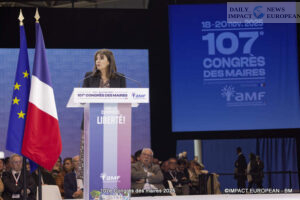
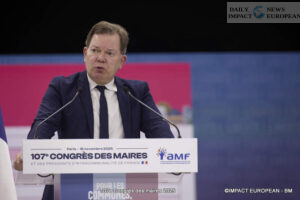
From November 18 to 20, the 107th Congress of Mayors of France and Presidents of Intercommunal Authorities brought together over 12,000 elected officials in Paris. Organized by the Association of Mayors of France (AMF), this event—the last before the municipal elections in March 2026—highlighted a growing divide between the central government and local territories. Under the banner “For municipalities, freedom!”, the debates exposed structural challenges threatening the French model of local governance.
Unprecedented Pre-Election Tensions and the Crisis of a Centralized Model
In many centralized political systems, the French mayor occupies a unique position, often considered the « first ambassador » of the state and the last line of defense for the Republic. This level of government is the closest and most trusted by citizens. It is therefore no surprise that the tone at this Congress was particularly sharp.
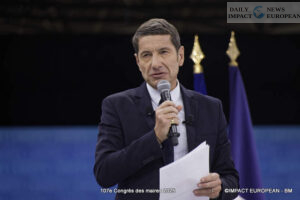
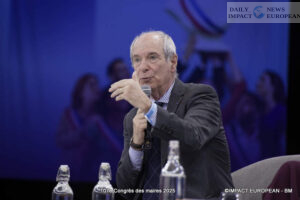
David Lisnard, president of the AMF, described the past mandate as a period of crisis, spanning from the Yellow Vest protests to the Covid-19 pandemic, culminating in what he called a “national mess.” For an international audience, the message is clear: the centralized French model is now considered obsolete and ineffective in responding to modern crises.
The main demand of the mayors is a transfer of freedom to act, adapt, and manage, without being constantly hindered by contradictory administrative regulations. Elected officials denounce fiscal and regulatory recentralization, which paralyzes action and threatens democratic vitality—a situation reflected in more than 40 mayoral resignations per month since 2020.
Financial Shock: A Test for Local Fiscal Autonomy
The most acute point of friction remains financial. Local authorities strongly oppose the government’s proposed contribution of €4.7 billion for 2026. The AMF estimates the actual burden at €7.5 billion—a “massive purge,” according to André Laignel, vice-president of the AMF.
This financial dispute raises questions about the sustainability of France’s local funding model. After the gradual elimination of many municipal tax powers (such as the residence tax), mayors feel reduced to the role of mere budget executors for the central government. For international observers, this underscores the fragility of local fiscal autonomy in France, in stark contrast with countries like Germany or Switzerland, where regional and local entities traditionally retain greater tax independence.
Overseas Territories: On the Frontlines of Climate Risk
The Congress also highlighted the particular vulnerability of France’s overseas territories to climate-related emergencies. This session provided crucial insight into the challenges facing small islands and threatened coastlines.
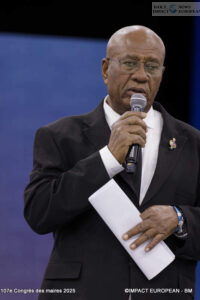
Jocelyn Sapotille, mayor of Lamentin (Guadeloupe), raised concerns over the lack of resources for managing cumulative risks (cyclones, volcanoes, and coastal erosion). According to him, the solution requires major investments rather than minor subsidies.
Elected officials strongly called on the state to enhance the Major Natural Risks Prevention Fund (FPRNM, or “Barnier Fund”), which they consider insufficient. An amendment supported by the AMF aims to create a dedicated fund to address coastal retreat, highlighting a political will to prevent the burden of climate impacts from falling exclusively on affected populations. This is framed as a matter of national solidarity in the face of a global risk.
Accessibility and Inclusion: A Persistent Urban Challenge
The review of accessibility in Public Buildings (ERP) showed mixed results. While 93% of municipalities report “mostly or fully” accessible facilities, larger cities and their suburbs (municipalities over 30,000 inhabitants) lag behind, with only 4.76% fully accessible.
This discrepancy is largely due to historic buildings (churches, classified town halls). The challenge now is to integrate inclusion—and consultation with associations for people with disabilities—from the design phase, not just during later adaptations (a “design for all” approach).
Mayors: A Pillar of Stability Amid Turbulence
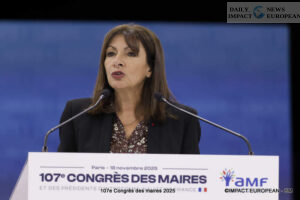
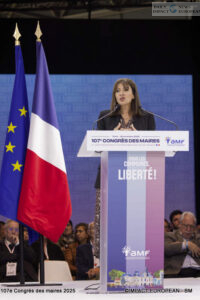
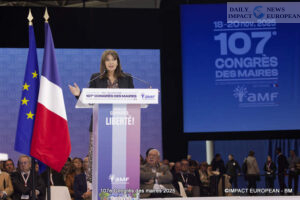
Despite tensions, closing speeches by Anne Hidalgo, Mayor of Paris, and David Lisnard reaffirmed the strength of the municipal bloc.
Hidalgo emphasized that Paris is “a commune like any other”, advocating for solidarity in the face of financial constraints. Lisnard paid tribute to mayors as “guardians of proximity.”
In conclusion, the 107th Congress not only served as a pre-election platform but also sent a strong signal internationally: the French commune remains the beating heart of public life, but its autonomy and ability to meet citizens’ expectations (climate, finance, inclusion) are now seriously challenged by pressures from a centralized state. The 2026 elections will be a test of resilience for this system of local democracy. 2026 sera un test de résilience pour cette démocratie de proximité.
©2025 – IMPACT EUROPEAN
https://www.youtube.com/watch?v=SPWcWzmWEcw












Views: 0
More Stories
Paris “Iftar of Peace”: Imam Hassen Chalghoumi awards Olive Branch Peace Prize to President Donald Trump
Super League: Wigan Warriors defeat Toulouse Olympique 36-16
Lunar New Year 2026: Paris Celebrates the Year of the Fire Horse