

PARIS – Long before darkness settled over the French capital, thousands of people were already gathering around the Champ de Mars and the Trocadéro. Families unfolded picnic blankets, tourists searched for the best viewpoints and photographers prepared their equipment as the Eiffel Tower slowly became the centre of attention.
Every summer, Paris hosts one of the world’s most famous National Day celebrations.
Yet the 2026 edition was unlike any other.
For the first time in recent years, the traditional Bastille Day fireworks were moved from July 14 to July 13. The decision was not driven by logistical concerns or technical constraints, but by a deliberate act of national remembrance.
French authorities chose to dedicate 14 July entirely to ceremonies marking the tenth anniversary of the Nice terrorist attack, allowing commemorations to take place without competing with one of France’s largest public celebrations.
In doing so, Paris transformed an already iconic event into something more meaningful: a celebration that recognised both national pride and collective memory.
A celebration shaped by remembrance
On 14 July 2016, thousands of people had gathered on Nice’s Promenade des Anglais to watch the traditional Bastille Day fireworks when a truck deliberately drove into the crowd.
The attack claimed the lives of 86 people, including many children, and injured hundreds more.
It remains one of the deadliest terrorist attacks in modern French history.
Ten years later, France chose not to separate celebration from remembrance, but to organise them differently.
Rather than cancelling festivities, the government advanced the Paris fireworks by one day, ensuring that the National Day itself could become a moment of reflection and tribute for victims and their families.
The decision illustrates how democratic societies continue adapting public ceremonies in response to historical events while preserving national traditions.
Paris welcomes the world once again
Despite exceptionally high temperatures affecting much of France, hundreds of thousands of spectators gathered around the Eiffel Tower throughout the evening.
Authorities adjusted access times because of the heatwave, delaying public entry and rescheduling the traditional Concert de Paris, performed by the National Orchestra of France and presented by Stéphane Bern.
The changes did little to diminish enthusiasm.
Visitors from across Europe, North America, Asia and Latin America filled the streets surrounding the Eiffel Tower, reinforcing Paris’ position as one of the world’s leading cultural destinations.
For many international visitors, Bastille Day offers a unique opportunity to experience French national traditions while discovering one of the country’s most recognisable landmarks.
« Happy, Together »: technology meets tradition
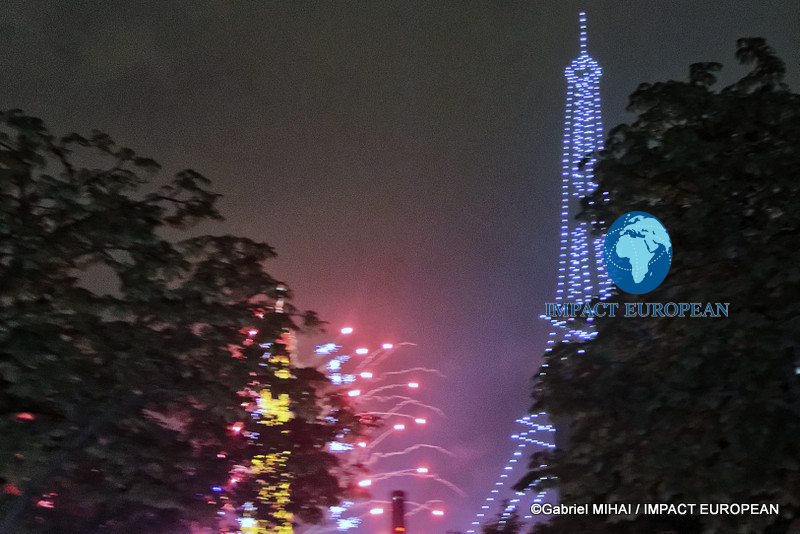
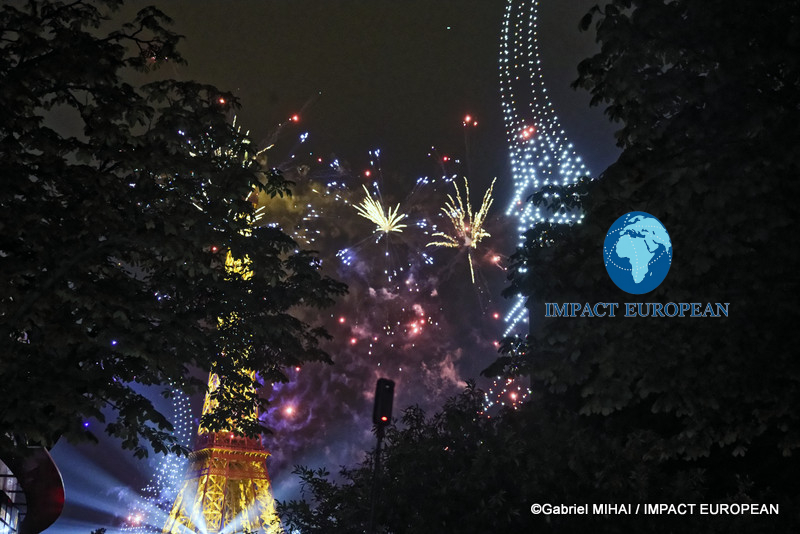
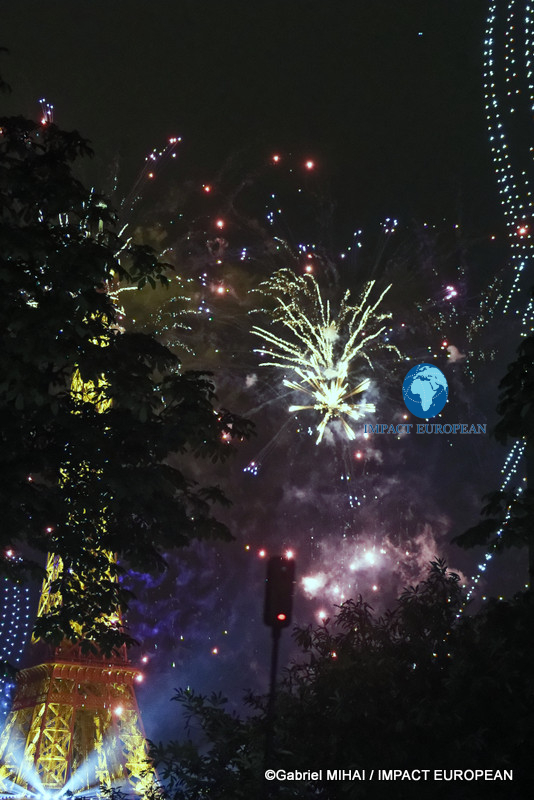
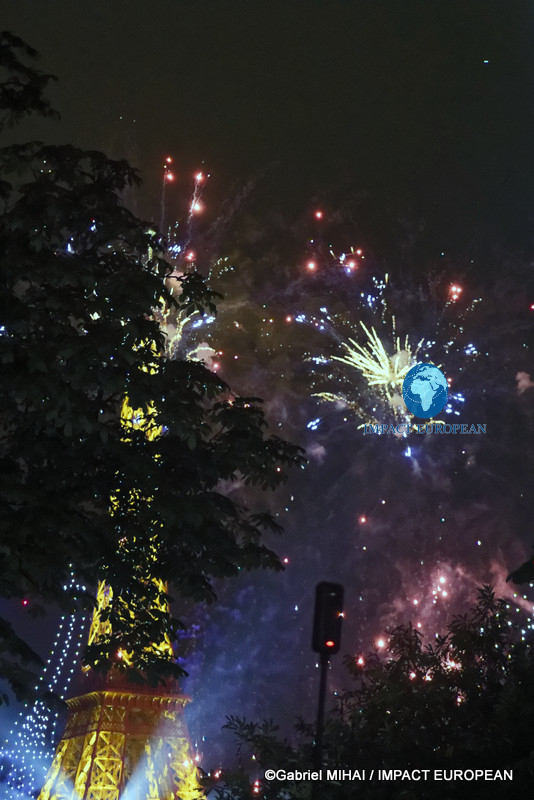
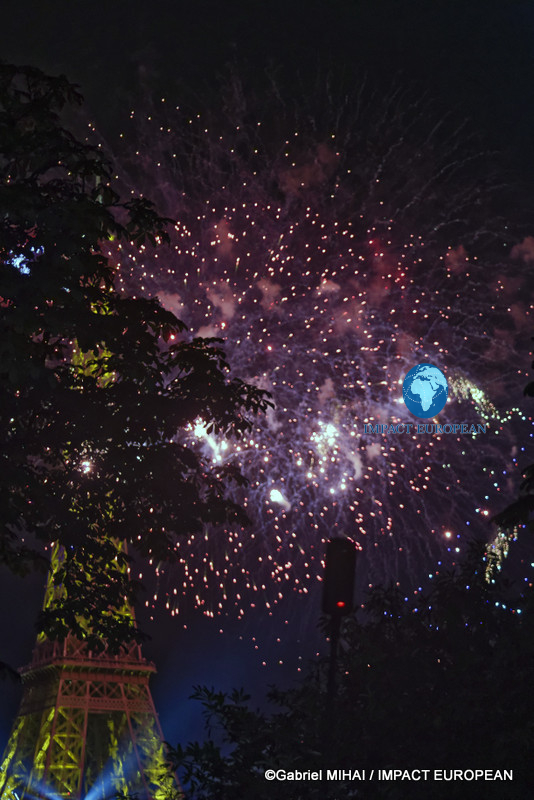
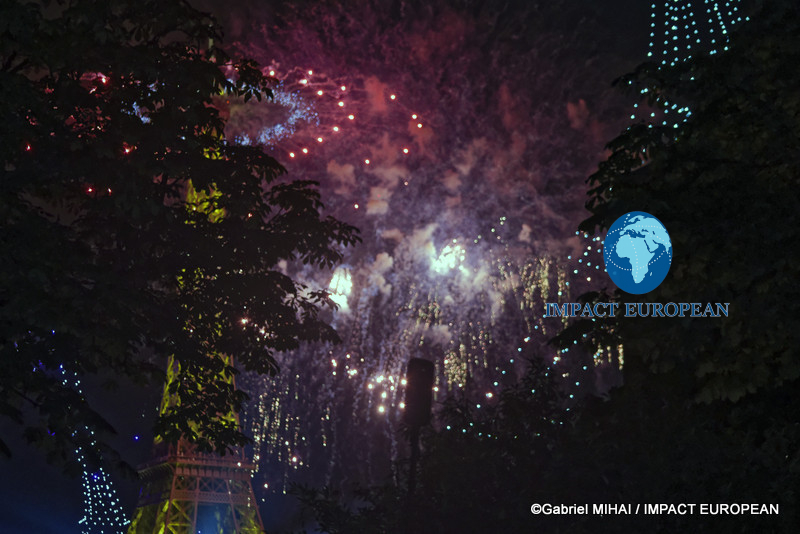
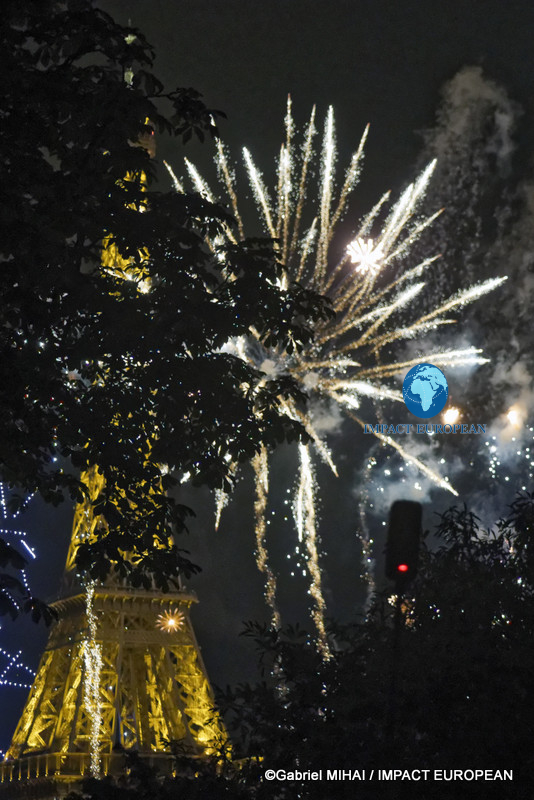
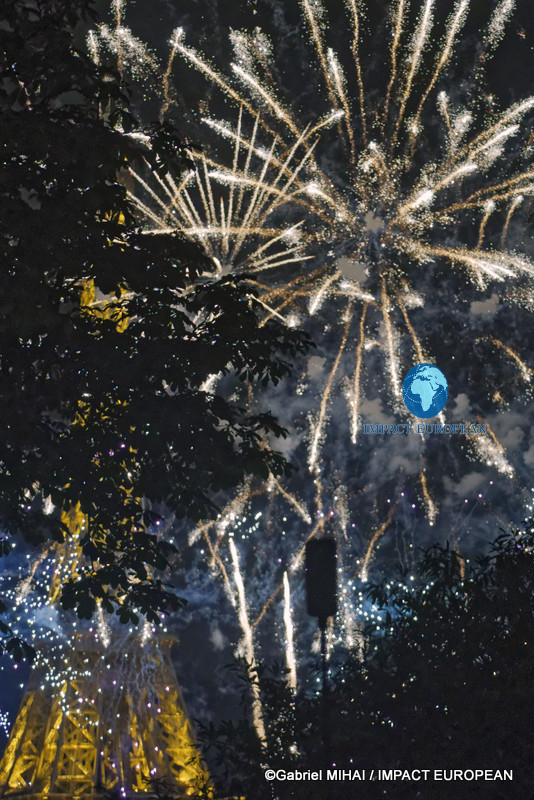
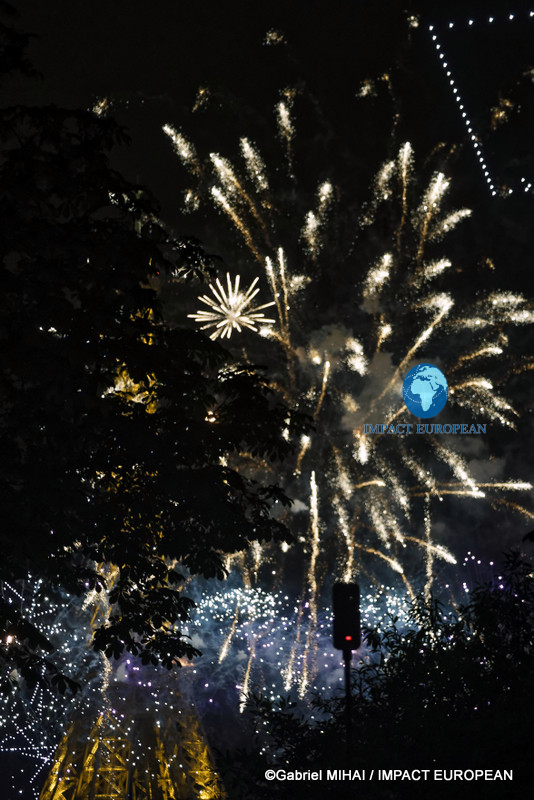
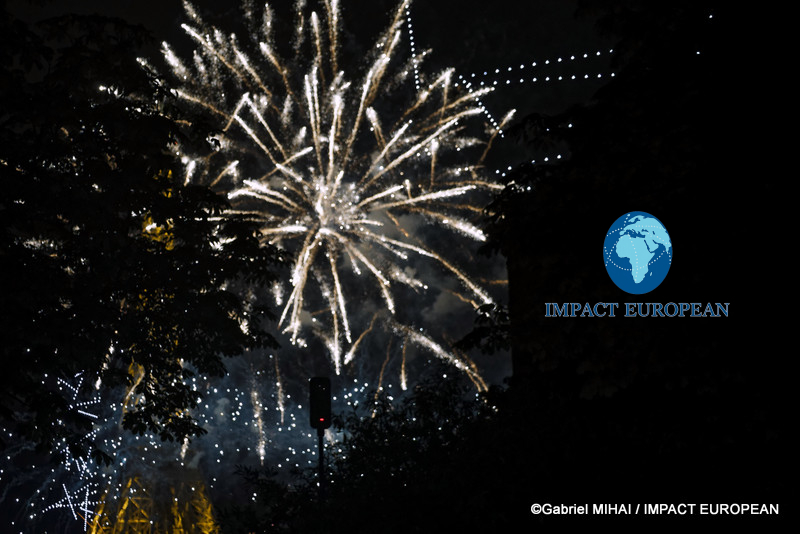
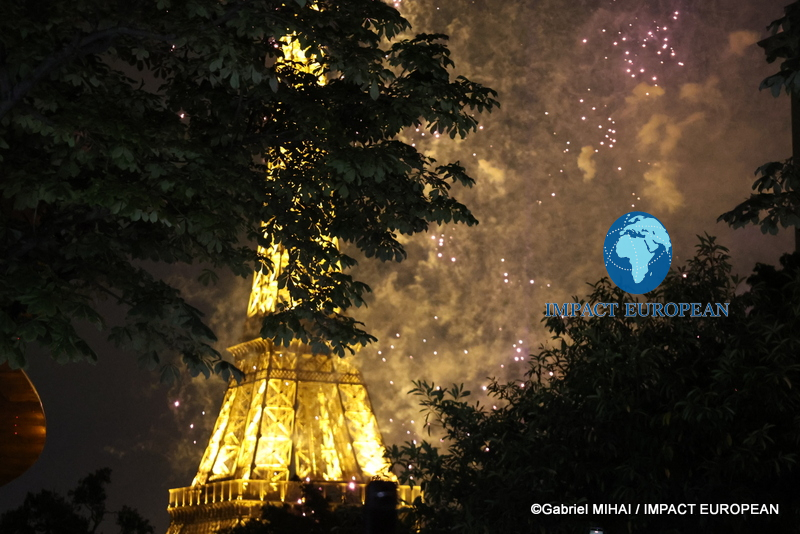
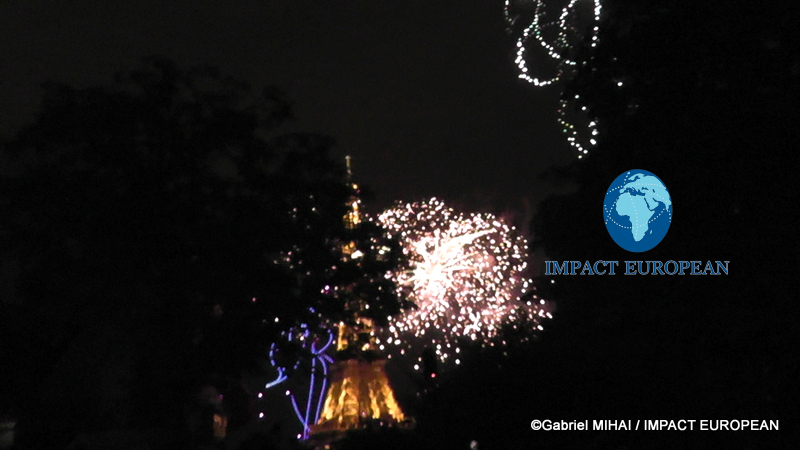
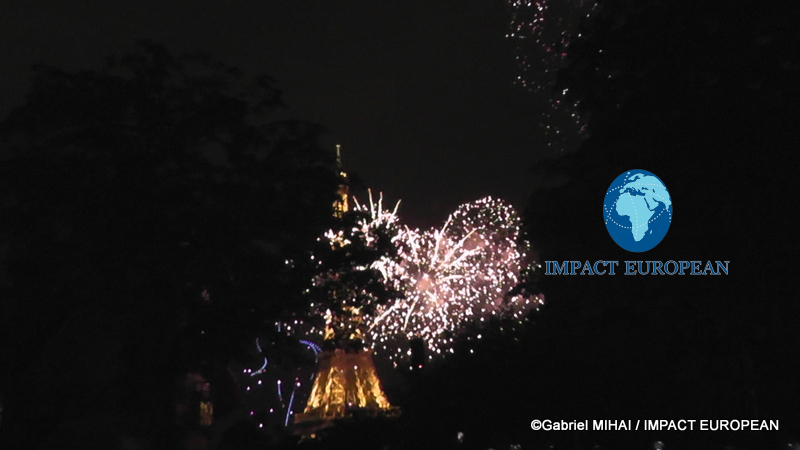
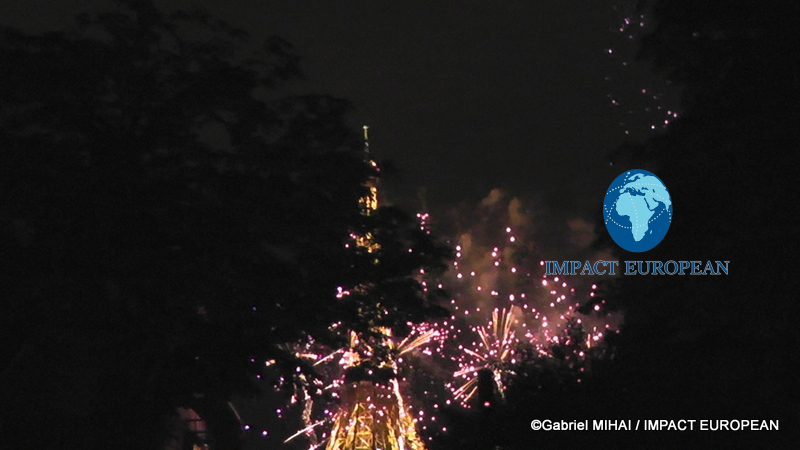
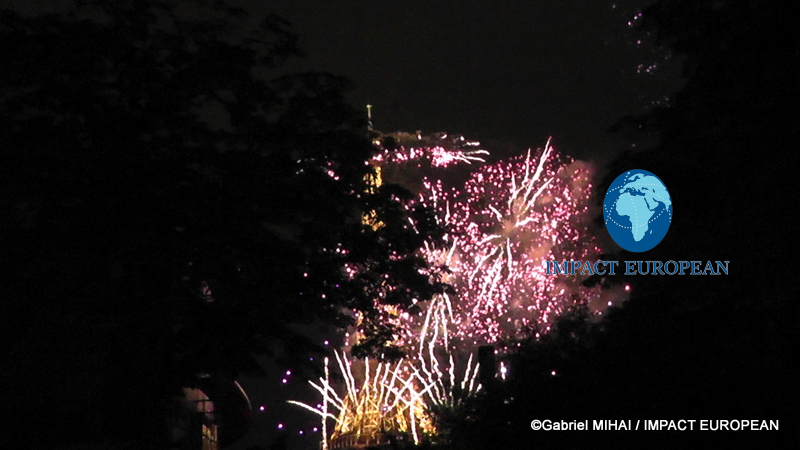
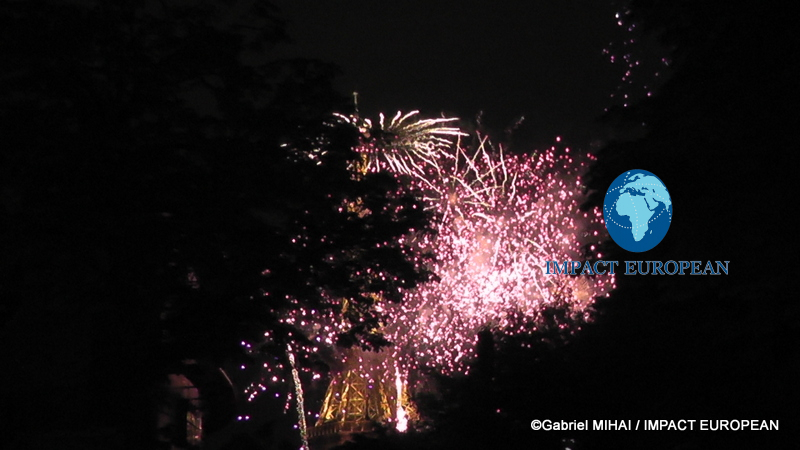
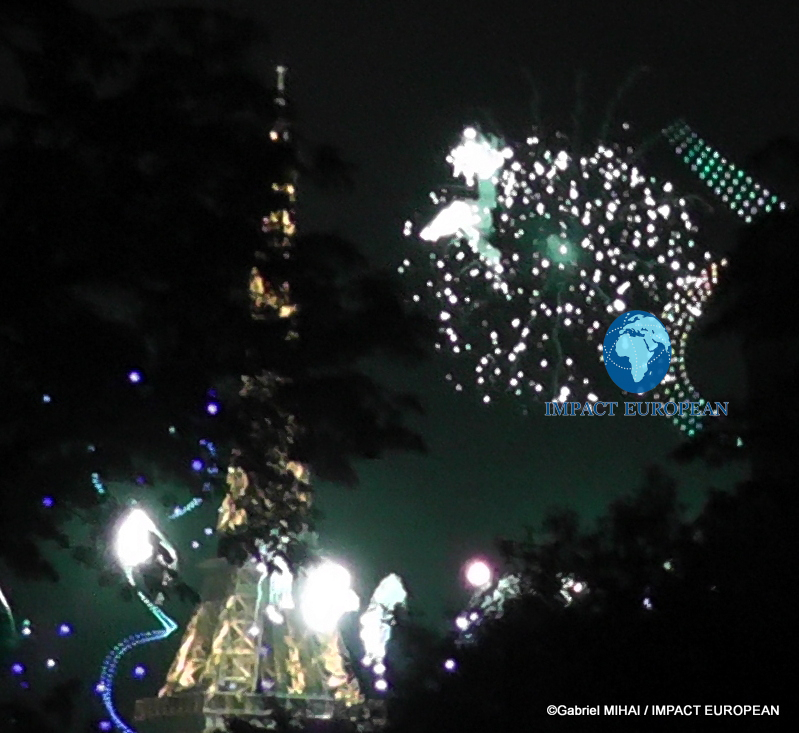
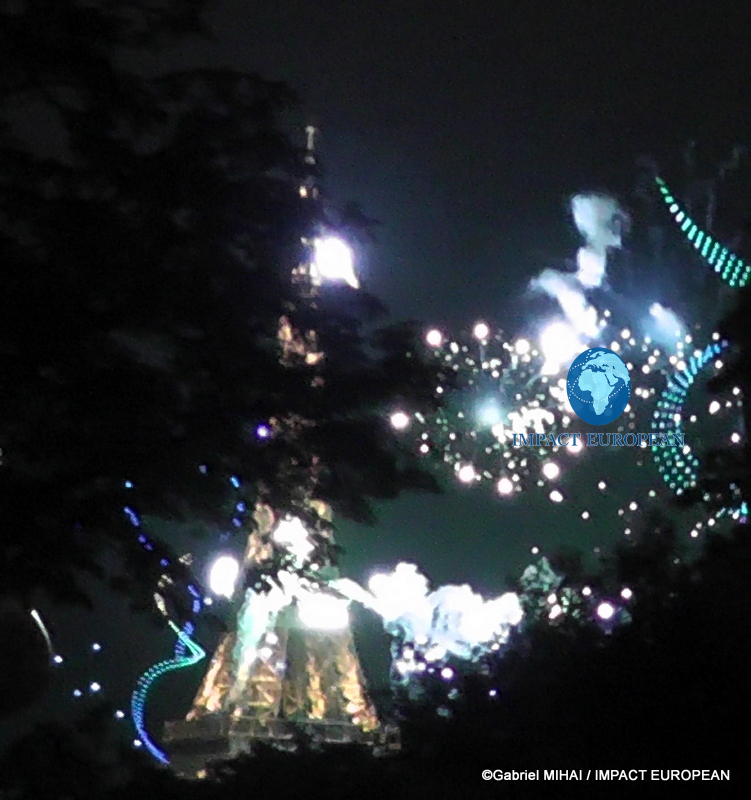
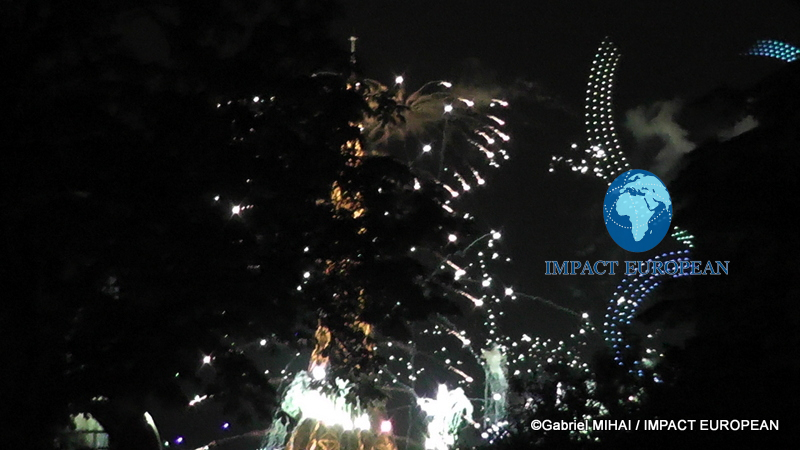
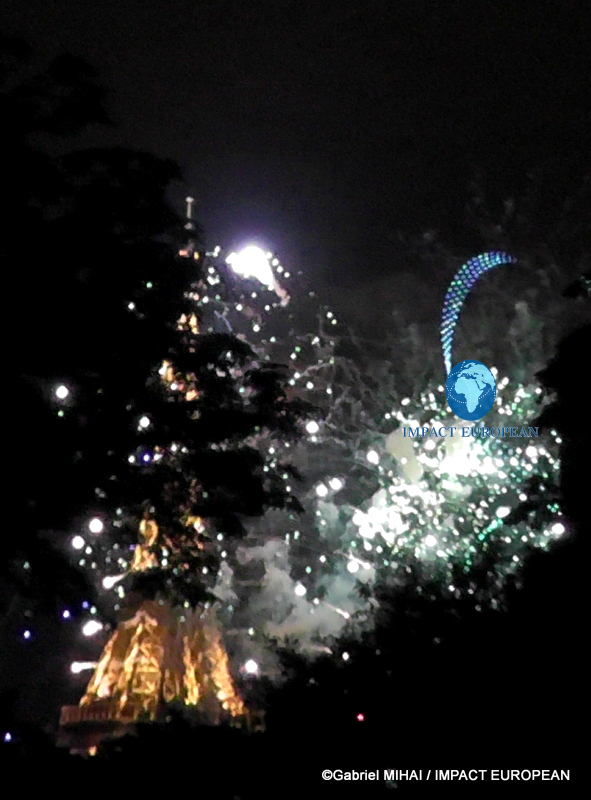
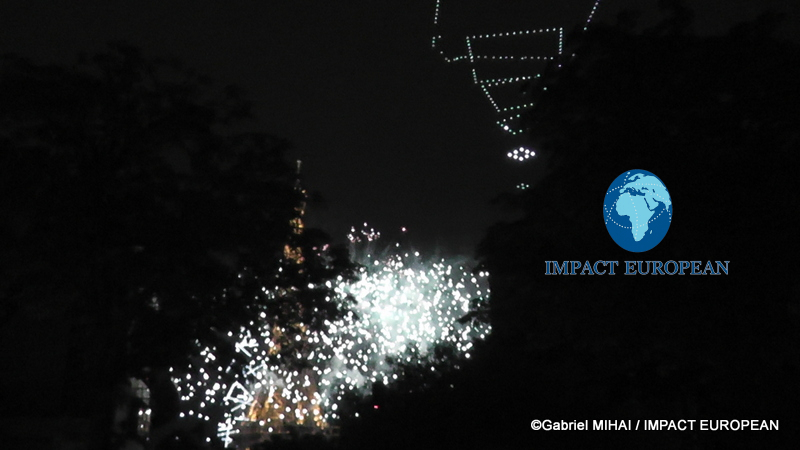
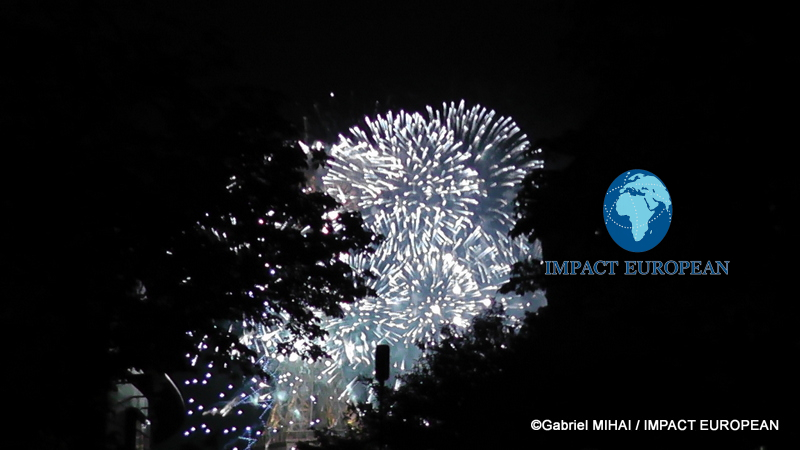
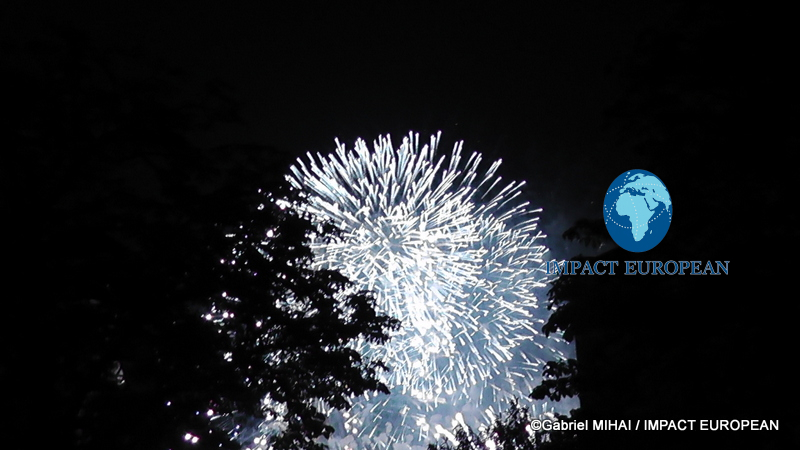
At around 11 p.m., the first fireworks illuminated the Paris skyline.
The twenty-minute production, entitled « Happy, Together, » unfolded through twelve carefully designed artistic sequences combining music, pyrotechnics and digital technology.
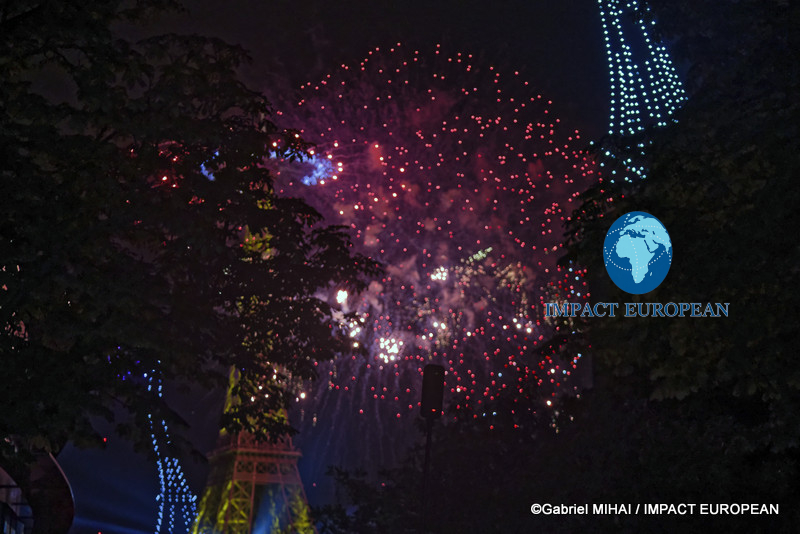
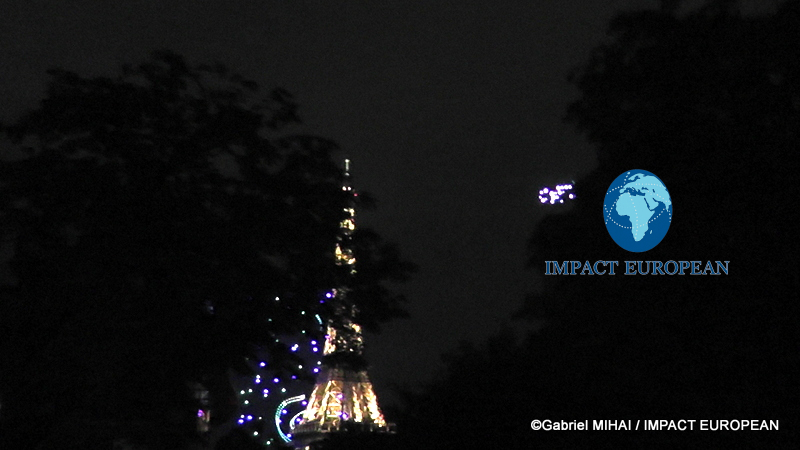
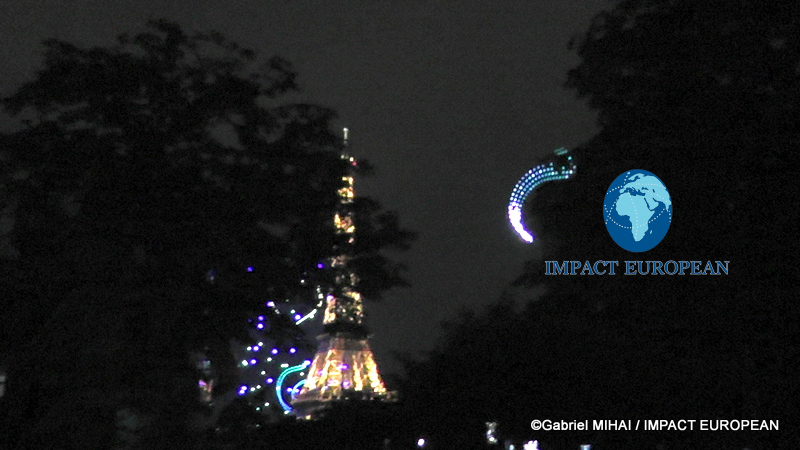
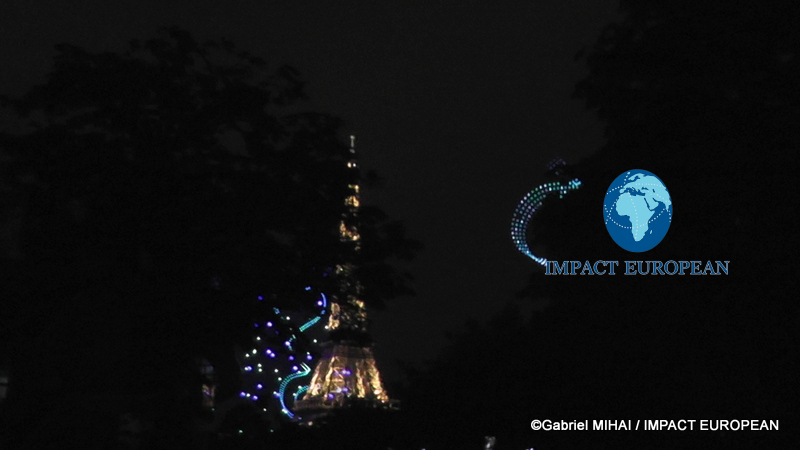
The most striking innovation came from the use of 1,600 synchronised drones, significantly more than in previous years.
Rather than replacing traditional fireworks, the drones complemented them, creating large-scale luminous figures above the Eiffel Tower and expanding the visual storytelling of the performance.
The combination of heritage and innovation reflected the broader philosophy behind this year’s celebration.
France did not seek to reinvent Bastille Day.
Instead, it demonstrated how modern technology can enhance long-standing traditions while preserving their emotional impact.
As fireworks echoed across the Seine, thousands of spectators raised their phones to capture the spectacle, while applause accompanied each new sequence lighting the Parisian sky.
When national celebrations become instruments of cultural diplomacy
France has long understood that major public celebrations are more than domestic events.
They are opportunities to present an image of the country to millions of people around the world.
Whether through the military parade on the Champs-Élysées, the Concert de Paris beneath the Eiffel Tower or the fireworks broadcast internationally every Bastille Day, these ceremonies have gradually become part of France’s cultural diplomacy.
The 2026 edition demonstrated this approach particularly well.
Instead of allowing remembrance and celebration to compete for public attention, French authorities redesigned the national programme so that both could receive the importance they deserved.
This careful balance transformed Bastille Day into a message extending far beyond France’s borders.
It presented a country capable of honouring its past while continuing to celebrate the democratic values that define its national identity.
Paris as a global cultural stage
Few cities possess the international visibility of Paris.
The Eiffel Tower has become one of the world’s most recognised monuments, attracting millions of visitors every year and serving as the backdrop for global sporting events, state ceremonies and cultural celebrations.
During Bastille Day, the monument takes on an even greater symbolic role.
For one evening, it becomes the centrepiece of a performance watched not only by those gathered around the Champ de Mars but also by television audiences and online viewers across every continent.
This international exposure explains why every artistic decision carries significance.
The choice of music, lighting, historical references and visual effects contributes to the image France presents to the world.
In 2026, the message focused on unity, remembrance and optimism.
The show’s title — « Happy, Together » — deliberately emphasised collective resilience rather than division.
A dialogue between history and innovation
One of the defining characteristics of this year’s performance was the combination of traditional fireworks with advanced drone technology.
The deployment of 1,600 synchronised drones, the largest aerial choreography ever presented during Paris’ National Day celebrations, illustrated how public ceremonies continue to evolve.
Unlike purely technological displays, however, the drones were carefully integrated into the narrative of the evening.
They accompanied — rather than replaced — the fireworks.
This artistic choice reflects a broader trend visible across major international cultural events.
Technology increasingly serves storytelling instead of spectacle alone.
In Paris, digital choreography became another way of expressing historical memory, national identity and artistic creativity.
The result was a visual dialogue between nineteenth-century engineering, represented by the Eiffel Tower itself, and twenty-first-century innovation.
Celebrating European friendship
Several sequences also highlighted France’s European identity.
One of the evening’s principal tributes marked the 70th anniversary of the twinning between Paris and Rome.
Although symbolic, the anniversary carried broader significance.
In a period marked by geopolitical uncertainty and political debate across Europe, celebrating long-standing cooperation between two historic capitals offered a reminder that cultural relationships often outlast political disagreements.
The performance also honoured the 400th anniversary of the French Navy, recognising four centuries of maritime history, scientific exploration, national defence and international engagement.
Together, these themes broadened the meaning of Bastille Day.
Rather than focusing exclusively on the French Revolution or military tradition, the celebration connected national history with European cooperation and international openness.
Climate adaptation reshapes public events
The 2026 Bastille Day celebrations also reflected another reality affecting cities throughout Europe: climate change.
An intense heatwave forced authorities to modify public access schedules, delaying entry to the viewing areas around the Eiffel Tower and postponing the start of the Concert de Paris.
These adjustments demonstrated how organisers of major public events are increasingly required to balance celebration with public health and safety.
Far from diminishing the experience, the revised schedule allowed spectators to enjoy the evening under safer conditions while preserving the event’s festive atmosphere.
As extreme weather becomes more frequent across Europe, Paris may well provide a model for adapting large-scale cultural events without compromising their symbolic importance.
Remembering through celebration
Public ceremonies often reveal more about a nation than political speeches.
They reflect how a country chooses to remember its past, celebrate its achievements and project its values into the future.
The 2026 Bastille Day celebrations in Paris demonstrated precisely that balance.
By moving the fireworks to 13 July, France created space for the official commemorations marking the tenth anniversary of the Nice terrorist attack, ensuring that remembrance would remain at the heart of the National Day without cancelling one of the country’s most important public traditions.
Rather than separating celebration from memory, the French authorities allowed both to coexist.
The result was a ceremony that recognised grief while affirming resilience.
The evolution of public ceremonies
National celebrations have changed considerably over recent decades.
They are no longer limited to military displays or symbolic rituals.
Today’s audiences expect cultural experiences capable of combining history, emotion, artistic creativity and technological innovation.
Paris has embraced this evolution.
The « Happy, Together » production demonstrated how fireworks, music, digital choreography and historical storytelling can be integrated into a single narrative.
The deployment of 1,600 drones, carefully synchronised with the pyrotechnic display, represented more than technological progress.
It reflected the growing role of innovation in preserving public interest while respecting long-established traditions.
This balance between continuity and renewal has become one of the defining characteristics of major French national ceremonies.
Paris projects an image beyond France
The significance of Bastille Day extends well beyond national borders.
Every year, images of the Eiffel Tower illuminated by fireworks circulate across international television networks, digital platforms and social media.
For millions of viewers, these celebrations provide a first impression—or a renewed image—of contemporary France.
This international visibility transforms the event into an instrument of cultural influence.
Without political speeches or diplomatic negotiations, France communicates through architecture, music, artistic creation and collective participation.
It is an expression of what is often described as soft power: the ability to inspire through culture rather than through political or economic pressure.
Few countries possess symbols as globally recognised as the Eiffel Tower.
Few national celebrations attract such broad international attention.
The 2026 edition demonstrated how those symbols continue to evolve while remaining deeply connected to French history.
A message of resilience
Perhaps the most enduring image of the evening was not the final explosion of fireworks nor the spectacular drone formations.
It was the message carried throughout the entire celebration.
Ten years after the tragedy in Nice, France chose neither silence nor forgetting.
Instead, it organised its National Day in a way that allowed remembrance and celebration to reinforce one another.
The decision reflected confidence rather than fear.
It showed that democratic societies can preserve their traditions while adapting them to honour difficult chapters of their history.
That approach may ultimately become the defining legacy of the 2026 Bastille Day celebrations.
The fireworks above the Eiffel Tower lasted only twenty minutes.
Their symbolic significance, however, will endure much longer.
By combining remembrance, artistic innovation and national celebration, Paris transformed one of France’s oldest public traditions into a reflection on resilience, democracy and collective memory.
The « Happy, Together » theme resonated far beyond the thousands gathered around the Champ de Mars.
It spoke to millions of viewers watching across Europe and around the world, reminding them that national ceremonies are not simply about commemorating the past.
They are also about expressing confidence in the future.
In an era often dominated by geopolitical tensions, social divisions and global uncertainty, Paris offered a different image.
One of remembrance without resignation.
Of celebration without forgetting.
And of a Republic capable of honouring its history while continuing to look ahead.
Copyright © 2026 IMPACT EUROPEAN
Views: 5
More Stories
Alzheimer’s Care Beyond Medicine: The Daily Infrastructure That Keeps Life Possible
At Marek Halter’s Paris home, Rosh Hashanah brings faiths together around humanity and peace
Pro D2: Provence Rugby beat Colomiers 18-13 despite playing over an hour with 14 men