

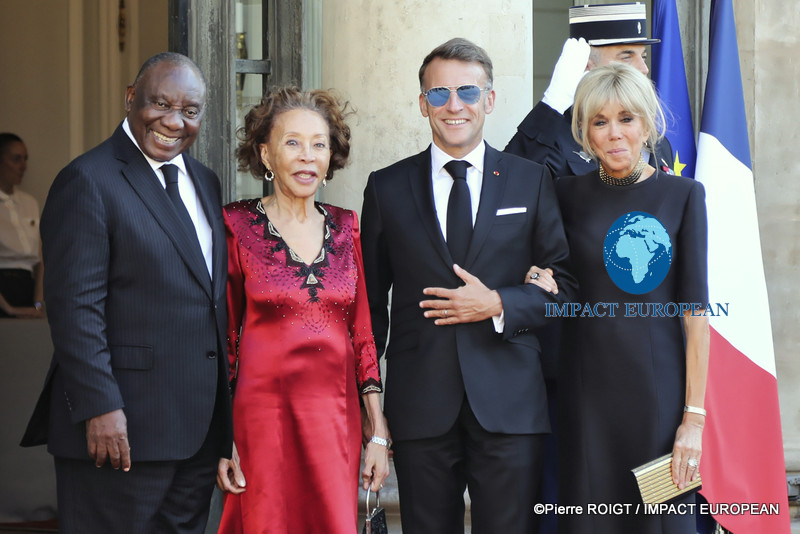
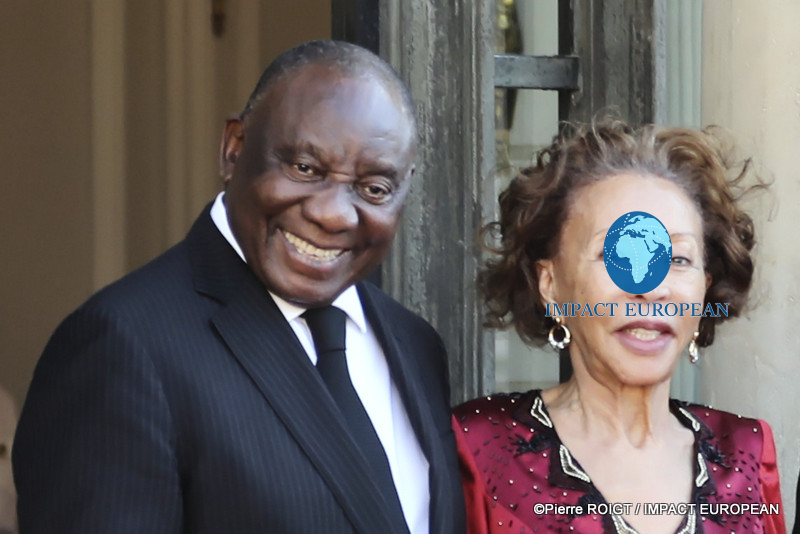
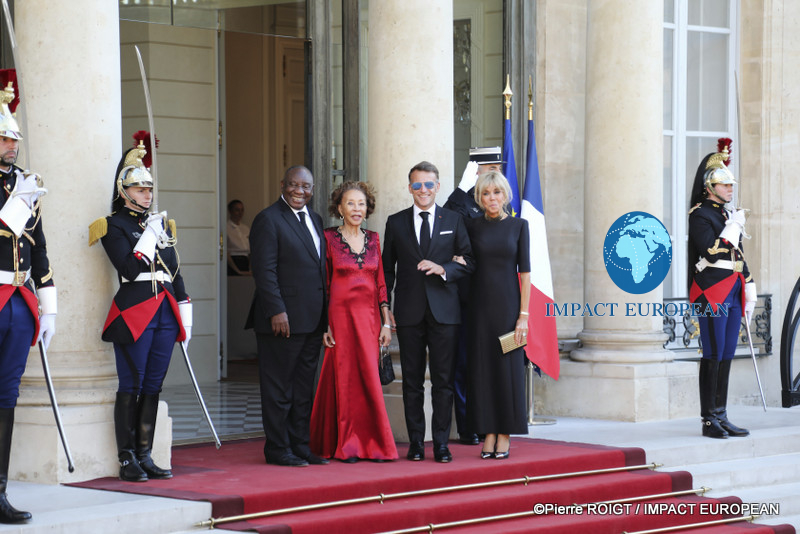
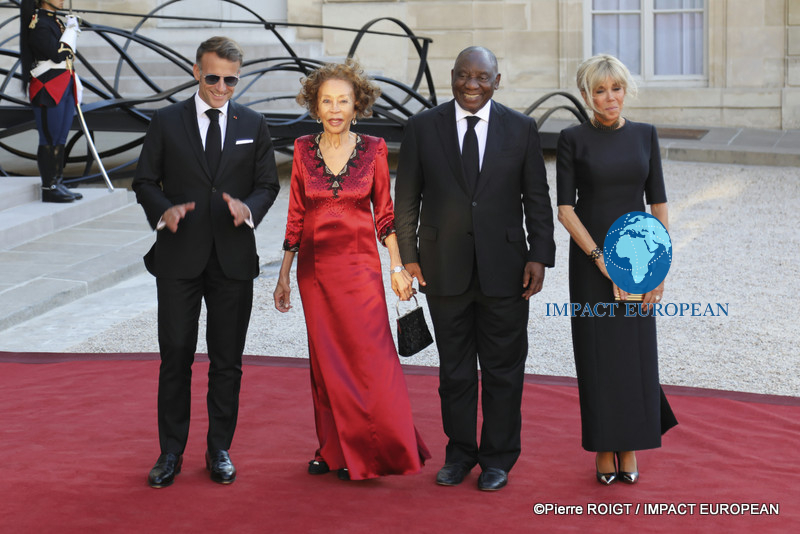
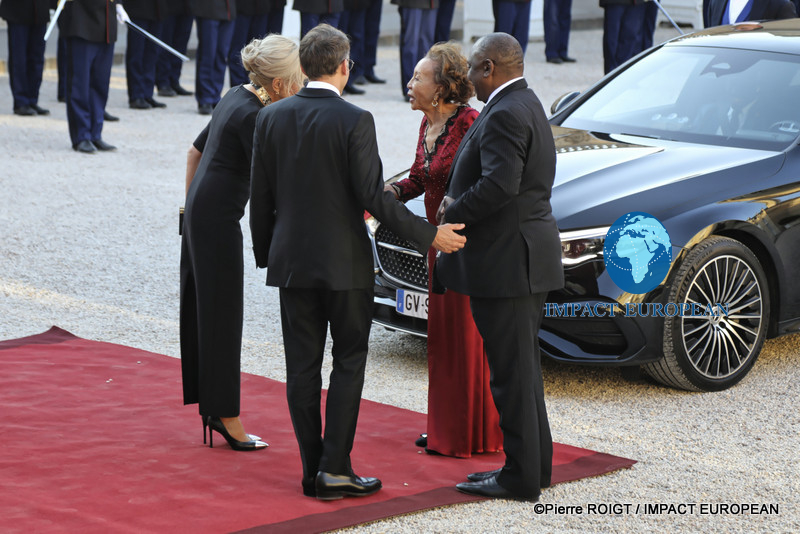
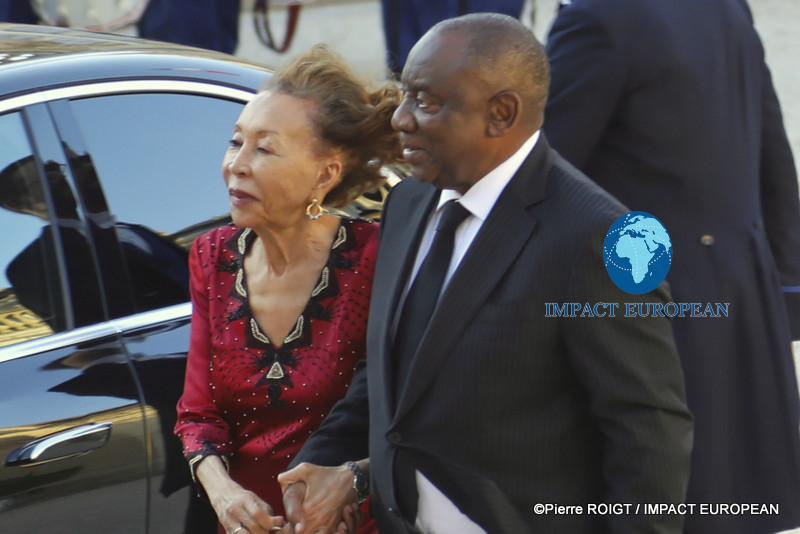
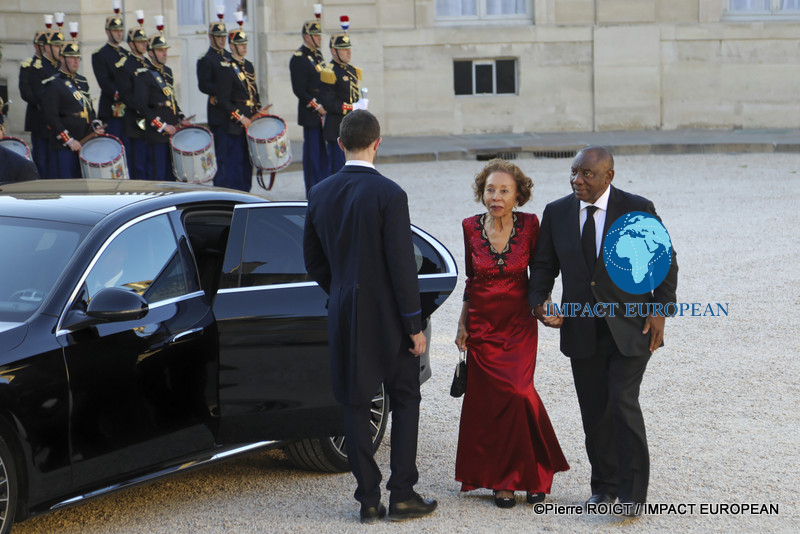
PARIS – President Cyril Ramaphosa’s official visit to France comes at a time when global diplomacy is undergoing one of its most significant transformations since the end of the Cold War. Economic power is becoming increasingly dispersed, emerging economies are demanding a greater voice in international governance, and traditional alliances are adapting to new geopolitical realities.
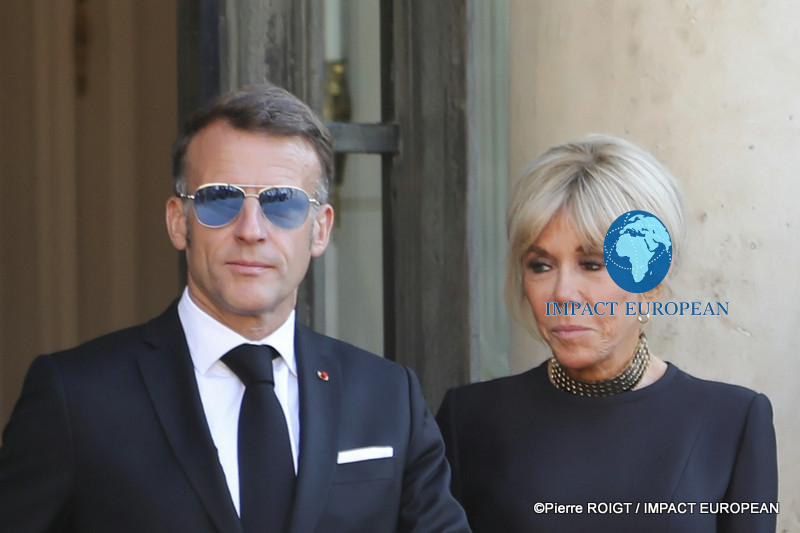
Against this backdrop, the meeting between French President Emmanuel Macron and South African President Cyril Ramaphosa carries significance well beyond bilateral relations. It reflects Europe’s growing recognition that Africa’s largest and most influential economies are no longer simply regional partners but increasingly important actors in shaping international political and economic agendas.
France views South Africa as one of its most reliable partners on the African continent. Pretoria, meanwhile, sees Paris as an important gateway to deeper engagement with Europe in areas ranging from investment and technology to education, defence cooperation and climate policy.
The official visit therefore represents not only an opportunity to strengthen existing ties but also to establish new institutional mechanisms capable of supporting cooperation in an increasingly uncertain international environment.
Turning diplomatic dialogue into long-term cooperation
One of the most important outcomes of the visit is the decision to establish an annual bilateral dialogue between the foreign ministers of both countries.
Although such announcements may appear procedural, they often represent a significant step in diplomatic relations. Permanent consultation mechanisms reduce misunderstandings, improve coordination before major international summits and create continuity regardless of changes in political leadership.
The agreement also follows several months of diplomatic sensitivity surrounding South Africa’s absence from the recent G7 Summit, an issue that generated concern in Pretoria and highlighted the importance of maintaining regular political communication between both governments. Recent discussions in Paris are intended to move beyond those tensions and reaffirm the strategic nature of the relationship.
South Africa’s growing international influence
South Africa occupies a unique position in global affairs.
It is simultaneously:
- Africa’s most industrialised economy;
- a member of the G20;
- one of the founding members of BRICS;
- an influential voice within the African Union;
- an active participant in United Nations institutions.
This combination gives Pretoria considerable diplomatic leverage.
Unlike many middle powers, South Africa maintains dialogue with Western democracies while also strengthening relations with emerging economies across Asia, Latin America and the Global South.
For France, this makes South Africa a particularly valuable partner capable of facilitating dialogue across different geopolitical blocs.
For South Africa, cooperation with France reinforces its engagement with the European Union while preserving its broader strategy of diversified international partnerships.
Economic cooperation moves higher on the agenda
Economic diplomacy represents one of the central pillars of Ramaphosa’s visit.
Meetings with leading French business executives are expected to encourage greater investment in South Africa’s infrastructure, manufacturing, energy transition and digital economy.
French companies have maintained a strong presence in South Africa for decades, employing tens of thousands of people across sectors including manufacturing, finance, transport, retail, healthcare and engineering. Strengthening these investments has become an important objective of both governments as they seek to expand bilateral trade and industrial cooperation.
For South Africa, attracting new European investment is particularly important as the country continues addressing structural challenges such as energy shortages, unemployment and economic modernisation.
For France, South Africa offers more than a domestic market.
It serves as a strategic gateway into Southern Africa, benefiting from developed financial institutions, sophisticated logistics infrastructure and increasing regional economic integration through the African Continental Free Trade Area.
BRICS, the European Union and South Africa’s balancing diplomacy
One of the defining characteristics of South Africa’s foreign policy is its ability to maintain constructive relationships with partners whose strategic interests do not always align.
As a founding member of BRICS, Pretoria actively supports reforms of global financial institutions and advocates for a stronger voice for emerging economies. At the same time, it remains one of the European Union’s most important political and economic partners on the African continent.
Rather than choosing between competing geopolitical blocs, South Africa has consistently pursued what its government describes as an independent and pragmatic foreign policy. This approach seeks cooperation with multiple partners while preserving strategic autonomy.
President Ramaphosa’s visit to France illustrates this diplomatic philosophy.
For Paris, engaging with Pretoria is not about competing with other global powers but about strengthening dialogue with one of Africa’s most influential democracies. For South Africa, closer cooperation with France complements — rather than replaces — its partnerships with BRICS members, the African Union and other international actors.
This diplomatic flexibility has become increasingly valuable as international politics evolve toward a more multipolar system.
Europe seeks a renewed partnership with Africa
The European Union has gradually shifted its approach toward Africa over the past decade.
Where cooperation once focused primarily on development assistance and security, today’s agenda increasingly emphasizes investment, innovation, industrial partnerships, digital transformation and sustainable development.
South Africa occupies a central place within this strategy.
Its relatively advanced industrial base, sophisticated financial markets, research institutions and regional influence make it a natural partner for European businesses seeking long-term opportunities across Southern Africa.
France has consistently advocated for stronger EU engagement with African partners based on mutual interests rather than traditional donor-recipient relationships.
President Macron has repeatedly argued that future Europe-Africa relations should be built on innovation, education, entrepreneurship and climate cooperation.
The discussions held in Paris reflect this broader European vision.
Education diplomacy gains strategic importance
Education has become one of the most significant aspects of Ramaphosa’s official programme in France.
At UNESCO headquarters in Paris, the South African President co-chairs the High-Level Steering Committee responsible for advancing Sustainable Development Goal 4 (SDG 4), which promotes inclusive and equitable quality education.
This role extends beyond symbolic representation.
It positions South Africa among the leading contributors to global discussions on education policy, teacher development, lifelong learning, digital inclusion and sustainable financing of education systems.
The UNESCO meetings also include the review of the Transforming Education Summit +4 (TES+4), assessing progress since the landmark 2022 summit and identifying priorities needed to achieve SDG 4 by 2030.
Pretoria intends to use this international platform to promote several priorities that also feature prominently during South Africa’s G20 Presidency:
- expanding skills development;
- strengthening education systems;
- increasing opportunities for young people;
- promoting digital inclusion;
- improving long-term educational resilience.
For Europe, these priorities closely align with broader efforts to strengthen cooperation with African universities, research centres and vocational training institutions.
Climate transition and economic transformation
Climate policy has also become a cornerstone of France-South Africa relations.
South Africa remains heavily dependent on coal for electricity generation while simultaneously seeking to accelerate its transition toward cleaner sources of energy.
This transformation represents both a national necessity and an international opportunity.
France and the European Union have expressed strong interest in supporting South Africa’s energy transition through investment, technology transfer and industrial cooperation.
Renewable energy, green hydrogen, electricity infrastructure and sustainable transport systems are expected to become increasingly important areas of bilateral cooperation.
Beyond environmental objectives, these initiatives also carry significant economic implications.
Developing green industries offers opportunities for job creation, technological innovation and greater competitiveness within global supply chains.
For Europe, supporting South Africa’s transition contributes to broader climate commitments while strengthening long-term economic partnerships across the African continent.
Remembering Delville Wood: diplomacy through shared history
Ramaphosa’s programme also includes participation in ceremonies commemorating the 110th anniversary of the Battle of Delville Wood, one of the most significant military engagements involving South African forces during the First World War.
Held at the South African National Memorial in Longueval, northern France, the commemorations honour the thousands of South African soldiers who fought and died during the battle.
The programme includes a wreath-laying ceremony and the unveiling of a UNESCO commemorative plaque.
Although primarily historical in nature, these events also reinforce contemporary diplomatic relations.
Shared historical memory often provides an important foundation for international partnerships, reminding both nations that cooperation extends beyond economic interests or political agreements.
G20 leadership and the future of global governance
President Ramaphosa’s visit to France also reflects South Africa’s growing international responsibilities.
As the current chair of the G20, Pretoria has placed development, education, economic resilience, climate finance and institutional reform at the centre of its international agenda. Rather than focusing solely on macroeconomic stability, South Africa is seeking to broaden discussions to include the challenges facing developing economies, particularly in Africa.
These priorities resonate with many European concerns.
The transition toward sustainable energy systems, financing climate adaptation, strengthening food security and improving access to quality education have become central themes in both European and African policy debates.
France views South Africa’s leadership within the G20 as an opportunity to reinforce dialogue between advanced economies and emerging powers.
Rather than approaching international governance through competing blocs, both governments have emphasised the importance of inclusive multilateral cooperation capable of addressing increasingly interconnected global challenges.
A partnership extending beyond bilateral interests
Although the official programme focuses on France and South Africa, the implications of this visit extend far beyond both countries.
Europe is redefining its relationship with Africa at a time when the continent is attracting growing attention from multiple global actors.
China continues expanding its economic footprint.
The United States is renewing diplomatic engagement.
India, Türkiye, the Gulf states and several Asian economies are also increasing their investments and political presence.
Within this increasingly competitive environment, France seeks to position itself as a long-term strategic partner capable of combining political dialogue, economic investment, scientific cooperation and cultural exchange.
South Africa, meanwhile, aims to diversify international partnerships while preserving its strategic autonomy.
This convergence creates opportunities for cooperation without requiring exclusive political alignment.
Building resilient economic partnerships
Economic cooperation featured prominently throughout President Ramaphosa’s visit.
Meetings with French business leaders illustrate the growing importance of private-sector engagement in diplomatic relations.
Future cooperation is expected to focus on several strategic sectors:
- renewable energy;
- transport infrastructure;
- advanced manufacturing;
- digital technologies;
- healthcare innovation;
- scientific research;
- higher education;
- green industrial development.
Such projects respond directly to South Africa’s long-term development objectives while also supporting European companies seeking sustainable investment opportunities across Southern Africa.
Rather than short-term commercial agreements, both governments appear increasingly interested in building long-lasting industrial partnerships capable of generating innovation, employment and technological exchange.
UNESCO and education as instruments of global influence
President Ramaphosa’s participation at UNESCO reinforces another important dimension of contemporary diplomacy.
Education has become an increasingly influential component of international cooperation.
Countries capable of investing in knowledge, research, technological innovation and skills development are likely to play a stronger role in future global governance.
South Africa’s co-chairmanship of UNESCO’s High-Level Steering Committee on Sustainable Development Goal 4 (SDG 4) reflects growing international recognition of its contribution to education policy and human capital development.
For France, hosting these discussions further strengthens Paris’ position as a global centre for multilateral dialogue.
The educational agenda discussed during the visit also complements South Africa’s broader priorities as G20 Chair, linking human development directly to economic resilience and sustainable growth.
Looking ahead: Europe and Africa in a changing world
Perhaps the most important message emerging from Ramaphosa’s visit is that Europe and Africa are entering a new phase of engagement.
Traditional donor-recipient relationships are gradually giving way to partnerships based on shared interests, mutual investment and long-term strategic cooperation.
Neither Europe nor Africa can effectively address climate change, technological transformation, migration, food security or economic competitiveness in isolation.
The increasingly interconnected nature of global challenges requires stronger institutional dialogue and greater political trust.
The establishment of an annual bilateral consultation mechanism between the French and South African foreign ministers reflects this broader ambition.
Rather than relying solely on occasional presidential meetings, both governments are creating permanent diplomatic structures designed to strengthen coordination across multiple policy areas.
Conclusion: diplomacy for a multipolar century
President Cyril Ramaphosa’s official visit to France represents far more than a ceremonial state visit.
It illustrates how middle powers with global influence are adapting to an increasingly multipolar international system.
France recognises South Africa as one of Africa’s most influential political and economic actors.
South Africa, in turn, views France as a key European partner capable of supporting investment, innovation, education and multilateral cooperation.
The agreements announced in Paris — from institutional dialogue to educational cooperation and economic engagement — demonstrate a shared commitment to building a partnership that extends beyond immediate political priorities.
Whether addressing global governance through the G20, advancing education at UNESCO, promoting sustainable economic development or strengthening diplomatic coordination, both countries are investing in a relationship designed to respond to the challenges of the twenty-first century.
In a world where geopolitical competition often dominates international headlines, the Franco–South African partnership offers a different perspective: one based not on confrontation, but on dialogue, shared responsibility and the recognition that lasting influence increasingly depends on cooperation rather than rivalry.
Copyright © 2026 IMPACT EUROPEAN





Views: 13
More Stories
France Protests on October 17: Mass Mobilization Overshadowed by Violence Across the Country
Work Palace Opens in Paris: INSITU Brings Luxury Hospitality Into the Workplace
Rugby Pro D2: Colomiers Defeat Narbonne 49-28 to Claim Bonus-Point Victory