
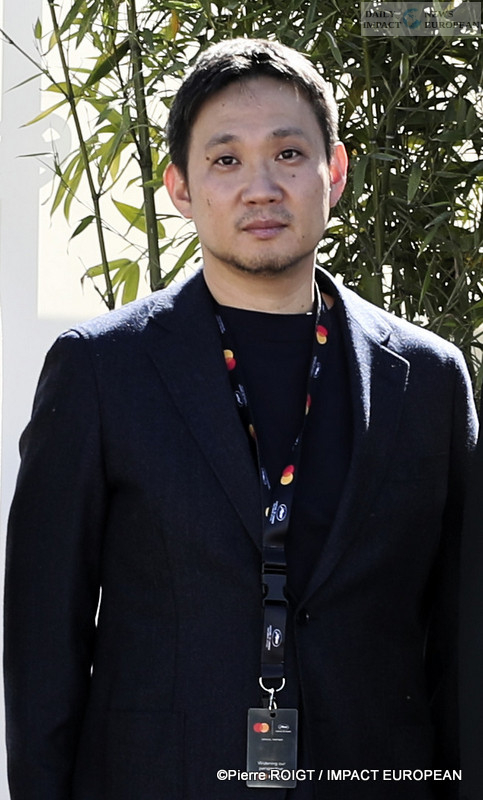
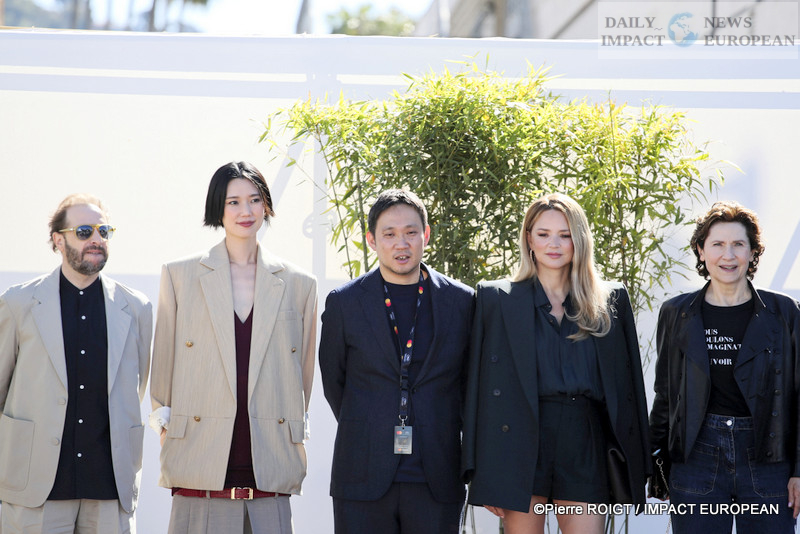
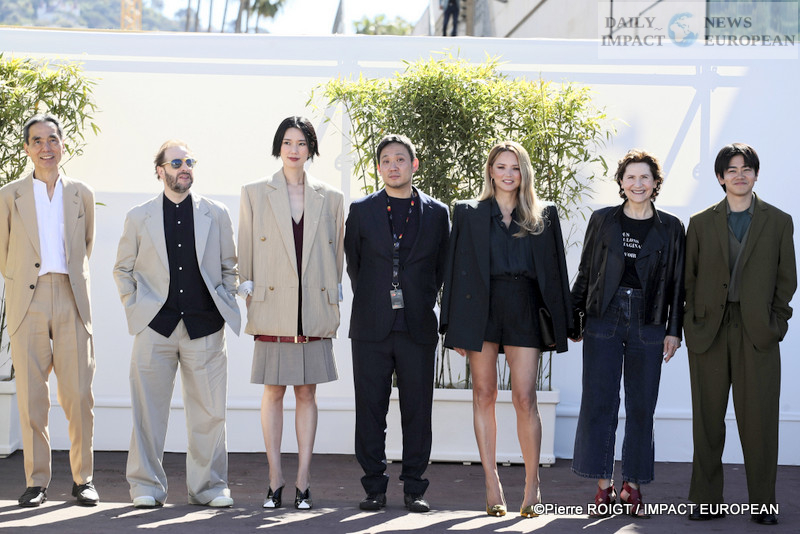
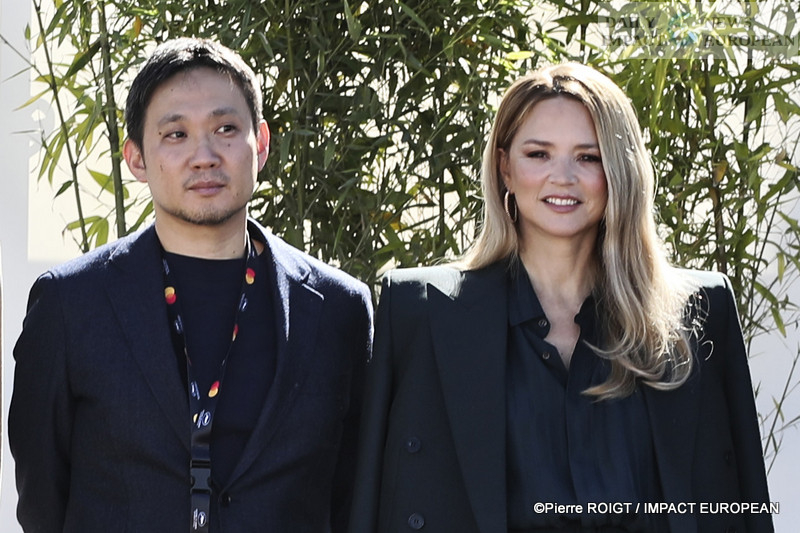
With Suddenly, presented in competition at the Festival de Cannes 2026, Ryūsuke Hamaguchi once again proves that few contemporary directors understand human conversation as deeply as he does.
After Drive My Car and Evil Does Not Exist, Hamaguchi returns with a monumental 3-hour-15-minute drama centered on ageing, illness, capitalism and emotional connection.
At first, the film appears surprisingly conventional.
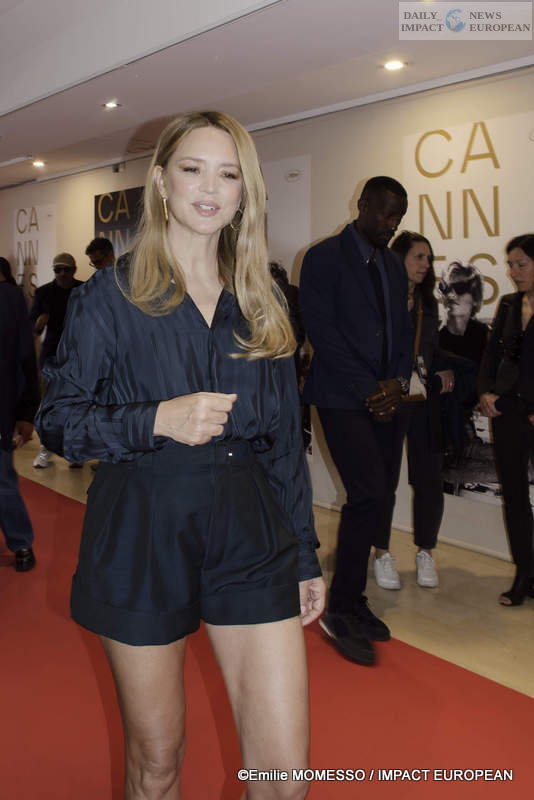
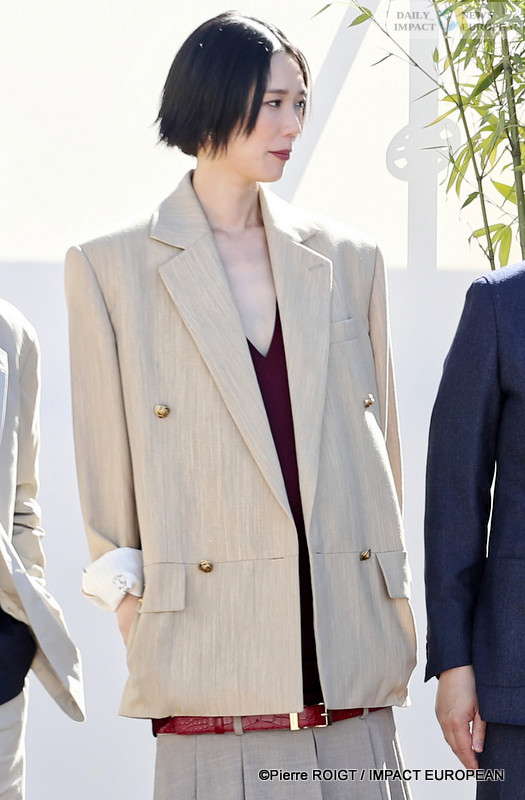
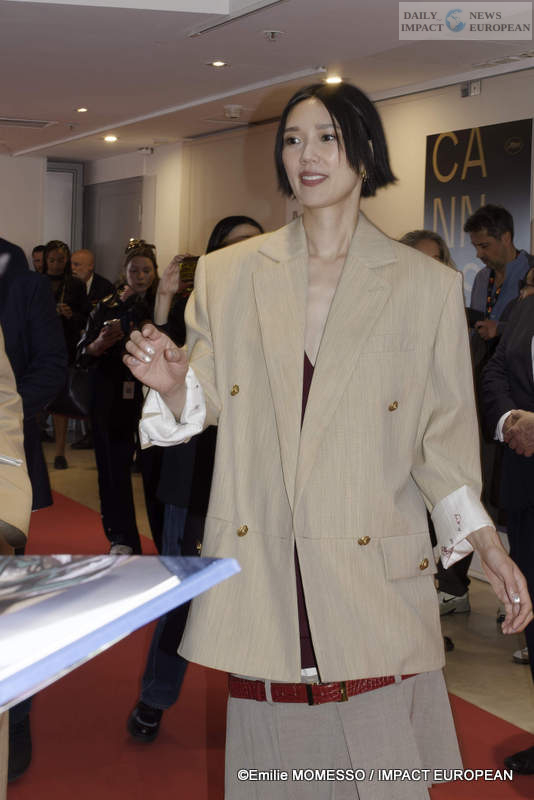
Marie-Lou, played by Virginie Efira, runs a Parisian care facility for elderly residents and attempts to introduce a more humane philosophy of treatment based on dignity and emotional attention. Her encounter with Mari, a Japanese theatre director battling cancer, gradually transforms her worldview.
The premise risks falling into familiar European social-drama territory.
And indeed, the film’s opening sections occasionally resemble the type of institutional healthcare drama frequently produced in contemporary French cinema.
Meetings.
Budget discussions.
Overworked staff.
Administrative tension.
But Hamaguchi slowly destabilizes that realism.
What initially feels like a social drama gradually evolves into something stranger, more philosophical and emotionally expansive.
As always in Hamaguchi’s cinema, dialogue becomes the true dramatic engine.
Characters in Suddenly speak constantly — about work, ageing, exhaustion, capitalism, theatre and mortality. Yet these conversations never feel like abstract intellectual exercises. They become attempts to understand how to continue existing ethically inside systems that increasingly deny human fragility.
The film’s emotional core lies in a remarkable overnight conversation between Marie-Lou and Mari inside the facility cafeteria.
What begins as political discussion slowly transforms into something profoundly intimate.
Hamaguchi films the scene with extraordinary patience, allowing silence, hesitation and contradiction to become as important as the words themselves.
This patience defines the entire film.
The 3h15 runtime is not indulgence; it is methodology.
Hamaguchi needs duration because his cinema depends on emotional accumulation rather than dramatic acceleration. Meaning emerges slowly through repetition, rhythm and gradual emotional exposure.
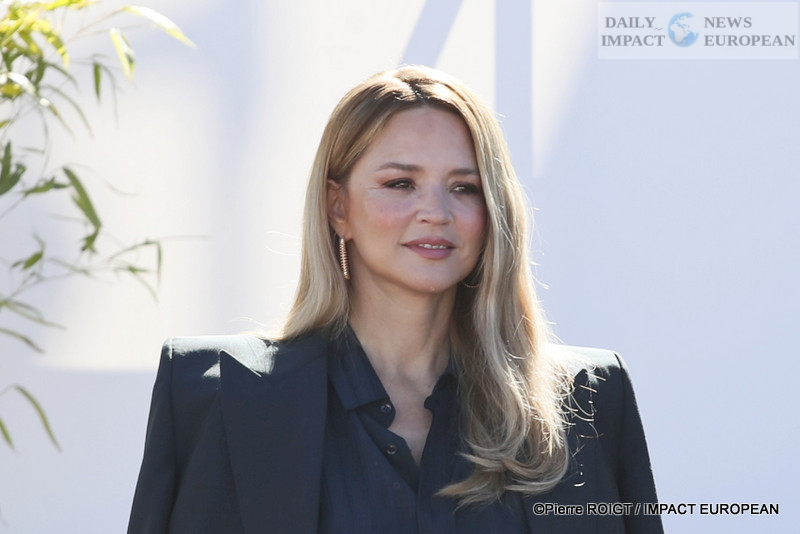
Virginie Efira delivers one of her most controlled performances in years. Marie-Lou is neither heroic nor idealized. She genuinely wants to improve the institution she runs, yet she repeatedly reproduces the same forms of pressure and rigidity she claims to oppose.
That contradiction makes her deeply human.
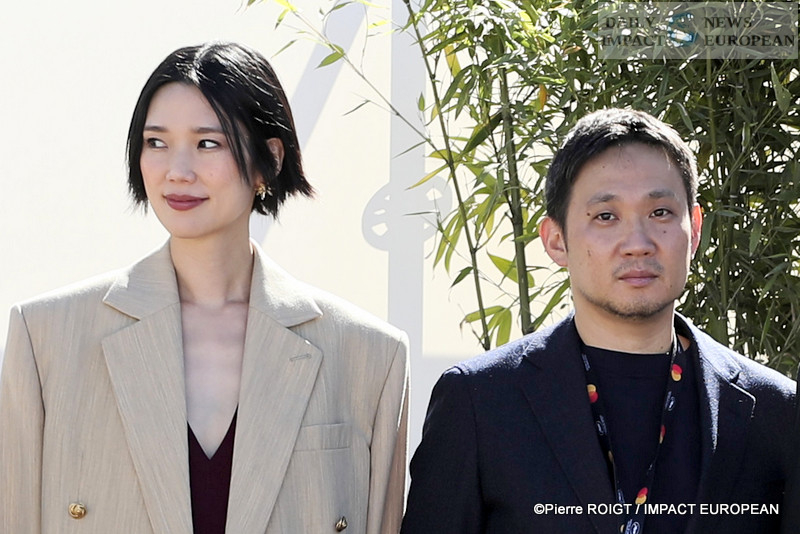
Tao Okamoto brings a quieter but equally fascinating energy to Mari. Her character functions almost like a philosophical mirror reflecting Marie-Lou’s exhaustion and hidden doubts back at her.
Theatre also plays a crucial role in the film.
Like many Hamaguchi works, Suddenly treats performance as a pathway toward emotional truth. Mari’s theatrical project about psychiatry, confinement and normality constantly echoes the emotional imprisonment experienced inside the care facility itself.
The result is a film obsessed with care in every possible sense.
Care for elderly bodies.
Care for exhausted workers.
Care for dying people.
Care for emotional truth itself.
Visually, Suddenly may initially seem more restrained than Hamaguchi’s previous work. Yet beneath this apparent simplicity lies extraordinary formal precision. The director carefully choreographs movement inside corridors, cafeterias and hospital rooms with remarkable sensitivity.
Bodies matter deeply in this film.
Not as spectacular objects of suffering, but as fragile presences moving through systems larger than themselves.
The film occasionally becomes overly didactic. Some conversations push thematic ideas too explicitly, and certain philosophical exchanges risk feeling academically dense.
Yet even these imbalances become strangely compelling because of Hamaguchi’s sincerity.
The final act moves toward something almost metaphysical. The boundaries between social realism, theatre, political reflection and emotional intimacy gradually dissolve.
And suddenly — true to its title — the film reveals itself not merely as a healthcare drama, but as a profound meditation on dignity, vulnerability and collective responsibility.
Suddenly may not be the easiest film in competition.
But it is unquestionably one of the most thoughtful and deeply humane.
Copyright © 2026 IMPACT EUROPEAN








Views: 0
More Stories
Saudi Arabia’s new power equation: Why Paris matters to Riyadh
Mas-d’Azil Cave: A Road Through the Mountain, a Journey Through Human Time
Tioman’s Hidden Network: The Life Beneath a Coral Reef