

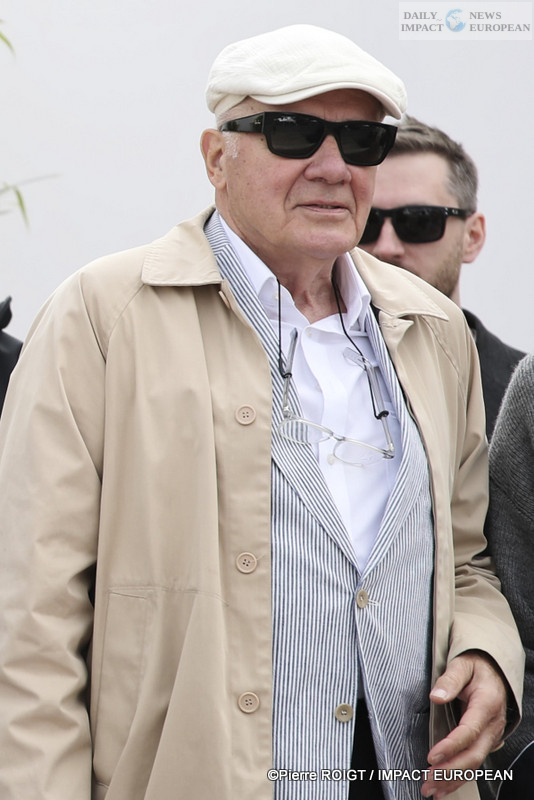
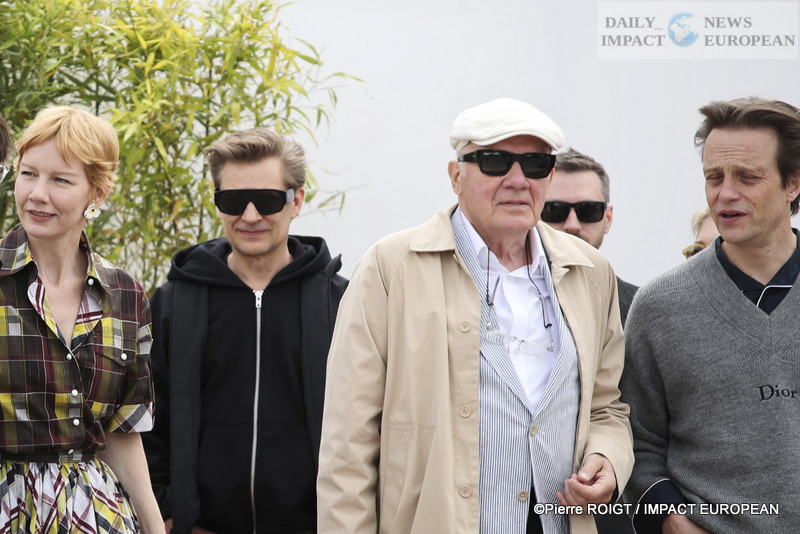
Competing at the Festival de Cannes 2026, Fatherland confirms Pawel Pawlikowski as one of Europe’s finest contemporary directors.
Set in 1949, the film follows Thomas Mann returning to Germany after years of exile in the United States. Accompanied by his daughter Erika, he travels across a devastated country divided between American and Soviet influence.
What begins as a literary journey quickly turns into a painful confrontation with memory, guilt and ideological reconstruction.
Pawlikowski’s visual style remains extraordinary. The stark black-and-white cinematography and square framing create an atmosphere haunted by history itself.
Every image feels carefully sculpted, but the film never becomes merely aesthetic. Beneath its formal precision lies a deeply political and emotional work.
The Germany depicted in Fatherland is not simply rebuilding cities — it is attempting to rebuild narratives. Former opportunists try to erase responsibility, while East and West Germany both seek to appropriate Thomas Mann’s symbolic authority.
At the emotional center of the film stands Erika Mann, played brilliantly by Sandra Hüller. Her performance gives the film much of its moral urgency.
Unlike her father, Erika refuses compromise or selective memory. Through her, the film raises uncomfortable questions about postwar reconciliation and historical accountability.
Pawlikowski avoids melodrama almost entirely. The emotional power emerges through silence, restrained dialogue and carefully observed gestures.
One particularly devastating sequence — in which Thomas Mann finally mourns his son Klaus inside a ruined church — encapsulates the film’s quiet emotional intensity.
Beyond its historical setting, Fatherland clearly speaks to contemporary Europe. Rising nationalism, political polarization and collective amnesia all echo beneath the surface of the story.
At only 78 minutes, the film remains remarkably concentrated. There is no wasted scene, no unnecessary exposition.
With Fatherland, Pawlikowski delivers a haunting and intellectually rich meditation on exile, memory and Europe’s unresolved wounds — easily one of the strongest contenders in Cannes 2026.
Copyright © 2026 IMPACT EUROPEAN



Views: 0
More Stories
Saudi Arabia’s new power equation: Why Paris matters to Riyadh
Mas-d’Azil Cave: A Road Through the Mountain, a Journey Through Human Time
Tioman’s Hidden Network: The Life Beneath a Coral Reef