

With Forsaken, Vincent Garenq brings to the screen one of the most traumatic events in recent French history: the murder of history and geography teacher Samuel Paty on October 16, 2020.
The film focuses on the final eleven days of his life, tracing the chain of events that led from a student’s lie to a social media campaign, institutional confusion, ideological manipulation and, finally, murder.
This is not a sensationalist film. Garenq chooses restraint. His method is factual, almost procedural. He follows the chronology, the emails, the phone calls, the meetings, the hesitations and the failures. The result is deeply disturbing because the horror does not appear suddenly. It grows step by step.
Antoine Reinartz plays Samuel Paty with remarkable sobriety. He does not turn him into a statue or a martyr from the first scene. He portrays a teacher, a father, a thoughtful man who believes in his work and gradually realizes that something uncontrollable is closing in around him.
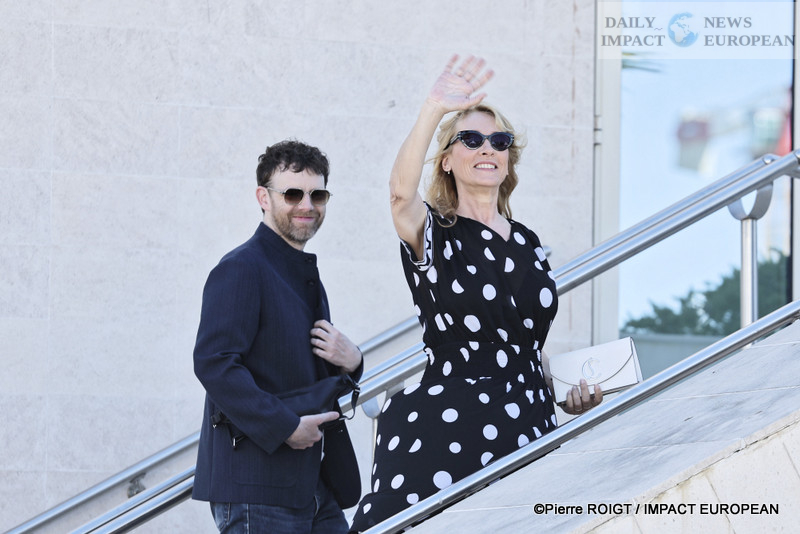
Emmanuelle Bercot, as the school principal, gives the film another layer of complexity. Her character is not presented as cruel or indifferent. She is overwhelmed, trapped inside a system that reacts, but never fast enough.
The film’s strongest point is its depiction of a runaway machine. A lie is identified early. The facts are known. Yet the machine keeps moving. Rumor becomes stronger than truth. Social media becomes a weapon. Fear replaces dialogue.
For an international audience, Forsaken is not only a French story. It is a film about the vulnerability of democratic societies when facts are replaced by outrage and when institutions fail to protect those on the front line.
The film is also about teaching. Samuel Paty is shown as a man who believed in critical thinking. That makes the tragedy even more powerful. He was killed not for an act of violence, but for doing his job as a teacher.
Garenq avoids easy emotional manipulation. This restraint may make the film feel dry at times, especially for viewers expecting a more dramatic structure. But its sobriety is also what gives it moral weight.
The film does not try to explain everything through one villain. It shows a chain of responsibility: lies, fear, ideology, bureaucracy, cowardice, social media and extremism. Each element contributes to the tragedy.
Forsaken is difficult to watch, but necessary. It restores the sequence of facts behind a name everyone knows. More importantly, it restores the humanity of Samuel Paty: a teacher, a father and a man abandoned by the world around him.
At Cannes, the film stands as a serious and urgent work of memory. Not a film of vengeance, but a film of clarity.
Copyright © 2026 IMPACT EUROPEAN
Views: 3
More Stories
Cannes Yachting Festival 2026: The Sea Becomes a New Frontier for Technology and Lifestyle
Global Black Pride Paris 2026: When a Global Movement Takes Its Voice to the Streets
Alzheimer’s Care Beyond Medicine: The Daily Infrastructure That Keeps Life Possible