

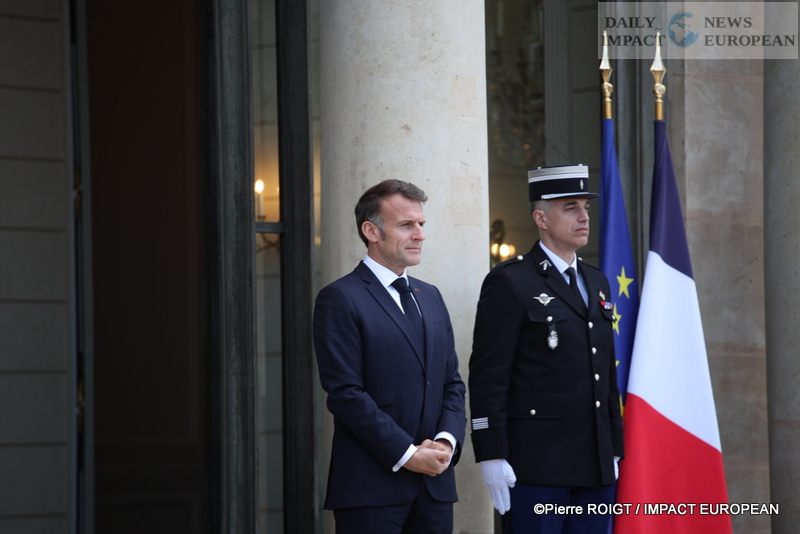
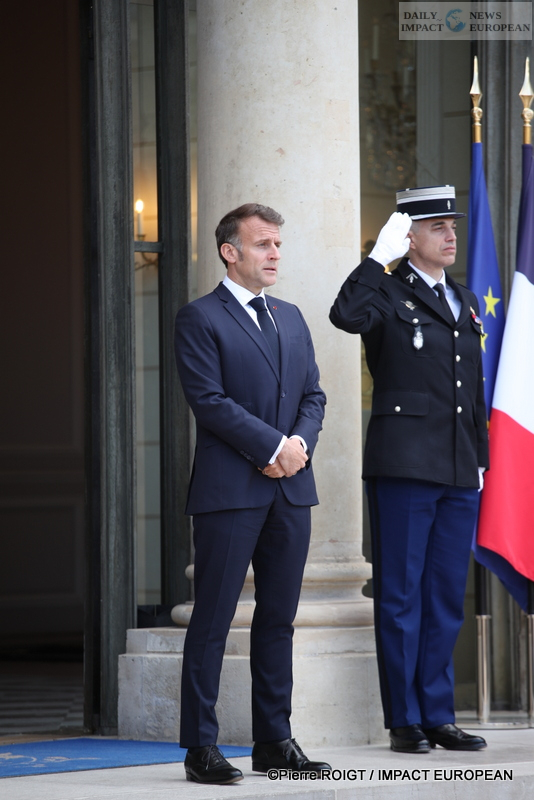
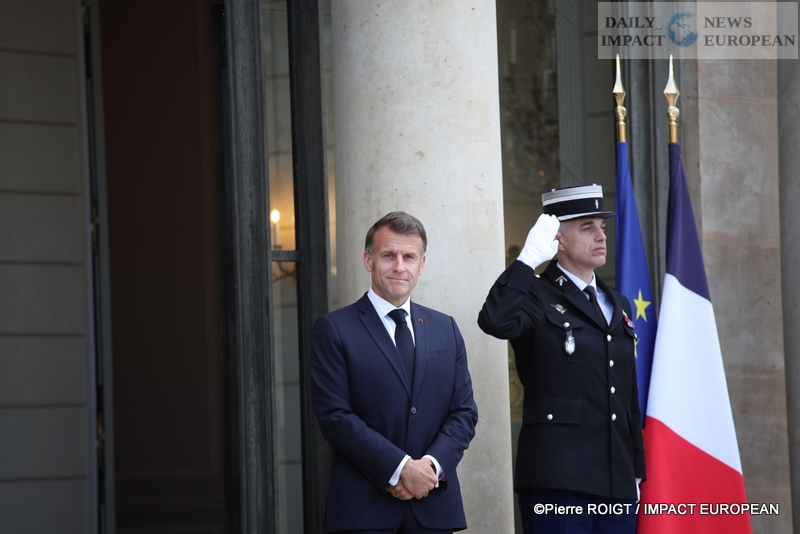
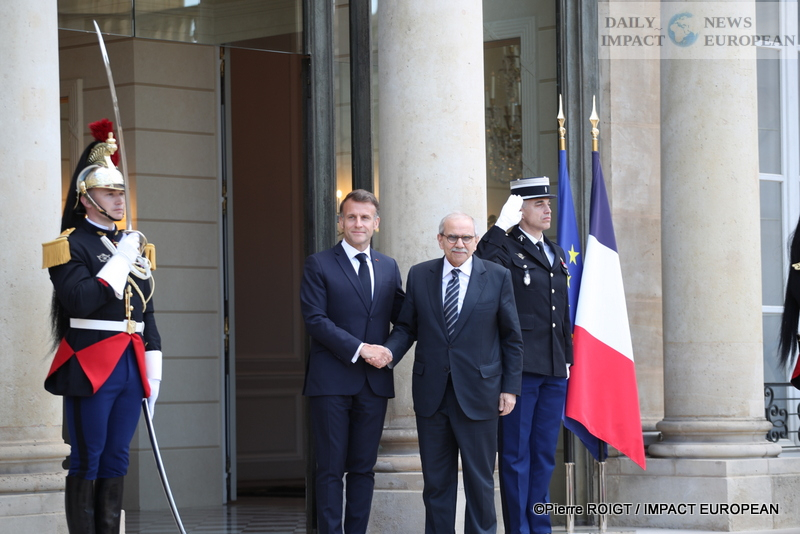
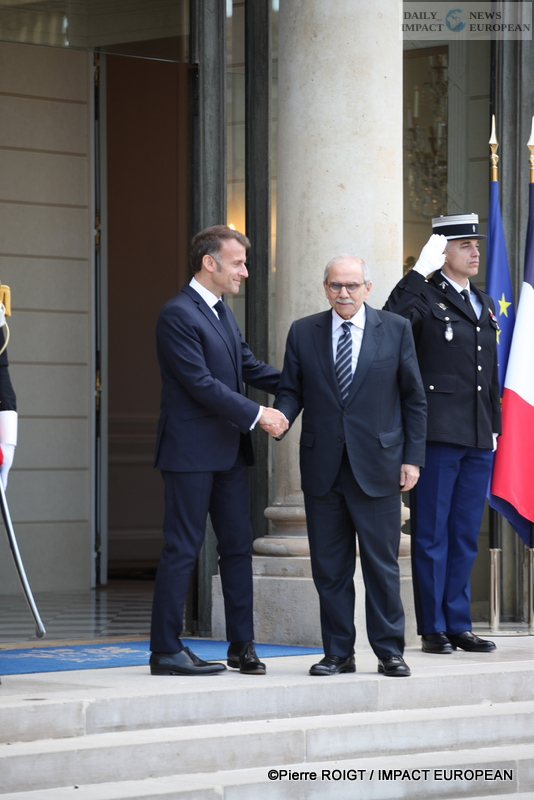
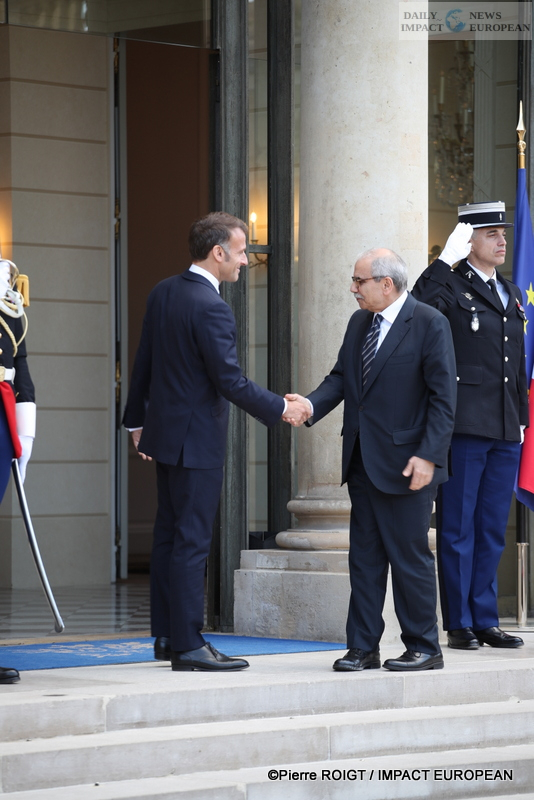
French President Emmanuel Macron welcomed Lebanese Prime Minister Nawaf Salam to the Élysée Palace on Tuesday, April 21, 2026, in a highly sensitive diplomatic moment for Lebanon, the Middle East, and France’s role in regional politics.
The meeting took place just days after a fragile ceasefire was established between Israel and Hezbollah following weeks of intense fighting that devastated southern Lebanon and increased fears of wider regional escalation. It also came only one day after the death of a French UN peacekeeper serving with the United Nations Interim Force in Lebanon (UNIFIL), killed in an attack blamed on Hezbollah.
For Paris, the visit represented far more than a bilateral diplomatic exchange. It was an attempt to reassert France’s historical role in Lebanon, defend Lebanese sovereignty, and reposition itself as a central actor in regional stabilization efforts.
A fragile ceasefire under international pressure
The ceasefire between Israel and Hezbollah officially entered into force only days before the Macron–Salam meeting, but the situation on the ground remains extremely fragile.
Both sides continue to accuse each other of violating the truce. Military tensions remain high, and fears of renewed escalation are constant across southern Lebanon and the Israeli border region.
For Emmanuel Macron, preserving this ceasefire is now the immediate priority.
After the meeting, during a joint press conference, the French president described the ceasefire as a major relief for the Lebanese population.
“This is a relief after several weeks of conflict that the Lebanese people did not want,” Macron said.
However, he immediately stressed that the truce alone was not enough.
“We must now consolidate the ceasefire,” he added.
According to Macron, existing mechanisms designed to monitor and enforce the truce must be reactivated urgently, and the ceasefire must evolve into a broader political process capable of ensuring long-term regional stability.
Hezbollah and the issue of Lebanese sovereignty
At the center of the diplomatic discussions stands the most difficult issue of all: Hezbollah.
For years, the Iran-backed armed group has played a dominant military and political role inside Lebanon. Its independent armed capacity remains one of the greatest obstacles to full Lebanese sovereignty and state authority.
Macron adopted a firm but cautious tone on the issue.
He stated clearly that Hezbollah must be disarmed, but insisted that this process must be led by the Lebanese themselves.
“The disarmament of Hezbollah must be carried out by the Lebanese themselves, with the support of the international community,” he said.
The French president also declared that Hezbollah had made “a mistake” by dragging Lebanon into war with Israel.
He urged the group to “stop targeting Israel” and to stop “pretending to replace the state in exercising sovereign responsibilities.”
Still, Macron acknowledged the complexity of the issue.
“The monopoly of weapons will not happen with the wave of a magic wand,” he explained.
He stressed that disarmament must be part of a broader political strategy capable of avoiding institutional collapse in Lebanon.
Macron tells Israel to abandon territorial ambitions
While addressing Hezbollah, Macron also delivered a strong message to Israel.
He insisted that Israeli security could not be guaranteed through territorial expansion or long-term military occupation of Lebanese land.
“Israel must renounce its territorial ambitions,” Macron declared.
Paris is particularly concerned about Israel’s intention to maintain a buffer zone in southern Lebanon, an issue that has become central since the ceasefire began.
Macron argued that the security of Israel depends not on permanent military pressure but on the existence of a strong and sovereign Lebanese state.
“The security of Israel will come through a strong Lebanese state, not through a policy of chaos,” he said.
He added that the only realistic path forward is a political agreement between Israel and Lebanon.
“The only way forward is a political agreement between Israel and Lebanon that guarantees the security and territorial integrity of both countries and lays the foundations for normalized relations.”
This reflects France’s long-standing diplomatic position: rejection of territorial annexation and support for negotiated regional security.
Nawaf Salam demands full Israeli withdrawal
Lebanese Prime Minister Nawaf Salam used the visit to defend Beirut’s position with equal clarity.
Like Lebanese President Joseph Aoun before him, Salam demanded a “complete withdrawal” of Israeli forces from Lebanese territory.
He also called for the return of Lebanese prisoners and displaced civilians forced to leave their homes during the fighting.
The humanitarian situation remains severe.
According to Salam, Lebanon will need at least 500 million euros over the next six months simply to address the immediate humanitarian crisis.
This estimate reflects not only the damage caused by recent military operations, especially in southern Lebanon, but also the broader economic collapse the country has been suffering for years.
Lebanon’s financial system remains deeply damaged, public institutions are weak, and social trust in the political system remains extremely fragile.
France promises humanitarian aid and reconstruction support
In response, Emmanuel Macron announced concrete French support.
France will send 60 tons of humanitarian aid to help meet urgent civilian needs.
Paris will also participate in the Euro-Arab humanitarian air bridge, delivering an additional 10 tons of emergency supplies in the coming days.
But Macron made clear that French support would go beyond emergency relief.
“The ceasefire must allow for the reconstruction of Lebanon, especially southern Lebanon, so that displaced people can return,” he said.
He confirmed that France would take part in rebuilding the areas most heavily damaged by Israeli bombardments.
This commitment is both humanitarian and strategic.
France has long-standing historical ties with Lebanon dating back to the French Mandate after World War I, and Paris continues to see Lebanon as a key point of influence in the Eastern Mediterranean.
“France has always stood by Lebanon during the critical moments of its history and will continue to do so,” Macron said.
The death of a French UN peacekeeper changes everything
The diplomatic atmosphere surrounding the meeting was heavily influenced by the death of Sergeant Florian Montorio, a French UN peacekeeper serving with UNIFIL.
He was killed Saturday during an ambush against peacekeepers in southern Lebanon.
Macron directly blamed Hezbollah.
“It was Hezbollah that targeted our soldiers,” he said during a press conference in Gdansk, Poland.
He clarified that the French soldiers were not targeted because they were French, but because they were carrying out their peacekeeping mission.
“They were not targeted because they were French. They were targeted because they were carrying out the mission.”
The attack triggered strong international condemnation.
All 15 members of the UN Security Council condemned the attack and demanded that those responsible be brought to justice without delay.
The Lebanese government also condemned the attack and promised investigations.
Still, the incident significantly increased international pressure on Hezbollah and complicated an already fragile diplomatic environment.
The uncertain future of UNIFIL
Another major issue discussed during the meeting was the future of UNIFIL.
The UN peacekeeping mission, deployed in southern Lebanon since 1978, is expected to begin withdrawing its peacekeepers at the end of the year.
This raises a critical strategic question: who will guarantee security along the Israel-Lebanon border after UNIFIL leaves?
Macron stated that France is ready to maintain its presence on the ground if Lebanon requests it.
“If Lebanon wishes, France is ready to maintain its engagement on the ground after the planned departure of UNIFIL,” he said.
Meanwhile, Nawaf Salam insisted there would be no “third version” of UNIFIL, but stressed that maintaining a UN framework remains essential for preserving international order in Lebanon.
French officials have also confirmed discussions with Spain, Italy, and Germany regarding possible future international security arrangements.
This debate will likely shape the next phase of European involvement in Lebanon.
France’s diplomatic influence under pressure
Despite France’s efforts to project leadership, its diplomatic position remains weakened.
New direct negotiations between Israel and Lebanon are scheduled to take place in Washington, but Israeli officials have made it clear that France is not involved in those talks.
This exclusion is highly significant.
It reflects growing tensions between Paris and Tel Aviv.
Among Israeli grievances are France’s exclusion of several Israeli defense companies from Eurosatory 2024 and the Paris Air Show 2025, as well as France’s leading role in UN initiatives supporting recognition of the Palestinian state.
For Paris, this creates a difficult paradox.
France maintains historical influence in Lebanon and wants to act as a mediator, yet its direct influence over the main negotiations is shrinking.
France’s larger strategic challenge
Ultimately, the Macron–Salam meeting reflects a much broader geopolitical challenge: France’s struggle to preserve relevance in the Middle East.
Between American leadership, Iranian influence, Israeli military strategy, and growing regional fragmentation, Paris is trying to maintain an independent diplomatic voice.
Lebanon remains central to that ambition.
But influence will not be measured by speeches alone. It will depend on whether France can help deliver real outcomes: sustainable security, institutional recovery, economic reconstruction, and a political path that allows Lebanon to recover full sovereignty.
For Emmanuel Macron, the challenge is clear: if France wants to remain indispensable in Lebanon, it must prove that its diplomacy still has the power to shape events on the ground.
©2026 – IMPACT EUROPEAN
Views: 6
More Stories
Cannes Yachting Festival 2026: The Sea Becomes a New Frontier for Technology and Lifestyle
Alzheimer’s Care Beyond Medicine: The Daily Infrastructure That Keeps Life Possible
At Marek Halter’s Paris home, Rosh Hashanah brings faiths together around humanity and peace