

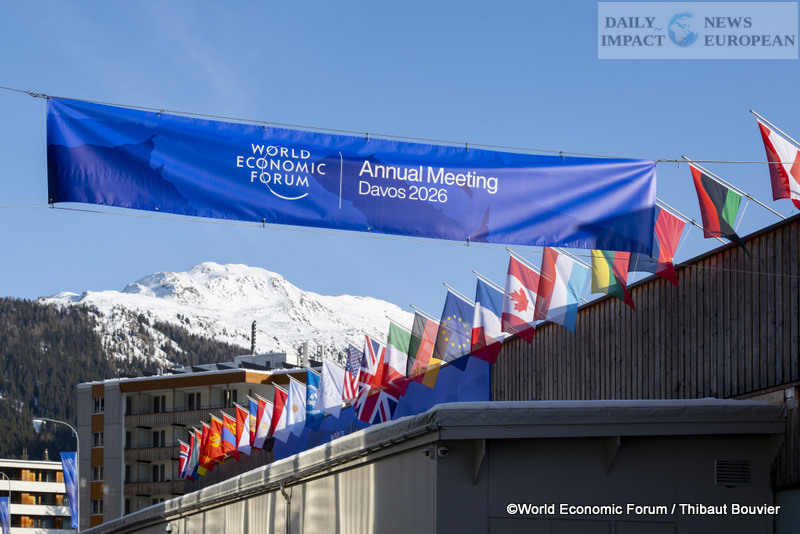
The 2026 World Economic Forum in Davos takes place in a world reshaped by economic crises, geopolitical tensions, and strategic energy and environmental challenges. Every year, Davos gathers key political leaders, economic policymakers, and industrial stakeholders to discuss the future of global governance, economic stability, and international security. This edition has been particularly notable due to the presence of three influential figures: Donald J. Trump, former President of the United States; Volodymyr Zelensky, President of Ukraine; and Friedrich Merz, German political leader and influential voice within the European Union.
The significance of this forum extends beyond economic discussions. Davos has become a strategic arena where global power dynamics, trade relations, military strategies, and energy policies intersect. This article provides an in-depth analysis of the interventions of Trump, Zelensky, and Merz, highlighting their geopolitical and geo-economic implications for Europe, the United States, and the broader global community.
Davos 2026: A Strategic Hub
Davos is not merely an economic forum; it is a laboratory for global strategy. The 2026 conference unfolds against a backdrop of heightened international tensions: the ongoing war in Ukraine, intensifying U.S.-China rivalry, energy crises, and the strategic control of natural resources in the Arctic and Greenland.
Europe, as a major economic bloc, occupies a central position in these debates. European leaders seek to assert global influence, secure critical energy supplies, and strengthen transatlantic cooperation. The discussions emphasized the inseparable link between politics and economics, demonstrating how military and diplomatic decisions directly influence markets, investment flows, and industrial strategies.
Donald J. Trump: American Strategy and Global Ambitions
Although no longer President, Donald J. Trump leveraged Davos 2026 as a platform to redefine U.S. priorities in security, energy, and trade. His speech highlighted several key dimensions:
Energy Policy and Economic Power
Trump emphasized that the United States must remain the global leader in energy production and technology. He outlined plans to exploit untapped resources, particularly in the Arctic, as a strategic lever for energy independence and global influence over oil and gas markets. Investment in advanced extraction technologies and protection of trade routes in the North Atlantic and Arctic were central to his strategy.
Greenland: Military and Strategic Importance
Greenland is central to U.S. military projection and Arctic dominance. Trump underscored the region’s significance for NATO positioning against Russia and as a control point for strategic maritime routes. Discussions about acquisition or strengthened partnerships with Greenland reflect the U.S. approach to Arctic power projection.
Relations with Europe and NATO
Trump stressed that Europe must increase its financial and operational contributions to NATO and enhance military capabilities. His comments implied a call for a more autonomous Europe that nonetheless aligns with U.S. strategic interests. He highlighted transatlantic coordination in energy security and cybersecurity as essential for countering Russian and Chinese threats.
Geo‑Economic Impacts
Trump’s announcements had immediate market implications: energy stocks surged, commodity trading adjusted, and investments pivoted toward strategic technologies. His strategy illustrates the direct correlation between political decisions and global economic movements.
Volodymyr Zelensky: European Security and Ukraine’s Defense
President Zelensky focused his intervention on European security and sustained international support for Ukraine. Key points included:
The War in Ukraine and European Geopolitics
Zelensky stressed that Ukraine’s conflict is a strategic European issue, not just a regional war. As a buffer zone between the West and Russia, Ukraine’s stability is crucial for continental security. He called for coordinated European military support and modernization of Ukrainian forces with financial and technological assistance from the EU and the United States.
Sanctions on Russia and Energy Dependencies
Zelensky highlighted the importance of economic sanctions against Russia and diversification of European energy sources. He advocated for significant investments in renewable energy and energy transport infrastructure to enhance Europe’s resilience against geopolitical shocks.
Europe as an Economic and Military Power
The president emphasized that Europe’s future depends on combining economic strength with military capacity. Strengthening strategic partnerships, defense industries, and financial systems capable of supporting frontline states like Ukraine is essential.
Transatlantic Cooperation
Zelensky stressed the need for close cooperation with the U.S. and the UK to ensure European security. Joint initiatives in cybersecurity, intelligence, and logistics place Europe and Ukraine in a shared strategic framework with the West.
Friedrich Merz: Europe’s Approach to Energy and Economic Challenges
Friedrich Merz, representing Germany and the European Union, delivered a pragmatic economic perspective at Davos:
German Strategy for Energy and Growth
Merz outlined a comprehensive plan to secure Europe’s energy supply through diversification, international partnerships, and investments in renewable and advanced nuclear technologies. He emphasized Europe’s role in the global energy transition and the need for strategic coordination among member states.
Intra-European Economic Relations
Merz proposed consolidating the single market, streamlining trade flows, and establishing a resilience fund for key sectors. The strategy aims to strengthen Europe’s competitiveness vis-à-vis the U.S. and China while promoting sustainable development.
Security and Europe’s Geopolitical Role
Merz stressed the necessity for Europe to develop autonomous defense and security capabilities, particularly in the context of the Ukraine war and Arctic tensions. Europe must act independently yet maintain strong partnerships with transatlantic allies.
Responses to Trump and Zelensky
Merz acknowledged the U.S. positions on energy and defense while advocating for a strategic balance to prevent overreliance on Washington. He expressed firm support for Ukraine but emphasized the importance of sustainable economic solutions to stabilize the region.
Greenland and the Arctic: Strategic Considerations
Greenland and the Arctic are central to 2026 strategic debates:
-
Natural resources: Rare earth minerals, strategic metals, and hydrocarbons are critical for global industry.
-
Strategic positioning: Control over this region allows deployment of military systems and monitoring of Arctic maritime routes.
-
Competing interests: Russia and China seek to expand their influence, creating a delicate balance between cooperation and competition.
-
Potential cooperation: International partnerships could secure resource access while minimizing tensions but require complex negotiations and coordination between the EU, U.S., and other powers.
Geo‑Economic Analysis
The interventions of Trump, Zelensky, and Merz demonstrate how geopolitics directly shapes the global economy:
-
Global trade: Reallocation of trade flows based on sanctions, alliances, and energy security.
-
Energy flows: Transition to renewables and diversification of supply sources.
-
Foreign investments: Focus on strategic infrastructure and cutting-edge technology.
-
Regional implications: Europe must enhance economic and energy autonomy, the U.S. seeks to consolidate leadership, and Ukraine emerges as a central strategic point.
The Interplay Between Policy, Security, and Markets
Davos 2026 exemplifies the intricate connection between political decision-making, security considerations, and economic outcomes. Key observations include:
-
Policy influence on markets: Announcements on energy, sanctions, or military support trigger immediate adjustments in commodities, equities, and currency markets.
-
Security-economic link: Military and energy strategies influence investment flows, supply chains, and technological development.
-
Strategic partnerships: Collaboration among states, particularly in Europe and with the U.S., enhances resilience but requires careful balancing of interests.
Future Perspectives
Looking ahead, Europe and the broader international community face several challenges:
-
Energy resilience: Securing diversified energy sources and advancing renewables.
-
Strategic autonomy: Developing independent defense and cybersecurity capabilities.
-
Economic stability: Ensuring robust investment in critical industries and infrastructure.
-
Arctic governance: Managing competition over Greenland and Arctic resources while fostering international cooperation.
The interactions of Trump, Zelensky, and Merz underscore the multifaceted nature of global strategy, where geopolitics, economics, and security are tightly intertwined. Europe must navigate a complex environment, balancing autonomy with strategic alliances, while preparing for potential crises in energy, security, and trade.
Davos 2026 confirms that geopolitics and geo-economics are inseparable. Decisions made by world leaders impact security, stability, and economic growth across the globe. Europe stands at a crossroads: it must strengthen autonomy while maintaining strong alliances, prepare its energy and technological infrastructure, and ensure economic resilience against global crises.
Greenland and the Arctic will remain areas of strategic competition, sanctions and economic cooperation will continue to reshape global trade, and the roles of leaders like Trump, Zelensky, and Merz demonstrate the complex interplay between politics, economy, and security.
©2026 – IMPACT EUROPEAN


Views: 4
More Stories
Paris Pride 2026: From Political Mobilisation to a European Message of Solidarity
France’s September 29 Strike: When Pay Becomes a Question of Public-Service Capacity
Pope Leo XIV in France: From Human Dignity to Europe’s Search for Peace