

Davos at the epicenter of a systemic crisis
The 2026 World Economic Forum in Davos has become the focal point of one of the most severe transatlantic crises in decades. At the center of the confrontation lies Greenland — an autonomous Danish territory that U.S. President Donald Trump now openly describes as a strategic asset vital to American security.
According to the Financial Times, the European Union is preparing retaliatory tariffs worth up to €93 billion, following Washington’s threat to impose punitive duties on several European allies, including France and Germany.
Greenland: from peripheral territory to strategic pivot
Greenland has rapidly emerged as a key geopolitical node, combining:
-
Arctic shipping routes,
-
critical raw materials,
-
military positioning in the North Atlantic.
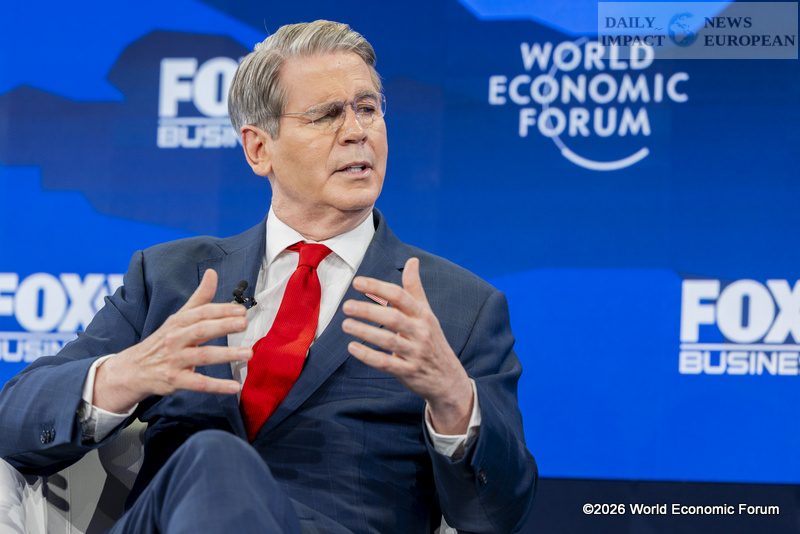
U.S. Treasury Secretary Scott Bessent stated in Davos:
“The President sees Greenland as a strategic asset for the United States. We will not outsource security in our hemisphere.”
This position represents a clear departure from multilateral norms and international law.
Trade as a weapon of power
Donald Trump has explicitly linked trade policy to geopolitical compliance.
In an interview with NBC News, he stated that tariffs would be imposed “100%” if no agreement on Greenland is reached.
UK Prime Minister Keir Starmer warned Trump that imposing tariffs on NATO allies was “a mistake.” A joint video call with Danish Prime Minister Mette Frederiksen, European Commission President Ursula von der Leyen, and NATO Secretary-General Mark Rutte failed to ease tensions.
Eight European countries issued a joint statement warning that U.S. threats:
“undermine transatlantic relations and risk triggering a dangerous spiral.”
Europe’s response: economic power and sovereignty
The EU is considering the activation of its Anti-Coercion Instrument (ACI), which would allow:
-
restrictions on U.S. investments,
-
limits on service exports,
-
targeted measures against major American tech companies.
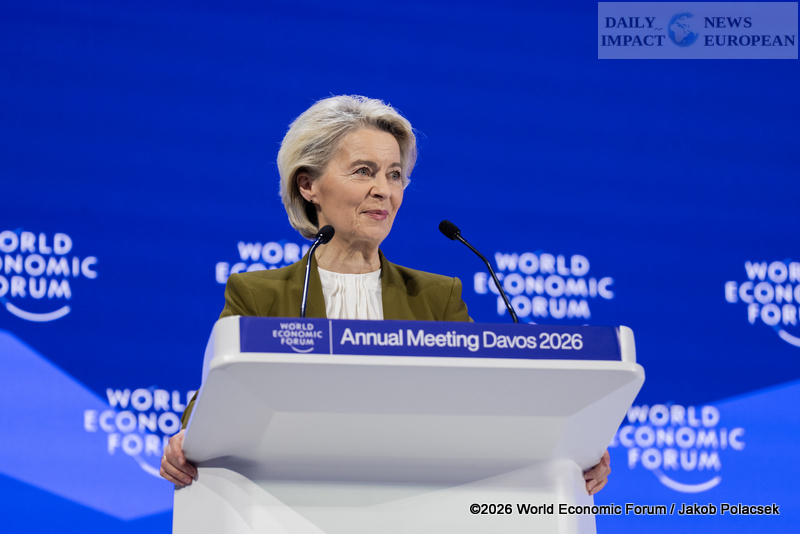
European Commission President Ursula von der Leyen stressed in Davos that:
“Respect for Greenland’s sovereignty is fundamental to the transatlantic relationship.”
France and Germany have declared themselves ready to “use all EU instruments if necessary.”
France and the strategic debate
French Economy Minister Roland Lescure described U.S. threats as “unacceptable,” calling for a united European response.
Foreign Minister Jean-Noël Barrot emphasized the depth of transatlantic interdependence, noting that:
“Major U.S. digital companies generate a quarter of their revenue — and likely half their profits — in Europe.”
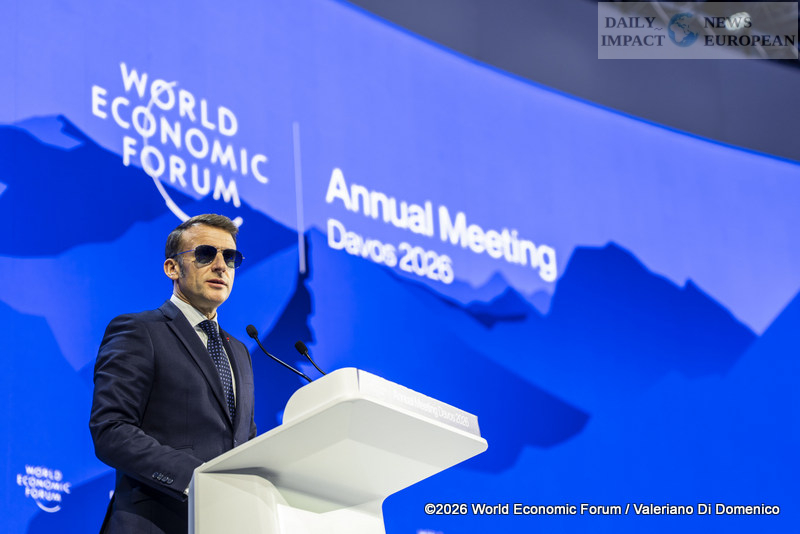
French President Emmanuel Macron, in one of Davos’ most forceful speeches, warned against:
“the law of the strongest,”
“new territorial annexations,”
and the erosion of multilateral rules.
ded by those who believe they have the loudest voice.”
Global economic risks
IMF Chief Economist Pierre-Olivier Gourinchas warned that rising trade and geopolitical tensions represent a major downside risk to global growth, particularly at a time of heightened global fragility.
A turning point for the global order
Davos 2026 may mark a point of no return.
The Greenland crisis highlights:
-
the weaponization of trade,
-
the fragility of the transatlantic alliance,
-
and Europe’s growing awareness of its own economic power.
As Emmanuel Macron stated:
“Let us not accept a world order decided by those who believe they have the loudest voice.”
©2026 – IMPACT EUROPEAN
Views: 0
More Stories
Saudi Arabia’s new power equation: Why Paris matters to Riyadh
Mas-d’Azil Cave: A Road Through the Mountain, a Journey Through Human Time
Tioman’s Hidden Network: The Life Beneath a Coral Reef