

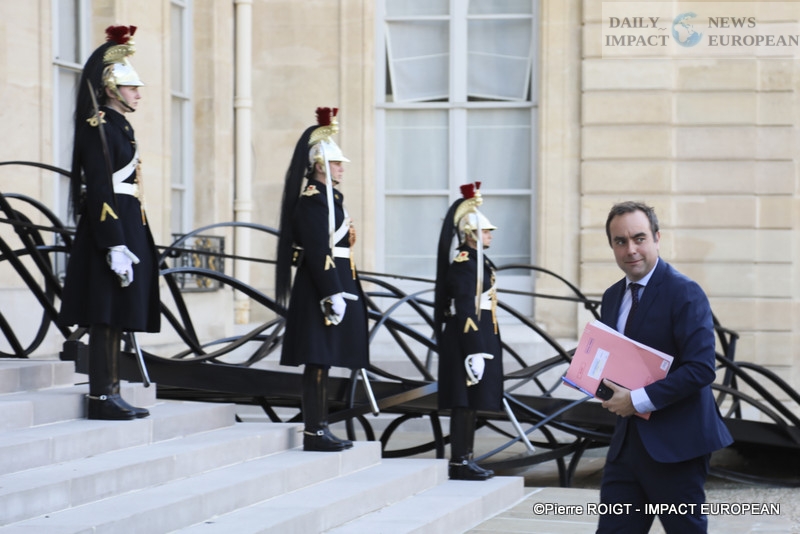
French Prime Minister Sébastien Lecornu addressed the nation on Friday, January 16, from the Hôtel de Matignon, outlining the government’s approach to the 2026 draft budget, amid stalled parliamentary negotiations and growing political fragmentation. His intervention followed the cancellation of National Assembly debates, reflecting the absence of a workable majority to pass the finance bill.
Parliamentary Deadlock and Institutional Constraints
The 2026 budget process has been marked by significant legislative gridlock. Scheduled debates in the National Assembly were suspended after negotiations failed to produce a viable compromise. In his address, Lecornu emphasized the government’s willingness to pursue dialogue while criticizing what he described as obstructionist tactics by parts of the opposition, notably from both the far left and the far right.
Beyond political criticism, the Prime Minister expressed concern about the broader implications for parliamentary governance, noting that only one of the two budgetary texts had completed the legislative process. He reaffirmed his intention to fulfil the executive’s constitutional responsibility: ensuring that France enters 2026 with an approved budget framework.
Fiscal Discipline and International Credibility
A central objective of the government’s strategy is maintaining fiscal credibility, particularly vis-à-vis European institutions and financial markets. Lecornu confirmed that France remains committed to limiting its public deficit to 5% of GDP in 2026, reiterating that this target is non-negotiable.
This message is aimed at reassuring international partners at a time when France remains under close scrutiny regarding its public finances. The government seeks to balance fiscal consolidation with targeted spending increases in priority sectors.
No Tax Increases for Households
The Prime Minister ruled out any increase in taxation for households in 2026, either directly or indirectly. Key commitments include:
-
No reduction in housing benefits or disability-related allowances
-
No changes to income tax abatements for pensioners
-
No hidden tax increases linked to inflation
To prevent “fiscal drag,” income tax brackets will be indexed to inflation, ensuring that rising prices do not result in higher effective taxation. At the same time, the government plans to strengthen measures against tax fraud and aggressive tax optimization.
Targeted Spending Increases in Strategic Areas
Despite the overall budgetary restraint, the government has identified several strategic exemptions:
-
Defense: A significant increase in military spending is planned, justified by the deteriorating international security environment. Lecornu announced that a new Military Programming Law will be presented before mid-July, signaling a long-term commitment to defense autonomy.
-
Education and Higher Education: The creation of 2,000 additional teaching and support positions, particularly for students with disabilities. Student grants will be maintained, and subsidized €1 university meals will be extended to all students starting in May.
-
Ecological Transition: Additional funding for the “Green Fund” will support local environmental projects, reflecting France’s continued climate commitments.
-
Overseas Territories: Specific budgetary priorities include reconstruction efforts in Mayotte and continued financial support for New Caledonia, both facing acute structural challenges.
Structural Savings and Public Sector Reform
To offset increased spending in priority areas, the Prime Minister called for structural and efficiency-oriented savings. He stated that, in current euros, expenditures in five out of six ministries would decline compared to the previous year.
The government also plans to launch reforms of the state apparatus and decentralization framework, aiming to reassess the scope and effectiveness of public spending. However, Lecornu rejected proposals to significantly reduce operating budgets for local governments, citing risks to territorial cohesion and public service delivery.
Sectoral Commitments: Agriculture, Housing, Employment
Several sector-specific commitments were reaffirmed:
-
Agriculture: A €300 million support package will be maintained, including regulatory simplification, fiscal support, and temporary adjustments to environmental standards.
-
Housing: The MaPrimeRénov’ energy renovation scheme will continue, accompanied by stricter controls to prevent fraud.
-
Employment: The government confirmed that employer payroll tax reductions will remain unchanged, arguing that increasing labor costs would undermine job creation and economic competitiveness.
A Budget Under Political Pressure
In conclusion, Lecornu acknowledged the political challenges surrounding the 2026 budget, particularly in a pre-presidential election context. The government’s approach reflects an attempt to reconcile fiscal discipline, social stability, and strategic investment within a fragmented parliamentary landscape.
Whether this strategy will translate into sufficient legislative support remains uncertain. What is clear, however, is the executive’s intention to avoid fiscal drift while preserving France’s economic credibility and institutional stability.
©2026 – IMPACT EUROPEAN
Views: 11
More Stories
Paris protest puts cost of living and public freedoms in focus
France Protests on October 17: Mass Mobilization Overshadowed by Violence Across the Country
Work Palace Opens in Paris: INSITU Brings Luxury Hospitality Into the Workplace