

Concrete outcomes of the meeting: progress shown, persistent ambiguities
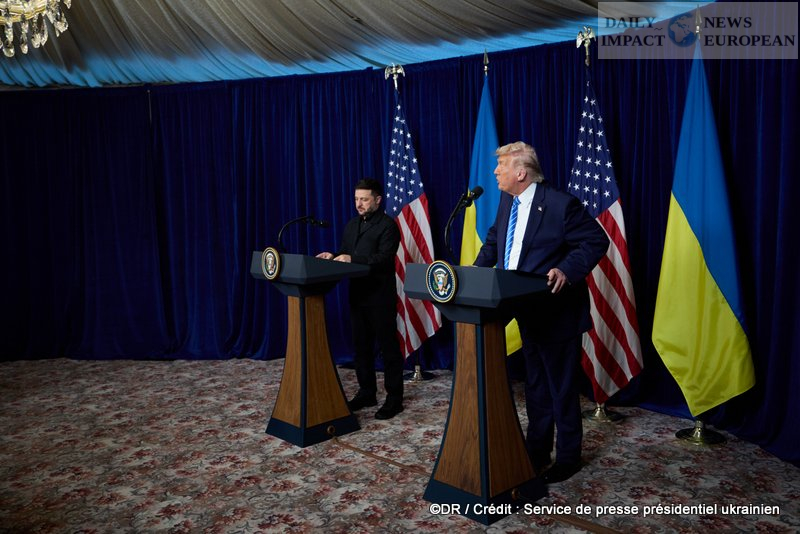
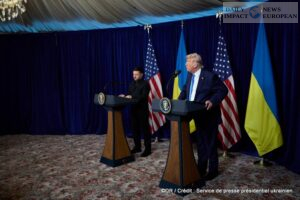
The discussion, lasting over three hours, focused on a revised 20-point peace framework (sometimes cited as 28 points in U.S. versions), including military, territorial, and economic aspects. Zelensky praised a « really great discussion, » stating that 90 % of the plan is approved, with documents already finalized or in progress.
U.S. security guarantees—automatic sanctions, military and economic aid in case of aggression—are « 100 % agreed » for 15 years (extendable), and Zelensky asked Trump to extend them to 30-50 years for a « historic decision. » Trump, more measured, cited progress at 95 %, praising Ukrainian courage and noting that teams are « very close, perhaps very close » to an agreement.
Concrete steps were announced: technical meetings between Ukrainian and U.S. teams next week, and a joint session with European leaders in Washington in January 2026. Zelensky also mentioned a possible Ukrainian referendum on the agreement, preceded by a 60-day ceasefire.
However, thorny issues remain: the status of Donbass (not fully resolved), the Zaporizhzhia nuclear plant (occupied by Russia since 2022), and Russia’s opposition to any foreign troops in Ukraine. Trump had multiple calls with Putin, including a 2.5-hour call before the meeting, sensing Russian « willingness, » but no tangible concessions were made public.
Presidents’ statements
Zelensky: « I especially want to thank Steve Witkoff and Jared Kushner for their commitment and dedication to the cause, as well as our team, including Rustem Umerov and Andriy Hnatov. We agree that security guarantees are essential for achieving lasting peace, and our teams will continue working on all aspects. »
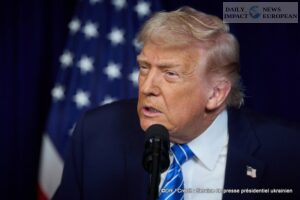
Trump: « During my phone call with Vladimir Putin before the Zelensky negotiations, I sensed a very different Putin, eager to reach an agreement. I believe both are sincere in concluding a peace deal. After my meeting with Zelensky, I will have another phone call with Putin to continue peace negotiations. »
For Russia: strategic and economic respite
For Moscow, this meeting provides an opportunity to gain time in a fragile economic context. Western sanctions caused oil and gas revenues to drop nearly 49 % in December 2025, drained the sovereign fund, and pushed inflation to 8-10 %. Despite a « war economy » (40 % of the budget devoted to defense), growth is slowing and fiscal pressure is increasing.
A peace agreement, even temporary, would allow Russia to partially bypass sanctions through China and India, rebuild infrastructure, and discreetly rearm, similar to the post-Minsk period before the 2022 conflict escalation. Without robust security guarantees, a ceasefire could provide Putin a five-year respite to stabilize the economy and prepare a « phase 2 » of the conflict. Internal legitimacy and territorial control remain structural drivers for the Kremlin.
For the United States: a double-edged economic reset
On the U.S. side, Trump prioritizes a « quick deal » to mark his legacy, while identifying economic opportunities. With persistent inflation and growing debt, the U.S. seeks new markets and returns on investments in Russian energy and resources.
The proposed Russo-American reset could include: restoration of Russian energy flows (oil and gas), massive investments for U.S. companies, stabilization of global oil prices, and reduced dependence on other suppliers. This process primarily serves the economic and strategic interests of both powers, at the expense of Ukraine, treated as a pawn in the larger game.
The risks of a new Minsk: masked peace and delayed war
The Minsk agreements (2014-2015) provide a worrying precedent: temporary ceasefires allowed Moscow to consolidate gains, rearm, and relaunch offensives in 2022. Today, a similar deal—without extending U.S. guarantees to 30-50 years and without international monitoring—could reproduce this pattern: a five-year respite for Russia, leaving Ukraine with territorial concessions and insufficient security.
Russian strikes persisting during discussions illustrate this duplicity. Western think tanks warn of a Ukrainian « political crossroads, » with Munich 2.0 risk if concessions are imposed without real deterrence against renewed military action.
Conclusion: Ukraine, the main collateral victim
The Zelensky–Trump meeting accelerates negotiations, but Ukraine’s needs remain overshadowed by Russian and American interests. For Moscow: strategic respite and potential economic and military rearmament. For Washington: reconstruction and investment opportunities, influence consolidation. For Ukraine: security and territorial control remain fragile, and the risk of conflict resuming within five years is high.
The coming weeks, with technical and European meetings, will be decisive in determining whether this initiative represents a true end to the war or merely a strategic interlude.
« History will judge whether this meeting ended the war… or simply postponed the next act. »
©2025 – IMPACT EUROPEAN
https://www.youtube.com/watch?v=lhqNO6c0iuI
https://www.youtube.com/watch?v=w-rK1_CmG5A



Views: 0
More Stories
Alzheimer Research Foundation Gala in Paris: when music and solidarity unite for global research
Foire du Trône: inside Europe’s largest fairground in Paris
Pro-Palestinian demonstrations held across France to mark Land Day