


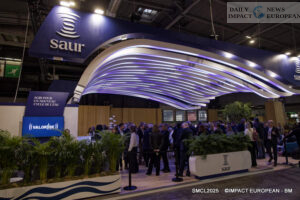
Paris, Porte de Versailles. On the morning of November 18, 2025, as winter’s pale light slid across the still-quiet exhibition halls of the Parc des Expositions, the first exhibitors were silently checking their stands. Moments later, the Salon des Maires et des Collectivités Locales — the SMCL — officially opened its doors, alongside the 107th Congress of French Mayors. A dense surge of activity, sharp discussions and innovation immediately swept through the aisles. For three days, 1,380 exhibitors from France, Europe and Africa gathered to present the best of what territories are imagining to address today’s challenges.
In recent years, the SMCL has become far more than a professional fair. It is a barometer of the health of French municipalities, a laboratory of ideas where local public action is reinvented, and a meeting ground where one can observe the fractures, expectations, hopes and ambitions of thousands of elected officials. The 2025 edition, themed “The Best in Common,” reflects more than ever this ambition to build a sustainable and resilient future together.
The slogan may appear simple, but it became the thread running through discussions. It evokes cooperation between city halls, inter-municipalities, companies, associations, public institutions and citizens. In every corridor, visitors perceived this idea: no territory advances alone. And while technological innovation catches the eye, it is truly the dialogue between these actors that gives the event its human depth.
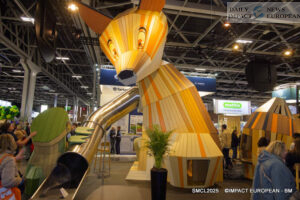
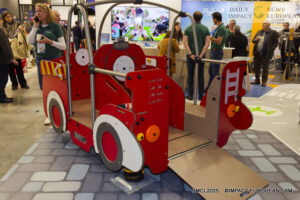
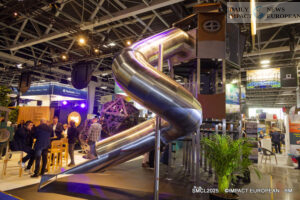
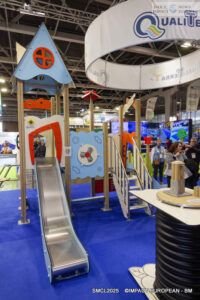
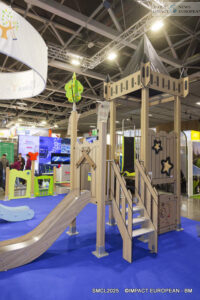
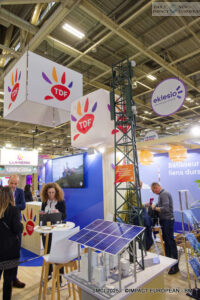
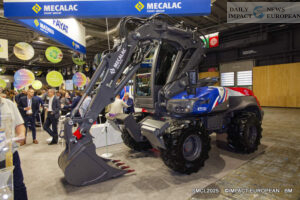
From the first hours of opening, a dense crowd of elected representatives, technicians, chief-of-staffs and territorial agents moved from hall to hall, drawn in turn to an autonomous cleaning robot, a solar-powered filtered water fountain, a ski simulator designed for municipal sports halls or a playground built entirely from biodegradable materials. SMCL 2025 unfolds like a journey, almost like a miniature city, in which each stand represents a public service, a responsibility, a local competence, or a vital issue for the daily lives of residents.
The “Vis-ta-ville” immersive parcours illustrates this ambition perfectly. Spread over several zones, it recreates six key spaces of municipal life: a connected city hall with intelligent administrative reception; a health center equipped for telemedicine; a secure digital school; a mobility hub dedicated to low-carbon transport; a cultural and market area; and finally a crisis-management chamber simulating climate incidents. It is a real-scale experience that allows elected representatives to test solutions themselves. One sees mayors handling tablets, triggering crisis scenarios, observing the efficiency of smart urban lighting or testing the fluidity of a citizen journey. Within these demonstrations, each participant finds echoes of their own concerns: medical desertification, urban violence, energy transition, inclusion, youth, cultural access, water resource management, safety.
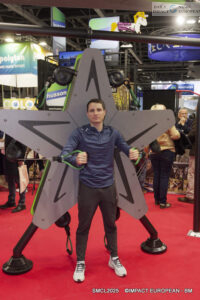
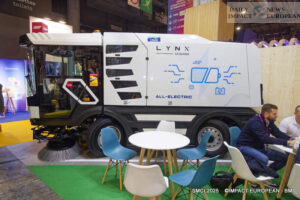
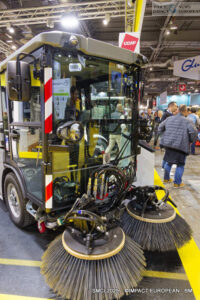
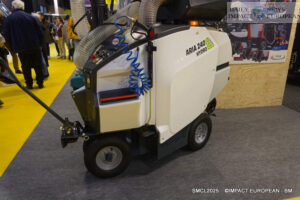
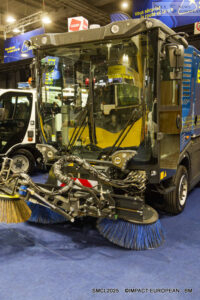
In the robotics hall, the atmosphere shifts. The noise becomes more mechanical, almost futuristic. New cleaning robots roam the carpeted floors at regular intervals, adjusting their trajectory according to detected foot traffic. These machines, designed for streets, parks, parking lots and public buildings, are impressive in their autonomy and technical capacities. Innovation goes beyond logistics: animal-shaped robots, developed for mediation, education or public space animation, attract both professionals and curious visitors. Playful in appearance, they are primarily intended to support educational programs, social inclusion workshops or even activities in nursing homes.
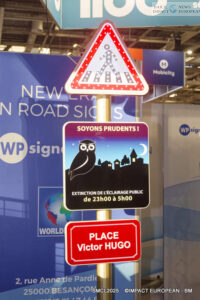
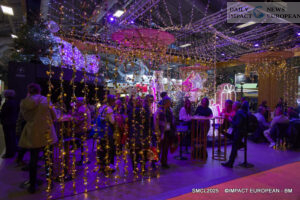
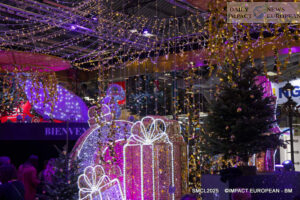
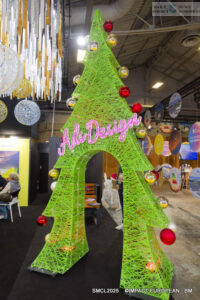
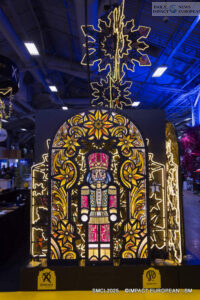
Just a few meters away, eco-friendly Christmas decorations remind attendees that municipalities must now reconcile attractiveness with energy sobriety. This year’s smart LED systems adapt their brightness to street footfall, reducing electricity consumption by up to 70 percent. The technology responds to a dual necessity: preserving municipal budgets and reducing environmental impact without giving up the festive atmosphere expected by residents. Several cities are already considering deploying these installations next winter, convinced by the simplicity of the system and its low energy footprint.
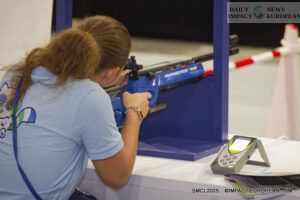
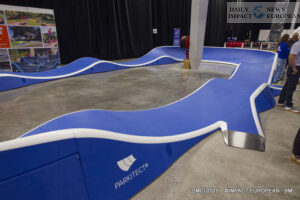
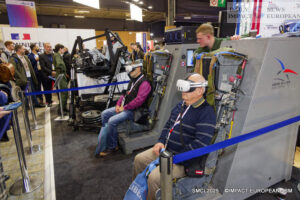
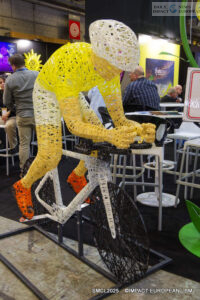
The sports and parasports sector features new equipment designed for immediate use by local authorities. Eight innovations were distinguished this year, ranging from the BOPA T11, capable of inflating 220 balls simultaneously, to the Aquaflow system that waters sports fields without wasting a drop of water. Demonstrations include ski simulators accessible to people with disabilities, and muscle-strength testing benches designed for rehabilitation and training. The emphasis on accessibility reflects the central place of inclusion in today’s public sports policies. This focus takes on particular significance as France moves forward with its bid to host the 2030 Winter Olympic and Paralympic Games. For attending officials, it is a chance to see how their local infrastructures might adapt to future international standards.
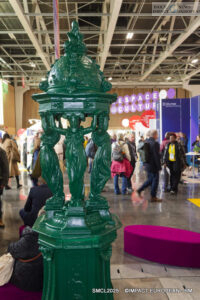
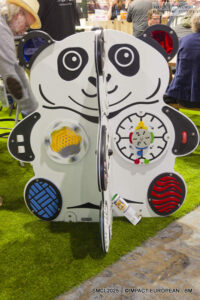
Ecology, omnipresent at the SMCL, occupies a privileged place in the Biodiversity and Ecological Engineering Fair, organized alongside the main event. In this hall, the ambiance shifts again: calmer, greener, almost forest-like in places. Urban renaturation solutions appear alongside innovations in sustainable water management. Visitors discover solar-powered self-cleaning fountains, already adopted by several North African municipalities, capable of filtering water continuously with minimal energy use. Exhibitors focused on local ecological agriculture showcase solutions adapted not only to rural settings but also to peri-urban communes looking to rehabilitate unused land or support short supply chains. Discussions here revolve around agroecology, smart composting, biodegradable playgrounds, and ecological corridors for pollinators. Exchanges with African and European participants highlight shared challenges: drought, resource management, pollution, soil artificialisation and the protection of living organisms.
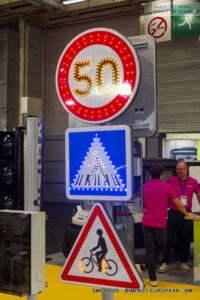
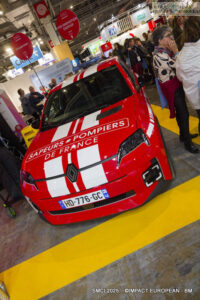
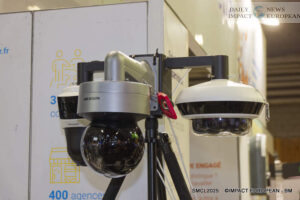
Further on, the presence of law-enforcement agencies adds a strikingly different tone. With digital screens, professional radios, surveillance drones, intervention vehicles and crisis-management tools on display, the Police and Gendarmerie present their new inter-service coordination systems designed to strengthen urban security and risk prevention. There are surveillance solutions specifically tailored for small or rural municipalities, as well as connected emergency call stations. Many elected officials — confronted daily with rising incivilities and violence — come seeking practical, affordable responses. Officers take time to explain protocols, costs, co-financing options and available training programs. For rural towns and mid-sized cities alike, these exchanges have become essential.
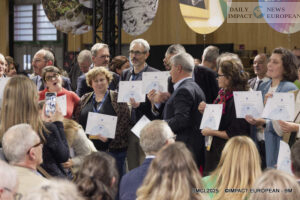
At the heart of the SMCL, national institutions hold continuous meetings with local representatives. The Association of French Mayors (AMF), ADEME, the National Agency for Territorial Cohesion (ANCT) and the Water Agencies welcome visitors at stands where one discusses energy transition, project funding, ecological planning and digital transformation. Associations, sports federations and inclusion organizations use the opportunity to strengthen partnerships, present new support programs or raise awareness among local leaders.
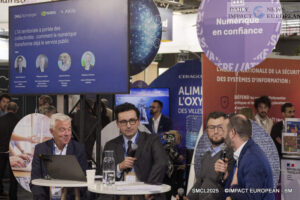
One of the structuring elements of SMCL 2025 is the richness of its intellectual programming. Over 500 conferences, workshops and roundtables take place across three days. Each room hosts experts from various backgrounds: urban planners, engineers, sociologists, doctors, researchers, government representatives, innovative start-ups, and territorial directors. Topics range from climate adaptation and water management to safety, digital policy, culture, inclusion, sports, economic development and local finances. Attendance is high; elected officials know that continuous training is now essential to managing modern territorial challenges.
The Territorial Innovation Awards punctuate the event. The award-winning projects, covering fields such as energy, digital innovation, inclusion, safety and sports, all share a common point: territories are seeking practical, effective, financially sustainable solutions that can be deployed quickly. The SMCL does not simply reward technology; it highlights visions capable of transforming daily life in a durable way.
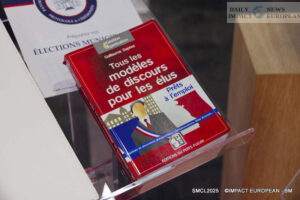
This 2025 edition takes place at a crucial moment for French political life: just months before the 2026 municipal elections, when thousands of elected officials must present both their achievements and their next commitments. In every conversation, one hears the same worries: how to convince residents? How to finance priority investments? How to address climate emergencies? How to ensure safety without worsening social tensions? Every solution proposed at the SMCL potentially becomes an answer — or even a key asset — for building a solid electoral program.
Yet beyond politics, the event tells a collective story: that of municipalities striving to maintain quality of life despite successive crises; that of elected officials who fight daily to ensure efficient public services; that of citizens who increasingly demand proximity, transparency and efficiency. The SMCL is not just an innovation fair: it is the portrait of a country in search of meaning, protection and renewal.
Walking through the halls, one senses that the future of territories is being shaped here. Robots, artificial intelligence, inclusive sports infrastructures, renewable energies, biodiversity initiatives, connected security tools, responsible digital solutions — none of these are gadgets. They embody crucial political choices. In a context where citizens’ expectations rise while financial resources shrink, innovation appears to be one of the few levers capable of reconciling modernity and restraint.
With its scope, themes and attendance, SMCL 2025 confirms its status as an essential national platform. It fosters dialogue between actors who rarely meet — elected officials, engineers, institutions, associations, entrepreneurs — and builds bridges between territories in France, Europe and Africa. Through its demonstrations, conferences and meetings, it encourages local authorities to rethink how they act, organize, protect and support their populations.
As the exhibition lights fade on the evening of November 20, the ideas sparked during the event continue to resonate. Elected representatives depart with projects, tools, visions — sometimes even newfound convictions. In today’s complex world, where ecological transition, digital transformation and social tensions reshape our realities, these three days feel like a necessary breath of fresh air.
The 2025 edition marks a turning point: territories no longer simply adapt to global change — they intend to shape it. Robots, ecological solutions, inclusive sports, intelligent security, institutional cooperation, sustainable mobility, responsible digital services: everything converges toward a single ambition — improving everyday life for residents. And in this place where technology meets humanity, perhaps that is, ultimately, what “the best in common” truly means.
©2025 – IMPACT EUROPEAN














































Views: 0
More Stories
Alzheimer Research Foundation Gala in Paris: when music and solidarity unite for global research
Foire du Trône: inside Europe’s largest fairground in Paris
Pro-Palestinian demonstrations held across France to mark Land Day