

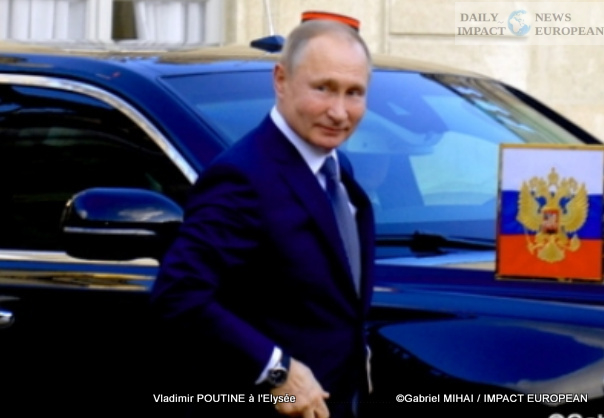
At the end of 2025, the question of whether Russia genuinely seeks peace or is preparing for a global confrontation has become a central issue in European and American diplomatic analyses. Official statements from Moscow, alongside military actions, reveal a complex strategy in which discourse on “peace” often masks a long-term power-play logic.
“Peace” as an Instrument of Power
Recent analyses published by 20 Minutes, RTL, and La Presse canadienne converge on one point: Russia does not outright reject negotiations, but it seeks to impose what some diplomats call a “sovereign peace.” This would require Ukraine and the West to recognize the legitimacy of its territorial gains and its structuring role in Eurasian security.
From the Kremlin’s strategic perspective, peace is not an end in itself but a means to anchor its influence permanently. This approach aligns with Russian geopolitical tradition: using diplomacy as a post-conflict consolidation tool while avoiding the appearance of aggression. Since 2023, each opening to dialogue has been accompanied by intensified military activity, illustrating an instrumental use of the word “peace.”
Strategic Turning Point: Regional Deterrence and Global Pressure
Recent signals, reported by Adevărul (Romania) and La Libre Belgique, reveal a significant evolution. From an initially regional war, the Kremlin seeks to create a controlled climate of instability around its borders. Threats directed at Romania and Poland, accusing them of “pushing the world toward war,” are part of a broader deterrence strategy aimed at testing NATO’s internal cohesion.
Simultaneously, Moscow maintains informational influence campaigns portraying Russia as an “encircled but rational” power, seeking to restore a multipolar balance. This narrative, aimed at some emerging countries in the Global South, seeks to legitimize its position and weaken the West’s perception of Russian responsibility.
Internal Fractures and the Regime’s Survival Logic
Investigations published in La Libre Belgique highlight tensions within Russia’s military apparatus. Several sources mention disagreements between operational command and the presidential administration over the assessment of losses and battlefield progress.
This dissonance reveals an internal dynamic in which the war becomes a tool for political cohesion. For the Kremlin, a poorly calibrated ceasefire would be seen as an internal defeat, potentially destabilizing the regime. Controlled continuation of the conflict—even in a limited dimension—keeps the ideological and authoritarian system under productive tension.
The American Factor and the Kremlin’s Calculus
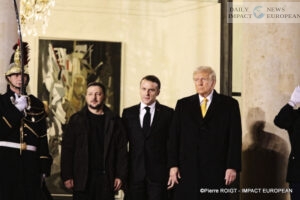
The prospect of a change in American policy, exemplified by the announced meeting between Donald Trump and Volodymyr Zelensky, directly influences Russia’s posture. If Washington softens military support, Moscow could exploit the situation to turn a military stalemate into a diplomatic victory. Conversely, sustained Western backing would force Russia to radicalize its communication, portraying the conflict as an existential war against the West—a narrative useful for legitimizing any escalation.
Between Constrained Diplomacy and the Threat of Global Escalation
Thus, Russia does not seek peace in the collective sense but rather recognition of a new security order aligned with its interests. Its approach relies on three strategic axes:
-
Durable territorial control: securing Russified areas of Donbass and southern Ukraine to make any rollback impossible.
-
Regional political deterrence: weakening NATO’s strategic cohesion through peripheral provocations.
-
Global resistance narrative: capitalizing on Sino-American rivalry to present itself as an alternative pole to the West.
In conclusion, Russia does seek peace—but on its terms, meaning a peace that validates the power balance it has built since 2022. The idea of universal peace or sustainable de-escalation does not correspond to its current strategic calculation. As long as this asymmetric conception of stability dominates the Kremlin, the world will remain suspended between tactical negotiations and the threat of global escalation.
©2025 – IMPACT EUROPEAN


Views: 0
More Stories
Paris “Iftar of Peace”: Imam Hassen Chalghoumi awards Olive Branch Peace Prize to President Donald Trump
Global Nuclear Energy Summit in Paris highlights role of nuclear power in energy transition
Super League: Wigan Warriors defeat Toulouse Olympique 36-16