

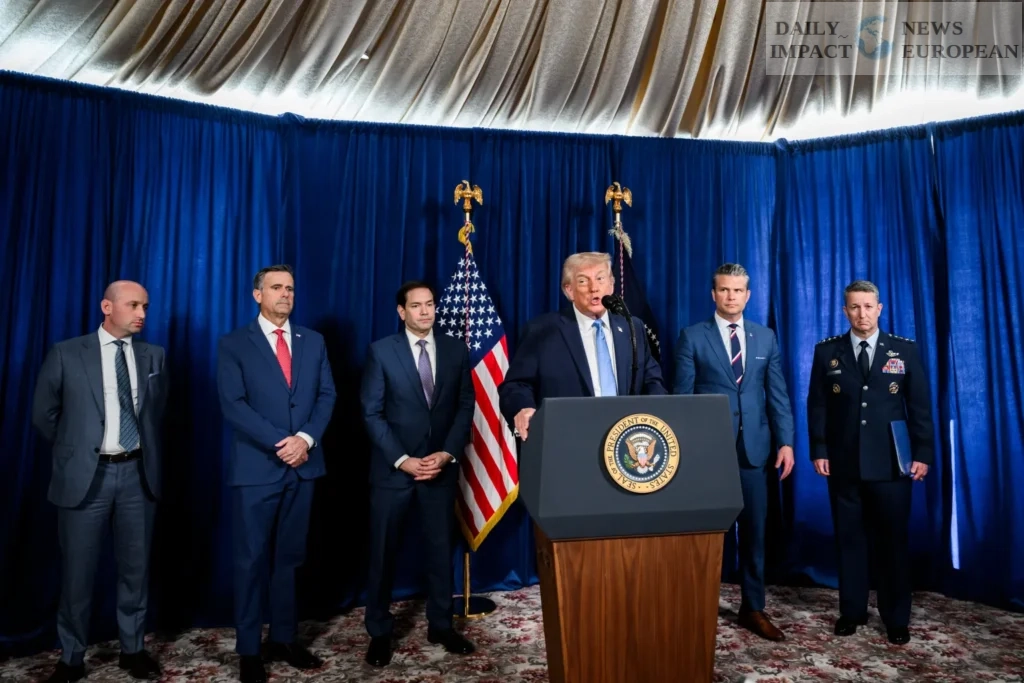
The arrest of Nicolás Maduro by the United States in early January 2026 stands as one of the most significant geopolitical events in recent years. Presented by the Trump administration as a targeted national security operation, the action has triggered a wave of international reactions and revived a central debate: the respect for international law and its selective application by major powers.
A U.S. Operation Presented as Legitimate
In a statement released on January 5, 2026, the White House announced the capture and extradition of Nicolás Maduro to the United States. The Trump administration described the former Venezuelan leader as a “narco-terrorist and indicted socialist dictator,” asserting that he was not a legitimate head of state but a criminal prosecuted under U.S. law.
Washington framed the arrest as a major foreign policy success, noting that a reward for Maduro’s capture had already existed under the Biden administration, but that no action had been taken at the time.
The White House Directly Attacks Democrats
In the same statement, the U.S. executive accused Democratic leaders of “hypocrisy,” citing numerous past declarations calling for Maduro’s removal or for maximum pressure on the Venezuelan regime.
Chuck Schumer, Dick Durbin, Chris Van Hollen, Chris Murphy, Tim Kaine, Amy Klobuchar, Elizabeth Warren, Jamie Raskin, and Darren Soto were accused of reversing their positions once the operation was carried out by Donald Trump. While they previously criticized inaction against the Venezuelan dictatorship, they now describe the operation as “irresponsible,” “illegal,” or “unconstitutional.”
Marco Rubio: The Western Hemisphere as a Red Line
On January 4, 2026, Secretary of State Marco Rubio conducted multiple media appearances to defend the operation. He stated that “there is no war against Venezuela,” emphasizing that U.S. forces remained on the ground for approximately two hours.
Rubio insisted that the operation was neither an invasion nor a prolonged military action, and therefore did not require congressional authorization. He articulated a clear doctrine:
the United States will not allow the Western Hemisphere to become a base of operations for drug trafficking, Iran, Hezbollah, or hostile regimes.
According to Rubio, economic pressure, oil sanctions, and potential additional measures will remain in place until these conditions are met.
France: Legal Condemnation and Political Ambiguity
In France, the official response revealed a degree of discomfort. President Emmanuel Macron initially welcomed the news for the Venezuelan people, stating they were “now freed from dictatorship,” before the government clarified its position.
The French Foreign Ministry, through Jean-Noël Barrot, condemned a military operation violating the principle of non-use of force. Government spokesperson Maud Bregeon reiterated that France neither supports nor approves the method employed, while considering Maduro’s departure to be positive for the Venezuelan population.
The Core Dispute with the UN: U.S. Law Versus International Law
A central distinction sets the Maduro case apart from other international dossiers cited by political leaders: Nicolás Maduro has neither been convicted nor prosecuted by the International Criminal Court. Instead, he faces charges brought exclusively by the United States under its domestic legal system.
This point lies at the heart of the criticism expressed by UN Secretary-General António Guterres. In his address to the Security Council, he did not dispute the seriousness of the accusations against Maduro, but reminded members that international law does not allow a state to use military force on the territory of another state to enforce its own national law.
Guterres emphasized that the UN Charter prohibits the use of force against the territorial integrity or political independence of any state, except under strictly defined circumstances. According to him, international law provides specific mechanisms to address transnational crimes, including drug trafficking and human rights violations, without resorting to unilateral military action.
This position highlights a fundamental fracture:
the United States justifies the operation against Maduro on the basis of a national judicial decision, while the United Nations insists that international legality cannot be replaced by the law of a single state, regardless of its power.
The Central Question of Double Standards: Putin and Netanyahu
At the core of international criticism lies the issue of the selective application of international law by the United States.
António Guterres recalled that respect for international law must apply equally to all states and all leaders, without exception. However, several observers note that Donald Trump met in 2025 with leaders who themselves are subject to international procedures or arrest warrants.
Russian President Vladimir Putin is the subject of an international arrest warrant, as is Israeli Prime Minister Benjamin Netanyahu, under international legal proceedings. Yet these situations did not prevent Donald Trump from officially meeting them, without Washington recognizing or enforcing those legal mechanisms.
This discrepancy fuels accusations of double standards:
when international warrants or procedures concern allies or strategic partners, they are ignored; when they concern adversaries, they are invoked to justify unilateral action.
China Condemns a Violation of the International Order
During an emergency meeting of the Security Council, Sun Lei, China’s representative to the UN, strongly condemned the U.S. action, describing it as “unilateral, illegal, and intimidating.” Beijing argues that the United States is undermining fundamental principles of sovereignty and weakening the rules-based international order.
Growing Fears of Regional Escalation
Tensions further escalated following statements by Donald Trump targeting Colombian President Gustavo Petro. The U.S. president claimed that Petro “would not remain in power for long” and suggested that a military operation against Colombia could be “a good idea,” accusing him—without providing evidence—of involvement in drug trafficking.
These remarks heightened fears of lasting regional destabilization in Latin America.
The arrest of Nicolás Maduro by the United States extends far beyond a regional event. It exposes a deep fracture in the international order, pitting a unilateral, security-based approach against a multilateral system grounded in international law.
The question raised by the United Nations and many states remains unresolved:
can international law survive if it is applied selectively, according to the strategic interests of major powers?
©2026 – IMPACT EUROPEAN
Views: 0
More Stories
Paris “Iftar of Peace”: Imam Hassen Chalghoumi awards Olive Branch Peace Prize to President Donald Trump
Super League: Wigan Warriors defeat Toulouse Olympique 36-16
Lunar New Year 2026: Paris Celebrates the Year of the Fire Horse