

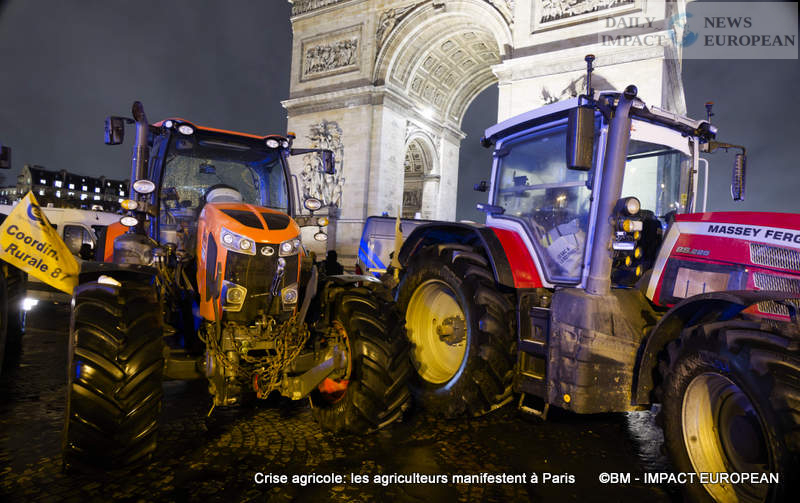
French farmers staged fresh protests in Paris on Thursday as opposition intensifies against the EU–Mercosur trade agreement, amid mounting economic pressure on the agricultural sector across Europe.
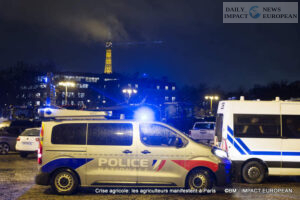
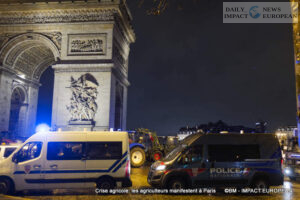
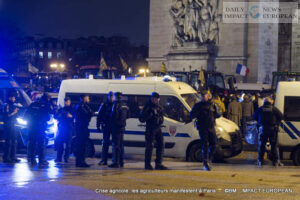
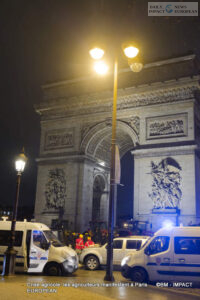
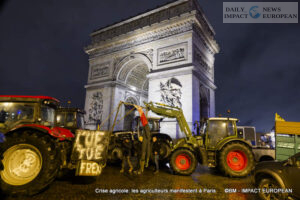
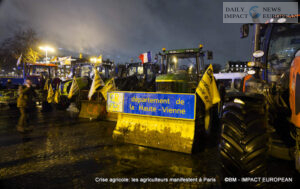
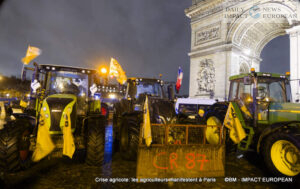
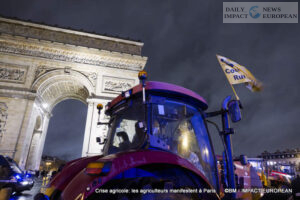
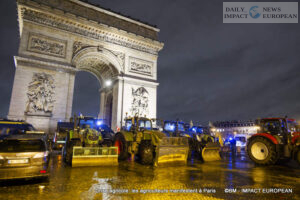
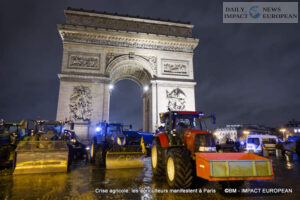
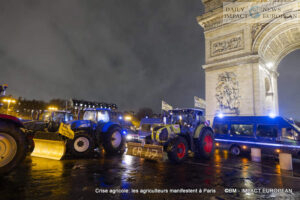
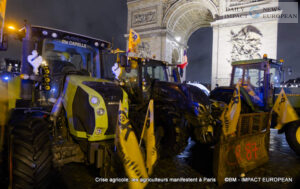
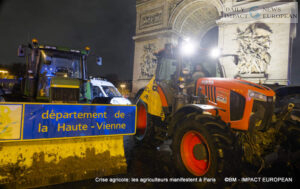
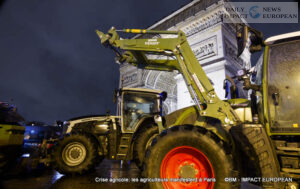
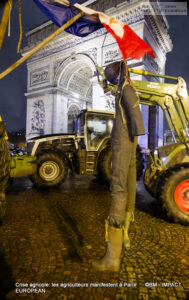
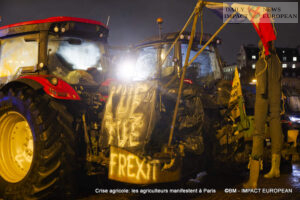
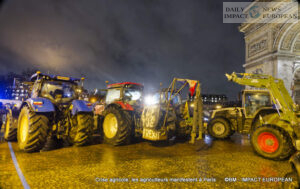
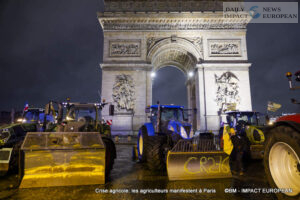
Before dawn, convoys of tractors moved towards central Paris, gathering near high-profile landmarks including the Eiffel Tower and the Arc de Triomphe. The demonstrations were organised by farming unions seeking to draw attention to what they describe as a widening gap between European production standards and global trade realities.
“We said we would come to Paris, and we did”
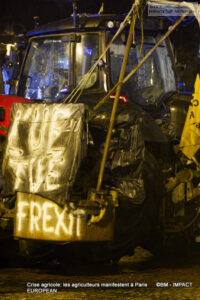
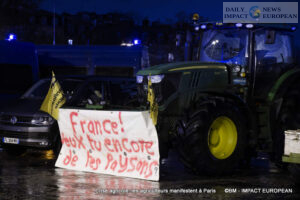
Around 3 a.m., several dozen farmers reached the area around the Eiffel Tower, parking tractors nearby despite restrictions imposed by authorities. One vehicle displayed a banner reading “CR 33 – No to Mercosur”, reflecting the core demand of the protest.
“We said we would come to Paris, and we did,” said Ludovic Ducloux, co-head of the Gironde branch of Coordination Rurale. “It took us about 40 minutes to get in, and we didn’t encounter police on the way.”
Coordination Rurale, France’s second-largest farmers’ union, had called for talks with senior parliamentary figures and urged farmers to rally near the National Assembly. Its national president, Bertrand Venteau, said the union wanted to be received “today” by parliamentary leaders.
Trade, prices and animal health at the heart of the dispute
Farmers say their anger is not limited to trade policy. The sector has been hit simultaneously by falling grain prices, rising fertiliser costs and the spread of contagious nodular dermatitis among cattle.
Many fear the EU–Mercosur agreement would further weaken European producers by opening the market to imports of beef, poultry and sugar produced under looser environmental and health standards than those required within the EU.
Calls for regulatory relief have been growing since winter 2024, with farmers arguing that administrative complexity and environmental rules are undermining their competitiveness. Recent legislative reforms in France, as well as commitments made in Paris and Brussels, have failed to calm tensions.
Police restrictions and political pressure
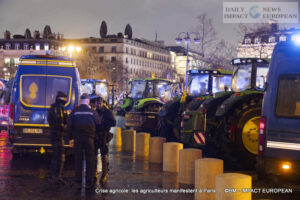
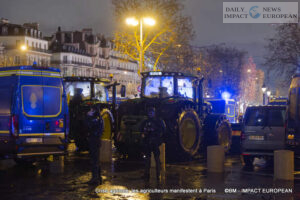
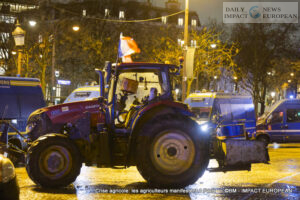
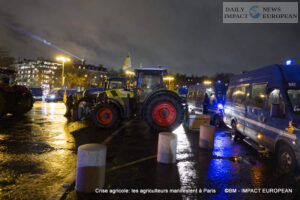
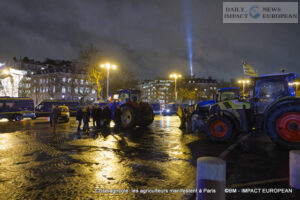
On Wednesday evening, Paris authorities banned tractors from entering several sensitive areas, including government buildings and major institutions. Despite this, dozens of tractors reached the capital, while others were stopped at its outskirts.
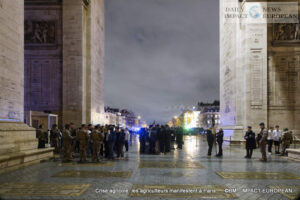
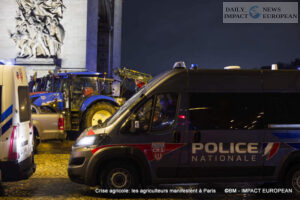
Police later began clearing areas around the Arc de Triomphe to manage the departure of vehicles. According to the Interior Ministry, 11 people were arrested, 12 tractors impounded and 65 fines issued in the Paris region.
Nationwide, authorities recorded 67 protest actions involving more than 2,000 demonstrators and over 600 tractors.
The Interior Minister rejected claims of a security failure, saying police had chosen not to forcibly disperse the Paris protest despite its illegal status.
Mercosur deal faces political resistance
Opposition to the EU–Mercosuragreement has become a rare point of consensus in French politics. President Emmanuel Macron announced that France would vote against the deal in Brussels, citing broad political rejection at home.
However, he acknowledged that the agreement’s path is not over, as it must still be approved by the European Parliament.
France’s main farming union, FNSEA, alongside Young Farmers (JA), has called for a large demonstration outside the European Parliament in Strasbourg on 20 January if the deal moves forward.
After meetings with parliamentary leaders, FNSEA president Arnaud Rousseau called for a dedicated legislative debate by spring to deliver what he described as “concrete solutions” for farmers, while urging lawmakers to pass the 2026 state budget and implement existing agricultural reforms.
A movement spreading beyond France
As of Friday, 9 January 2026, farmers remained mobilised despite the EU’s political momentum behind the Mercosur agreement. Protests are continuing not only across France but also in other EU member states, including Belgium and Poland.
In western France, farmers gathered in Le Mans following calls from regional unions.
Coordination Rurale has pledged to continue bringing farmers’ grievances to Paris, despite bans on tractor convoys — a commitment the union says it has already honoured, as pressure mounts on both national governments and EU institutions over the future of European agriculture.
©2026 – IMPACT EUROPEAN

























Views: 0
More Stories
Paris “Iftar of Peace”: Imam Hassen Chalghoumi awards Olive Branch Peace Prize to President Donald Trump
Super League: Wigan Warriors defeat Toulouse Olympique 36-16
Lunar New Year 2026: Paris Celebrates the Year of the Fire Horse