

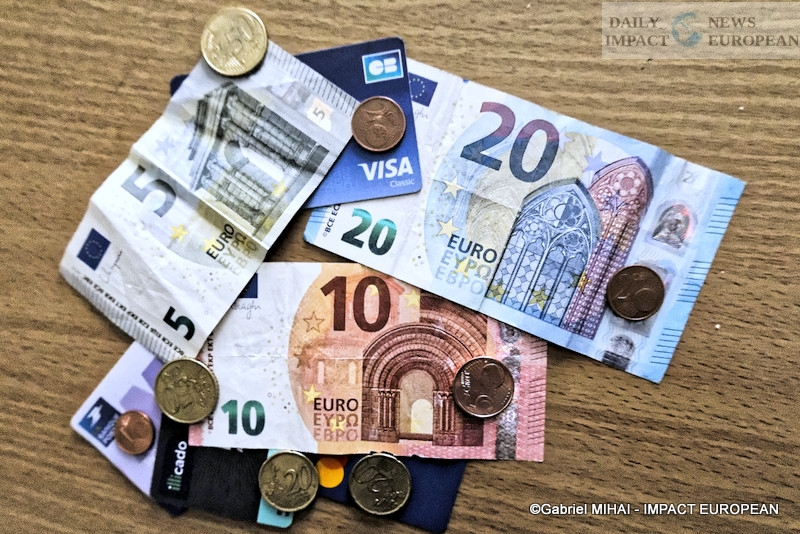
From 1 January 2026, Bulgaria — one of the EU’s lower-income member states in terms of GDP per capita, with a population of 6.4 million — will become the 21st member of the euro area, definitively abandoning its national currency, the Bulgarian lev, in circulation since 1881.
This accession, required under Bulgaria’s 2007 EU accession treaty, represents a key milestone in the country’s economic integration. It comes, however, amid persistent inflationary pressures, chronic political instability, and a deeply divided public opinion.
A solid yet fragile economic framework
Bulgaria has met the Maastricht convergence criteria since July 2025, as validated by the EU Council: controlled inflation (around 2.4% expected by 2027, despite a peak at 5.2% in November 2025), sound public finances, and exchange rate stability ensured by a long-standing currency board regime, which pegs the lev to the euro at a fixed rate of €1 = 1.95583 leva.
The Bulgarian economy has shown robust growth, estimated at around 3% in 2025, driven by household consumption and public investment. Unemployment remains at a historically low level, below 4%.
Nevertheless, structural vulnerabilities persist. Food inflation remains significantly higher than the euro area average, housing prices have risen sharply (up to 15.5% year-on-year in Q2 2025, with some estimates suggesting a doubling over three years), and wage growth continues to outpace productivity gains, eroding competitiveness.
At the same time, Bulgaria faces a slowdown in external demand, particularly from Germany, its main trading partner, weighing on industrial output.
Expected economic benefits
Adopting the euro is expected to support Bulgaria’s economy by eliminating exchange-rate risk and transaction costs with euro area partners, generating — according to several estimates — hundreds of millions of euros in annual savings for SMEs.
The move is also expected to attract foreign direct investment, improve access to cheaper financing on international markets, and strengthen Bulgaria’s sovereign credit profile, as already highlighted by rating agencies such as Fitch.
The tourism sector, accounting for around 8% of GDP in 2025, is likely to benefit from smoother monetary transactions and increased attractiveness for European visitors.
Institutionally, Bulgaria will gain a seat at the European Central Bank’s decision-making table, enhancing its capacity to absorb external shocks and, according to EU institutions, reducing certain geopolitical vulnerabilities.
As European Commission President Ursula von der Leyen stated, “the euro is a tangible symbol of Europe’s strength and unity”, fostering deeper economic integration.
Macroeconomic risks and challenges
Despite these positive expectations, significant risks temper optimism.
Consumer-perceived inflation is considered very high for certain essential goods, far exceeding official statistics, reinforcing concerns over purchasing power. Price speculation in food and real estate markets could intensify during the transition period.
ECB President Christine Lagarde has described the inflationary impact of euro adoption as “modest and short-lived”, estimated at 0.2–0.4 percentage points, based on previous enlargements. Nevertheless, fears of price rounding effects persist, as observed in countries such as Croatia and Slovakia after euro adoption.
While Bulgaria’s monetary autonomy is already constrained by the currency board, euro adoption will further expose the country to the macroeconomic constraints and debt dynamics of the euro area as a whole, limiting national tools to respond to asymmetric shocks.
Political instability compounds these challenges. Bulgaria has held eight elections in five years, and the recent resignation of Prime Minister Rosen Zhelyazkov, following protests over corruption and fiscal issues, underscores the difficulty of maintaining the budgetary discipline required to weather future shocks.
According to Georgi Angelov, senior economist at the Open Society Institute, “the key challenge will be having a stable government for at least one to two years in order to fully reap the benefits of euro area membership.”
A divided public opinion
Eurobarometer surveys indicate substantial public opposition to euro adoption, particularly in poorer and rural regions, where concerns over rising living costs dominate.
Some citizens, such as Bilyana Nikolova, a grocery store owner, express scepticism:
“Prices will go up. That’s what friends living in Western Europe have told me.”
Others take a more optimistic view. Natali Ilieva, a political science student, sees the euro as “a step forward” for economic growth and European integration.
Protests over the summer, led by nationalist and pro-Russian parties, have further crystallised divisions, blending euroscepticism, social anxiety, and debates over monetary sovereignty.
Practical aspects of the monetary transition
The transition plan предусматривает one month of parallel circulation of the lev and the euro, accompanied by dual price displays to prevent abuse.
The Bulgarian parliament has strengthened price monitoring mechanisms, while the Bulgarian National Bank has distributed starter kits of euro coins to familiarise citizens with the new currency. Targeted information campaigns are also underway to support vulnerable groups, particularly the elderly.
Bulgaria’s entry into the euro area represents a major economic gamble — a potential catalyst for stability and long-term growth, but one dependent on disciplined management of inflationary, political, and social risks.
If the authorities succeed in stabilising the country in the coming months, euro adoption could consolidate Bulgaria’s European trajectory. Failure to do so, however, risks deepening existing internal fractures.
©2025 – IMPACT EUROPEAN
Views: 0
More Stories
Paris “Iftar of Peace”: Imam Hassen Chalghoumi awards Olive Branch Peace Prize to President Donald Trump
Global Nuclear Energy Summit in Paris highlights role of nuclear power in energy transition
Super League: Wigan Warriors defeat Toulouse Olympique 36-16