

Artificial intelligence is no longer merely a driver of innovation or economic growth. It has become a strategic issue of sovereignty, trust, and global governance. As investments accelerate and AI-driven systems permeate every sector of society, the central question is no longer whether AI will transform our world, but how it will do so—and under which rules.
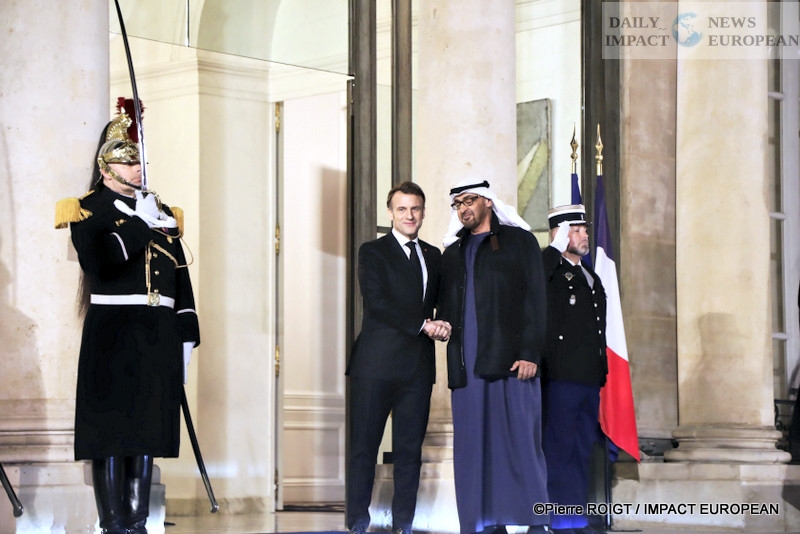
In this context, the strategic convergence between France and the United Arab Emirates offers a compelling pathway toward a balanced AI model, one that reconciles technological performance, economic competitiveness, and ethical responsibility.
Artificial Intelligence as a Long-Term Strategic Choice
The United Arab Emirates has positioned artificial intelligence at the core of its economic transformation strategy. According to PwC estimates, AI could contribute between USD 90 and 100 billion to the UAE economy by 2030, representing nearly 14% of national GDP—one of the highest ratios worldwide.
Abu Dhabi plays a leading role in this ambition through large-scale investments in data centers, high-performance computing, applied research, and the integration of AI across key sectors such as energy, advanced manufacturing, logistics, healthcare, and finance. This proactive approach has established the emirate as a major regional hub for technological innovation and deep tech.
France, for its part, stands as one of Europe’s leading AI actors. It benefits from a globally recognized research ecosystem, a strong pool of highly skilled talent, and industrial champions in computing, software, defense, energy, and digital infrastructure. Artificial intelligence is now a cornerstone of France’s industrial policy and its broader strategy for digital sovereignty.
Ethics as a Foundation for Trust and Performance
The rapid expansion of artificial intelligence also brings significant risks: algorithmic bias, opaque decision-making systems, threats to privacy, and the erosion of public trust. Acknowledging these challenges, the UAE has integrated the concept of responsible AI early on into its public policies and national strategies.
This is precisely where alignment with France becomes particularly meaningful. France promotes an approach rooted in the protection of fundamental rights, algorithmic transparency, and risk management, in line with international frameworks such as UNESCO’s Recommendation on the Ethics of Artificial Intelligence, now widely regarded as a global reference.
Rather than constraining innovation, ethical governance emerges as a key enabler of sustainable performance, legal certainty, and social acceptance of AI technologies.
From Shared Principles to Concrete Cooperation
Franco-Emirati cooperation in artificial intelligence goes beyond a convergence of values. It is already taking shape through academic partnerships, joint research and innovation initiatives, institutional dialogue, and collaborative projects in strategic areas such as AI for public services, energy systems, healthcare, and climate transition.
Such cooperation is particularly relevant in a global AI ecosystem still marked by structural imbalances. Today, less than 25% of professionals working on AI systems worldwide are women, raising critical issues of diversity, representativeness, and quality in technology design.
Addressing these gaps is not only a matter of equity but also a prerequisite for building robust, inclusive, and trustworthy AI systems.
Investing in AI Means Investing in Trust
International experience shows that artificial intelligence investments can only thrive sustainably within environments that provide regulatory stability, ethical clarity, and legal security. By combining strong investment capacity, agile governance, and a clear commitment to responsible AI, the UAE—and Abu Dhabi in particular—stands out as a natural strategic partner for France.
At the same time, France is increasing both public and private investment to strengthen its AI competitiveness and preserve its technological autonomy. Partnerships with countries that share a responsible digital vision thus become a powerful lever for international influence and strategic projection.
Toward a Bilateral Model with Global Reach
The challenge is not to slow innovation, but to guide it. Franco-Emirati cooperation in artificial intelligence illustrates how a bilateral model can be built—one in which technology remains at the service of the economy, society, and human values.
In a world increasingly shaped by fragmented standards and technological rivalries, this approach—grounded in scientific excellence, investment power, and ethical ambition—could emerge as one of the most credible frameworks for governing artificial intelligence in the 21st century.
©2026 – IMPACT EUROPEAN
Views: 2
More Stories
Climate and France’s 2027 budget: 53 organisations bring health, emergency services and workers to Bercy
Cannes Yachting Festival 2026: The Sea Becomes a New Frontier for Technology and Lifestyle
From Paris to Iran: Freedom, Justice and Democracy Become a Question of the Future