

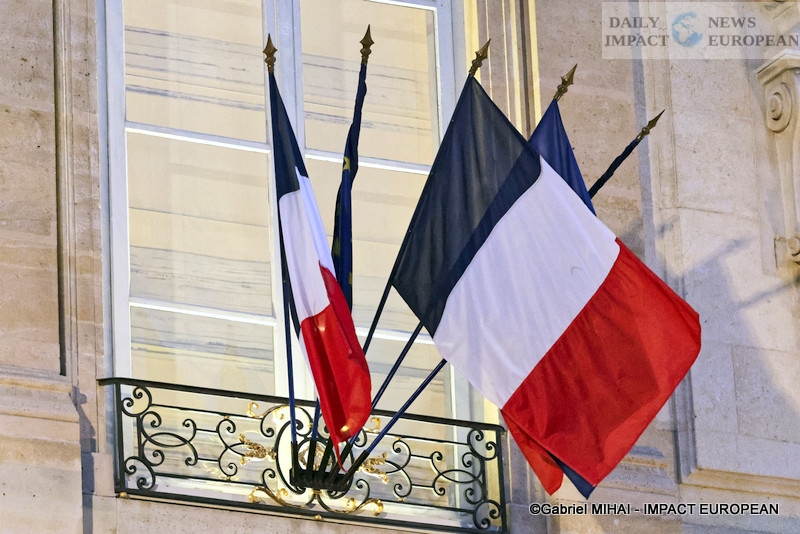
Why France Often Misses the Mark in Its Foreign Policy
More than a political power, Europe often envisions itself as a moral power: consciously or unconsciously, major European countries frequently look down on other nations, believing that their intellectual and historical dominance is universally recognized. This “undisputed” authority supposedly gives them a superior perspective on international affairs.
Yet, like other European powers, France often struggles to make accurate assessments and take appropriate decisions in its dealings with the rest of the world. Examples abound.
French policy towards Africa, despite initially being conciliatory, has led to its gradual exclusion from the continent.
In managing the Ukraine conflict, France shifted from an initially conciliatory approach—rejected even by Putin—to a confrontational stance, which has alienated even its allies. Neither approach has produced success, and Europe remains excluded from potential peace negotiations.
Influenced by the Macron-era “both at once” approach, France’s stance on the Israeli-Palestinian conflict has become inconsistent and unreadable to the international community. Unable to influence the conflict, it risks rejection by both parties: France becomes an obstacle for Israel while remaining a target for Islamist terrorism, including Hamas.
Two main factors underlie France’s limited ability to perceive or analyze situations: history and culture.
Colonial Reality Denial
Although France turned its back on colonization, sometimes to the point of repentance, it, like the UK, retained two legacies: a sense of superiority and strong arrogance.
While these attitudes may have been justified during France’s nearly 400-year colonial period, they are no longer relevant today. France, with a declining population and structurally weaker growth, is comparatively in decline.
The mismatch between the form of France’s “messages” and historical realities often overshadows their substance. Even well-intentioned positions provoke irritation in the Global South. Macron’s and Hollande’s acknowledgment that colonization was “massive and brutal,” even a crime against humanity, has not strengthened ties with former colonies; on the contrary, it crystallized resentment.
This historical confusion extends beyond colonization, affecting Europe’s post–Cold War peace period. Calls for law and sanctity of peace, once widely respected, are now seen as weakness or irrelevance. This past continues to shape France’s perspective and how the world views it—a reality that often results in denial of current international dynamics.
A World Without Vision
Historical evolution is long-term, but cultural evolution is increasingly rapid. The rise of social media and instantaneous opinions has ushered in an era of simplification, dominated by opinions rather than factual analysis.
This trend is mirrored at the highest political levels, where widely shared opinions can solidify into unquestionable “groupthink.” The President, responsible for foreign policy, should ensure long-term vision. Instead, the role has shifted from statesman to politician, reflecting short-term thinking, electoral pressure, inconsistent positions, and rhetorical over substance.
France frequently condemns and excludes foreign powers without the means or intent to act effectively. The result is ineffectiveness, strained relations, and a perception of arrogance.
Dramatization is even used to instill fear as a political tool: the threat of a Russian invasion, after France’s struggles in Ukraine, exemplifies this policy. As explained at the Élysée: it is an empire with a strong army… A little analysis, Mr. President!
©2026 – IMPACT EUROPEAN
Views: 22
More Stories
France Protests on October 17: Mass Mobilization Overshadowed by Violence Across the Country
Work Palace Opens in Paris: INSITU Brings Luxury Hospitality Into the Workplace
Mosaïca: Marie Cantagrill unveils a new concerto in Le Mas-d’Azil